Reliable power is one of the easiest ways to protect a studio and reduce avoidable noise, resets, and downtime. The right conditioner can also make rack setups easier to manage with better outlet layout, voltage monitoring, and surge protection.
This roundup highlights the best studio power conditioners for audio equipment across home studios, live racks, and pro environments, so you can match protection and features to your setup.
Best 10 Studio Power Conditioners for Audio Equipment Picks for 2026
Stage-Proven Rack Protection

- 20 amp rackmount conditioner with voltmeter/ammeter
- Isolated outlet banks help reduce interference
- Uses SMP, LiFT, and EVS protection technologies
Best For: Recording studios, DJ rigs, and pro audio racks
Compact Rack Upgrade
Black Lion Audio PG-X Rackmount

- PG-90 filtering technology with capacitor-based design
- Eight rear outlets, one front outlet, and USB port
- Rackmount build keeps studio wiring organized
Best For: Home and project studios that need practical rack power management
Voltage Stabilizer Choice
Furman P-1800 AR Voltage Regulator
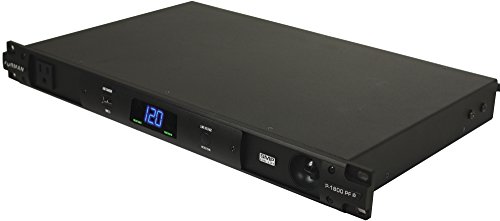
- True RMS regulation outputs stable 120V power
- Works with 97-137V input range
- Adds SMP surge protection, LiFT filtering, and EVS
Best For: Studios with unstable AC power that need regulated output
Outlet-Rich Rack Option
Radial Power-1 Power Conditioner

- 11-outlet rackmount power conditioner
- Includes noise filtering and surge protection
- Stainless steel build for studio racks
Best For: Large studio racks needing many powered outlets
Rack-Friendly Power Protection

- Digital voltmeter shows incoming line voltage.
- Noise filtering reduces RFI and EMI.
- 8 rear outlets plus 1 front outlet.
Best For: Home studios and rack setups needing basic conditioning and voltage readout.
Simple Rack Convenience
Radial Power-2 Power Conditioner

- 9 outlets for powering multiple devices.
- Noise filtering and surge protection included.
- LED illumination helps in dark racks.
Best For: Small studios that want basic conditioning with extra outlets and rack lighting.
Voltage Regulation Pick

- AVR corrects under- and overvoltage.
- EMI/RFI filtering removes up to 20 dB noise.
- Six outlets with 720 joules of surge suppression.
Best For: Sensitive audio setups that need voltage regulation and line-noise filtering.
Sequenced Control
MICNAUX 20A 10-Outlet Rack Conditioner

- 8 independently switched rear outlets
- LCD voltage display with bypass mode
- 10 total outlets with 2 always-on front ports
Best For: Larger audio rigs needing sequencing and monitoring
Digital Rack Controller
Pyle PCO875 10-Outlet Power Sequencer

- 10 outlets with 8 rear and 2 front always-on
- Digital LCD voltage readout
- 1U rackmount design with USB charging
Best For: Studios and AV racks wanting simple rack power control
Stage-Proven Rack Protection – Furman PL-PRO DMC 20 Amp
For studio power conditioners for audio equipment, the Furman PL-PRO DMC 20 Amp is aimed at users who want serious rack-mounted protection plus real-time power monitoring. Its isolated outlet banks help minimize inter-component interference and noise contamination, while the 20 amp rating and high inrush magnetic circuit breaker add a strong layer of protection for demanding setups.
Best For: Recording studios, instrument rigs, DJ setups, and pro audio racks that need robust protection and outlet isolation.
Pros:
- Isolated outlet banks help reduce noise contamination between components.
- 20 amp capacity with a high inrush magnetic circuit breaker.
- Includes voltmeter/ammeter for checking power conditions at a glance.
- Built with Furman SMP, LiFT, and EVS protection technologies.
Cons:
- May be more capacity than small home studio setups need.
- Rack-mount format is best suited to permanent installations.
This is a strong choice if you want a feature-rich conditioner that combines surge protection, filtering, and monitoring in one rack unit. It fits best in systems where clean power and organized rack integration matter.
Compact Rack Upgrade – Black Lion Audio PG-X Rackmount
If you’re comparing studio power conditioners for audio equipment, the Black Lion Audio PG-X stands out for its rackmount design and PG-90 filtering technology. It also adds Panasonic and Wima capacitors, eight rear-panel outlets, one front-panel outlet, and a front USB port for added convenience in a studio rack.
Best For: Home and project studios that want a rackmount conditioner with practical outlet access and filtering.
Pros:
- PG-90 filtering technology is the core noise-reduction feature.
- Eight rear-panel outlets plus one front-panel outlet.
- Front-panel USB port adds useful charging or accessory power.
- Rackmount format keeps studio wiring tidy.
Cons:
- No voltage display or regulation features are listed.
- Fewer advanced protection details are provided than on some competitors.
The PG-X is a straightforward option for users who want clean rack integration and practical outlet layout without overcomplicating the setup. It makes the most sense in studios where filtering and accessibility are the priorities.
Voltage Stabilizer Choice – Furman P-1800 AR Voltage Regulator
Among studio power conditioners for audio equipment, the Furman P-1800 AR is a strong pick when line voltage swings are the main concern. Its True RMS Voltage Regulation delivers a stable 120 volts from a 97-137 volt input range, and Furman’s SMP, LiFT, and EVS technologies add surge protection, filtering, and shutdown protection.
Best For: Studios and rigs that need regulated output to protect gear from unstable AC power.
Pros:
- True RMS voltage regulation holds output at 120 volts.
- Wide 97-137 volt input range supports unstable power environments.
- Includes SMP surge protection, LiFT filtering, and EVS shutdown protection.
- Front-panel USB convenience outlets add extra utility.
Cons:
- Heavier than simpler conditioners at 19.2 pounds.
- 15 amp output may not suit the highest-demand rigs.
This model is especially useful when you need more than basic filtering and want voltage regulation built into the rack unit. It is a practical choice for protecting sensitive gear in places where AC power is not consistent.
Outlet-Rich Rack Option – Radial Power-1 Power Conditioner
For buyers shopping studio power conditioners for audio equipment, the Radial Power-1 focuses on a high-outlet rackmount layout with noise filtering and surge protection. Its 11-outlet design makes it practical for setups with multiple pieces of gear, while the stainless steel build suggests a durable rack-friendly enclosure.
Best For: Larger studio racks that need many outlets in one conditioner.
Pros:
- 11-outlet layout supports gear-heavy setups.
- Includes noise filtering and surge protection.
- Rackmount form factor fits organized studio installations.
- Stainless steel construction adds durability.
Cons:
- No voltage regulation features are listed.
- Fewer detailed specs are provided than some alternatives.
The Power-1 is a sensible pick if outlet count is the main deciding factor and you want basic filtering and surge protection in a rack unit. It is best suited to studios that need to distribute power across several connected devices.
Rack-Friendly Power Protection – Furman M-8Dx Merit X Series
If you need studio power conditioners for audio equipment with a straightforward rack-style layout, the Furman M-8Dx adds useful monitoring and basic noise control in one unit. It includes a digital voltmeter, AC noise filtering to reduce RFI and EMI, and spike/surge protection to help keep connected gear powered safely.
Best For: Home studios and rack setups that want voltage monitoring plus everyday surge protection.
Pros:
- Digital voltmeter displays incoming line voltage.
- AC noise filtering helps reduce RFI and EMI.
- Spike and surge protection adds a layer of equipment safety.
- Includes 8 rear-panel outlets and 1 front-panel outlet.
Cons:
- Protection details are basic compared with higher-end regulated units.
- The feature set is centered on standard conditioning rather than advanced power management.
Overall, this is a practical pick if you want a simple, rackable conditioner with visible line-voltage feedback and multiple outlets. The included dual lights also add convenience for darker studio spaces.
Simple Rack Convenience – Radial Power-2 Power Conditioner
The Radial Power-2 is a streamlined option for studio power conditioners for audio equipment when you want noise filtering, surge protection, and built-in illumination in one unit. Its 9-outlet layout makes it useful for powering several pieces of gear while keeping the rack easier to see.
Best For: Studios that want a simple power conditioner with extra outlets and lighted rack convenience.
Pros:
- 9-outlet power supply offers generous connectivity.
- Noise filtering helps keep power cleaner for connected gear.
- Surge protection adds a layer of defense.
- LED illumination improves visibility in rack spaces.
Cons:
- The supplied notes do not include detailed electrical ratings.
- Feature information is limited compared with more fully specified models.
This is a good fit if your priority is simple rack convenience with enough outlets for a small studio setup. It keeps the feature set focused on the essentials without adding unnecessary complexity.
Voltage Regulation Pick – Tripp Lite LS606M
For studio power conditioners for audio equipment where voltage stability matters, the Tripp Lite LS606M stands out with automatic voltage regulation, EMI/RFI filtering, and surge suppression. It is designed to correct undervoltage and overvoltage conditions while giving you six rear outlets in a compact chassis.
Best For: Audio rigs and mixed-use setups that need voltage correction along with filtering and surge protection.
Pros:
- AVR boosts undervoltages and reduces overvoltages.
- EMI/RFI filter removes up to 20 dB of line noise.
- 720 joules of surge suppression helps protect connected equipment.
- Front-panel LEDs show boost, trim, and normal operation.
Cons:
- Only 6 outlets, which may be limiting for larger rigs.
- Rated at 600W, so it is better suited to modest loads.
Compared with basic surge strips, this unit adds real voltage regulation and diagnostic feedback, which can be especially useful for sensitive gear. It is a compact, practical choice when clean and consistent power is the priority.
Rack-Ready Basic Protection – Pyle-Pro PCO800 8-Outlet Conditioner
If you need studio power conditioners for audio equipment that are simple, rack-mountable, and focused on basic surge protection, the Pyle-Pro PCO800 is a straightforward option. It combines 8 rear outlets, a front-panel switch, and triple-mode varistor protection in a single-rack-space metal chassis, making it easy to add to a compact studio or utility rack.
Best For: Home studios, small racks, and users who want a no-frills 8-outlet conditioner with basic protection.
Pros:
- 8 rear outlets with space for four wall warts
- Single-rack-space metal housing for easy rack installation
- Triple-mode varistor surge and spike protection
- 15 amp rating with rear-panel circuit breaker
Cons:
- No voltage display or sequencing features
- Outlets are rear-mounted only
- Basic control layout compared with more advanced conditioners
Overall, the PCO800 is a practical entry-level choice if your priority is protecting connected gear and saving rack space. It keeps operation simple, but it is best suited to setups that do not require sequencing or monitoring tools.
Sequenced Control – MICNAUX 20A 10-Outlet Rack Conditioner
For studio power conditioners for audio equipment where sequencing and monitoring matter, this MICNAUX rack-mount unit adds more control than a basic surge strip. It offers 10 outlets total, 8 independent rear-panel switches, a voltage display, bypass mode, and remote switching, which makes it a strong fit for more complex audio rigs.
Best For: Larger audio setups that need sequenced outlet control, voltage readout, and remote switching.
Pros:
- 8 rear sequenced outlets with independent switches
- 2 always-on front outlets for essential gear
- Large LCD voltage display for real-time monitoring
- Bypass mode and external dry contact switch add flexibility
Cons:
- More complex than a basic plug-and-play conditioner
- Only 2 always-on outlets in front
- Rack-mount format may be overkill for very small setups
Because it combines protection, sequencing, and voltage monitoring, this model is better suited to users who want more control over how audio gear powers up and down. It is a feature-rich option, but that also means it is aimed at more demanding racks rather than the simplest setups.
Digital Rack Controller – Pyle PCO875 10-Outlet Power Sequencer
This Pyle PCO875 is built for users looking for studio power conditioners for audio equipment with a little more control than a standard surge protector. It pairs 10 outlets with a digital LCD readout, USB charging, and a one-button power switch in a 1U rackmount design, which makes it convenient for studio, stage, or home theater use.
Best For: Studios and AV racks that want 10 outlets, voltage readout, and simple one-button operation.
Pros:
- 10 outlets total, including 8 rear and 2 front always-on outlets
- Digital LCD display for voltage readout
- USB port for charging an external device
- 1U rackmount metal housing with surge overload protection
Cons:
- 13 amp rating is lower than some 20A rack units
- No independent outlet switches or sequencing controls
- Front outlets are always-on, which may not suit every workflow
In practice, the PCO875 is a useful middle-ground option if you want rackmount convenience, clean power support, and a readable display without moving into advanced sequencing gear. It is best for straightforward rigs that value ease of use and compact installation.
How We Picked the Best Studio Power Conditioners for Audio Equipment
For this guide, we prioritized Studio Power Conditioners for Audio Equipment that offer practical protection, useful monitoring, and the right feature set for real-world recording and playback rigs. We favored units with solid surge defense, rack-friendly designs, readable voltage displays, and options suited to different power demands.
Quick Comparison
Use basic rack conditioners if you mainly want surge protection and organized power distribution. Choose models with metering if you want to monitor incoming voltage at a glance. If your location has unstable power, an automatic voltage regulator can be a better fit than a basic conditioner. Sequencer models are best when you need controlled startup and shutdown for multiple pieces of gear.
Key Buying Factors for Studio Power Conditioners for Audio Equipment
Protection Type
Look for surge protection with a clear joule rating or equivalent protective spec. Some units also add filtering, which can help reduce interference from noisy power sources.
Voltage Monitoring and Regulation
A built-in meter helps you see what the incoming line is doing. If voltage swings are common, consider a conditioner with automatic regulation so your equipment receives a steadier output.
Outlet Count and Layout
Count both current and future gear. Spaced outlets are useful for wall warts and bulky adapters, while front-panel outlets can make temporary connections easier.
Current Capacity
Match the unit’s amperage or wattage rating to your load. High-power racks, power amps, and multiple processors need more headroom than a small interface-and-monitor chain.
Rack Features and Usability
In rack systems, front lights, pull-out lamps, digital readouts, and sequenced switching can improve daily workflow. For a compact desktop setup, simpler and smaller units may be the better value.
Who Should Buy Which Studio Power Conditioners for Audio Equipment?
Choose a basic rackmount conditioner if you want reliable protection at the lowest complexity. Pick a metered model if you want quick visibility into line voltage. Select a regulated unit if your power is inconsistent or you run sensitive gear. Go with a sequencer if you need controlled power-up routines for a larger studio or live rack. The best choice depends on your total load, how stable your power is, and how much monitoring you want from your Studio Power Conditioners for Audio Equipment.