Kaqiluo High Density Self-Adhesive Acoustic Foam is a straightforward option for buyers who want dense padding with an easy peel-and-stick install.
It is best understood as a practical treatment panel, not a miracle soundproofing fix.
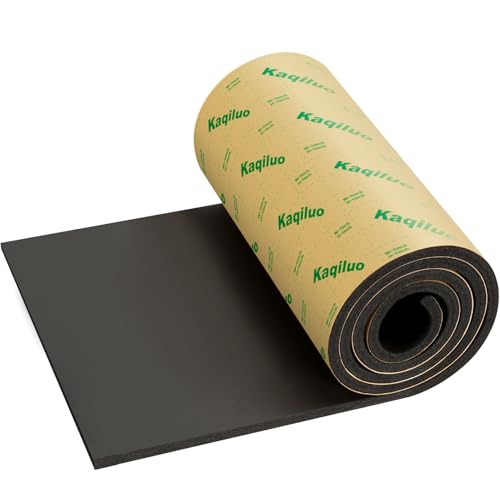
Kaqiluo High Density Self-Adhesive Acoustic Foam Review Summary
This Kaqiluo High Density Self-Adhesive Acoustic Foam review comes down to fit: it suits people who need a compact, cuttable acoustic layer for reducing flutter echo, softening reflections, and adding a bit of insulation to a room or vehicle panel.
The listing points to a high-density closed-cell foam construction, a full self-adhesive backing, 0.4-inch thickness, and a 5.8 square foot coverage area, which makes it easier to use on targeted problem spots than on an entire room.
Verdict: it is a sensible buy if you want a dense, easy-to-install foam pad for localized acoustic treatment, not if you expect dramatic isolation from traffic, neighbors, or bass leakage.
Review Scorecard
| Category | Score | Why it matters |
|---|---|---|
| Noise control for echoes | 7/10 | The listing specifically targets flutter echoes, reverberations, and reflections. |
| Installation ease | 9/10 | Full self-adhesive backing should simplify placement on suitable surfaces. |
| Material confidence | 8/10 | High-density closed-cell foam is a more substantial format than thin novelty padding. |
| Moisture and fire resistance | 8/10 | The manufacturer claims water resistance and B1 class fire resistance. |
| Coverage value | 6/10 | 5.8 sq ft is useful for spot treatment, but not large-area coverage. |
| Versatility | 8/10 | The sheet can be cut into shapes and is listed for cars, condos, studios, classrooms, and factories. |
| Soundproofing realism | 4/10 | The product helps with treatment and padding more than true isolation. |
Key Features and Specifications of Kaqiluo High Density Self-Adhesive Acoustic Foam
The core appeal of Kaqiluo High Density Self-Adhesive Acoustic Foam is its combination of density, adhesive backing, and modest coverage.
The listing describes it as a closed-cell foam with a density of 50+ kg/m³ and a thickness of 0.4 inches, or 10 mm.
That matters because it suggests a firmer, more substantial panel than the ultra-light foam often sold for decorative acoustics.
The sheet size is listed as 12 x 71 inches, with total coverage of 5.8 square feet.
That is enough for selective placement on a panel, wall section, cabinet, door, or automotive area, but it is not the kind of package that transforms a large room by itself.
Buyers should think in terms of targeted application rather than full-room coverage.
Other notable listing claims include:
- Self-adhesive backing across the full rear surface for easier mounting.
- Fire resistance described as B1 class.
- Waterproof or water-resistant behavior intended to avoid the smell and absorption issues associated with some sponge foams.
- Cut-to-fit flexibility for irregular spaces and custom shapes.
- Intended use across multiple settings, including automobiles, condos, apartments, studios, classrooms, and factories.
For shoppers comparing it to generic acoustic foam, the important distinction is that the listing emphasizes a denser, closed-cell construction and a more utility-focused use case.
That does not make it a substitute for mass-loaded vinyl, decoupling, or other serious sound isolation methods, but it does make it more credible as a padding and treatment layer.
Pros and Cons of Kaqiluo High Density Self-Adhesive Acoustic Foam
Pros
- Dense closed-cell construction should feel more substantial than thin budget foam.
- Self-adhesive backing lowers the barrier to installation.
- 0.4-inch thickness is manageable in tight spaces.
- Water resistance is useful in locations where ordinary sponge foam would be risky.
- B1 fire resistance is a meaningful safety-oriented claim for some buyers.
- Can be cut to fit awkward panels or smaller treatment zones.
Cons
- The coverage area is limited, so bigger projects will need multiple sheets.
- It is not a true soundproofing product in the strict sense.
- Thin foam alone will not stop low-frequency noise.
- The listing language mixes sound insulation, soundproof padding, and acoustic treatment, which can create unrealistic expectations.
- Buyers seeking dramatic room isolation may need more than this material can provide.
The biggest strength here is not raw acoustic power.
It is convenience.
If your goal is to improve a specific spot quickly, the adhesive format and flexible sizing are a real advantage.
Who Should Buy Kaqiluo High Density Self-Adhesive Acoustic Foam?
This is a good fit for buyers who want simple acoustic cleanup in a localized area.
If you are dealing with reflections in a small studio corner, a workstation, a classroom section, a vehicle panel, or another place where a thin but denser foam layer makes sense, the format is practical.
It also makes sense for people who want a material that is easier to place than loose foam or non-adhesive pads.
The adhesive backing is the main convenience feature, and for many users that alone can justify the product over a more fiddly alternative.
It is less suitable for anyone whose main goal is to block loud external noise, isolate a shared wall, or eliminate bass transfer.
If your real problem is sound leakage, this is the wrong category of product. You would likely need heavier isolation materials and construction changes.
Buyers who care most about moisture resistance or a more durable-feeling foam layer may also find this more appealing than cheap wedge foam.
But if you want large-area coverage or professional-grade room treatment, the small sheet size means you should keep looking.
How the Kaqiluo Foam Fits Real Acoustic Jobs
Echo Reduction in Small Spaces
The clearest use case is softening reflections and flutter echo in compact spaces.
The listing directly mentions reducing reverberations and reflections, so this is the right expectation: better acoustic control, not silence.
Adhesive Installation on Convenient Surfaces
The full adhesive layer makes this more attractive for users who want a fast install.
That matters most where a clean, simple placement matters more than removable, reusable mounting.
Moisture-Sensitive and Utility Areas
The water-resistant, closed-cell description gives it an edge in places where traditional sponge foam may absorb moisture or develop odor.
That makes the product more versatile than basic hobby foam.
Limited Coverage, Targeted Impact
At 5.8 square feet, this is a patching product.
Its job is to improve chosen spots, not to blanket a room.
That limitation is also what makes it easy to plan around.
Alternatives to Kaqiluo High Density Self-Adhesive Acoustic Foam
If you need a broader or better-known option, it is worth comparing Kaqiluo with established acoustic and insulation lines:
- Auralex foam panels if you want a more familiar studio-treatment brand.
- Foamily acoustic panels if you want simple room-treatment sheets.
- Noico sound deadening mat if your real need is automotive vibration control rather than foam treatment.
- Mass-loaded vinyl sheets if you need heavier isolation materials instead of lightweight foam.
Those alternatives are not interchangeable.
Foam helps with reflections and comfort, while heavier materials are better when the goal is blocking or dampening transfer.
Is Kaqiluo High Density Self-Adhesive Acoustic Foam Worth It?
Yes, if you want a dense, adhesive-backed acoustic foam for small-scale treatment and simple installation.
The listed density, waterproofing claim, fire-resistance claim, and cut-to-fit format give it a practical profile for targeted jobs.
No, if you expect it to function like real soundproofing.
The product is more useful for improving acoustic behavior than for stopping noise at the source.
For buyers who understand that tradeoff, Kaqiluo High Density Self-Adhesive Acoustic Foam is a reasonable, utility-first choice.
For everyone else, it is better to treat it as a niche acoustic pad and shop heavier materials for isolation work.