Great in-ear monitoring can tighten your timing, improve mix clarity, and help protect your hearing on stage. The right system should stay stable, sound clean, and feel easy to use under pressure.
In this roundup of the best digital wireless in ear monitor systems, we focus on practical features that matter for real performances: latency, range, battery life, frequency control, and receiver comfort.
Best 10 Digital Wireless in Ear Monitor Systems Picks for 2026
Ultra-Portable 2.4GHz Pick
Xvive U4 Wireless in-Ear Monitor System Set
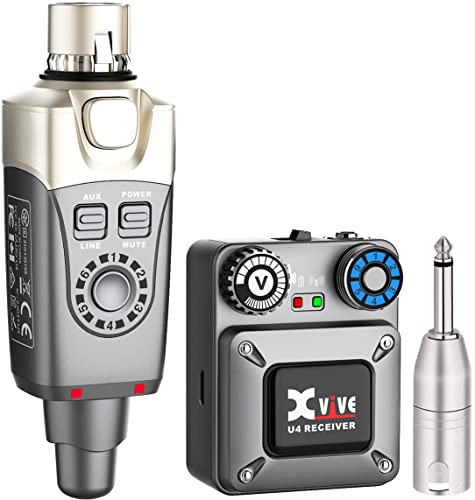
- 2.4GHz wireless design
- Over 90 feet of range
- Less than 5ms latency
Best For: Solo performers and small clubs
Feature-Rich UHF Rackmount Pick
Phenyx Pro PTM-10 Stereo IEM System

- True stereo and mono modes
- 900MHz band with 89 frequencies
- Up to 160 feet of range
Best For: Bands and studios needing rack-mount flexibility
Practice-Friendly Clip-On Pick

- 48kHz/16bit audio clarity
- Under 5ms latency
- Over 8 hours of battery life
Best For: Guitar players and beginners
Compact Stereo Stage Pick
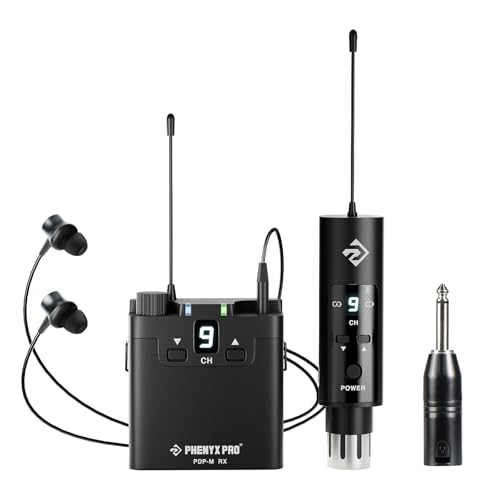
- 24-bit/48kHz digital signal path
- Up to 160-200 feet of range
- Supports mono and stereo monitoring
Best For: Portable stage use and quick setup
Portable 2.4G IEM with Long Battery Life

- 30-hour runtime with charging case
- OTG support for phones and USB-C devices
- One transmitter can feed up to 10 receivers
Best For: Portable band, studio, and rehearsal monitoring
Metal UHF Mono IEM for Clean Monitoring

- UHF 900MHz system with 50 selectable frequencies
- Mono monitoring to reduce phase issues
- Metal transmitter with separate outputs and PAD switch
Best For: Mono monitoring for church, conference, and live use
Low-Latency Stereo IEM for Small Stages

- Under 4.5 ms latency in mono mode
- One transmitter works with up to 4 receivers
- 6–8 hour battery life with LED indicators
Best For: Small bands, singers, and rehearsal monitoring
Compact 2.4G Stereo Monitor
Donner CV-3 Wireless in Ear Monitor System

- 192kHz / 24-bit audio with under-6ms latency
- Stereo/mono switching with 100-foot range
- Lightweight zinc alloy receiver with color screen
Best For: Bands and performers who want a lightweight, easy-to-use wireless IEM
Ultra-Low Latency UHF Pick
POGOLAB Wireless in-Ear Monitor System

- 1ms delay with 48kHz/24-bit hi-fi audio
- 7-channel UHF design with XLR and AUX/LINE
- USB-C rechargeable transmitter and receiver
Best For: Live performers who want fast, flexible UHF monitoring
Multi-Receiver Stage Starter
LEKATO MS-1 Wireless in Ear Monitor System
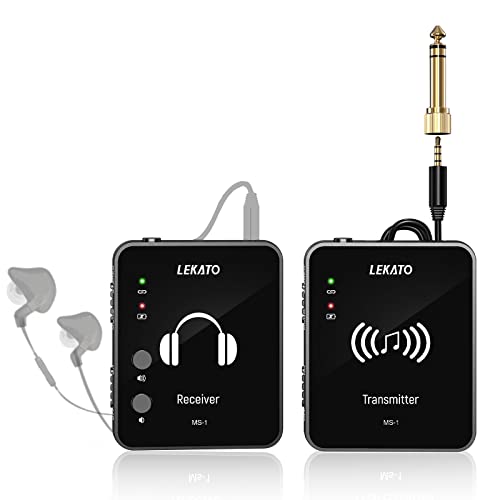
- One transmitter can support up to 6 receivers
- Auto-pairing and stereo/mono switching simplify setup
- 2.4GHz wireless with 100-foot range
Best For: Small bands and churches that need shared wireless monitoring
Ultra-Portable 2.4GHz Pick – Xvive U4 Wireless in-Ear Monitor System Set
If you want a simple digital wireless in ear monitor systems option for small stages and mobile setups, the Xvive U4 keeps the focus on ease of use. It runs on 2.4GHz, offers over 90 feet of working range, and stays under 5ms latency, making it a practical pick for performers who need quick setup and dependable monitoring.
Best For: Solo performers, small bands, and clubs that need a compact wireless monitor system.
Pros:
- 2.4GHz wireless design works anywhere in the world
- Over 90 feet of range suits small venues and onstage movement
- Less than 5ms latency helps keep monitoring tight
- Up to 5 hours of battery life for a full show
Cons:
- Only one receiver is included in the set
- Range is better suited to small clubs than larger stages
Overall, the Xvive U4 is a straightforward, compact monitoring solution that favors portability and low-latency performance over advanced routing features. It is a strong fit when you want a no-fuss system for personal or team monitoring.
Feature-Rich UHF Rackmount Pick – Phenyx Pro PTM-10 Stereo IEM System
For buyers comparing digital wireless in ear monitor systems with more control, the Phenyx Pro PTM-10 stands out for its UHF stereo design and flexible monitoring tools. It uses the 900MHz band, supports stereo or mono operation, and reaches up to 160 feet, giving stage and studio users a more configurable wireless monitor option.
Best For: Bands, worship teams, presenters, and studios that want stereo monitoring and rack-friendly hardware.
Pros:
- True stereo monitoring with stereo/mono mode selection
- 900MHz band with tunable 89 frequencies and support for multiple systems
- Up to 160 feet of coverage for stage and venue use
- Includes EQ, balance, limiter, pad, lock, and rack-mount accessories
Cons:
- Bulkier setup than compact portable systems
- Uses AA batteries for the bodypack receiver
The PTM-10 is built for users who value adjustability and a more professional feature set. If you need a rack-mountable wireless IEM with stereo control and room for multiple systems, this one is easy to justify.
Practice-Friendly Clip-On Pick – JOYO JW-07 2.4G Wireless IEM
The JOYO JW-07 is a practical choice in digital wireless in ear monitor systems for practice, guitar monitoring, and casual live use. It uses 2.4GHz wireless transmission, offers under 5ms latency, and includes automatic pairing plus frequency hopping for stable operation in a compact setup.
Best For: Guitar players, beginners, and practice-focused users who want a lightweight wireless monitor.
Pros:
- 48kHz/16bit audio clarity for monitoring and recording practice
- Low latency under 5ms for real-time feedback
- Frequency hopping helps reduce interference
- Over 8 hours of battery life per charge
Cons:
- One transmitter does not support multiple receivers
- Range is limited to 40-60 feet in open space
As a lightweight IEM option, the JW-07 is best when portability and practice convenience matter more than advanced stage networking. Its battery life and anti-interference design make it a solid entry-level wireless monitor system.
Compact Stereo Stage Pick – Phenyx Pro PDP-M Portable IEM
If you want digital wireless in ear monitor systems with a smaller footprint, the Phenyx Pro PDP-M is designed for portability without dropping useful stage features. It uses a 24-bit/48kHz digital signal path, UHF 900MHz frequency hopping, and up to 160-200 feet of range, making it a flexible option for rehearsals, worship sets, and compact live stages.
Best For: Performers who want a portable wireless monitor with stereo support and an easy setup.
Pros:
- 24-bit/48kHz digital audio for a cleaner monitor feed
- Mono and stereo operation for different stage setups
- UHF 900MHz frequency hopping for improved stability
- Includes adapters, charging cable, and storage pouch
Cons:
- Up to 4 hours of continuous use is shorter than some rivals
- Designed more for small stages than large production setups
The PDP-M is a good match for users who want a compact monitor system that is simple to carry and quick to deploy. Its digital audio path and expandable receiver support make it a practical everyday stage tool.
Portable 2.4G IEM with Long Battery Life – LEKATO MS-20 Charging
If you want a digital wireless in ear monitor system that’s built for portability, the LEKATO MS-20 is a practical pick for rehearsals, small gigs, and studio monitoring. It uses 2.4GHz wireless transmission, supports OTG input from smartphones and USB-C devices, and comes with a charging case for extended use between sessions.
Best For: Bands, singers, and studio users who want a compact one-transmitter, multi-receiver IEM setup with long battery life.
Pros:
- Up to 30 hours of usage time with the charging case and 2000mAh battery capacity.
- One transmitter can send to multiple receivers, with support for up to 10 paired devices.
- OTG support makes it easy to plug into phones and USB-C devices.
- 150 ft open-area range and low-noise, low-latency monitoring for stage use.
Cons:
- Earphones are not included in the package.
- Requires a 5V 2A charging head for best charging setup.
- Range is listed for open areas, so real-world performance may vary.
Overall, the MS-20 is a flexible wireless IEM option if you value battery life, simple auto-pairing, and phone-friendly input options. It’s especially appealing for users who need a compact system that can handle practice sessions and live monitoring without a lot of setup.
Metal UHF Mono IEM for Clean Monitoring – Phenyx Pro PTM-11
The Phenyx Pro PTM-11 is a wired-input, digital wireless in ear monitor system built around mono monitoring and UHF performance. It’s a strong fit if you want a simple monitor mix with less phase confusion, a metal transmitter base, and a setup that can pass original audio through to the soundboard or speaker.
Best For: Church speakers, conference hosts, broadcasters, and live performers who want reliable mono monitoring.
Pros:
- Mono monitoring helps avoid phase issues and keeps the audio focused.
- UHF 900MHz operation with 50 selectable frequencies.
- Supports up to 5 IEM systems working together.
- Separate left/right outputs and a PAD switch help manage signal routing and overload.
Cons:
- Mono design won’t suit users specifically looking for stereo monitoring.
- Operating range is listed at 164 ft, and obstacles can reduce it.
- Only one receiver and one earphone are included in the box.
For users who prioritize clean mono monitoring over extra features, the PTM-11 is a straightforward and durable option. Its metal build, frequency flexibility, and signal-pass-through design make it practical for stage, lecture, and studio environments.
Low-Latency Stereo IEM for Small Stages – LEKATO MS-02
The LEKATO MS-02 is a compact digital wireless in ear monitor system aimed at small to medium performance setups. It offers upgraded low latency, 2.4GHz stereo wireless transmission, and a one-transmitter-to-many-receivers design, making it useful for band rehearsals, stage work, and practice environments where simple monitoring matters.
Best For: Singers, trainees, and small bands that want a lightweight stereo IEM system with easy pairing.
Pros:
- Upgraded latency is listed at under 4.5 ms in mono mode.
- Supports one transmitter to up to 4 receivers.
- 6–8 hours of battery life with LED battery and volume indicators.
- Mono/stereo switching and one-key mute add practical control.
Cons:
- Receiver count is limited compared with larger systems.
- Wireless range is listed at 100 ft open area, which may be limiting for larger stages.
- Earbuds are not included and must be purchased separately.
If you need a lightweight monitor system for practice or smaller live setups, the MS-02 offers a strong balance of portability and control. Its quick pairing, low-latency design, and compact clip-on receivers make it easy to work into everyday performance use.
Compact 2.4G Stereo Monitor – Donner CV-3 Wireless in Ear Monitor System
If you want a practical option in digital wireless in ear monitor systems for rehearsals or live sets, the Donner CV-3 focuses on clean monitoring, simple controls, and a lightweight build. Its 2.4GHz connection, stereo/mono switching, and low-latency design make it a flexible pick for players who need dependable sound without extra complexity.
Best For: Bands, solo performers, and rehearsal setups that need a lightweight wireless IEM with straightforward operation.
Pros:
- 192kHz sampling and 24-bit depth for clear, detailed monitoring.
- Less than 6ms latency for tight on-stage timing.
- 100-foot wireless range with automatic channel finding to help reduce interference.
- Interactive color screen and compact zinc alloy receiver for easier use and carry.
Cons:
- Battery life is rated at up to 10 hours, which may be limiting for longer events.
- Uses 2.4GHz wireless, so crowded environments can still require careful setup.
- No active noise control is listed in the supplied details.
Overall, the CV-3 is a good fit if you want a balanced monitoring system that stays portable and easy to manage. It covers the core needs of most rehearsal and performance setups without adding unnecessary bulk.
Ultra-Low Latency UHF Pick – POGOLAB Wireless in-Ear Monitor System
For buyers comparing digital wireless in ear monitor systems, the POGOLAB unit stands out for its UHF operation and very low stated latency. It is built for live performance use where quick response, clear signal routing, and simple stage setup matter, especially when you need more channel flexibility than many entry-level wireless IEM options.
Best For: Live bands, worship teams, and performers who want UHF wireless with fast response and channel selection.
Pros:
- Stated 1ms ultra-low transmission delay for real-time monitoring.
- UHF system with 7 selectable channels to help reduce interference.
- XLR input plus AUX/LINE switch for flexible source matching.
- Rechargeable transmitter and receiver with USB-C charging and battery indicators.
Cons:
- Battery life is up to 5 hours, so it is better suited to shorter gigs and rehearsals.
- Range is listed at 164 feet line of sight, which still depends on stage conditions.
- Requires correct input switching for best results with different audio sources.
In practice, this is a strong choice if latency and interference management are top priorities. The channel selection and professional input options make it especially useful for structured stage setups.
Multi-Receiver Stage Starter – LEKATO MS-1 Wireless in Ear Monitor System
The LEKATO MS-1 is aimed at users who need one of the more flexible digital wireless in ear monitor systems for small to medium stages. Its one-transmitter-to-many-receivers support, automatic pairing, and stereo transmission make it a practical choice for band practice, church use, and compact live setups.
Best For: Small bands, churches, and rehearsal spaces that need multiple receivers from one transmitter.
Pros:
- Supports up to 6 receivers with one transmitter for group monitoring.
- Auto-pairing makes setup quick and simple.
- True stereo transmission with mono/stereo switching.
- 2.4GHz system with up to 100-foot range and over 5 hours of battery life.
Cons:
- Latency is listed at under 12ms, which is not as fast as the quickest systems here.
- Battery life is just over 5 hours, so longer services or gigs may need charging planning.
- Uses 2.4GHz wireless, which can be more sensitive to crowded wireless environments than UHF.
Overall, the MS-1 is a smart value-oriented option if you need multiple beltpack receivers and easy setup. It gives you the features most small-stage users need without making monitoring complicated.
How We Picked the Best Digital Wireless in Ear Monitor Systems
We prioritized Digital Wireless in Ear Monitor Systems that balance dependable RF performance, straightforward setup, and stage-friendly features. That means clean signal transmission, low-latency monitoring, useful range, and hardware that holds up for rehearsals, gigs, and travel.
We also looked at usability: pairing speed, transmitter/receiver design, battery options, and whether the system is practical for solo performers, bands, or venues.
Quick Comparison
For simple setups, clip-on 2.4GHz systems are often the easiest to deploy and recharge. For more demanding environments, UHF models typically offer stronger frequency management and better flexibility in crowded wireless spaces. Mono systems can be enough for speech or basic monitoring, while stereo systems are better for players who want a more natural mix and instrument separation.
Key Buying Factors for Digital Wireless in Ear Monitor Systems
Latency and Sound Quality
Low latency is essential so your performance feels natural and tightly synchronized. Look for systems that emphasize fast transmission and clean audio reproduction, especially if you play rhythm-critical parts or sing with precise timing.
Range and RF Reliability
Check the stated operating distance, but also consider how the system behaves in real venues with walls, crowds, and wireless interference. UHF systems can be a better fit when reliability matters most, while 2.4GHz models are attractive for convenience and portability.
Mono Vs. Stereo
Stereo monitoring lets you place instruments or backing tracks in a more spacious mix, which can reduce fatigue and improve clarity. Mono is simpler and can be perfectly adequate if you mainly need a balanced vocal or click-based cue.
Battery Life and Charging
Long battery life matters for festivals, extended rehearsals, and all-day use. Rechargeable cases, USB charging, and replaceable battery options can all be useful depending on how you work.
Fit, Build, and Inputs
Bodypack size, clip quality, screen readability, and connector flexibility all affect day-to-day convenience. Also check whether the transmitter supports XLR and AUX/line inputs, since that can make integration with mixers and playback gear much easier.
Who Should Buy Which Digital Wireless in Ear Monitor Systems?
If you want the simplest setup, choose a compact clip-on digital wireless in ear monitor system with auto-pairing and rechargeable hardware. If you perform in more complex RF environments, a UHF model with frequency selection is usually the safer pick. If you need a richer stage mix, stereo systems are the better fit; if you mainly need dependable voice or cue monitoring, mono can save money and simplify operation.
For most bands, the best choice comes down to how often you perform, how crowded your wireless environment is, and whether you value portability or maximum control.