Choosing the right looper can make a home studio feel instantly more musical, whether you’re sketching ideas, building layered parts, or practicing timing and arrangement.
This roundup of the best loop stations for home studios focuses on practical features like recording length, stereo support, drum patterns, connectivity, and ease of use so you can buy with confidence.
Best 10 Loop Stations for Home Studios Picks for 2026
Compact First Looper

- Simple record, overdub, playback, and undo/redo workflow
- 12 minutes of stereo recording time
- Stereo I/O with phrase memory retention
Best For: Players who want an easy, compact looper for home studio basics
Feature-Rich Dual Track
Sheeran Looper + Dual Track Looper Pedal

- Four modes: single, multi, sync, and song
- Saves up to 128 loops with over 3 hours of storage
- Works as a 2-in/2-out USB audio interface
Best For: Musicians who want advanced looping and USB recording in a home studio
Looping With Rhythm Tools
FLAMMA FF20 Looper Pedal Drum Machine

- 300 minutes of recording across 100 slots
- Built-in drum machine with 220 grooves
- Headphone out and USB file transfer for home use
Best For: Players who want a looper with drum patterns and quiet practice options
Budget Compact Practice
Hoerev Looper Pedal for Guitar and Bass

- Compact footprint for tight pedalboards
- 5 minutes of recording with unlimited overdubs
- USB file transfer and automatic loop storage
Best For: Beginners and home practice setups needing a low-cost compact looper
Studio-Ready Stereo Looper

- Up to 6 hours of stereo recording
- 99 memories and 50 rhythm patterns
- Cab sim, MIDI, and dual-output support
Best For: home studio players who want long memory and flexible routing
Memory-Rich Dual-Footswitch Looper

- 77 save slots with about 300 minutes total
- Auto Record and Fade Out for smooth workflow
- Imports and exports common audio file formats
Best For: home studio users who want large storage and easy file management
Simple Silent-Practice Looper

- 40 slots and 160 minutes of storage
- Headphone output for silent practice
- USB import/export and unlimited overdub
Best For: home studio players who want simple looping and quiet monitoring
Studio Groove Looper

- Stereo looper and drum machine in one pedal
- 14 save slots, up to 140 minutes total
- 121 drum grooves across 11 genres
Best For: Home-studio players who want looping plus built-in drum patterns
Compact Practice Looper
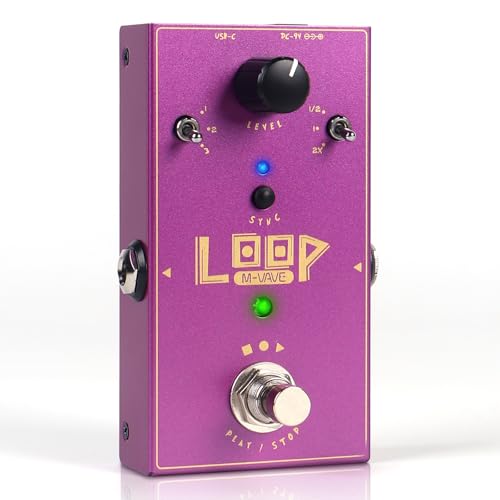
- 3 storage slots with 11 minutes total
- Single footswitch controls core loop functions
- USB import/export with editor software
Best For: Players who want a simple looper with basic storage and USB transfer
Feature-Rich Home Studio Looper
FLAMMA FF20 Drum Machine Looper

- 300 minutes across 100 memory slots
- 220 drum grooves plus a color screen
- USB file transfer and headphone out
Best For: Home-studio musicians who want a high-capacity looper with drums
Compact First Looper – BOSS RC-1 Loop Station Pedal
If you want loop stations for home studios that stay simple and dependable, the BOSS RC-1 is an easy place to start. It gives you straightforward record, overdub, playback, and undo/redo control in a compact stompbox, with stereo I/O and up to 12 minutes of stereo recording time.
Best For: Guitarists, bass players, and keyboardists who want a user-friendly looper for everyday home recording and practice.
Pros:
- Very easy to use, with clear loop indication for Rec/Overdub/Play.
- Up to 12 minutes of stereo recording time for layering ideas and phrases.
- Stereo inputs and outputs support flexible home studio setups.
- Memory retains recorded phrases even after power-off.
Cons:
- No advanced multi-track or built-in drum features.
- Storage is focused on one straightforward looping workflow.
- Optional AC adaptor is sold separately.
The RC-1 is best viewed as a clean, no-fuss looper that gets the core job done well. For a home studio player who values simplicity over deep editing, it offers a reliable path into looping.
Feature-Rich Dual Track – Sheeran Looper + Dual Track Looper Pedal
For loop stations for home studios that do more than basic looping, the Sheeran Looper + brings a full-color display, dual-track operation, and USB audio interface features into one pedal. It supports single and dual-track modes, lets you save loops to internal storage, and is built for easy recording, sharing, and DAW integration.
Best For: Home studio musicians who want a modern looper with multi-mode workflow, storage, and USB recording.
Pros:
- Four looper modes, including single, multi, sync, and song.
- Save up to 128 loops with over 3 hours of total audio storage.
- Functions as a 2-in/2-out USB audio interface for recording and streaming.
- Steel chassis and dual pedals are built for rugged use.
Cons:
- More complex than a basic one-button looper.
- Larger footprint than compact entry-level pedals.
- Requires some setup if you want to use its storage and USB features fully.
This is a strong choice if your home studio needs looping plus recording flexibility. The expanded workflow makes it better suited to players who want more control and more ways to use their loops.
Looping With Rhythm Tools – FLAMMA FF20 Looper Pedal Drum Machine
If you want loop stations for home studios that also help you build rhythm, the FLAMMA FF20 combines a stereo looper with a built-in drum machine. With 300 minutes of recording time, 100 loop slots, a color screen, and USB file transfer, it is aimed at players who want a fuller practice and songwriting tool.
Best For: Home studio guitarists and bass players who want looping, drum patterns, and silent practice in one pedal.
Pros:
- 300 minutes of recording time across 100 memory slots.
- Built-in drum machine with 220 grooves across 11 styles.
- Full-color screen shows loop status, BPM, and menu settings clearly.
- Headphone out supports silent practice and monitoring at home.
Cons:
- More of a feature-heavy unit than a minimal looper.
- Digital workflow may take longer to learn than a basic pedal.
- Best use comes when you need both rhythm and looping, not just a simple loop capture.
The FF20 stands out if you want your looper to double as a practice and writing partner. Its drum features, storage, and headphone output make it especially practical for home sessions.
Budget Compact Practice – Hoerev Looper Pedal for Guitar and Bass
For loop stations for home studios on a tighter budget, the Hoerev looper keeps things simple and compact. It offers 5 minutes of recording, unlimited overdubbing, USB file upload and download, and a small footprint that fits easily on a crowded pedalboard.
Best For: Entry-level players and home practice setups that need an affordable, space-saving looper.
Pros:
- Compact design fits well on smaller pedalboards.
- Unlimited overdub support within its 5-minute recording limit.
- USB connectivity allows uploading and downloading audio files.
- Automatic storage helps preserve loops when power is disconnected.
Cons:
- Only 5 minutes of recording time.
- Less feature-rich than larger home studio loopers.
- Best suited to occasional use rather than heavy looping needs.
The Hoerev is a practical starter option if you mainly want to practice and capture short ideas at home. It trades advanced features for portability and straightforward looping.
Studio-Ready Stereo Looper – NUX Loop Core Stereo
If you want one of the more feature-rich loop stations for home studios, the NUX Loop Core Stereo gives you plenty to work with: stereo recording, up to 6 hours of record time, and 99 user memories for keeping ideas organized. It also adds built-in rhythm patterns, cab simulation for mixer or direct output, and MIDI control, so it can fit into a practice rig or a more connected recording setup.
Best For: Players who want a stereo looper with long recording time, rhythm support, and flexible studio routing.
Pros:
- Up to 6 hours of stereo recording time with 99 user memories
- Built-in drum patterns with 50 rhythm options for practicing and writing
- Cab simulation plus mono/L/R outputs for mixer or dual-amp use
- Includes a 1500mA power supply, instrument cable, and guitar tool
Cons:
- More features may be more than casual loopers need
- Uses a compact pedal format, so editing is still pedal-based
This is a strong fit if you want a looper that feels more like a small studio tool than a basic practice pedal. The stereo workflow, memory depth, and routing options make it especially useful when you want to build ideas at home and move them into a fuller setup.
Memory-Rich Dual-Footswitch Looper – MOOER Looper X2
The MOOER Looper X2 is built for loop stations for home studios where storage, control, and cleanup matter. It offers 77 save slots, about 300 minutes of stereo recording time, auto record, and a Fade Out function for smoother loop endings. With stereo I/O and support for importing and exporting audio files, it also works well as a more organized practice and sketchpad tool.
Best For: Players who want lots of storage, smooth loop transitions, and file-transfer support.
Pros:
- 77 save slots and about 300 minutes of stereo recording time
- Auto Record and Fade Out features for easier practice workflow
- Supports MP3, WAV, FLAC, and APE imports, plus WAV export
- Dual footswitches and external footswitch support for expanded control
Cons:
- No built-in rhythm tracks listed
- Powered by a 9V adapter, so it is not battery-based
If you want a looper that focuses on storage and practical workflow features, this one stands out. The combination of many save slots, stereo recording quality, and file handling makes it a good match for home players who like to build and revisit ideas regularly.
Simple Silent-Practice Looper – AKLOT Compact Loop Station
For players shopping loop stations for home studios, the AKLOT Compact Guitar Looper Pedal keeps the focus on simplicity and silent practice. It provides 40 storage slots, up to 160 minutes of recording time, 44.1kHz/16-bit audio, unlimited overdubbing, and a headphone output for private monitoring. USB import and export also make it easier to move ideas between the pedal and your computer.
Best For: Home players who want an easy-to-use looper with headphone monitoring and USB workflow.
Pros:
- 40 slots and up to 160 minutes of total recording time
- Headphone output supports quiet practice and private monitoring
- Unlimited overdubbing for building layered loop ideas
- USB import/export helps manage loop files on a computer
Cons:
- 16-bit audio is lower-resolution than some competing pedals
- No rhythm patterns or MIDI features are listed
This pedal makes sense if your priority is straightforward looping without a learning curve. The headphone output and USB support give it extra home-studio usefulness, while the simple control approach keeps it approachable for everyday practice and songwriting.
Studio Groove Looper – MOOER Groove Loop X2
If you want one of the more versatile loop stations for home studios, the MOOER Groove Loop X2 brings a stereo looper and drum machine together in a compact pedal. It offers 14 save slots, up to 10 minutes per slot, and built-in groove tools that make it easier to sketch song ideas, practice over backing rhythms, or build layered parts without extra gear.
Best For: Home-studio players who want looping plus integrated drum patterns in one pedal.
Pros:
- 14 save slots with up to 140 minutes of stereo recording time
- Built-in drum machine with 121 grooves across 11 genres
- Three recording modes: Count-in, Automatic, and Normal
- Time Stretch and Justify functions help keep loops and drums aligned
Cons:
- Requires a 9V DC adapter, which is not a battery-powered setup
- Uses editor software for track management and firmware updates
- Menu and groove selection may take some learning for first-time users
For home studios, this is a strong all-in-one option if you value rhythm support and saved loop memory over a bare-bones looper. The separate routing for looper and drum audio is especially useful when you want more control in a recording setup.
Compact Practice Looper – Stereo 3-Track Loop Pedal
Among loop stations for home studios, this compact stereo looper focuses on simple control and quick idea capture. It gives you 3 storage slots with up to 11 minutes total recording time, plus import and export support through editor software, so it works well when you want an uncomplicated pedal for practicing, arranging, or moving loops to and from a computer.
Best For: Guitarists who want a simple looper with basic storage and USB file transfer.
Pros:
- 3 independent slots with up to 11 minutes of total recording capacity
- One footswitch handles record, play, stop, overdub, undo/redo, and delete
- Supports import/export via USB with editor software
- 3-gear speed control adds a little flexibility for playback tuning
Cons:
- Power adapter is not included
- Only 3 slots and 11 minutes total, which is limited for larger projects
- No built-in drum machine or screen for visual feedback
This is a practical pick if you want a straightforward looper without extra features getting in the way. Its smaller memory and single-footswitch workflow make it better for compact home practice than for building complex layered arrangements.
Feature-Rich Home Studio Looper – FLAMMA FF20 Drum Machine Looper
If you’re comparing loop stations for home studios and want more room to build ideas, the FLAMMA FF20 stands out with 300 minutes of recording across 100 memory slots. It also adds a built-in drum machine, a color screen, and USB file transfer, making it a flexible option for practice, songwriting, and home recording sessions.
Best For: Home-studio musicians who want a high-capacity looper with drums and a screen.
Pros:
- 300 minutes of stereo recording across 100 loop memory slots
- Built-in drum machine with 220 grooves from 11 drum styles
- 2-inch full-color screen shows loop status, BPM, and settings
- USB editor software supports WAV import/export and headphone practice
Cons:
- More features may be more than you need for very simple looping
- Requires 9V DC power and is not described as battery powered
- Learning all the modes and menu options may take some time
For a home studio, this model is the most feature-heavy of the three and gives you the largest recording headroom. If you want a looper that can handle long sessions, visual feedback, and drum accompaniment, it offers a lot of utility in one pedal.
How We Picked Loop Stations for Home Studios
We focused on Loop Stations for Home Studios that balance sound quality, ease of operation, and useful creative features. The strongest options in this category should be simple enough for everyday practice, but capable enough for recording ideas, layering parts, and building full arrangements.
We also prioritized controls that make sense in a home setup: visible loop status, reliable undo/overdub functions, enough memory for multiple ideas, and flexible input/output options for guitars, bass, and studio monitoring.
Quick Comparison
For fast decision-making, think in terms of workflow rather than specs alone. Basic compact loopers are best for straightforward practice and riff building. Dual-track and stereo models are better for fuller arrangements and cleaner recording. Loopers with drum machines or rhythm patterns are especially useful if you want a self-contained songwriting tool without relying on a separate drum source.
Key Buying Factors for Loop Stations for Home Studios
Recording Time and Memory
If you mainly capture short ideas, modest loop time may be enough. If you like composing longer sections or experimenting with multiple layers, look for extended recording capacity and multiple loop slots.
Stereo Versus Mono
Stereo support matters more in home studios than many buyers expect, especially if you run ambient effects, stereo pedals, keyboards, or want broader playback through monitors.
Rhythm and Sync Features
Built-in drum grooves, tempo control, and MIDI sync can make Loop Stations for Home Studios far more useful for songwriting. These features help keep performances tight and reduce the need for extra gear.
Interface and Footswitch Layout
Clear screens, obvious LEDs, and intuitive footswitch actions save time. In a home studio, you want something that is quick to learn and easy to operate without stopping your creative flow.
Connectivity and Output Options
Check for headphone use, stereo outputs, USB support, and cab simulation if you plan to record directly or route audio into an interface. Matching the pedal to your setup matters as much as raw recording length.
Who Should Buy Which Loop Stations for Home Studios?
Beginners and casual players should lean toward simple loopers that are easy to operate and reliable for practice. Songwriters and solo performers usually benefit from models with longer memory, multiple tracks, or rhythm support. Home producers and players with more complex rigs should look for stereo operation, sync options, and flexible outputs so the looper integrates smoothly into a recording workflow.
If your main goal is fast idea capture, choose simplicity. If you want a compact writing tool, prioritize drum features and storage. If you want the most versatile setup for a studio desk or pedalboard, pick a model with stereo audio and stronger connectivity.