Choosing the right looper can completely change a live set, from solo songwriting to full-stage improvisation. The best models make layering parts fast, reliable, and musical under pressure.
In this roundup, we focus on loop stations for live performances that balance sound quality, control, and real-world usability so you can pick a pedal or tabletop unit that fits your workflow.
Best 10 Loop Stations for Live Performances Picks for 2026
Premium Compact Power

- 32-bit processing for clean live looping
- 13 hours of stereo record time
- 57 rhythms, MIDI, and USB support
Best For: performers needing a compact, feature-rich looper
Simple Hands-On Control

- Dedicated start/stop button for stage use
- Import/export, backing tracks, and loop effects
- Simple layout with stop, reverse, and half speed
Best For: players who want an intuitive, no-fuss live looper
Rhythm-Driven Performance
BOSS RC-10R Rhythm Loop Station

- 280+ preset rhythm styles with fills
- Two-track looping for song-based performances
- 16 drum kits and 99 phrase memories
Best For: solo performers needing rhythm-backed looping
Starter-Friendly Classic

- Easy-to-use compact stompbox design
- Record, overdub, undo, and redo functions
- 12 minutes of stereo recording time
Best For: beginners wanting a simple live looper
Tabletop Multitrack Powerhouse
Boss RC-505 Mk2 tabletop loop station

- Five stereo tracks for layered looping
- Dual XLR mic inputs with phantom power
- Two stereo line input pairs for flexibility
Best For: Tabletop live performers needing vocal and instrumental layering
Dual-Track Performance Looper
BOSS RC-500 dual-track loop station

- Two-track pedal format for compact live use
- 32-bit audio processing with onboard rhythms
- 99 phrase memories and USB file management
Best For: Solo musicians wanting a compact but capable performance looper
Stage-Ready Six-Track Workhorse
Boss RC-600 six-track loop station
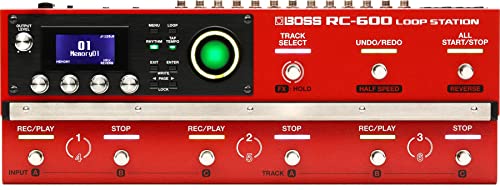
- Six stereo phrase tracks for bigger performances
- Two XLR mic inputs plus two stereo input pairs
- 99 phrase presets with rhythm guide support
Best For: Advanced performers needing maximum track count and input flexibility
Hands-on tabletop looper

- Two stereo tracks with dedicated controls
- Four input FX and four track FX
- 64 phrase memories for live set recall
Best For: Club performers and electronic musicians who want fingertip looping control
Three-track foot control

- Three stereo tracks with dedicated footswitches
- Dedicated fader per track
- Up to three hours of recording with 99 memories
Best For: Guitarists and solo acts needing a full pedal-based looper
Simple compact starter looper

- 24-segment LED loop indicator
- Up to 12 minutes of stereo recording
- Battery powered with optional AC adaptor
Best For: Beginners and compact rigs that need straightforward looping
Premium Compact Power – BOSS RC-5 Loop Station
If you want loop stations for live performances that pack serious features into a small pedalboard-friendly footprint, the BOSS RC-5 is built for that job. It combines 32-bit AD/DA conversion, 32-bit floating-point processing, and 13 hours of stereo recording time, making it a strong fit for players who need polished sound and flexible control on stage.
Best For: Performers who want a compact, high-quality looper with deep storage, rhythm tools, and modern connectivity.
Pros:
- 32-bit AD/DA and 32-bit floating-point processing for high-quality audio capture and playback
- 13 hours of stereo recording time plus 99 phrase memories
- 57 rhythms with A/B variations and 7 drum kits for live accompaniment
- MIDI I/O, USB connectivity, and external control support for expanded setups
Cons:
- Single-track looping may feel limiting for players wanting multi-part layer management
- Advanced features can be more than needed for very simple looping jobs
The RC-5 stands out when you want professional looping capability without giving up much pedalboard space. Its mix of sound quality, rhythm options, and control integration makes it one of the more versatile compact choices for live use.
Simple Hands-On Control – TC Electronic DITTO X2 Looper
For players comparing loop stations for live performances, the TC Electronic DITTO X2 keeps the experience direct and easy to follow. Its dedicated start/stop button, loop import/export, backing track support, and simple loop effects make it a practical choice when you want fast control without a steep learning curve.
Best For: Guitarists who want an intuitive looper with straightforward live control and a few useful performance effects.
Pros:
- Dedicated start/stop button for easier stage use
- Loop import/export plus backing track support
- Loop effects include stop, reverse, and half speed
- Very simple control layout centered on quick operation
Cons:
- Feature set is more focused than some rhythm-heavy loop stations
- Limited details on recording capacity compared with more advanced models
The DITTO X2 is appealing if you value speed and simplicity over deep editing. It gives live performers the core looping tools they need, along with a few performance effects that can add variety without complicating the workflow.
Rhythm-Driven Performance – BOSS RC-10R Rhythm Loop Station
If your priority is loop stations for live performances that can keep rhythm moving with you, the BOSS RC-10R is built around that idea. It combines song-based looping with over 280 preset rhythm styles, two-track operation, and 16 drum kits, making it a strong fit for players who want loops and accompaniment working together on stage.
Best For: Solo performers who want a compact looper with built-in dynamic rhythms and two-part song control.
Pros:
- Over 280 preset rhythm styles with intro, ending, and transition fills
- Two-track operation for building performances with two independent song parts
- 16 drum kits and 50 user rhythms for flexible accompaniment
- 32-bit processing, 99 phrase memories, and informative LCD display
Cons:
- More specialized than a basic looper if you only need simple phrase capture
- Best results depend on using the rhythm features as intended
The RC-10R is a performance-oriented option for players who want loops to feel connected to a rhythm section. Its song-based design and broad style library make it especially useful for solo sets and genre-spanning live work.
Starter-Friendly Classic – BOSS RC-1 Loop Station Pedal
For musicians who want a straightforward entry into loop stations for live performances, the BOSS RC-1 keeps the process simple. It supports record, playback, overdub, undo, and redo functions in a compact stompbox, with stereo I/O and 12 minutes of stereo recording time for basic live looping needs.
Best For: Beginners and players who want an easy, compact looper for guitar, bass, or keyboard.
Pros:
- User-friendly design that is easy to operate on stage
- Record, playback, overdub, undo, and redo functions
- 12 minutes of stereo recording time with stereo inputs and outputs
- Phrase memory retains the recorded loop after power off
Cons:
- Fewer advanced features than newer loop stations
- Limited recording time compared with higher-end models
The RC-1 is a practical choice if you want the core looping workflow without extra complexity. It is designed to be easy to use, making it a solid starting point for live looping or a reliable simple pedal for everyday playing.
Tabletop Multitrack Powerhouse – Boss RC-505 Mk2 tabletop loop station
If you want loop stations for live performances with hands-on control from a tabletop setup, the Boss RC-505 Mk2 is built for that kind of stage workflow. It gives you five stereo tracks, dual XLR mic inputs with phantom power, and two stereo line input pairs, so it can handle vocals, instruments, and layered backing parts in one unit.
Best For: Performers who want a tabletop looper with deep vocal and instrumental control.
Pros:
- Five stereo tracks support complex live layering.
- Two XLR mic inputs with phantom power make it useful for vocal setups.
- Two stereo line input pairs add flexible routing for instruments and gear.
- Includes a rhythm generator and looping controls for performance use.
Cons:
- Tabletop format may not suit players who want a foot-operated pedal.
- At 2 kg, it is less portable than compact loop pedals.
The RC-505 Mk2 is a strong fit for live looping setups that prioritize control and multi-input flexibility over a traditional floor-pedal layout. If your performances rely on vocals and layered parts, this model is designed to support that workflow well.
Dual-Track Performance Looper – BOSS RC-500 dual-track loop station
The BOSS RC-500 is a practical choice among loop stations for live performances when you want a compact pedal with serious control. It combines dual tracks, 32-bit AD/DA conversion, 32-bit floating-point processing, onboard rhythms, phrase memory, and multiple external control options for a flexible stage setup.
Best For: Solo performers and live musicians who want a compact two-track looper with advanced controls.
Pros:
- Dual-track design keeps live looping workflows manageable.
- 32-bit AD/DA conversion and floating-point processing support high-quality audio handling.
- 99 phrase memories make it easy to store and recall ideas.
- Onboard rhythms, reverse, and Loop FX add performance variety.
Cons:
- Only two tracks, so it is less expansive than larger multitrack units.
- Many deeper control features may be more than casual users need.
Overall, the RC-500 balances portability and performance depth very well. It suits players who want a pedal-format looper with enough memory, rhythm support, and control options to handle real live use.
Stage-Ready Six-Track Workhorse – Boss RC-600 six-track loop station
For players comparing loop stations for live performances, the Boss RC-600 stands out as a full-featured pedal with six stereo phrase tracks and broad input support. It includes two XLR microphone inputs with phantom power, two stereo instrument/line input pairs, 99 phrase memory presets, and rhythm guide functions for more elaborate stage setups.
Best For: Performers who need a powerful stereo looper with lots of tracks and input flexibility.
Pros:
- Six stereo phrase tracks provide the most room for layered performances in this group.
- Two XLR mic inputs with phantom power support vocal routing.
- Two stereo instrument/line input pairs help integrate multiple sources.
- 99 phrase memory presets and rhythm guide aid live organization.
Cons:
- Larger footprint may be less convenient than smaller loop pedals.
- More advanced layout may be unnecessary for simple looping needs.
The RC-600 is the most expansive option here, built for performers who need serious track count and connection versatility. It makes the most sense when your live looping setup has grown beyond a basic pedal and needs a true performance hub.
Hands-on tabletop looper – BOSS RC-202 Loop Station
If you want loop stations for live performances that put hands-on control front and center, the BOSS RC-202 is built for exactly that style of use. Its tabletop layout gives club performers, electronic musicians, and beatboxers direct access to two stereo tracks, onboard effects, and 64 phrase memories without relying on foot control.
Best For: Hands-on live performers who want a compact tabletop looper with performance effects and memory recall.
Pros:
- Two simultaneous stereo tracks with dedicated controls and loop status indicators
- Four input FX and four track FX available at the same time
- 64 phrase memories for storing tracks, effects settings, and more
- Supports expanded external control via optional footswitches, expression pedal, and MIDI
Cons:
- Tabletop design is less foot-focused than a pedal-style looper
- Optional external control gear is not included
Overall, the RC-202 is a strong choice when your live setup benefits from fingertip control, stacked effects, and saved performance presets. It is geared toward creative looping workflows rather than simple one-button operation.
Three-track foot control – BOSS RC-300 Loop Station
For loop stations for live performances that need a full pedal-based workflow, the BOSS RC-300 offers three stereo tracks with dedicated footswitches, faders, and real-time expression control. Its format is aimed at performers who want layered looping, hands-free operation, and onboard memory for longer sets.
Best For: Guitarists and solo performers who want a three-track pedal looper with direct foot control.
Pros:
- Three stereo tracks with dedicated footswitches and controls for each
- Dedicated fader per track for quick level balancing
- Expression pedal support for real-time effects control
- Up to three hours of internal recording and 99 onboard memories
Cons:
- Larger pedalboard-style unit than compact loopers
- Requires a more involved live setup than a simple single-track looper
In practice, the RC-300 is built for performers who need multi-track looping with plenty of control underfoot. Its mix of faders, memories, and expression support makes it well suited to longer, more structured live performances.
Simple compact starter looper – Boss RC-1 Loop Station
If you are comparing loop stations for live performances and want something straightforward, the Boss RC-1 keeps the concept simple. It offers up to 12 minutes of stereo recording, a clear loop indicator, and basic stereo input/output flexibility for instruments or effects.
Best For: Players who want an easy-to-use compact looper with a simple live-performance setup.
Pros:
- 24-segment LED loop indicator makes Rec/Overdub/Play status easy to read
- Up to 12 minutes of stereo recording time
- Stereo in/out supports stereo effects, amplifiers, and synthesizers
- Runs on a single 9-volt battery, with optional AC adaptor support
Cons:
- Single-track design is more limited than multi-track loopers
- Optional AC adaptor is sold separately
The RC-1 makes sense when you want reliable looping without a complicated control layout. The included bundle accessories add value, but the core appeal is still its clear, compact, and easy live use.
How We Picked the Best Loop Stations for Live Performances
We looked for Loop Stations for Live Performances that are easy to operate on stage, responsive enough for tight timing, and flexible enough for different performance styles. Priority went to models with clear controls, useful memory or storage options, strong connectivity, and features that help performers stay focused on the music instead of the hardware.
Quick Comparison
At a glance, simpler single-track loopers are best for players who want fast setup and minimal distraction, while multi-track and tabletop units suit performers building layered arrangements, spoken-word sets, or more complex live compositions. Rhythm-capable models are a strong fit for solo artists who need built-in backing support without carrying extra gear.
Key Buying Factors for Loop Stations for Live Performances
Control Layout and Footswitches
On stage, tactile control matters more than feature lists. Look for dedicated stop, undo/redo, and track control functions if you need quick changes between sections. Bigger footswitch spacing can also reduce mistakes during a set.
Track Count and Memory
More tracks and phrase memories give you room to build longer arrangements and switch between song ideas. If you perform setlists with multiple songs, memory storage is a major convenience. If you mainly loop one part at a time, a simpler design may be enough.
Rhythm, Sync, and Connectivity
Built-in rhythms can help keep performances locked in without an external drummer or click track. USB, MIDI, and stereo I/O are valuable if you want to integrate with a DAW, send audio to a mixer, or expand your rig later.
Sound Quality and Workflow
Transparent audio passthrough, low latency, and easy overdubbing are essential. Choose a looper that preserves tone and supports your preferred instrument or vocal setup, whether that is guitar, bass, keys, or live vocal looping.
Who Should Buy Which Loop Stations for Live Performances?
If you want the simplest path to reliable live looping, a compact pedal is usually the best starting point. Guitarists and singer-songwriters who need more arrangement control should consider multi-track loop stations, while performers who build full arrangements or manage multiple sources will benefit most from tabletop or advanced performance loopers. For Loop Stations for Live Performances, the right choice is the one that matches your timing needs, stage footprint, and how complex your songs actually are.