If you need clean audio outside the studio, the right recorder matters as much as the microphone. From interviews and lectures to ambient sound capture, today’s best handheld options make it easier to get usable takes quickly.
This roundup highlights practical voice recorders for field recording across different budgets and workflows, with a focus on portability, battery life, storage, and recording quality.
Best 10 Voice Recorders for Field Recording Picks for 2026
Portable 32-Bit Handheld
TASCAM DR-05XP for Music, Voice & Video

- 32-bit float, 24-bit, and 16-bit recording modes
- Built-in mics handle loud sources up to 125 dB SPL
- USB-C interface for direct computer recording
Best For: Users who want one compact recorder for field voice, music, and video audio
Wearable Lav Recorder

- 32-bit float recording for clip-free capture
- Includes lavalier mic, windscreen, and lapel clip
- Compact body-pack design with long battery life
Best For: People filming interviews, weddings, and on-camera content
Voice-Activated Speech Recorder
EVISTR 64GB Recorder with Playback

- Voice-activated recording helps skip silent segments
- 64GB storage and long battery life for extended use
- Playback tools include A-B repeat and variable speed
Best For: Speech-heavy recording like lectures, meetings, and interviews
Versatile 4-Track Recorder
Zoom H4 Essential for Flexible Capture

- 4-track recorder with built-in stereo mics
- Two XLR/TRS inputs for external gear
- USB-C recording and streaming plus SD backup
Best For: Users who need a flexible recorder for field audio, podcasts, and video
Field-Ready Voice Recorder
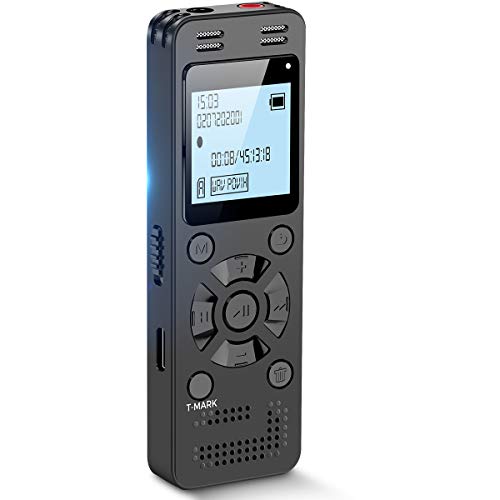
- 128GB storage with very long recording capacity
- Voice-activated recording with 6 sensitivity levels
- PCM up to 1536Kbps with MP3/WAV options
Best For: Long spoken-word recordings, lectures, and interviews
Portable Stereo Recorder Kit

- 32-bit float recording reduces gain-setting hassle
- Built-in XY stereo mics for immersive capture
- Accessory bundle includes card, tripod, wind muff, and more
Best For: Music, interviews, vlogging, and field video work
Budget Voice Recorder Pick
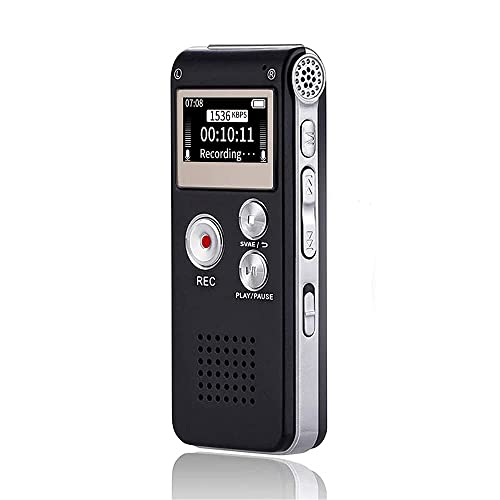
- One-button recording with easy playback controls
- Voice activation and DSP noise reduction for speech
- Also works as USB storage and a music player
Best For: Simple lectures, meetings, and quick spoken notes
Field-Ready Long-Run Recorder
Tonfarb 136GB PCM Voice Recorder

- 136GB total storage with included 128GB TF card
- Up to 68 hours of continuous recording
- PCM HD audio with noise reduction and VOR
Best For: Long sessions, interviews, lectures, and field notes
Versatile Budget Field Recorder
Tonfarb 64GB Voice Recorder with PCM

- One-click record/save with powered-off start
- 64GB storage and up to 48 hours recording
- PCM WAV audio with noise reduction and voice activation
Best For: Easy everyday use for interviews and lectures
Portable 32-Bit Handheld – TASCAM DR-05XP for Music, Voice & Video
If you want voice recorders for field recording that can also handle music, video audio, and meetings, the TASCAM DR-05XP is a flexible handheld option. Its built-in omnidirectional condenser mics support loud sources up to 125 dB SPL, and its 32-bit float recording modes help reduce concern about clipping when conditions change quickly outdoors or on location.
Best For: Creators who need a compact handheld recorder for field work, voice capture, and video audio with simple USB-C connectivity.
Pros:
- Built-in omnidirectional condenser microphones are designed for loud environments and moving sources.
- Supports 32-bit float, 24-bit, and 16-bit recording at multiple sample rates.
- USB-C 2-in/2-out interface lets you record directly to a computer.
- Up to 17.5 hours of operation with 2 AA batteries.
Cons:
- SD card and batteries are not included.
- More of a general-purpose recorder than a dedicated lavalier setup.
Overall, the DR-05XP is a practical all-around choice if you want a small recorder that can handle field voice capture without giving up useful features for music and video work. It is strongest when you want one device for multiple recording jobs rather than a highly specialized rig.
Wearable Lav Recorder – Zoom F2 for Interviews & Film
For voice recorders for field recording where size and simplicity matter, the Zoom F2 is built to disappear on a person while still capturing clean audio. Its 32-bit float recording is designed for clip-free capture at any volume level, and the included lavalier mic makes it ready for interviews, weddings, filmmaking, and other on-the-go voice work.
Best For: Filmmakers, journalists, and content creators who want a tiny body-pack recorder with a lav mic included.
Pros:
- 32-bit float recording helps avoid clipping without gain adjustments.
- Includes an omnidirectional lavalier mic, windscreen, and lapel clip.
- Very compact and wearable for discreet recording.
- Up to 15 hours of recording time on 2 AAA batteries.
Cons:
- Records in mono or stereo but is centered around lavalier use.
- Requires separate microSD storage up to 512GB.
The F2 stands out when you need hands-free field recording with minimal fuss and a mic already in the box. It is less of a jack-of-all-trades recorder and more of a focused solution for wearable, person-centered capture.
Voice-Activated Speech Recorder – EVISTR 64GB Recorder with Playback
If you need voice recorders for field recording that lean toward lectures, interviews, and spoken notes, the EVISTR L357 focuses on easy operation and long storage. Its voice-activated recording, noise reduction features, and adjustable gain make it useful when you want to capture speech clearly and skip unnecessary silence.
Best For: Students, teachers, and professionals who mainly record speech and want simple playback and file management.
Pros:
- Voice activation can reduce silent gaps and save storage space.
- 64GB capacity supports very long recording libraries.
- Playback features include A-B repeat, rewind, and variable speed.
- Type-C charging and file transfer work with Windows and Mac.
Cons:
- Best suited to speech-focused recording rather than demanding field production.
- Built-in mic design is less specialized than recorder-plus-external-mic setups.
The EVISTR is a practical pick if your priority is convenience, storage, and speech capture rather than advanced production workflows. It is especially appealing for note-taking and long meetings where quick access to recordings matters.
Versatile 4-Track Recorder – Zoom H4 Essential for Flexible Capture
When you need voice recorders for field recording that can scale from interviews to live performances, the Zoom H4 Essential offers a more capable 4-track layout. It combines built-in stereo mics with two XLR/TRS inputs, so you can capture voices and ambient sound while also connecting external mics, instruments, or a mixer as needed.
Best For: Creators who want a versatile handheld recorder for field audio, podcasting, music, and video work.
Pros:
- 4-track recording gives you more flexibility on bigger projects.
- Built-in stereo mics plus two XLR/TRS inputs support multiple setups.
- USB-C lets you record or stream to a phone, tablet, or computer.
- Spoken menu guidance makes navigation easier for more users.
Cons:
- Battery life is listed at about 10 hours of digital recording time.
- Bulkier than smaller voice-only recorders.
The H4 Essential is a strong choice if you want one recorder that can handle simple field interviews one day and more complex capture the next. It is especially useful when expandability matters more than extreme portability.
Field-Ready Voice Recorder – 128GB EVIDA 9296Hr Recorder
If you want voice recorders for field recording that lean more toward long runtime and storage than studio polish, this EVIDA model is worth a look. It records in high-quality PCM up to 1536Kbps, includes voice-activated recording with six sensitivity levels, and offers a huge 128GB capacity for long sessions in the field.
Best For: Students, interviewers, and field note-taking when long recording capacity and simple file management matter most.
Pros:
- 128GB storage with up to 9,296 hours of recording capacity
- Voice activation with 6 decibel levels helps skip silence and whispers
- PCM recording up to 1536Kbps plus MP3/WAV format options
- Four-folder file organization and password protection add convenience
Cons:
- Designed more as a practical voice recorder than a dedicated pro field recorder
- No headphone jack listed in the supplied specs
- Built-in mono mic may be limiting for more demanding stereo capture
Overall, this is a strong pick if your priority is capturing lots of spoken audio with easy transfer, playback, and organization. It is especially appealing for users who want a simple recorder that can handle long sessions without constant file management.
Portable Stereo Recorder Kit – Zoom H1essential 32-Bit Float
For voice recorders for field recording where audio quality matters more than basic note capture, the Zoom H1essential stands out with 32-bit float recording and built-in XY stereo microphones. This bundle adds useful accessories like a 64GB microSD card, tripod, wind muff, batteries, charger, lavalier mic, and headphones, making it a flexible starter kit for on-location work.
Best For: Musicians, vloggers, filmmakers, and content creators who want a compact stereo recorder with a ready-to-go accessory bundle.
Pros:
- 32-bit float recording helps avoid manual gain setup
- Built-in XY stereo condenser mics for immersive capture
- Includes a broad accessory set for field use and interviews
- USB-C power, built-in speaker, and up to 1TB storage support
Cons:
- Bundle is tailored more to content creation than minimalist carry
- Supplied notes list 5 hours digital recording time, which may feel limited compared with some battery-based field setups
- Microphone form factor and included accessories may be more than casual users need
This is the strongest option here if you need better audio capture for music, interviews, or video work and want accessories included from day one. The 32-bit float workflow and stereo mic design make it far more versatile than a basic dictaphone-style recorder.
Budget Voice Recorder Pick – Sunlan 16GB USB Recorder
If you need a simple, low-cost option among voice recorders for field recording, this Sunlan unit focuses on easy operation and clear spoken-word capture. It offers one-button recording, voice activation, DSP noise reduction, and 1536kbps recording quality, all in a compact 16GB device.
Best For: Users who want an uncomplicated recorder for lectures, meetings, and quick field notes.
Pros:
- Very simple controls with REC, STOP, PLAY, and A-B repeat
- Voice-activated recording helps save storage and battery life
- DSP noise reduction and 1536kbps recording aim for clearer speech
- Can also work as a music player and removable USB storage device
Cons:
- 16GB storage is much smaller than higher-capacity alternatives
- Built-in mono microphone is best suited to speech rather than more advanced field audio
- Battery life and recording time are shorter than the larger-capacity model in this roundup
As a straightforward voice recorder, this one makes sense when you want basic field capture without extra complexity. It is best viewed as a practical everyday recorder for spoken content rather than a specialized tool for more demanding audio work.
Field-Ready Long-Run Recorder – Tonfarb 136GB PCM Voice Recorder
If you need voice recorders for field recording that can run for long sessions and keep speech clear, the Tonfarb 136GB model is built for practical, everyday capture. Its dual noise-reduction microphones, 1536 kbps PCM recording, and voice-activated mode make it a solid choice when you want cleaner audio without constant file management.
Best For: Extended interviews, lectures, meetings, and field notes where storage and battery life matter.
Pros:
- 136GB total capacity with included 128GB TF card, rated for up to 9,775 hours of recordings.
- Up to 68 hours of continuous recording on a single charge.
- PCM HD recording with automatic noise reduction and voice activation.
- One-click record/save, USB-C transfer, and password protection for convenience.
Cons:
- Bulk of the feature set is aimed more at speech capture than specialized field sound work.
- Best performance depends on using the noise-reduction and VOR features appropriately.
- At 97 grams, it is portable but not the lightest option in this group.
Overall, this Tonfarb recorder is a strong pick if your priority is dependable long-duration recording with simple controls and plenty of storage. It suits buyers who want a versatile recorder that can handle field notes, interviews, and lecture capture without frequent battery or memory concerns.
Compact USB-C Field Recorder – Qunifyed 64GB AI Noise Reduction Recorder
For buyers comparing voice recorders for field recording, this Qunifyed model focuses on portability, quick transfers, and cleaner speech capture. The 360° microphone, DSP noise reduction, and voice activation are useful when you need a compact recorder that can handle conversations, lectures, and interviews without much setup.
Best For: Portable recording, fast file transfer, and everyday speech capture in meetings or interviews.
Pros:
- 64GB built-in storage with up to 7,600 hours at low bitrate settings.
- Up to 35 hours of continuous recording plus auto-save when battery runs low.
- Built-in USB-C connector for easy transfer to computers, smartphones, and tablets.
- 360° omnidirectional pickup with DSP noise reduction and voice activation.
Cons:
- Battery life is shorter than the longest-running options in this roundup.
- Focuses on speech and note capture rather than specialized environmental recording.
- Small size may feel less robust for users who prefer larger controls.
This is a practical choice if you want a compact recorder that is easy to carry and easy to offload files from quickly. Its included accessories and timestamped file naming also make it especially convenient for organized daily use.
Versatile Budget Field Recorder – Tonfarb 64GB Voice Recorder with PCM
If you want voice recorders for field recording with a simple workflow and solid feature coverage, this Tonfarb 64GB model is built for quick starts and flexible use. It combines one-click recording, PCM WAV capture, noise reduction, and voice activation, making it useful for interviews, lectures, and other on-the-go recording tasks.
Best For: Users who want an easy-to-use recorder for interviews, lectures, and general field capture.
Pros:
- Instant one-click record/save works even when powered off.
- 64GB storage rated for up to 4,600 hours of recordings.
- PCM 1536 kbps WAV recording with automatic noise reduction.
- Includes voice activation, password protection, A-B loop playback, and file segmentation.
Cons:
- Battery life is shorter than the 136GB Tonfarb model in this list.
- Storage capacity is lower than the highest-capacity option here.
- Feature set is broad, but the emphasis is still on speech-focused recording.
As a versatile all-rounder, this recorder covers the core features many buyers need without making the workflow complicated. It is a strong pick if you value fast operation, clear WAV recording, and practical extras like bookmark and playback tools.
How We Picked These Voice Recorders for Field Recording
We focused on recorders that balance sound quality, portability, and ease of use. For field work, the most useful models are the ones that can handle unpredictable audio, store long takes reliably, and operate without a steep learning curve. We also weighed format support, monitoring options, battery convenience, and whether a recorder works well for solo creators, interviewers, or run-and-gun production.
Quick Comparison
In this group, handheld stereo recorders are the most flexible all-around choice for ambient sound and general location recording. Lavalier-style options are better when you need hands-free speech capture for weddings or filmmaking. Basic voice recorders with voice activation and large internal storage are usually best for lectures, meetings, and long note-taking sessions. If you want the widest margin for unpredictable peaks, look for 32-bit float recording and easy USB-C connectivity.
Key Buying Factors for Voice Recorders for Field Recording
Recording Format
For field recording, 32-bit float can be a major advantage because it reduces the risk of clipped audio from sudden loud sounds. If that is not essential, a solid stereo recorder with good gain control can still deliver excellent results for interviews, ambient texture, and general use.
Microphones and Input Options
Built-in X/Y mics are useful for compact, natural stereo capture. External mic support, lavalier compatibility, and USB audio interface features expand flexibility for creators who record both on location and at a desk.
Battery, Storage, and Workflow
Long field sessions demand dependable battery life and enough internal or expandable storage. Voice activation can help stretch recording time for meetings and lecture capture, while simple file transfer through USB-C or standard USB saves time after a shoot.
Noise Handling and Monitoring
Look for models with low self-noise, decent wind handling, and headphone monitoring if you need to confirm levels in real time. For outdoor work, portability and quick setup often matter just as much as technical specs.
Who Should Buy Which Voice Recorders for Field Recording?
If you want the most versatile option, choose a handheld stereo recorder with float recording and external mic support. Filmmakers and event shooters may prefer a lavalier recorder for discreet speech capture. Students, journalists, and professionals who mainly need long-form spoken-word recording should lean toward voice-activated models with large memory. For creators building a compact kit, the best choice is usually the recorder that matches your most common scenario rather than the highest spec sheet.
Ultimately, the best Voice Recorders for Field Recording are the ones that fit your workflow, not just your budget. Match the recorder to your source, location, and post-production needs, and you will get cleaner results with less effort.