Headphone amplifiers with optical input are a smart pick when you want cleaner digital audio from a TV, console, PC, or streamer without giving up easy desktop use.
This roundup focuses on versatile models that can improve headphone performance, simplify your setup, and fit different budgets and listening needs.
Best 10 Headphone Amplifiers with Optical Input Picks for 2026
Gaming DAC/Headphone Amp Combo
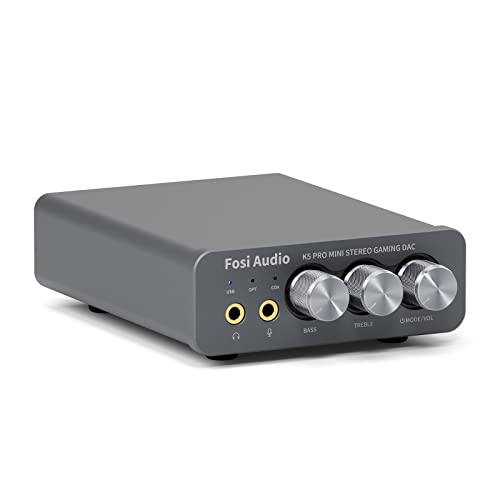
- USB-C, optical, and coaxial inputs
- Drives headphones from 16 to 300 ohms
- Bass, treble, and mic support for desktop use
Best For: Gaming desktops and compact audio setups with optical sources.
High-Power Desktop Amp

- Up to 4600mW+4600mW balanced output
- Class AB discrete amplifier design
- 4.4mm balanced and 3.5mm outputs
Best For: Driving planar and high-impedance headphones from a desktop source.
Budget Stereo Receiver

- Optical, coaxial, RCA, Bluetooth, and USB inputs
- RMS 60W x2 compact stereo output
- Remote control with bass and treble adjustment
Best For: Budget speaker setups that need optical and wireless inputs.
Compact DAC With Headphone Amp

- USB, optical, coaxial, and RCA inputs
- Built-in headphone amp with volume control
- RCA output can run alongside headphones
Best For: Compact desktop setups that need optical DAC conversion and headphone listening.
Flagship Bluetooth DAC/amp
AIYIMA DAC A7 for desktop listening
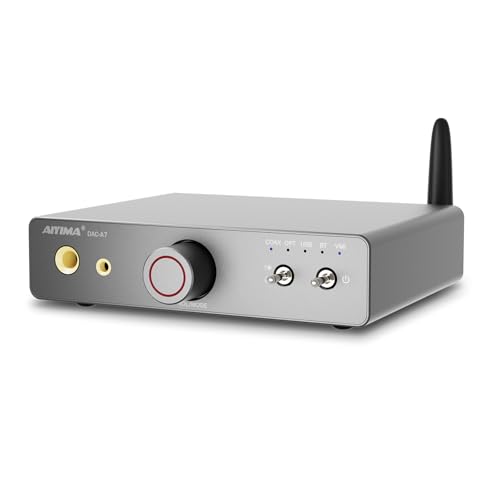
- ES9038Q2M DAC with OPA1612 and TPA6120A2 stages
- Drives 16–600Ω headphones up to 1500mW at 32Ω
- Bluetooth 5.4 with LDAC plus dual headphone outputs
Best For: Desktop users wanting a powerful DAC/amp with wireless and speaker-friendly flexibility
Compact DAC amp
AIYIMA DAC-A2 for PC and gaming
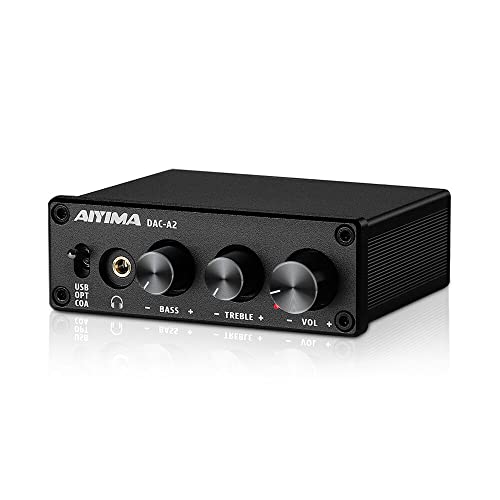
- Optical, coaxial, and USB inputs with RCA/3.5mm output
- Bass and treble knobs for quick sound shaping
- 160mW RMS at 32Ω, suitable for 16–200Ω headphones
Best For: PC and gaming users who want optical input and simple tone controls in a compact DAC/amp
All-in-One Tube Pick
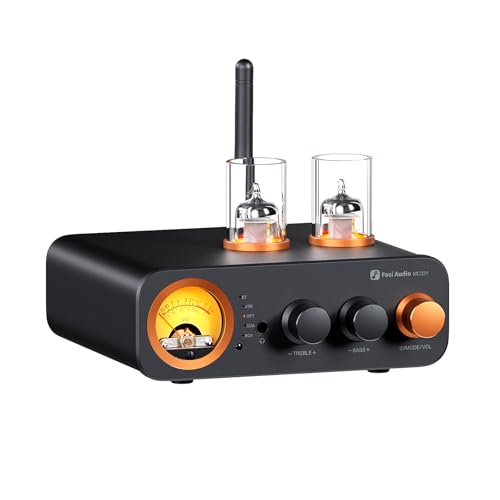
- Optical, USB, coaxial, Bluetooth, and RCA inputs
- Built-in DAC, amp, preamp, and headphone output
- Compact design with VU meter and tube styling
Best For: One-box desktop systems with headphones and bookshelf speakers
Budget DAC Choice
Nobsound Q3 Mini Headphone Amp

- Optical, coaxial, and USB inputs
- RCA output plus 3.5mm headphone output
- Treble and bass controls in a mini aluminum case
Best For: Small desktop systems that need optical input and tone controls
High-Res Desktop DAC

- Optical, coaxial, and USB-C inputs
- High-res playback up to 32-bit/768kHz and DSD512
- RCA and sub-out outputs for flexible setups
Best For: Users pairing an optical DAC with a separate amp or powered speakers
Gaming DAC/Headphone Amp Combo – Fosi Audio K5 Pro
For buyers comparing headphone amplifiers with optical input, the Fosi Audio K5 Pro is a compact DAC/amp combo aimed at gaming and desktop listening. It accepts USB-C, optical, and coaxial sources, then outputs to 3.5mm AUX or RCA, making it a practical hub for PS5, PC, Mac, and powered speakers.
Best For: Gaming setups and small desktop systems that need optical input plus headphone output.
Pros:
- Supports USB-C, optical, and coaxial digital inputs.
- Drives 16 ohm to 300 ohm headphones with up to 1000mW output at 16 ohms.
- Includes bass, treble, and master volume controls.
- Comes with microphone support and a bundled optical cable.
Cons:
- USB-C input is limited to up to 24-bit/96kHz.
- Single-ended 3.5mm headphone output only.
- Best suited to desktop use rather than portable listening.
The K5 Pro is a strong value pick if you want one box to handle optical source switching, headphone output, and RCA feed to speakers. Its clean, low-noise design and gaming-friendly features make it easy to slot into a straightforward desktop audio setup.
High-Power Desktop Amp – FiiO JadeAudio GIGAS 1
If you need headphone amplifiers with optical input in a broader desktop chain, the FiiO JadeAudio GIGAS 1 is built more like a power amp for headphones than a simple compact DAC box. It uses a Class AB discrete circuit and offers both balanced 4.4mm and 3.5mm outputs, with flexible RCA and 3.5mm inputs from DACs, players, computers, and other sources.
Best For: Power-hungry planar magnetic or high-impedance headphones in a desktop setup.
Pros:
- Very high balanced output rated up to 4600mW+4600mW at 32 ohms.
- Class AB discrete amplification for a smooth, natural sound.
- Supports both 4.4mm balanced and 3.5mm single-ended headphones.
- Dual gain modes help match sensitive IEMs and demanding headphones.
Cons:
- No optical input is listed in the supplied specs.
- Requires external source connections through RCA or 3.5mm.
- More of a dedicated amp than an all-in-one DAC/amp.
GIGAS 1 stands out when raw driving power matters most. It is a better fit for listeners who already have a source device and want a serious desktop amplifier for difficult-to-drive headphones.
Budget Stereo Receiver – BT-398A Optical Amp
The BT-398A is a compact stereo amplifier for buyers who want speaker power and digital convenience in one box. For shoppers considering headphone amplifiers with optical input, this model is more of a small speaker amp, but it does include optical and coaxial inputs plus Bluetooth, USB, and RCA for flexible home audio use.
Best For: Small rooms, budget home theater setups, and simple speaker systems with optical sources.
Pros:
- Includes optical, coaxial, RCA, Bluetooth 5.0, and USB input options.
- Rated at RMS 60W x2 for compact stereo speaker setups.
- Remote control and bass/treble knobs make it easy to adjust.
- Small footprint suits apartments, bedrooms, offices, and garages.
Cons:
- No dedicated headphone output is mentioned in the supplied notes.
- Designed primarily as a speaker amplifier, not a headphone amp.
- Best for modest rooms rather than demanding audio systems.
BT-398A is a practical pick if your priority is an affordable optical-input amplifier for speakers rather than headphones. It gives you plenty of connection choices in a compact chassis, but it is not the strongest match for dedicated headphone listening.
Compact DAC With Headphone Amp – Rockville RDAC5B
The Rockville RDAC5B is a straightforward DAC and headphone amplifier for users who want optical input, coaxial, USB, and RCA support in a compact aluminum chassis. It converts digital audio to analog for computers, TVs, receivers, gaming consoles, or powered speakers while also adding a dedicated headphone amp with volume control.
Best For: Desktop and home audio users who want a compact optical DAC with a built-in headphone amp.
Pros:
- Supports USB, optical, coaxial, and RCA inputs.
- Built-in headphone amplifier for high-impedance headphones.
- RCA output works simultaneously with headphone use.
- Compact aluminum design is easy to fit into tight setups.
Cons:
- Single-channel listing in the supplied details may confuse some buyers.
- No balanced headphone output is mentioned.
- More utility-focused than feature-rich compared with larger desktop units.
RDAC5B makes sense if you want a simple, plug-and-play box that handles optical conversion and private listening without taking much space. It is a clean fit for general desktop audio and gaming setups where compactness matters.
Flagship Bluetooth DAC/amp – AIYIMA DAC A7 for desktop listening
If you want headphone amplifiers with optical input that also double as a modern desktop DAC, the AIYIMA DAC A7 is built for flexible everyday use. It combines optical-ready compatibility with USB and Bluetooth 5.4/LDAC support, so it can fit a PC, gaming setup, or compact hi-fi desk without much fuss.
Best For: Listeners who want a compact desktop DAC/amp with optical-capable versatility, strong headphone output, and wireless LDAC support.
Pros:
- ES9038Q2M DAC, OPA1612 op-amps, and TPA6120A2 amp stage for high-end spec sheets
- Supports 16–600Ω headphones with up to 1500mW at 32Ω output
- Dual 3.5mm and 6.35mm headphone jacks with one-button output switching
- Preamp mode and driverless compatibility across Windows, macOS, Linux, iOS, and Android
Cons:
- Requires DC 5V/2A power input
- Desktop-focused design is less portable than tiny dongle DACs
The DAC A7 is best viewed as a compact all-rounder for people who want strong headphone drive, modern wireless features, and easy desktop integration. If you need a feature-rich unit that can handle both headphones and active speakers, it is a compelling pick.
Optical-to-analog converter – PROZOR 192KHz DAC for TV and home audio
Among headphone amplifiers with optical input, this PROZOR unit is really an optical and coaxial DAC that feeds analog gear through RCA or a 3.5mm jack. It is aimed at simple TV, console, and home-cinema setups where you need a straightforward digital-to-analog conversion path rather than a dedicated headphone amp.
Best For: Users who need an affordable optical DAC for TVs, consoles, or home audio gear with a direct 3.5mm headphone option.
Pros:
- Converts optical or coaxial PCM audio to RCA and 3.5mm analog outputs
- Supports up to 192kHz/24-bit and uncompressed 2-channel LPCM or PCM
- Includes aluminum alloy housing for shielding and heat dissipation
- Plug-and-play setup with included optical and USB power cables
Cons:
- Must be fed PCM/LPCM, so it is not ideal for every TV audio format
- Powered by 5V USB and no wall adapter is included
- More of a DAC adapter than a true high-power headphone amplifier
This model makes sense when the priority is reliable optical conversion and basic headphone access from a TV or console. It is a practical budget bridge for analog speakers or headphones, but not the strongest option if amplification power is your main goal.
Compact DAC amp – AIYIMA DAC-A2 for PC and gaming
If you are comparing headphone amplifiers with optical input for a PC or gaming desk, the AIYIMA DAC-A2 keeps things simple and functional. It accepts optical, coaxial, and USB digital inputs, then outputs to RCA or 3.5mm analog, making it a practical desktop upgrade for headphones and small speaker setups.
Best For: Users who want a plug-and-play desktop DAC/amp with optical input, tone controls, and easy headphone connectivity.
Pros:
- Supports optical, coaxial, and USB digital inputs
- Front-panel bass and treble controls for quick tuning
- Drives headphones from 16 to 200Ω with 160mW RMS at 32Ω
- Full-metal chassis and output protection circuit for added durability
Cons:
- Lower output power than higher-end desktop headphone amps
- Powered by 5V and best suited to compact setups
The DAC-A2 is a good fit if you want an easy desktop box with optical input, tone shaping, and enough power for mainstream headphones. It is less about raw output and more about convenient, flexible everyday listening.
All-in-One Tube Pick – Fosi Audio MC331 DAC Amp
If you want headphone amplifiers with optical input that also handle speaker duty, the Fosi Audio MC331 is built as a compact all-in-one hub. It combines DAC, amplifier, preamp, and 3.5mm headphone output in one unit, with optical, USB, coaxial, Bluetooth, and RCA inputs for flexible desktop or small-room setups.
Best For: Listeners who want one desktop component for headphones, bookshelf speakers, and multiple digital sources.
Pros:
- Includes optical input along with USB, coaxial, Bluetooth, and RCA.
- Combines DAC, amp, preamp, and headphone output in a single box.
- Compact design with a VU meter and tube styling for a retro look.
- Remote control makes source switching and tone adjustment easier.
Cons:
- Headphone output is 3.5mm only.
- Designed as an integrated amp, so it may be more than needed for headphone-only use.
The MC331 is a strong choice if you want optical-input convenience without giving up speaker amplification. Its flexibility and compact footprint make it especially practical for a neat desktop system.
Budget DAC Choice – Nobsound Q3 Mini Headphone Amp
For shoppers comparing headphone amplifiers with optical input, the Nobsound Q3 Mini keeps things simple and practical. It works as a DAC with optical, coaxial, and USB inputs, plus RCA and 3.5mm headphone outputs, making it a compact fit for a basic home stereo or desktop audio setup.
Best For: Users who want an affordable, small-format DAC and headphone amp with tone controls.
Pros:
- Supports optical, coaxial, and USB inputs.
- Includes both RCA output and 3.5mm headphone output.
- Treble and bass controls add easy sound shaping.
- Mini aluminum case is well suited to desktop use.
Cons:
- USB input is limited to up to 24-bit/96 kHz.
- Best suited to compact systems rather than high-power setups.
The Q3 Mini is a straightforward option if you mainly need optical connectivity and basic headphone amplification in a small chassis. Its tone controls and plug-and-play USB support make it especially user-friendly.
High-Res Desktop DAC – Fosi Audio Q6 Optical DAC
If your setup needs headphone amplifiers with optical input as part of a modern digital chain, the Fosi Audio Q6 is a compact desktop DAC made to feed an external amp or powered speakers. It accepts optical, coaxial, and USB-C sources, then sends a clean signal through RCA or sub-out connections, so it fits neatly into home stereo and headphone systems.
Best For: Users who want a high-resolution desktop DAC to pair with a separate headphone amp or stereo amplifier.
Pros:
- Includes optical, coaxial, and USB-C inputs.
- High-res support up to 32-bit/768kHz PCM and DSD512.
- RCA and sub-out outputs make system building flexible.
- Compact aluminum build keeps the desktop tidy.
Cons:
- Cannot drive headphones directly.
- Requires a separate amplifier or powered speakers.
The Q6 is best viewed as a source component rather than a standalone amp. If you already have a headphone amplifier or want to add one, its optical input and high-resolution conversion make it a capable upgrade path.
How We Picked These Headphone Amplifiers with Optical Input
We looked for models that balance sound quality, practical input options, and real-world usability. Priority went to devices with optical support, solid headphone output power, and features that make them useful for gaming, music, or home office listening. We also favored units with dependable conversion, straightforward controls, and enough flexibility to work in compact desktop systems.
Quick Comparison: What Matters Most
Not every DAC-amp needs the same feature set. Some buyers need a simple optical-to-headphone solution for a TV or console, while others want a desktop hub with USB, coaxial, Bluetooth, tone controls, or speaker output. If you mainly care about headphones, focus on output power and gain options. If you are building a small stereo setup, look at pass-through or line-out support as well.
Key Buying Factors for Headphone Amplifiers with Optical Input
Input Compatibility
Make sure the optical port supports the source you plan to use, whether that is a TV, game console, PC, or streamer. Some models also add USB-C, coaxial, RCA, or Bluetooth for extra flexibility.
Headphone Power and Impedance Support
More power helps drive demanding headphones, but the right amount depends on your gear. Sensitive in-ear monitors do better with low-noise designs, while high-impedance or planar headphones benefit from stronger amplification.
DAC Quality and Resolution Support
A better DAC can improve clarity, detail, and channel separation. Higher sample-rate support is useful, but good implementation matters more than a spec sheet alone.
Controls and Usability
Volume knobs, gain switches, bass and treble controls, and balanced outputs can make a big difference in daily use. Simple front-panel access is especially helpful on a desk or entertainment center.
Use Case and Output Type
Choose a compact DAC-amp if you only need headphones. Pick a hybrid or integrated model if you want speaker support, microphone input, or a more complete desktop audio hub.
Who Should Buy Which Headphone Amplifiers with Optical Input?
Gamers and TV listeners should prioritize easy optical hookup, low-latency wired playback, and enough power for immersive headphones. PC users who want a cleaner desktop setup may prefer a compact DAC-amp with USB and optical inputs. Audiophiles with harder-to-drive headphones should look for higher output power, balanced connections, and better DAC stages. If you want one device for both headphones and speakers, a more feature-rich integrated option is usually the better fit.