The right preamp can give a quiet microphone more usable gain, reduce noise, and add helpful control before your signal reaches an audio interface. That matters especially with passive ribbon and low-output dynamic microphones.
We selected 10 microphone preamps for home studios across several budgets and workflows, including inline activators, tube designs, single-channel studio preamps, and channel-strip processors.
Best 10 Microphone Preamps for Home Studios Picks for 2026
Channel-Strip Control

- Preamp with four independent processors
- XLR and 1/4-inch inputs
- Rack-mountable 1U design
Best For: Vocal recording, podcasting, and hardware-based signal shaping
Affordable Tube Color
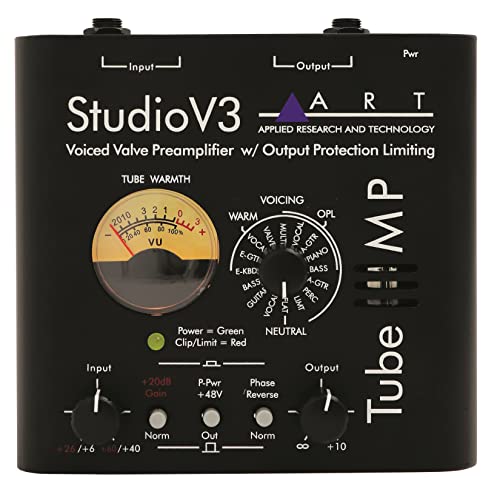
- Single-channel tube preamplifier
- Variable valve voicing
- Compact metal enclosure
Best For: Adding tube character to vocals and instruments in compact setups
Flexible Transformer Preamplification
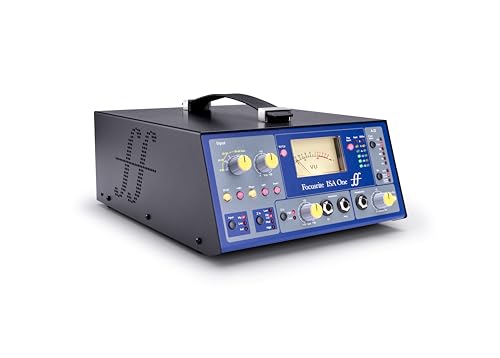
- Transformer-based single-channel preamp
- Four switchable input impedances
- Independent DI and headphone output
Best For: Engineers and performers needing flexible mic and instrument routing
Clean Gain for Low-Output Mics
Cloudlifter CL-1 Mic Activator

- Adds up to +25 dB of gain
- Powered by phantom power
- Safe for compatible passive ribbon mics
Best For: Boosting quiet passive microphones before a standard preamp
Compact Gain Booster

- Low-noise Class-A JFET design
- Shielded, compact inline enclosure
- Lightweight 2.72-ounce build
Best For: Small home-studio microphone setups
Transparent Inline Gain

- Up to +28 dB clean gain
- Supports dynamic and passive ribbon mics
- Slim all-metal XLR design
Best For: Podcasters and home studios using low-output microphones
Versatile Tube-Style Value

- Professional-quality hybrid design
- Compact all-aluminum chassis
- Cost-effective single-channel format
Best For: Budget-minded home recording setups
Most Versatile

- 0–72 dB adjustable gain
- Mic and instrument inputs
- USB-C, 48V, HPF, and phase controls
Best For: Flexible home studio and streaming setups
Classic Feature Set
Pre73 Jr MKII Microphone Preamp

- Single-channel preamp/DI
- 48V phantom power
- Highpass, polarity, and Air controls
Best For: One-channel recording and instrument DI use
Simple Inline Boost

- Adds 25 dB of gain
- For dynamic and ribbon microphones
- Requires external 48V phantom power
Best For: Quiet dynamic or ribbon mic setups
Channel-Strip Control – dbx 286s
The dbx 286s is a versatile choice among microphone preamps for home studios when you want preamp gain plus hands-on vocal processing. Its compressor, de-esser, enhancer, and expander/gate provide useful control before the signal reaches your interface or recorder.
Best For: Home-studio vocalists, podcasters, and musicians who want an all-in-one, rack-mountable channel strip.
Pros:
- Combines microphone preamp, compression, de-essing, enhancement, and gating in one unit.
- Accepts XLR microphone and 1/4-inch line inputs for microphones, instruments, or prerecorded tracks.
- Includes an insert/loop-out connection for adding external processors.
- Front-panel LEDs provide at-a-glance level and processor-status monitoring.
Cons:
- Its single channel may be limiting for stereo recording setups.
- The extensive processing controls may be more than users seeking only clean preamp gain need.
Choose the 286s when shaping vocals during tracking is as important as amplification. It is especially practical for creators who prefer dedicated hardware controls over software processing.
Affordable Tube Color – ART Tube MP Studio V3
The ART Tube MP Studio V3 is a compact single-channel option among microphone preamps for home studios. Its tube design and variable valve voicing make it suitable when you want to add preamp character to vocals or instruments without choosing a larger rack unit.
Best For: Home recordists who need a small, affordable tube microphone or instrument preamplifier.
Pros:
- Uses a tube amplifier design with variable valve voicing.
- Works with vocals, electric and acoustic guitars, keyboards, bass, and drums.
- Compact metal enclosure measures approximately 5 by 5.5 by 2 inches.
- Includes a 2-year warranty.
Cons:
- It provides only one channel.
- The supplied notes identify it as a tube preamplifier but do not specify onboard compression or other channel-strip processing.
The Tube MP Studio V3 is a straightforward fit for a small home setup where size and tube voicing matter. Consider it when you want a dedicated front end for one microphone or instrument at a time.
Flexible Transformer Preamplification – Focusrite ISA One
The Focusrite ISA One is a premium single-channel choice among microphone preamps for home studios, pairing a transformer-based preamp with switchable impedance and an independent DI channel. Its insert, headphone output, and metering also support more involved recording workflows.
Best For: Engineers and performers who want flexible microphone matching, direct-instrument recording, and detailed monitoring from a standalone preamp.
Pros:
- Uses a Lundahl LL1538 input transformer and offers four selectable input impedances.
- Includes an independent DI channel with amp routing and a rear XLR output.
- Provides a dedicated insert point, headphone output, and external stereo cue-mix inputs.
- Backlit VU and six-LED peak meters support level monitoring.
Cons:
- It is a single-channel unit.
- The stereo 192kHz A-D converter is an optional upgrade rather than a standard feature.
- Its 12.8-pound chassis is less convenient for users seeking a lightweight desktop preamp.
The ISA One makes sense when input flexibility and routing options justify a more substantial standalone unit. It can serve both microphone and instrument recording duties while leaving room for a future converter upgrade.
Clean Gain for Low-Output Mics – Cloudlifter CL-1 Mic Activator
The Cloudlifter CL-1 is a mic activator rather than a complete standalone preamp, but it can be a valuable companion for microphone preamps for home studios. It uses phantom power to provide up to 25 dB of gain for quiet passive microphones while keeping phantom power from reaching the microphone itself.
Best For: Podcasters, streamers, and recordists using passive ribbon or other low-output microphones with a phantom-powered input.
Pros:
- Provides up to +25 dB of microphone gain using standard +48V phantom power.
- Designed to preserve a microphone’s natural sound while improving signal strength.
- Compatible with passive ribbon microphones and tube-, battery-, or power-supply-driven microphones.
- Compact USA-made unit supports studio, podcast, broadcast, and live-sound use.
Cons:
- It requires a separate preamp or microphone input with phantom power.
- It has one channel and uses XLR connectivity only.
- It is intended for passive or compatible microphones, not as a universal replacement for a preamp.
The CL-1 is a focused upgrade for systems that struggle with quiet microphone output. Pair it with an existing phantom-powered input when you need more clean gain, particularly with passive ribbon microphones.
Compact Gain Booster – Triton Audio FetHead
The Triton Audio FetHead is a compact option for home studios that need additional gain from a compatible microphone setup. Its low-noise Class-A JFET design, shielded enclosure, and inline form make it practical when you want to add preamp support without using a larger desktop unit.
Best For: Home-studio users seeking a small, low-noise inline preamp solution.
Pros:
- Low-noise Class-A JFET amplifier design
- Shielded enclosure helps support clean operation
- Compact, lightweight 2.72-ounce package
- Double single-ended amplifier topology with four matched JFETs
Cons:
- Its inline format may offer less flexibility than a full desktop preamp
- The supplied notes specify 24-volt operation, so system compatibility should be checked
The FetHead is a focused choice among microphone preamps for home studios when size, low noise, and simple inline integration matter more than extensive controls or connectivity.
Transparent Inline Gain – sE Electronics DM1 Dynamite
The sE Electronics DM1 Dynamite adds up to +28 dB of clean, transparent gain for dynamic and passive ribbon microphones. For home studios, podcasting, and live sound, its ultra-slim XLR design can help strengthen low-output microphone signals while keeping the setup compact.
Best For: Dynamic or passive ribbon microphone users who need clean inline gain.
Pros:
- Provides up to +28 dB of gain
- Designed for dynamic and passive ribbon microphones
- All-metal housing with gold-plated XLR connectors
- Ultra-slim inline form factor for compact XLR setups
Cons:
- Single-channel design
- Its supplied 16 kHz frequency-response specification may be limiting for some recording applications
The DM1 Dynamite is a strong fit among microphone preamps for home studios when you want a dedicated, portable gain stage for a dynamic or passive ribbon mic rather than a full-featured rack or desktop preamp.
Versatile Tube-Style Value – ART Tube MP Project Series
The ART Tube MP Project Series is a compact, cost-effective microphone preamp for home studios that want a dedicated desktop unit. Its hybrid design and all-aluminum stackable chassis make it a practical choice for microphone and computer-based recording setups.
Best For: Budget-conscious home studios wanting a compact hybrid microphone preamp.
Pros:
- Professional-quality hybrid design
- Compact and reliable chassis
- All-aluminum stackable construction
- Compatible with microphones and personal computers
Cons:
- Single-channel design
- The supplied notes do not list extensive onboard features or controls
- At 2.7 pounds, it is less lightweight than the inline options here
The Tube MP is a sensible pick among microphone preamps for home studios when affordability, a standalone form factor, and hybrid construction are priorities.
Most Versatile – RO-04 Adjustable Mic Preamp
For home studios needing flexible microphone preamps, the RO-04 combines up to 72 dB of adjustable gain with an ultra-low stated EIN of -120 dBV. Its separate mic and instrument inputs, dual output levels, and USB-C power support make it adaptable to recording, podcasting, and streaming setups.
Best For: Home studios recording low-output dynamic microphones, instruments, podcasts, or mobile livestreams.
Pros:
- Wide 0–72 dB gain range for quiet and demanding sources.
- Mic and high-impedance instrument inputs use separate circuits.
- Includes 48V phantom power, HPF, phase control, and dual output levels.
- USB-C and power-bank support improve portability.
Cons:
- Its 2.42-pound weight and compact-but-substantial enclosure may be more than a simple inline booster requires.
- The many controls and connection options may be unnecessary for basic single-microphone setups.
The RO-04 is the most feature-rich option here for users who want one preamp to cover microphones, instruments, desktop recording, and mobile streaming.
Classic Feature Set – Pre73 Jr MKII Microphone Preamp
The Pre73 Jr MKII is a single-channel choice among microphone preamps for home studios, with a straightforward feature set for microphones, electric guitar, and high-impedance instruments. It includes 48V phantom power along with polarity reverse, a highpass filter, and an Air boost.
Best For: Home recordists who want a one-channel preamp/DI with practical tone-shaping and routing features.
Pros:
- Combines microphone preamp and DI functionality in one channel.
- Provides +48V phantom power for compatible condenser microphones.
- Includes polarity reverse, highpass filter, and Air boost controls.
- Lists compatibility with Pro Tools, Ableton Live, and Reaper workflows.
Cons:
- Only one channel is provided.
- The supplied notes do not specify gain range, noise rating, or dimensions.
The Pre73 Jr MKII suits buyers who prioritize a focused one-channel recording path and useful processing controls over extensive connectivity or published specifications.
Simple Inline Boost – Coda 25dB Microphone Booster
The Coda MB-1 is a focused option for home studios that need extra gain from a quiet dynamic or ribbon microphone. It adds 25 dB of stated clean gain through 48V phantom power supplied by an audio interface or external power supply, while remaining compact and suitable for podcasting, broadcast, and live sound.
Best For: Dynamic and ribbon microphones used for vocals, podcasting, streaming, or broadcast recording.
Pros:
- Adds 25 dB of gain to quiet dynamic and ribbon microphones.
- Designed to preserve the microphone’s natural sound.
- Aluminum construction and a single-channel design suit simple signal chains.
- Useful for reducing line noise on long cable runs and improving gain before feedback.
Cons:
- Requires external 48V phantom power and does not supply it.
- Does not work with condenser microphones.
- Offers a fixed 25 dB boost rather than adjustable gain.
The Coda is best viewed as a dedicated inline booster rather than a full-featured preamp, making it a practical match for compatible microphones and uncomplicated recording chains.
How We Picked These Microphone Preamps for Home Studios
We focused on practical recording needs rather than maximum specifications alone. The selection covers inline boosters for passive microphones, standalone preamps with more gain and tone-shaping options, and channel strips that combine preamplification with dynamics or voice-processing tools. We also considered noise performance, phantom-power behavior, input flexibility, connectivity, controls, build quality, and whether each design fits a typical home-studio setup.
Because microphone output levels vary widely, no single model is ideal for every source. A passive ribbon may need substantial clean gain, while a condenser microphone may need only a basic preamp with reliable phantom power. The best choice depends on the microphone, interface, recording style, and available budget.
Quick Comparison
- Inline gain boosters: Cloudlifter CL-1, Triton Audio FetHead, sE Electronics DM1 Dynamite, and Coda Mic Preamp are compact solutions for low-output dynamic and passive ribbon microphones.
- Tube preamps: ART Tube MP Studio V3 and ART Tube MP Project Series offer tube-based coloration and useful front-panel controls at accessible prices.
- Flexible standalone preamps: Focusrite ISA One, Pre73 Jr MKII, and RO-04 provide more extensive gain control and studio-oriented features.
- Channel-strip processing: The dbx 286s combines microphone gain with compression, de-essing, enhancement, and gating for vocals, speech, and broadcast-style work.
Key Buying Factors
Gain and Noise
Check how much clean gain your microphone requires. Inline boosters can add substantial gain before an interface, but they generally need phantom power from the interface or another source. Look for a low-noise design, particularly when recording quiet sources or using a passive ribbon.
Phantom Power and Microphone Compatibility
Condenser microphones require 48V phantom power, while passive ribbon microphones need extra care. Confirm the preamp’s phantom-power behavior and follow the ribbon manufacturer’s guidance. Some inline boosters pass phantom power through to the microphone, while others are intended primarily for dynamic or passive ribbon designs.
Color, Controls, and Connectivity
Tube circuits and transformer-style designs can add warmth or saturation, whereas transparent preamps aim to preserve the microphone’s original character. Decide whether you need only gain or also want EQ-style filtering, phase reversal, a DI input, compression, de-essing, or a gate. Balanced XLR connections are important for longer cable runs and lower interference.
Fit with Your Interface
A standalone preamp usually connects to a line input or an interface input with its preamp bypassed. Sending a preamp output into another active preamp can add unnecessary noise or coloration. Check the interface manual before connecting, and confirm that the preamp offers a suitable output level.
Who Should Buy Which Microphone Preamps for Home Studios?
Choose an inline booster if you already like your interface and simply need more clean gain for a dynamic or passive ribbon microphone. These are compact, affordable, and easy to add to an existing setup.
Choose a tube or colored preamp if you want adjustable character as well as gain for vocals, instruments, or creative tracking. These models can be useful when a completely neutral interface preamp sounds too plain.
Choose a full standalone preamp if you want more headroom, detailed control, DI capability, or a long-term upgrade for serious recording. A channel strip makes the most sense for vocalists, podcasters, and streamers who want compression or voice processing while recording.