The best multitrack recorder can turn ideas, rehearsals, interviews, and live performances into polished recordings without requiring a computer at every step.
These 10 options range from pocket-sized songwriting tools to full mixer-recorders, so the right choice depends on your input needs, track count, portability, and preferred workflow.
Best 10 Multitrack Recorders Picks for 2026
Best Portable 32-Bit Float Pick

- Four-track recording with bounce and undo
- 32-bit float capture helps prevent clipping
- Battery or USB-C powered with built-in rhythms
Best For: Portable songwriting, demos, and quick instrument or vocal recording
Best Practice-and-Performance Recorder
Roland BR-80 Portable Digital Recorder
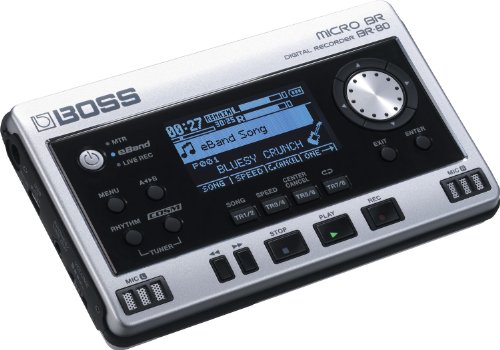
- MTR, eBand, and Live Recorder modes
- 64 V-Tracks with eight-track playback
- Built-in microphone, effects, and backing patterns
Best For: Practice, play-along sessions, live capture, and portable recording
Best Mixer-Style Studio Hub
Tascam Model 12 Multitrack Studio

- 12-channel mixer and digital recording setup
- 12-in/10-out USB audio interface
- Built-in compression, EQ, MIDI, and dual headphones
Best For: Home studios and small ensembles needing hands-on mixer control
Best Touchscreen Multitrack Workflow
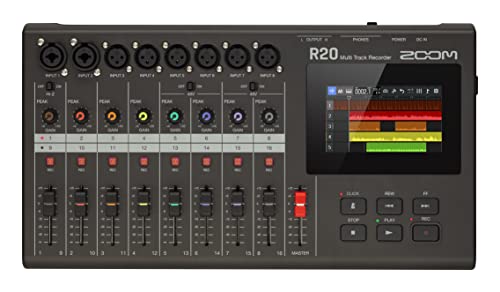
- Up to 16 tracks with eight simultaneous inputs
- Touchscreen recording, editing, and mixing
- Built-in rhythms, synth sounds, EQ, and compression
Best For: Computer-free projects, demos, and small-group recording
Compact Songwriting Recorder

- Six-track recording with two-track simultaneous input
- Built-in stereo condenser microphones
- Battery-powered CD-quality WAV recording
Best For: Portable songwriting demos and simple multitrack sessions
Touchscreen Music Workstation

- Eight-track recording with touchscreen editing
- Drum loops, FM synths, effects, and MIDI
- USB-C interface and DAW control surface
Best For: Portable arranging, recording, and computer-based music production
Effects-Focused Multitrack Recorder

- Eight-track playback with 64 V-Tracks
- Built-in guitar, vocal, and pitch effects
- Drum machine and stereo microphone included
Best For: Portable guitar-and-vocal recording with onboard effects
Best Portable Mixer-Recorder

- 12-track recording at 24-bit/96kHz
- Four headphone outputs with three monitor mixes
- Records to SD card and computer simultaneously
Best For: Portable band, podcast, and live-session recording
Best Handy Recorder

- Six tracks plus stereo mix in 32-bit float
- Microphones handle up to 140dB SPL
- Up to 15 hours on four AA batteries
Best For: Film, field, and mobile music recording
Best Large-Format Mixer-Recorder

- 14-track recording at 24-bit/96kHz
- 12 channels with +70dB-gain preamps
- Physical 60mm faders for hands-on control
Best For: Bands and live setups needing extensive mixer control
Best Portable 32-Bit Float Pick – Zoom R4 Multi-Track Recorder
The Zoom R4 is one of the most flexible multitrack recorders for capturing ideas without a computer. It records up to four tracks, supports layering and bouncing, and uses 32-bit float recording to help avoid clipping without manual gain adjustments.
Best For: Musicians who want a compact, battery-powered recorder for vocals, instruments, demos, and mobile songwriting.
Pros:
- Records, layers, and bounces tracks with undo capability.
- Two XLR/TRS combo inputs accommodate microphones, instruments, and keyboards.
- Includes more than 80 rhythm patterns and works as a USB audio interface.
- Runs on four AA batteries or USB-C power.
Cons:
- Limited to four recording tracks before bouncing.
- Its 3.5mm headphone output may be less convenient for some studio setups.
The R4 stands out when portability and quick, clip-resistant recording matter more than a large track count. Its built-in rhythms, effects, microphones, and USB connectivity make it a versatile sketchpad and compact recording setup.
Best Practice-and-Performance Recorder – Roland BR-80 Portable Digital Recorder
The Roland BR-80 combines multitrack recording with dedicated eBand and Live Recorder modes. For musicians comparing multitrack recorders, its built-in stereo condenser microphone, backing patterns, effects, and phrase-training features make it especially useful for practice and spontaneous capture.
Best For: Guitarists and songwriters who want recording, play-along practice, and live stereo capture in one compact unit.
Pros:
- Offers MTR, eBand, and Live Recorder modes.
- Provides 64 V-Tracks and eight simultaneous playback tracks.
- Includes a stereo condenser microphone for instant recording.
- Features COSM amps, effects, backing patterns, and USB audio-interface functionality.
Cons:
- SD/SDHC storage is limited to cards up to 32 GB.
- Requires a AAA battery rather than offering the more common AA battery setup.
The BR-80 is a strong choice for players who want more than a basic recorder. Its eBand training tools and built-in sound library add practical value for rehearsing, while the multitrack mode supports layered projects.
Best Mixer-Style Studio Hub – Tascam Model 12 Multitrack Studio
The Tascam Model 12 is a mixer-centered option among multitrack recorders, combining a 12-channel digital recording setup with a USB audio interface and DAW controller. Its hands-on controls, onboard MIDI, click output, and channel processing suit musicians building a more permanent recording workspace.
Best For: Home studios, small ensembles, and creators who prefer physical mixer controls alongside computer-based recording.
Pros:
- Provides 12 channels with 12-in/10-out USB audio connectivity.
- Includes a one-knob compressor and three-band EQ on all input modules.
- Offers onboard MIDI functionality and click output with tap tempo.
- Provides dual headphone outputs with individual volume and source selection.
Cons:
- Its corded design and 13.3-pound weight make it less portable than handheld recorders.
- The supplied notes do not specify standalone battery operation or built-in microphones.
The Model 12 is better suited to a desk or studio than a backpack. Choose it when channel count, mixer workflow, headphone flexibility, and computer integration are priorities.
Best Touchscreen Multitrack Workflow – Zoom R20 Tabletop Recorder
The Zoom R20 is designed for computer-free music production, with a DAW-style touchscreen for recording, editing, and mixing directly on the unit. It supports up to 16 tracks, records eight simultaneously, and provides six XLR inputs for larger songwriting and demo sessions.
Best For: Musicians and small groups that want hands-on editing, multiple microphone inputs, and a complete tabletop workflow.
Pros:
- Records up to 16 tracks and up to eight simultaneously.
- Touch controls support drag, drop, swipe, and pinch editing.
- Includes EQ, compression, 150 rhythm patterns, and an 18-sound onboard synth.
- Works without a computer and also functions as a USB interface.
Cons:
- Maximum sample rate is 44.1 kHz.
- At 4.3 pounds and 15 inches wide, it is less pocket-friendly than compact handheld recorders.
The R20 is a practical middle ground between a portable recorder and a computer DAW. Its touchscreen and generous track capacity make it particularly appealing for complete projects, rehearsals, and demos created away from a computer.
Compact Songwriting Recorder – Tascam DP-006
The Tascam DP-006 is a straightforward choice among multitrack recorders for capturing song ideas without a computer. It records up to six tracks at CD quality, includes built-in stereo microphones, and runs on four AA batteries for portable use.
Best For: Songwriters and musicians who want a simple, battery-powered recorder with built-in microphones.
Pros:
- Records up to six tracks, with two tracks available for simultaneous recording.
- Built-in omnidirectional condenser microphones make quick demos convenient.
- Records 16-bit/44.1kHz WAV audio and includes a dedicated stereo master track.
- Compact battery-powered design with 4GB of storage.
Cons:
- Its 2.5mm headphone jack may require an adapter for some headphones.
- Recording is limited to two tracks simultaneously.
- The included warranty is relatively limited.
The DP-006 favors portability and uncomplicated songwriting over advanced production features. Choose it when built-in microphones, basic multitrack recording, and battery operation matter most.
Touchscreen Music Workstation – Zoom R12
The Zoom R12 is a versatile option among multitrack recorders, combining eight-track recording with a color touchscreen and DAW-style editing. Its two XLR/TRS inputs, onboard effects, drum loops, synths, and USB-C interface make it suited to more complete portable music production.
Best For: Musicians who want touchscreen editing, built-in accompaniment tools, and computer integration in a portable recorder.
Pros:
- Records up to eight tracks and supports cutting, copying, looping, and mixing without a computer.
- Includes 150 drum loops, 18 FM synth instruments, and MIDI support.
- Both inputs provide 48V phantom power, while input 1 offers Hi-Z guitar and bass connectivity.
- Works as a stereo USB-C audio interface and DAW control surface.
Cons:
- Battery life is rated at up to five hours on four AA batteries.
- It has two XLR/TRS combo inputs, limiting simultaneous source connections.
- The feature-rich touchscreen workflow may be more than needed for basic demos.
The R12 is the strongest fit here for musicians who want an all-in-one portable workspace rather than a basic idea recorder. Its editing, accompaniment, and USB-C features expand its usefulness for arranging and home production.
Effects-Focused Multitrack Recorder – Boss BR-600
The Boss BR-600 remains a practical choice among multitrack recorders for musicians who want extensive track organization and onboard performance tools. It offers eight-track playback, 64 V-Tracks, a guitar and vocal effects processor, a drum machine, and a built-in stereo microphone.
Best For: Guitarists and vocalists who want built-in effects, rhythm programming, and portable recording.
Pros:
- Provides eight simultaneous playback tracks and 64 V-Tracks for project organization.
- Includes guitar effects, vocal effects, and a pitch corrector.
- Built-in drum machine features velocity-sensitive pads.
- Built-in stereo microphone and battery operation support recording away from a studio.
Cons:
- Uses CompactFlash media and includes only a 128MB card.
- Listed digital recording time is approximately two hours and 16 minutes.
- Requires four 9V batteries for battery-powered operation.
The BR-600 is appealing when onboard effects and rhythm creation are more important than modern storage or connectivity. Its V-Track system gives users flexibility for experimenting with multiple takes, while the built-in microphone supports quick portable recordings.
Best Portable Mixer-Recorder – Zoom LiveTrak L-8
The Zoom LiveTrak L-8 is a practical choice among multitrack recorders for musicians, podcasters, and small live setups. It records up to 12 tracks simultaneously at 24-bit/96kHz to an SD card, while also working as a USB audio interface for computer recording.
Best For: Bands, podcasters, and performers who need portable multitrack recording with multiple headphone mixes.
Pros:
- Records 12 tracks simultaneously at up to 24-bit/96kHz.
- Six preamps offer up to +54dB of gain and a -121dBu noise floor.
- Four headphone outputs and three independent monitor mixes support group sessions.
- Can record to an SD card and computer at the same time.
Cons:
- Its eight-channel format may be limiting for larger ensembles.
- Battery operation and portable design may not replace a larger studio mixer.
The L-8 stands out when portability and flexible monitoring matter as much as track count. Its combination of onboard mixing features, SD recording, and USB connectivity makes it well suited to mobile sessions and live podcast production.
Best Handy Recorder – Zoom H6 Studio
The Zoom H6 Studio is a focused option among multitrack recorders for filmmakers, musicians, and location crews. It records up to six individual tracks plus a stereo mix, with 32-bit float recording designed to preserve dynamic range and reduce concerns about clipping.
Best For: Filmmakers, field recordists, and musicians who need a battery-powered handheld recorder for unpredictable sound levels.
Pros:
- Records six individual tracks plus a stereo mix in 32-bit float.
- Included 19.4mm microphones handle sound levels up to 140dB SPL.
- Look-ahead limiters help prevent overload distortion.
- Supports recording rates from 44.1 to 192kHz and up to 15 hours on four AA batteries.
Cons:
- Six-track capacity is smaller than the track count of dedicated mixer-recorders.
- Its handheld format provides less physical mixing control than a larger mixer.
The H6 Studio is a strong fit when mobility, battery life, and recording protection are priorities. Its 32-bit float workflow and look-ahead limiters make it especially useful for location work where levels can change quickly.
Best Large-Format Mixer-Recorder – Zoom LiveTrak L12next
The Zoom LiveTrak L12next combines a digital mixer with a multitrack recorder for musicians who need hands-on control. It can record up to 14 tracks at 24-bit/96kHz and mix them in 32-bit float, while physical faders provide direct access to key mix settings.
Best For: Larger bands, rehearsal spaces, and live productions that need 12 channels, detailed routing, and physical mixing controls.
Pros:
- Records up to 14 tracks at 24-bit/96kHz.
- Studio-grade preamps provide up to +70dB of gain with -128dBu EIN.
- Hi-Z, PAD, and +48V phantom power support varied input sources.
- 60mm faders and channel encoders enable hands-on control without menu diving.
Cons:
- It is corded electric rather than battery powered.
- The larger feature set may be more than a simple recording setup requires.
- Wireless control requires the separately mentioned BTA-1 adapter.
The L12next is the most suitable choice here for users who want a higher channel count and mixer-style control. Its 14-track recording, strong preamps, and flexible monitoring features make it a capable centerpiece for live and rehearsal recording.
How We Picked the Best Multitrack Recorders
We selected these Multitrack Recorders to cover the most useful recording scenarios, including songwriting, mobile production, live mixing, podcasting, band rehearsal, and computer-based studio work. We compared track capacity, physical inputs, recording formats, monitoring and mixing controls, portability, onboard features, and overall workflow.
The lineup includes compact battery-powered recorders, touchscreen and tabletop units, traditional digital studios, and mixer-style systems. This variety matters because a recorder that suits a solo musician may be a poor fit for a full band or multi-person podcast.
Quick Comparison
| Best For | Look For |
|---|---|
| Solo songwriting | Built-in microphones, portability, simple overdubbing |
| Full-band recording | Several XLR inputs, sufficient simultaneous tracks, reliable monitoring |
| Live sessions | Dedicated mixer controls, multichannel recording, dependable storage |
| Podcasting | Multiple mic inputs, headphone monitoring, mix-minus or routing features |
| Computer-based production | USB audio interface support and DAW control |
Key Buying Factors for Multitrack Recorders
Inputs and Simultaneous Recording
Count the microphones, instruments, and stereo sources you expect to connect at once. Combo XLR/TRS inputs provide flexibility, while dedicated mic preamps are important for vocals, acoustic instruments, and microphones that need phantom power. Track count and input count are not always the same, so check how many sources the unit can record simultaneously.
Workflow and Portability
Compact recorders are convenient for rehearsals, field work, and quick demos. Larger mixer-style models offer more hands-on control but take up more space. Built-in microphones, battery operation, onboard effects, drum patterns, and physical faders can make a major difference when recording away from a desktop.
Editing, Storage, and Computer Connectivity
Consider whether you want to finish songs entirely on the recorder or transfer tracks to a DAW. USB connectivity is useful for file transfer and can also allow some models to function as audio interfaces. Confirm supported storage media, file formats, backup options, and whether the editing controls match your comfort level.
Monitoring and Live Use
For live recording or podcasting, prioritize headphone outputs, low-latency monitoring, flexible routing, and a clear way to adjust levels quickly. Mixer-recorders are often better for ongoing live control, while compact multitrackers may be better for portable overdubbing.
Who Should Buy Which Multitrack Recorders?
Choose a compact pocket recorder if you mainly capture song ideas, demos, or simple overdubs and value battery operation. Choose a tabletop multitracker if you want more inputs, visual control, and a structured songwriting workflow.
Choose a mixer-recorder for bands, live sessions, rehearsals, or podcasts that need hands-on level control and several connected sources. Choose a traditional digital studio if you prefer dedicated recording controls and self-contained production without relying heavily on a computer.
Before buying, match the recorder to your largest likely session rather than your smallest one. A little extra input capacity, storage flexibility, and monitoring capability can extend the useful life of your setup.