The right channel strip can make spoken-word audio sound fuller, clearer, and more controlled before it ever reaches your recording software. For podcasters, that means less editing and a more consistent voice from episode to episode.
We compared 10 channel strips and related recording solutions across preamp quality, compression, EQ, noise control, connectivity, and ease of use. The list includes studio hardware, USB interfaces, and flexible choices for home and professional podcast setups.
Best 10 Channel Strips for Podcasting Picks for 2026
Digital Tube Control

- Tube preamp with warmth and definition
- Compressor, expander, de-esser, and gate
- USB plus multiple digital outputs
Best For: Flexible studio podcast chains with onboard vocal processing
Portable UA Workflow
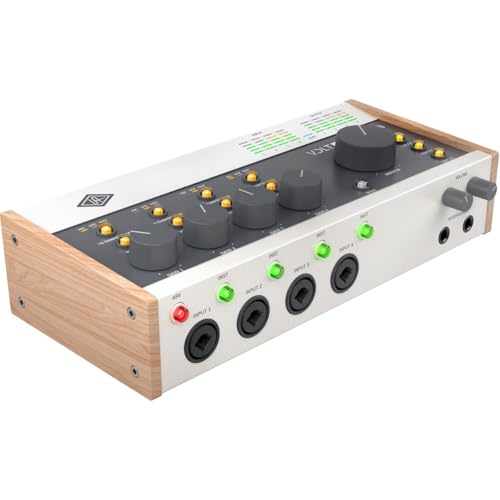
- Four-channel USB audio interface
- Vintage preamp mode and 1176-style compression
- Supports computer and selected mobile recording
Best For: Multimic podcasting with an interface-based workflow
Compact 500-Series Voice Chain
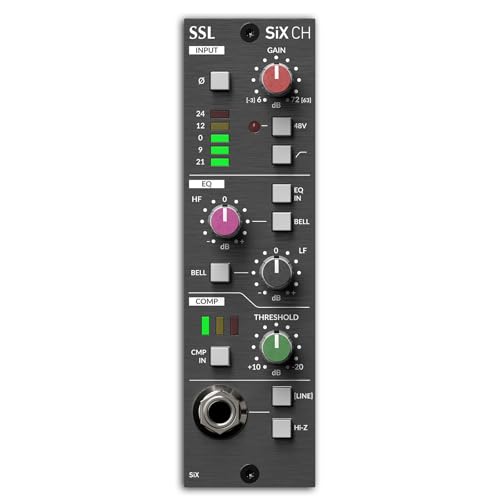
- 500 Series mic pre, EQ, and compressor
- +48V phantom power and 75 Hz HPF
- Front-panel Hi-Z input for instruments
Best For: Rack-based podcast studios needing a focused vocal channel
Warm Tube Voice Processing
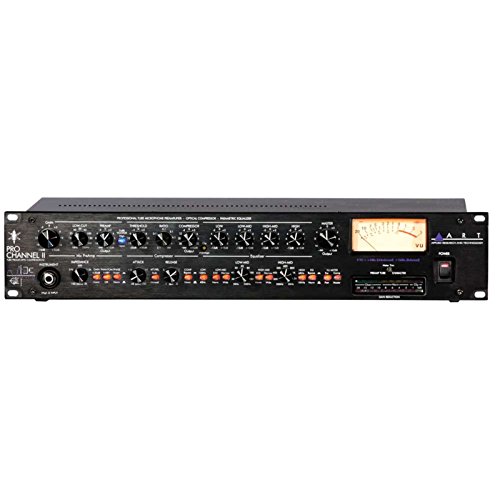
- Independent tube preamp, compressor, and EQ
- Switchable optical/tube compression
- Selectable VU metering across the signal path
Best For: Warm, hands-on processing for single-voice recording
Tube-Controlled Vocal Shaping

- Class A vacuum-tube preamp
- Variable VCA compressor
- Three-band parametric EQ
Best For: Permanent podcast and home-studio rigs needing analog-style processing
USB Podcast Control Hub
Behringer Ultravoice UV1 Channel Strip and USB Audio Interface

- One-channel mic/line preamp
- Built-in USB audio interface
- Compressor, gate, and de-esser
Best For: Solo podcasters recording directly to a computer
Analog Noise Control
Rodweil RO05 Channel Strip Processor

- Analog noise gate and expander
- Targets ambient and preamp-floor noise
- Compact hardware design
Best For: Existing setups needing dedicated analog noise reduction after the preamp
Versatile Interface Pick

- Four transformer-equipped Class-A mic preamps
- 6 x 4 I/O, MIDI, and USB connectivity
- DSP monitoring with channel-strip processing
Best For: Multi-microphone podcasts needing an audio interface
Premium Processing Pick

- Discrete mono preamp with Lundahl transformers
- Transient Designer and tube saturation
- Dedicated compressor for one recording channel
Best For: Single-voice podcasts seeking dedicated hardware processing
Tube Tone Pick

- Mono tube channel strip for vocal shaping
- Selectable opto/FET compression voicings
- Four-band semi-parametric EQ
Best For: Podcasters wanting tube character and hands-on EQ
Digital Tube Control – ART VoiceChannel
For podcasters seeking channel strips for podcasting with broad routing options, the ART VoiceChannel combines a tube preamp with compressor, expander, de-esser, and gate controls. Its USB and digital outputs also suit computer-based recording setups.
Best For: Podcasters who want tube coloration, dynamics control, and flexible digital connectivity from one channel.
Pros:
- Tube preamp design provides warmth and definition.
- Includes compressor, expander, de-esser, and gate.
- Supports USB, ADAT, AES/EBU, S/PDIF, and TOSLink connections.
- Supports sample rates up to 192 kHz.
Cons:
- It is a single-channel unit.
- At 5.5 kg, it is less portable than compact interfaces.
- Its extensive connectivity may be more than a basic podcast setup requires.
The VoiceChannel is a feature-rich choice when you want hands-on vocal processing plus multiple ways to connect to a computer or digital system. It is especially compelling for a more permanent studio setup.
Portable UA Workflow – Universal Audio Volt 476p
The Universal Audio Volt 476p approaches channel strips for podcasting from an interface perspective, combining four channels with Vintage preamp mode and an analog compressor based on the 1176. It also supports Mac, Windows, and selected iOS recording setups.
Best For: Podcasters who need a multichannel USB interface with built-in analog-style preamp and compression options.
Pros:
- Offers four channels for microphones or other sources.
- Vintage mode is designed to deliver classic UA 610-style preamp character.
- Includes an analog compressor based on the 1176.
- Works with Windows, macOS, and supported iPad or iPhone setups.
Cons:
- It is an interface rather than a traditional standalone channel strip.
- Mobile iOS recording requires additional power and, in some cases, an Apple adapter.
- The listed frequency response is 96 kHz, despite support for up to 192 kHz sample rates.
The Volt 476p is a practical fit for podcast teams or creators who need several inputs and a streamlined USB workflow. Its onboard tonal and compression features add recording flexibility without requiring separate rack equipment.
Compact 500-Series Voice Chain – SSL SiX Channel Strip
The SSL SiX Channel Strip brings a focused mic-pre, EQ, and single-knob compressor layout to the 500 Series format. For channel strips for podcasting, its high-pass filter, phantom power, and front-panel Hi-Z input provide useful recording controls in a compact module.
Best For: 500 Series owners who want a straightforward vocal channel with essential tone-shaping and compression.
Pros:
- Combines mic preamp, EQ, and compressor functions.
- Provides +48V phantom power for compatible microphones.
- Includes a switchable 75 Hz high-pass filter.
- Front-panel TRS input includes a 1 MΩ Hi-Z switch.
Cons:
- Requires a compatible 500 Series rack or chassis.
- It has one channel.
- The compressor uses a single-knob control, offering less adjustment than more elaborate designs.
This is a sensible option for a rack-based podcast studio that values SSL-style simplicity and a compact signal path. The 500 Series format is its main limitation if you do not already own the required chassis.
Warm Tube Voice Processing – ART Pro Channel II
ART Pro Channel II Microphone Preamp/Compressor/EQ Professional Tube Based Selectable VU Metering
Check Price On AmazonThe ART Pro Channel II is a traditional one-channel strip for channel strips for podcasting, with separate tube-based mic preamp, compressor, and EQ sections. Its selectable VU metering helps you monitor different points in the signal path while recording speech.
Best For: Voice-focused studios that want tube character and separate preamp, compression, and EQ stages.
Pros:
- Combines tube mic preamp, compressor, and EQ modules.
- Offers switchable optical/tube compression.
- Selectable VU metering monitors preamp, compressor, or main output.
- Provides XLR and 1/4-inch connectivity.
Cons:
- It is a single-channel unit.
- At 13.4 pounds, it is not especially lightweight.
- Its tube-based design may be more processing than a simple interface-only setup needs.
The Pro Channel II suits podcasters who want a deliberately shaped, warm vocal sound before the signal reaches the recorder. Its independent modules and metering make it useful when hands-on control matters more than minimal setup.
Tube-Controlled Vocal Shaping – PreSonus Studio Channel
The PreSonus Studio Channel is a rack-style option for podcasters who want hands-on control over the voice signal before it reaches their recording setup. Its Class A vacuum-tube preamp, variable VCA compressor, and three-band parametric EQ give this channel strip for podcasting a broad set of tools for gain, dynamics, and tonal adjustment.
Best For: Podcasters and home-studio users who want an analog-style preamp, compression, and EQ in one rack-mount unit.
Pros:
- Class A vacuum-tube preamplifier
- Variable VCA compressor for dynamics control
- Three-band parametric EQ for voice shaping
Cons:
- Rack-style dimensions may be more equipment than a simple desktop setup needs
- At 6.31 pounds, it is less portable than compact channel-strip options
The Studio Channel is a versatile analog front end when you want preamp character plus dedicated compression and EQ. Its larger rack format makes it a better fit for a more permanent podcast or studio rig.
USB Podcast Control Hub – Behringer Ultravoice UV1 Channel Strip and USB Audio Interface
The Behringer Ultravoice UV1 combines a one-channel mic/line preamp with a USB audio interface, making it a practical choice for streamlined podcast recording. Its compressor, gate, and switchable de-esser provide useful voice-processing tools, while USB connectivity supports computer-based setups.
Best For: Solo podcasters who want one channel of preamp and vocal processing with direct USB connectivity to a computer.
Pros:
- Combines a mic/line preamp and USB audio interface
- Includes compressor, gate, and de-esser functions
- Supports up to 192 kHz sample rate
Cons:
- Provides only one channel
- Computer compatibility is listed for Windows 10 and Mac OS X 10.4 or higher
For a single-microphone podcast workflow, the UV1 reduces the need for separate interface and processing hardware. Its one-channel design is focused rather than expandable, so it is most suitable for solo recording or a single processed input.
Analog Noise Control – Rodweil RO05 Channel Strip Processor
The Rodweil RO05 focuses on reducing ambient and preamp-floor noise in home recordings through an analog expander/gate circuit. For podcasters comparing channel strips for podcasting, its main appeal is low-latency noise control rather than a complete mic preamp: it must be placed after a mic preamp or in a line-level signal chain.
Best For: Home-studio podcasters who already have a mic preamp and need dedicated analog background-noise reduction.
Pros:
- Analog noise gate and expander/gate processing
- Designed to reduce ambient noise and preamp-floor noise
- Compact 3.35 x 2.95 x 1.97-inch form factor
Cons:
- Cannot be connected directly to a microphone
- Requires a separate mic preamp or line-level signal chain
- Higher power consumption is noted in the product information
The RO05 is a specialized noise-control processor, not an all-in-one recording front end. Its placement requirement is important, but it can suit a podcast setup that already has adequate preamplification and needs analog gate or expander processing.
Versatile Interface Pick – Steinberg UR-RT4
Steinberg UR-RT4 4-Channel Audio Interface with Rupert Neve Designs Transformers
Check Price On AmazonFor creators looking at channel strips for podcasting, the Steinberg UR-RT4 combines four microphone preamps with a USB audio interface in one practical unit. Its Class-A D-PRE preamps include switchable Rupert Neve Designs transformers, while onboard DSP provides latency-free monitoring with channel-strip processing.
Best For: Multi-microphone podcast setups that also need computer connectivity, MIDI, and flexible monitoring.
Pros:
- Four Class-A D-PRE mic preamps with switchable Rupert Neve Designs transformers
- 6 x 4 analog I/O, MIDI I/O, and USB connectivity
- DSP-powered monitoring includes REV-X reverb, Channel Strip, and Guitar Amp Classics
- Supports up to 24-bit/192 kHz and works with Windows, macOS, and iOS
Cons:
- Its 2.4 kg interface format may be more than needed for a single-mic setup
- iOS use requires a compatible Apple camera adapter
The UR-RT4 is the most adaptable option here for podcasters who want several inputs and interface functionality rather than a single standalone channel strip. Cubase AI and Cubasis LE are included for supported workflows.
Premium Processing Pick – SPL Channel One MK3
The SPL Channel One MK3 is a premium mono channel strip for podcasters who want dedicated front-end processing for one microphone. It combines a discrete preamp with Lundahl input and output transformers, a Transient Designer, tube saturation, and compression.
Best For: Single-voice podcast recording where dedicated mono preamp, dynamics, and tonal-shaping hardware are the priority.
Pros:
- Dedicated mono channel-strip design for focused vocal processing
- Discrete preamp with Lundahl I/O transformers
- Includes Transient Designer, tube saturation, and compressor sections
Cons:
- Mono processing limits it to one channel at a time
- Its 16.78-pound weight and large dimensions make it less portable
Choose the Channel One MK3 when you want a specialized hardware channel strip rather than an all-in-one recording interface. Its feature set is aimed at shaping one source with several dedicated processing stages.
Tube Tone Pick – ART Pro Channel III
The ART Pro Channel III gives podcast producers a mono tube channel strip with several ways to tailor a microphone signal. Its switchable microphone impedance, selectable opto/FET compression voicings, and four-band semi-parametric EQ support hands-on vocal shaping.
Best For: Podcasters who want tube-based character plus selectable compression styles and detailed EQ control for one source.
Pros:
- Mono tube channel-strip design
- Switchable microphone impedance for source matching
- Selectable opto and FET compression voicings
- Four-band semi-parametric EQ for flexible tonal adjustment
Cons:
- Mono operation is less suitable for multi-microphone sessions
- Its 10.61-pound, full-size format may not suit compact setups
The Pro Channel III is a focused choice among channel strips for podcasting when hands-on tone control matters. It offers a tube-based signal path with multiple compression approaches and a flexible four-band EQ.
How We Picked the Best Channel Strips for Podcasting
We evaluated these products by looking at the features that matter most for spoken-word recording: clean gain, useful compression, practical EQ controls, noise management, metering, routing, and connection options. We also considered whether each unit suits a single-microphone podcast, a multi-host show, a mobile rig, or a more traditional studio.
A dedicated channel strip can combine a microphone preamp, compressor, EQ, gate, de-esser, or other processing in one signal path. USB interfaces may not be traditional channel strips, but they can be better choices when you need multiple inputs, headphone monitoring, and direct computer connectivity.
Quick Comparison
| Best For | What to Prioritize | Most Suitable Type |
|---|---|---|
| Solo podcasting | Simple controls, quiet preamp, headphone monitoring | Single-channel strip or USB interface |
| Two or more hosts | Multiple microphone inputs and independent monitoring | Multi-channel USB interface |
| Warm vocal tone | Tube circuitry, transformer coloration, variable drive | Tube or transformer-based strip |
| Fast, polished recordings | Compression, EQ, gating, and metering | Full-featured analog channel strip |
| Portable or hybrid setups | USB connectivity, compact design, flexible routing | USB audio interface |
Key Buying Factors for Channel Strips for Podcasting
Preamp Quality and Gain
A quiet, high-gain preamp is essential for dynamic microphones, which often need more amplification than condenser models. Look for clean gain with low self-noise and enough headroom to prevent loud speech or laughter from clipping.
Compression and EQ
Compression helps maintain a consistent vocal level, while EQ can improve intelligibility by reducing muddiness and adding presence. For podcasting, straightforward controls are often more useful than an unusually complex signal path.
Noise Gates and Expanders
Gates and expanders can reduce room noise, computer fans, and headphone bleed between words. They should be adjustable enough to avoid cutting off quiet syllables or creating unnatural starts and stops.
Connectivity and Channel Count
Check whether the unit uses XLR, line-level outputs, USB, or a combination of connections. A single-channel strip may be ideal for one host, while a multi-input interface is more practical for co-hosts, guests, and live recording.
Monitoring and Metering
Direct monitoring, headphone outputs, signal indicators, and clear VU or LED meters make recording easier and help prevent clipping. These features are especially valuable when you need to manage levels without relying entirely on software meters.
Who Should Buy Which Channel Strips for Podcasting?
Choose a dedicated analog strip if you already own an audio interface and want hands-on control over tone, dynamics, and gain before recording. Tube and transformer-based models are worth considering when you want added character rather than a strictly transparent sound.
Choose a USB interface with channel-strip-style features if you are building a complete podcast rig. This approach can provide microphone inputs, conversion, headphone monitoring, and computer connectivity in one device, often with less setup complexity.
Choose a premium mono channel strip if vocal quality and long-term studio use matter more than minimizing cost. These units generally offer more refined controls, stronger metering, and greater flexibility for careful voice shaping.
Choose a budget-friendly processor if you are upgrading from a basic interface and need compression, EQ, or gating without a large investment. Prioritize low noise and usable controls over a long feature list, then add room treatment and microphone technique to get the biggest overall improvement.