Traveling musicians need instruments that balance sound, playability, durability, and packability. The best portable synthesizers can provide inspiring tones in a hotel room, on a tour bus, or during a quick songwriting session without taking over your luggage.
This roundup covers compact pocket synths, creative samplers, portable keyboards, electronic wind instruments, and beginner-friendly options so you can find a practical setup for your music and travel routine.
Best 10 Synthesizers for Traveling Musicians Picks for 2026
Pocket Retro Pick

- Pocket-sized analog-style synthesizer
- Three octaves with optional vibrato
- Built-in speaker, headphone socket, and 3.5mm connectivity
Best For: Traveling musicians who want a distinctive retro instrument
Creative Sampling Pick

- Pocket-size sampler with built-in microphone
- Chop, sequence, resample, and play samples chromatically
- Granular controls and computer software integration
Best For: Mobile producers focused on sampling and sound design
Hands-On Learning Pick

- Cassette-sized monophonic pocket synth
- Built-in speaker, line out, batteries, and vibrato
- Conductive-object connections enable custom controls
Best For: Beginners and experimental musicians on the go
Full-Keyboard Travel Pick

- 61 full-size keys with carry handle
- 400 tones, 77 rhythms, and Dance Music Mode
- Battery or AC power with USB-MIDI connectivity
Best For: Traveling keyboardists who want full-size keys and broad features
Compact Sound Designer

- Compact 9.21-inch design
- Lightweight 0.65 kg body
- MIDI connectivity
Best For: Portable MIDI sound-design setups
Expressive Travel Performer

- Touch-sensitive playing stem
- Wah and vibrato effects
- 3.5 mm output and strap
Best For: Playful portable performances
Bowie-Inspired Pocket Synth
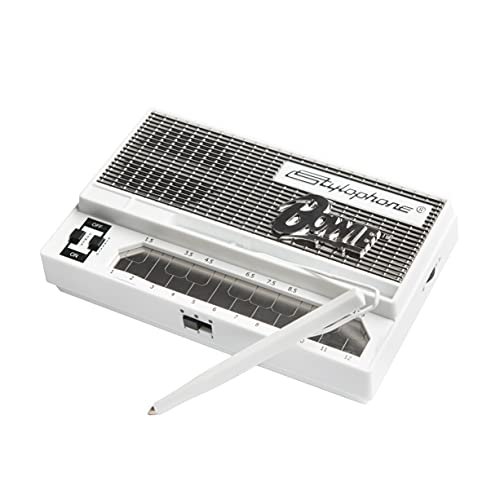
- Compact battery-powered design
- Three synth and bass modes
- Stylus-based interface
Best For: Lightweight travel sketches and casual performance
Best Wireless Wind Controller
Coolmusic S1 Electronic Saxophone
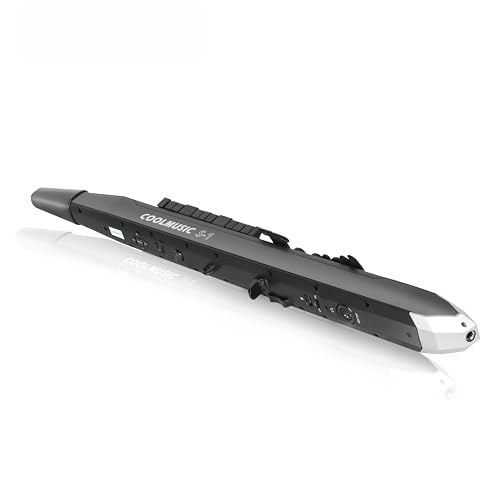
- 72 timbres with multiple fingering options
- 8–12-hour battery with USB-C power-bank charging
- Built-in speakers and headphone monitoring
Best For: Wind players seeking a versatile rechargeable travel instrument
Best Ultra-Light Theremin-Style Synth
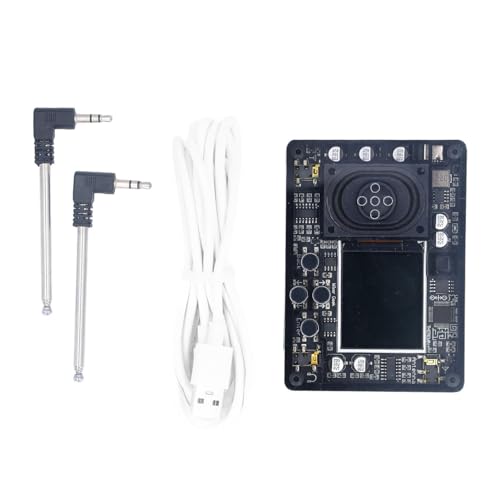
- Weighs only 7.1 ounces
- 70 tones and 20 instrument types
- USB-C charging with waveform and pitch display
Best For: Lightweight travel practice and experimental performances
Best Pocket Analog Synth

- 45 g cassette-sized design
- Three-octave touch keyboard with vibrato and delay
- Built-in speaker, headphone jack, and AAA battery power
Best For: Pocket-sized lo-fi sound creation and quick musical ideas
Pocket Retro Pick – Stylophone Original
For musicians seeking synthesizers for traveling musicians, the Stylophone delivers a distinctive analog-style experience in a coat-pocket-sized format. Its touch-sensitive metal keyboard, built-in speaker, headphone socket, and battery operation make it easy to use away from a studio.
Best For: Beginners, experienced musicians, and travelers who want a compact instrument with an iconic retro sound.
Pros:
- Compact design measures less than 12 cm wide and weighs 8.8 ounces.
- Battery-powered operation, built-in speaker, and headphone socket support portable playing.
- Offers three octaves, optional vibrato, and a 3.5mm connection for recording or external gear.
Cons:
- Requires three AA batteries.
- The stylus-and-touch-surface layout may feel less familiar than a conventional keyboard.
The Stylophone is a strong choice when portability and character matter more than extensive controls. It is especially appealing for spontaneous ideas, casual practice, and retro-flavored sounds.
Creative Sampling Pick – Roland AIRA Compact P-6
The Roland AIRA Compact P-6 is a focused option for synthesizers for traveling musicians who build sounds from samples. Its built-in microphone, onboard keyboard, sequencing features, granular controls, and USB-C connection support portable sound design without requiring external recording equipment.
Best For: Producers and performers who want hands-on sampling, looping, chopping, and sound manipulation in a compact device.
Pros:
- Compact 10.72-ounce design with a built-in microphone for quick sample capture.
- Chop, step-sampling, resampling, chromatic playback, and polyphonic playback provide flexible workflows.
- Dedicated filters, envelopes, granular parameters, and macOS/Windows software integration support detailed editing.
Cons:
- Its extensive sampling and granular features may have a steeper learning curve for beginners.
- Editing and import/export workflows use the included computer software.
The P-6 is the most production-oriented option in this selection. Choose it when creating and transforming samples on the move is more important than having a traditional full-size keyboard.
Hands-On Learning Pick – MicroKits Synth-a-Sette
The MicroKits Synth-a-Sette offers an unusually small and approachable entry point among synthesizers for traveling musicians. Its cassette-sized body includes a 13-key monophonic touchpad, battery operation, built-in speaker, line out, and creative conductive-object connections.
Best For: Beginners, students, and curious musicians who want a simple pocket synth with an educational, experimental angle.
Pros:
- Very compact 4 x 2.6 x 0.5-inch design for easy travel.
- Includes a 13-key touchpad, octave-up button, vibrato switch, speaker, and line out.
- Alligator clips let users connect conductive objects such as fruit or forks to create custom controls.
Cons:
- The monophonic touchpad is more limited than a full keyboard for chords and complex arrangements.
- Its simplified design is aimed at approachable experimentation rather than advanced synthesis.
The Synth-a-Sette stands out as a playful travel companion and learning tool. It is best suited to quick melodies, experimentation, and musicians who enjoy making the instrument part of the creative process.
Full-Keyboard Travel Pick – Casio Casiotone CT-S200
For travelers who need familiar keys and broad built-in sounds, the Casio CT-S200 is a practical alternative among synthesizers for traveling musicians. It combines 61 full-size keys with a carry handle, battery or AC power, 400 tones, 77 rhythms, USB-MIDI, and learning features.
Best For: Beginners, keyboard players, and mobile performers who want a conventional portable keyboard with varied accompaniment options.
Pros:
- 61 full-size keys and a built-in carry handle support familiar playing on the move.
- Offers 400 tones, 77 rhythms, 10 reverb types, and a Dance Music Mode.
- Battery or AC operation, 3.5mm headphone output, USB-MIDI, built-in lessons, and app connectivity add flexibility.
Cons:
- Its full-size 61-key layout is substantially less compact than pocket synths.
- It weighs 7 pounds, making it better for organized travel than ultra-light carry.
The CT-S200 is the most versatile choice for travelers who prioritize a conventional keyboard experience. Its wide sound selection and lesson features also make it suitable for practice, learning, and casual performance.
Compact Sound Designer – PHARA-O MINI
For synthesizers for traveling musicians, the Behringer PHARA-O MINI offers a compact, straightforward option for mobile sound design. Its 9.21-by-6.1-by-2.56-inch body, 0.65-kilogram weight, and MIDI connector make it practical for musicians who want a small instrument to include in a portable setup.
Best For: Traveling musicians seeking a compact synth for portable sound design and MIDI-connected setups.
Pros:
- Compact dimensions for easier transport.
- Lightweight 0.65-kilogram construction.
- Includes a MIDI connector.
- Glossy black alloy-steel body.
Cons:
- The supplied notes do not specify built-in speakers, battery operation, or other performance features.
- Its listed dimensions may still require protection in a crowded travel bag.
The PHARA-O MINI is a practical pick when portability and MIDI connectivity matter most. Confirm the control layout and power requirements before choosing it as your primary travel instrument.
Expressive Travel Performer – Otamatone Deluxe
Among synthesizers for traveling musicians, the Otamatone Deluxe stands out as a playful, highly portable instrument with an expressive touch-sensitive stem. It supports pitch sliding, face squeezing for a wah effect, vibrato, and connection to headphones, amplifiers, or speakers through its 3.5 mm stereo jack.
Best For: Musicians who want a distinctive, fun travel instrument with expressive controls and auxiliary output.
Pros:
- Touch-sensitive stem supports sliding between notes.
- Face control adds a wah effect, while shaking adds vibrato.
- Three pitch settings provide roughly four octaves per setting.
- Includes a 3.5 mm aux cable, batteries, instruction manual, and strap.
Cons:
- Its 18-inch length is less compact than pocket-sized travel synths.
- The unusual playing method may require practice for musicians accustomed to conventional keyboards.
- The supplied notes list conflicting battery counts: three AA batteries in the package description and three AAA batteries in the details.
The Otamatone Deluxe is best viewed as a portable performance novelty with genuine expressive range rather than a conventional keyboard synthesizer. Its strap and auxiliary connection make it especially appealing for casual live playing and creative travel sessions.
Bowie-Inspired Pocket Synth – Limited Edition Stylophone
The Bowie Stylophone is a strong choice for synthesizers for traveling musicians who value an especially compact, battery-powered instrument. Its stylus-based design, 7.09-by-4.16-by-1.82-inch size, and three modes for classic analog synth and bass sounds suit quick musical sketches and lightweight travel rigs.
Best For: Travelers wanting a small, battery-powered instrument for simple analog-style synth and bass sounds.
Pros:
- Compact body fits easily into many travel setups.
- Battery-powered for convenient mobile use.
- Three modes provide classic analog synth and bass sounds.
- Limited-edition white design includes an embossed Bowie logo.
Cons:
- The stylus playing method is less familiar than a traditional keyboard.
- The supplied notes do not specify battery life or included batteries.
- Its auxiliary connector may require additional equipment for broader connectivity.
The Bowie Stylophone prioritizes portability, simplicity, and distinctive design. It is a sensible companion for travel sketches or compact performances, especially for players who enjoy its stylus interface and limited-edition Bowie styling.
Best Wireless Wind Controller – Coolmusic S1 Electronic Saxophone
For traveling musicians who want an expressive wind instrument with synthesizer flexibility, the Coolmusic S1 combines saxophone-style performance with portable digital features. It offers 72 timbres, built-in speakers, headphone monitoring, and a rechargeable battery rated for 8–12 hours.
Best For: Wind players who need a versatile, rechargeable synthesizer for rehearsals, travel, and quiet practice.
Pros:
- Offers 72 instrument timbres, multiple fingerings, and one-touch tone conversion.
- Built-in speakers support standalone playing, while the output interface allows connection to external speakers.
- USB-C charging works with a power bank, with an estimated 8–12-hour battery life.
- LCD display shows timbre, volume, fingering, battery level, and octave information.
Cons:
- At 1.59 kg, it is less pocket-friendly than the smaller synths in this roundup.
- Its saxophone-style layout may require an adjustment period for musicians unfamiliar with wind controllers.
The S1 is a strong travel option when playability and sound variety matter more than minimum size. Its speakers, headphone support, and power-bank compatibility reduce the amount of additional gear needed on the road.
Best Ultra-Light Theremin-Style Synth – Mini 70-Tone Synthesizer
This compact mini synthesizer is designed for musicians who prioritize low weight and quick experimentation while traveling. At 7.1 ounces, it fits easily into a portable setup and provides 70 tones, 20 instrument types, USB-C charging, and a responsive display.
Best For: Travelers, beginners, and experimental performers who want a lightweight instrument for practice or outdoor sessions.
Pros:
- Extremely light at 7.1 ounces and compact enough for easy transport.
- Includes 70 tones and 20 instrument types, including drums, percussion, keyboards, and MIDI sounds.
- Dynamic screen displays waveform, frequency, time, volume, and piano pitch.
- USB-C fast charging and durable ABS housing support mobile use.
Cons:
- The notes do not specify battery runtime or whether a built-in speaker is included.
- Its hand-movement interface may be less familiar than a conventional keyboard.
With its very low weight and broad tone library, this mini synth is convenient for spontaneous music-making. It is particularly appealing when minimizing luggage matters, though buyers should confirm their preferred monitoring and power details before traveling.
Best Pocket Analog Synth – Stylophone Stylosette
The Stylophone Stylosette is a cassette-sized pocket synthesizer for traveling musicians who want an immediate, tactile way to create sounds. Its touch keyboard, built-in speaker, three-octave range, effects, and headphone jack make it easy to play without a larger setup.
Best For: Musicians and beginners who want a highly portable lo-fi analog instrument for ideas, casual playing, and sound experiments.
Pros:
- At approximately 10 cm wide and 45 g, it is exceptionally easy to carry.
- Provides a three-octave range with vibrato, delay, and an inbuilt speaker.
- Runs on two AAA batteries and includes a headphone jack for private playing.
- Expansion port supports conductive-object experiments and connection to another Stylosette.
Cons:
- Its mini touch keyboard is less suitable for conventional full-keyboard performance.
- The lo-fi analog sound profile may not suit musicians seeking a broad modern production palette.
The Stylosette stands out when portability and playful sound design are the main priorities. It can slip into a pocket or small accessory bag, making it a practical companion for capturing musical ideas wherever inspiration strikes.
How We Picked the Best Synthesizers for Traveling Musicians
We focused on portability first, then considered the features that determine whether an instrument is genuinely useful away from a studio. The lineup includes instruments with different playing interfaces, sound-generation approaches, and skill requirements rather than treating every compact synth as interchangeable.
Our comparison emphasizes physical size, power flexibility, built-in sounds or sampling tools, control layout, connectivity, and learning curve. We also considered whether each product is best suited to casual experimentation, songwriting, live performance, or structured practice.
Quick Comparison
| Type | Best For | Main Advantage |
|---|---|---|
| Pocket synthesizer | Immediate, casual play | Smallest travel footprint |
| Compact sampler | Beatmaking and sound design | Flexible sample-based creativity |
| Portable keyboard | Beginners and complete arrangements | More keys, tones, and rhythms |
| Mini analog synth | Hands-on sound shaping | Direct physical controls |
| Electronic wind controller | Wind players and expressive leads | Breath-based performance control |
Key Buying Factors for Synthesizers for Traveling Musicians
Size, Weight, and Protection
Measure the instrument against your actual travel bag, not just its advertised dimensions. Pocket models are easiest to carry, while 61-key keyboards offer more range but may require a dedicated case. Look for sturdy controls, a protective cover or case option, and a layout that can tolerate frequent packing and unpacking.
Power and Connectivity
Battery operation or USB power can be more convenient than relying on wall outlets. Check whether the instrument supports headphones for quiet practice, USB-MIDI for recording, and compatible audio connections for amplifiers or mixers. If you plan to perform, confirm the required cables and adapters before buying.
Playing Style and Sound Creation
Choose the interface that matches how you make music. Keys suit traditional keyboard players, touch strips encourage experimental phrasing, samplers support loops and found sounds, and wind controllers can feel more natural for saxophone or flute players. Preset-heavy instruments are faster to use, while deeper synthesis controls reward experimentation.
Battery Life and Workflow
For travel, a quick startup and reliable battery life can matter more than advanced studio features. Consider how easily you can save ideas, change sounds, control tempo, and continue a session without extra equipment.
Who Should Buy Which Synthesizers for Traveling Musicians?
Choose a pocket synthesizer if maximum portability and instant play are your priorities. A compact sampler is a better fit for beatmakers who want to manipulate recordings and build rhythmic ideas. Beginners or players who need familiar keys, accompaniment, and many ready-made sounds should consider a portable keyboard.
Musicians who enjoy turning knobs and creating tones from scratch may prefer a compact analog-style synth. Wind players should look at an electronic wind instrument with expressive breath control. Limited-edition or character-focused instruments make sense for collectors and performers who value a distinctive stage presence as much as conventional versatility.
Before ordering, confirm the power requirements, included accessories, available outputs, and whether a case is included. The best choice among these Synthesizers for Traveling Musicians is the one you will actually carry, connect, and play regularly.