Traveling musicians need MIDI gear that is compact, dependable, and easy to connect across laptops, tablets, controllers, and legacy hardware. The right interface can simplify a hotel-room writing session, live rig, or portable recording setup.
This roundup covers simple USB-to-MIDI cables, multi-port interfaces, wireless systems, USB hosts, and audio interfaces with MIDI-friendly mobile applications. Use the buying guide below to narrow the options by connectivity, portability, and workflow.
Best 10 Midi Interfaces for Traveling Musicians Picks for 2026
Best Cable-Style Pick

- 6.5-foot USB-to-5-pin MIDI cable
- Driver-free operation across major platforms
- Filtering, mapping, and routing support
Best For: Travelers connecting one MIDI device to a computer or mobile setup
Best for Complex Rigs

- 8 MIDI inputs and 12 MIDI outputs
- 10 USB-MIDI host ports plus RTP-MIDI
- Preset-based routing and OLED monitoring
Best For: Traveling performers with extensive multi-device MIDI systems
Best Portable Pad Controller

- Eight RGB-backlit performance pads
- Eight assignable Q-Link knobs
- Slim, USB-powered Mac and PC setup
Best For: Traveling producers triggering samples and controlling DAW software
Best for Mobile Audio Recording
PIYONE Q2 USB-C Audio Interface

- Two XLR/TRS combo inputs
- 24-bit/192kHz recording resolution
- USB-C bus power and zero-latency monitoring
Best For: Traveling musicians recording vocals or instruments on a computer
Best Flexible Router

- Compact 3-in/3-out MIDI interface
- Standalone routing, filtering, merge, and split
- Works with major desktop and mobile operating systems
Best For: Traveling musicians managing multiple MIDI instruments
Best for Mobile Recording
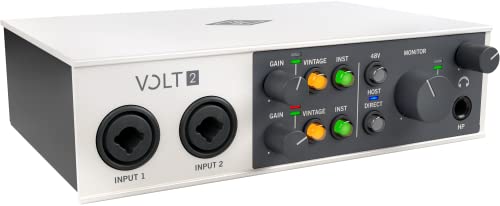
- Two-channel USB audio interface with MIDI
- Vintage preamp mode and up to 24-bit/192 kHz
- Supports Mac, Windows, iPad, and iPhone
Best For: Traveling musicians recording MIDI and live audio
Best Simple Cable Interface
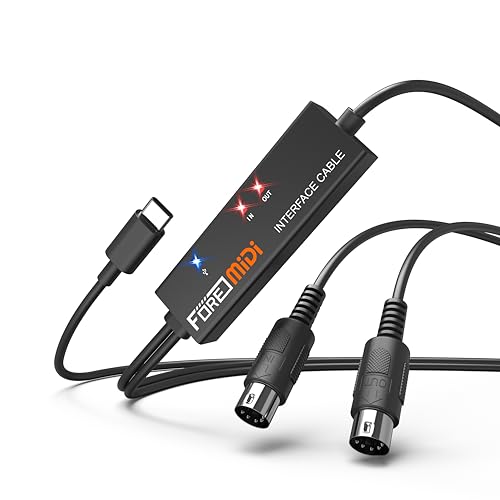
- One-in/one-out 5-pin MIDI connection
- Plug-and-play USB-C operation
- Compatible with iOS, Android, Windows, and macOS
Best For: Travelers connecting one MIDI instrument to a USB-C device
Most Versatile
CME H2MIDI Pro Compact USB Host MIDI Interface

- Standalone USB host connects USB and 5-pin DIN MIDI gear
- Supports up to eight USB MIDI device ports with a hub
- Weighs only 2.08 ounces and works across major operating systems
Best For: Traveling musicians building compact hybrid MIDI rigs
Best Wireless Option
M-VAVE Wireless MIDI Transmission System

- Wireless MIDI helps reduce cable clutter on the move
- Ultra-low-latency connection supports playing and recording
- Rechargeable unit provides up to 48 hours of use
Best For: Mobile performers seeking a lightweight wireless MIDI link
Best for Pedalboards
CME H4MIDI WC Advanced USB Host MIDI Interface

- Supports USB hosting plus four-in/four-out virtual MIDI over USB-C
- Runs from 5V USB or 9V DC power
- Adds advanced routing and four preset configurations
Best For: Guitarists and producers using mobile pedalboard MIDI rigs
Best Cable-Style Pick – CME U2MIDI Pro
For musicians who need midi interfaces for traveling musicians without adding another box to a gear bag, the CME U2MIDI Pro is a streamlined USB-to-MIDI cable. Its 6.5-foot design, broad operating-system compatibility, and plug-and-play setup make it practical for connecting a laptop, tablet, or computer to standard 5-pin MIDI gear.
Best For: Travelers connecting one MIDI instrument to a computer or mobile device.
Pros:
- Compact cable format helps reduce travel clutter.
- Works without drivers on macOS, iOS, Windows, Android, Linux, and ChromeOS.
- Supports all 16 MIDI channels, including clock, sysex, MTC, and MPE.
- Includes filtering, mapping, routing, and merging tools through UxMIDI Tools.
Cons:
- Provides one MIDI input and one MIDI output rather than multiple ports.
- Uses USB-A, so some mobile setups may require an adapter.
The U2MIDI Pro is the most bag-friendly option here for straightforward MIDI connectivity. It is especially appealing when low cable clutter and broad device compatibility matter more than extensive routing hardware.
Best for Complex Rigs – iConnectivity mioXL
The iConnectivity mioXL is a powerful choice among midi interfaces for traveling musicians who need to manage several instruments and computers. With extensive DIN and USB connectivity, network MIDI, and saved routing presets, it can serve as a central hub for a sophisticated mobile or touring setup.
Best For: Musicians traveling with multiple MIDI instruments, USB devices, and computers.
Pros:
- Offers 8 MIDI inputs and 12 MIDI outputs via 5-pin DIN.
- Adds 10 USB-MIDI host ports for class-compliant peripherals.
- Supports RTP-MIDI networking and up to 22 virtual network ports.
- OLED display and Auracle software support monitoring and saved routing presets.
Cons:
- Its extensive connectivity is less compact than a simple travel cable.
- Requires a 12V power supply, adding equipment to a portable rig.
- iOS connection through USB uses a Camera Connection Kit.
The mioXL is better suited to organized, multi-device travel rigs than minimalist carry-on setups. Its routing flexibility can simplify complex systems, but the hardware and power requirements make it a substantial choice.
Best Portable Pad Controller – Akai Professional LPD8
The Akai Professional LPD8 is a compact controller rather than a traditional MIDI interface, but it earns a place among midi interfaces for traveling musicians who want hands-on beat-making control. Its slim, USB-powered design fits easily in a laptop bag while providing eight responsive pads and eight assignable knobs.
Best For: Mobile producers and performers triggering samples, loops, instruments, and DAW parameters.
Pros:
- Lightweight, slim design is easy to pack.
- Eight RGB-backlit MPC-style pads support expressive triggering.
- Eight assignable knobs provide tactile software control.
- USB-powered, plug-and-play operation requires no AC adapter or driver on Mac and PC.
Cons:
- It is a pad controller, not a DIN-MIDI interface for connecting external MIDI instruments.
- USB connectivity is oriented toward Mac and PC rather than a broad range of mobile platforms.
The LPD8 makes sense when travel music-making centers on a computer and virtual instruments. It adds immediate performance control without the size of a full keyboard, though external DIN gear will need another MIDI solution.
Best for Mobile Audio Recording – PIYONE Q2 USB-C Audio Interface
The PIYONE Q2 is an audio interface rather than a dedicated MIDI interface, making it useful for traveling musicians who also need to record vocals, guitars, or other sources. Its USB-C, bus-powered design and two combo inputs keep a portable recording rig relatively simple.
Best For: Mobile musicians recording microphones or instruments alongside computer-based music production.
Pros:
- Two XLR/TRS combo inputs accommodate microphones and line or instrument sources.
- 24-bit/192kHz recording supports high-resolution capture.
- USB-C handles data and bus power without an external supply.
- Direct monitoring provides zero-latency tracking, with a 3.5mm headphone output.
Cons:
- It does not provide dedicated MIDI input or output.
- The supplied details specify Windows compatibility, so other platform support should be confirmed before purchase.
- At 0.74 kg, it is less lightweight than a cable-style MIDI solution.
The Q2 is a practical companion for recording-focused travel setups, especially when microphone or guitar inputs matter. Choose it for portable audio capture, not as a replacement for a dedicated MIDI connection.
Best Flexible Router – CME U6MIDI Pro 3-in-3-out
For traveling musicians who need more than basic cable conversion, the CME U6MIDI Pro is a versatile choice among midi interfaces for traveling musicians. Its compact 3-in/3-out design works with computers and mobile devices, while standalone routing, filtering, merging, splitting, and thru functions help manage complex MIDI setups without requiring a computer.
Best For: Mobile performers and producers who need flexible MIDI routing across keyboards, synthesizers, drum machines, and digital pianos.
Pros:
- Works with macOS, iOS, Windows, Android, Linux, and Chrome OS via USB-C.
- Provides standalone 3-in/3-out routing, filtering, merge, split, and thru functions.
- Supports a broad range of MIDI data, including clock, sysex, MIDI timecode, and MPE.
- Compact 3.49-ounce design with claimed low latency and jitter-free transmission.
Cons:
- Advanced configuration requires the UxMIDI Tools software.
- Uses 5-pin DIN MIDI rather than newer USB-only connections for instruments.
The U6MIDI Pro stands out when portability and routing control matter equally. It is more capable than a simple MIDI cable, making it a strong travel option for musicians carrying several hardware instruments.
Best for Mobile Recording – Universal Audio Volt 2
The Universal Audio Volt 2 is primarily a USB audio interface, but its MIDI connectivity and mobile-device support make it relevant for musicians seeking midi interfaces for traveling musicians who also record vocals or instruments. It offers two channels, Vintage preamp mode, and recording quality up to 24-bit/192 kHz in a portable desktop-style unit.
Best For: Traveling musicians who want MIDI connectivity alongside two-channel audio recording and production features.
Pros:
- Combines MIDI with two-channel USB audio recording.
- Offers Vintage mode modeled after UA 610-style preamps.
- Supports recording at up to 24-bit/192 kHz.
- Works with Mac, Windows, iPad, and iPhone, with required adapters or power supply.
Cons:
- Larger and heavier than dedicated MIDI-only interfaces at 650 g.
- Mobile use may require an external Volt power supply and Apple adapter.
- Its feature set may be excessive for musicians who only need MIDI.
Choose the Volt 2 if travel sessions involve both MIDI instruments and microphones or line-level sources. For MIDI routing alone, a smaller dedicated interface will generally be easier to pack.
Best Simple Cable Interface – FORE T1 USB-C MIDI Interface
The FORE T1 is a straightforward option for musicians who want a lightweight connection between a 5-pin MIDI instrument and a USB-C phone, tablet, or computer. As one of the more basic midi interfaces for traveling musicians, it uses built-in drivers, LED status indicators, and a 6.5-foot integrated cable for quick setup.
Best For: Keyboard players and electronic drummers who need an uncomplicated MIDI connection for recording or editing on the go.
Pros:
- Plug-and-play operation with no extra driver installation.
- Supports iOS, Android, Windows, and macOS devices.
- LED indicators show power and MIDI signal activity.
- USB bus-powered design with a 6.5-foot integrated cable.
Cons:
- Provides only one MIDI input and one MIDI output.
- USB-A-to-C adapter is not included.
- Best suited to direct connections rather than advanced MIDI routing.
The T1 is a practical grab-and-go solution when you need to connect one conventional MIDI device to a modern USB-C host. Its simplicity and integrated cable are convenient for travel, though multi-device rigs will need a more capable interface.
Most Versatile – CME H2MIDI Pro Compact USB Host MIDI Interface
For musicians comparing midi interfaces for traveling musicians, the CME H2MIDI Pro stands out as a tiny, flexible bridge between modern USB MIDI gear and traditional 5-pin DIN equipment. It can work standalone or connect to a computer, tablet, or phone, making it practical for compact hybrid rigs.
Best For: Traveling producers, keyboardists, guitarists, and performers combining USB and legacy MIDI hardware.
Pros:
- Standalone USB host operation connects class-compliant MIDI devices to 5-pin DIN hardware without a computer.
- Supports up to eight USB MIDI device ports through a standard USB hub.
- Compact 2.08-ounce design with routing, filtering, mapping, splitting, and four preset configurations.
- Works with macOS, Windows, iOS, Android, Linux, and ChromeOS.
Cons:
- Provides one MIDI input and one MIDI output through 5-pin DIN.
- Advanced routing requires the HxMIDI Tools software.
- USB devices must be class-compliant.
The H2MIDI Pro is a strong choice when portability and compatibility matter more than having extensive physical DIN I/O. Its small footprint and broad operating-system support suit mobile setups that need to connect several generations of MIDI equipment.
Best Wireless Option – M-VAVE Wireless MIDI Transmission System
The M-VAVE wireless system is a convenient option among midi interfaces for traveling musicians who want to reduce cable clutter. Its paired adapters provide wireless MIDI transmission between compatible instruments, computers, and mobile devices, with a rechargeable unit rated for up to 48 hours of continuous use.
Best For: Performers and arrangers who want a lightweight wireless MIDI connection for mobile practice, creation, or stage use.
Pros:
- Wireless design reduces the need for MIDI cables between compatible devices.
- Ultra-low-latency transmission is intended for responsive playing and recording.
- Rechargeable MIDI A unit offers up to 48 hours of continuous use after charging.
- Supports MIDI instruments with 5-pin DIN connections and Bluetooth MIDI devices.
Cons:
- Windows 10 use requires the Korg BLE MIDI Driver.
- Android compatibility depends on Bluetooth MIDI-integrated apps.
- It is a wireless transmission system rather than a standalone multi-port MIDI router.
Choose the M-VAVE when freedom from cables is the priority. Before traveling, confirm your device and operating-system compatibility, particularly on Windows and Android, and charge the battery-powered adapter in advance.
Best for Pedalboards – CME H4MIDI WC Advanced USB Host MIDI Interface
For traveling guitarists and producers needing more routing capacity, the CME H4MIDI WC is a robust pick among midi interfaces for traveling musicians. It combines standalone USB hosting, dual power options, expanded computer MIDI ports, and a compact design suited to pedalboards and crowded mobile setups.
Best For: Guitarists, pedalboard users, and mobile producers who need flexible routing and standalone power.
Pros:
- Offers up to eight USB MIDI host ports through a standard hub and up to four-in/four-out virtual MIDI ports over USB-C.
- Supports 5V USB or 9V DC standalone power for flexible stage and studio use.
- Includes MIDI thru, split, merge, mapping, and filtering tools, plus four onboard presets.
- Compact 3.06-ounce construction is designed for mobile setups and pedalboards.
Cons:
- WIDI Bluetooth MIDI requires the optional WIDI Core module.
- Its 5.51-inch width may take more pedalboard space than the H2MIDI Pro.
- Advanced configuration depends on HxMIDI Tools.
The H4MIDI WC is the better fit when a travel rig needs more virtual MIDI I/O and dependable standalone power. It is especially appealing for guitar-focused setups, though its larger footprint and optional Bluetooth module should be considered.
How We Picked the Best Midi Interfaces for Traveling Musicians
We focused on the practical demands of mobile music making: compact dimensions, straightforward setup, connection flexibility, dependable MIDI timing, and compatibility with common computers, tablets, controllers, and 5-pin DIN equipment. The selection includes dedicated MIDI interfaces, USB MIDI cables, wireless transmitters, USB host devices, and audio interfaces that can support broader recording rigs.
Because travel setups vary widely, the best choice is not necessarily the model with the most ports. A solo producer may need only one reliable USB-to-DIN connection, while a touring keyboardist or hardware-based performer may benefit from multiple inputs and outputs, routing, filtering, or host functionality.
Quick Comparison
| Best For | Look For | Typical Advantage |
|---|---|---|
| Simple laptop connection | USB-to-MIDI cable | Small, inexpensive, and easy to pack |
| Hardware-heavy rigs | Multiple DIN inputs and outputs | More instruments and routing options |
| Pad and keyboard control | USB MIDI controller | Hands-on performance without extra hardware |
| Mobile recording | USB audio interface | Combines audio inputs, monitoring, and computer connectivity |
| Wireless setups | Bluetooth or wireless MIDI | Less cable clutter and easier stage movement |
| Host-based connections | USB MIDI host support | Connects USB MIDI devices without a computer |
Key Buying Factors for Midi Interfaces for Traveling Musicians
Connections and Compatibility
Check whether your equipment uses USB, USB-C, Bluetooth, or 5-pin DIN MIDI. Adapters can add bulk and potential failure points, so native compatibility is valuable when packing light. Also verify support for your operating system, iPad or iPhone setup, and any required power accessories.
Port Count and Routing
One input and one output may be enough for a single keyboard or synth. Larger rigs should consider independent outputs, filtering, mapping, and enough ports to avoid repeatedly swapping cables. More ports are useful only if your workflow actually needs them.
Power and Portability
Bus-powered devices are convenient for laptops and mobile rigs, but USB host and wireless products may require dedicated power or batteries. Consider cable length, connector durability, enclosure size, and whether the interface can fit in your everyday gig bag.
Latency and Reliability
For live playing, stable timing matters more than headline features. Wired MIDI is generally the safest choice for critical performances, while wireless systems are attractive when freedom of movement and reduced cable clutter outweigh the need for maximum simplicity.
Who Should Buy Which Midi Interfaces for Traveling Musicians?
Choose a compact USB-to-MIDI cable if you mainly connect one computer or tablet to a vintage keyboard, sound module, or other DIN-equipped device. It is the easiest option for minimal travel kits.
Choose a multi-port interface if you use several synthesizers, drum machines, or controllers and need centralized routing. These models suit hardware performers and producers who want to leave more of the rig connected.
Choose a USB host interface when you need to connect USB MIDI gear directly to DIN hardware without carrying a computer. This is especially useful for standalone rehearsal and performance systems.
Choose wireless MIDI for flexible stage movement or a cleaner setup, provided your devices support the required wireless standard. For recording vocals and instruments as well as MIDI, an audio interface with suitable inputs and monitoring may be the more versatile travel companion.