Finding the right cello resources at the intermediate level means balancing technical development with music you genuinely want to play. The best choice may be a structured method, a performance-ready solo collection, or an arrangement that makes practice more engaging.
This roundup compares 10 options across technique, classical repertoire, duets, popular music, and supplemental digital materials so you can choose based on your goals, current ability, and preferred playing setting.
Best 10 Cellos for Intermediate Players Picks for 2026
Structured Skill Builder
Essential Elements Cello Book 2

- Progressive tone, bowing, and finger-placement lessons
- EEi audio, videos, and self-assessment tools
- Suitable for lessons or guided home practice
Best For: Cellists moving beyond Book 1
Classical Repertoire Sampler
Fifty Famous Classical Themes for Cello

- 50 recognizable classical themes
- Easy and intermediate solo arrangements
- Chord changes support accompaniment
Best For: Students expanding classical repertoire
Advanced Method Continuation
Essential Elements Cello Book 3

- Exercises and scales for progressing players
- Covers shifting, vibrato, intonation, and ensemble skills
- EEi videos, assignments, and assessments included
Best For: Essential Elements students continuing beyond Book 2
Collaborative Playing Choice
Intermediate Violin and Cello Duets

- 22 classical and traditional duet pieces
- Melody is shared between both players
- Many selections use easy keys and first position
Best For: Cellists with an intermediate violin duet partner
Best for Easy Setup
ABCs of Cello for the Intermediate

- Builds second-position skills with visual finger-placement guides.
- Combines technique exercises with melodies and study pieces.
- Includes 84 performance tracks plus piano accompaniment PDFs.
Best For: Students continuing from the ABCs of Cello beginner method
Two-Player Repertoire
Intermediate Classic Duets for Two Cellos
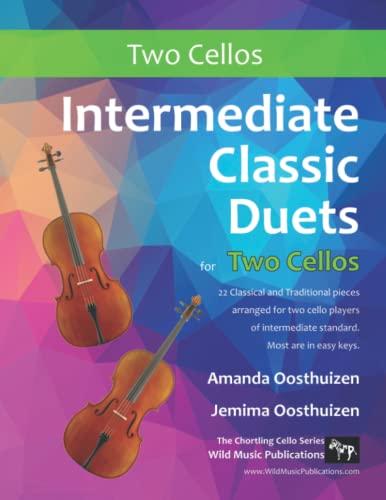
- Includes 22 classical and traditional arrangements.
- Designed for two cellists of similar intermediate ability.
- Supports listening, melody-sharing, and ensemble playing.
Best For: Intermediate cellists seeking collaborative repertoire
Orchestra Technique Focus
Essential Technique for Strings: Cello

- Covers shifting, higher positions, scales, and bowings.
- Uses graded studies for progressive technical development.
- Fits orchestra, lessons, classroom study, or independent practice.
Best For: Intermediate players building ensemble-ready technique
Classical Repertoire Builder

- 17 classical pieces arranged by difficulty
- Includes fingerings, bowings, and piano parts
- Designed for recital and contest preparation
Best For: Intermediate students building classical recital repertoire
Broadway Expression Pick
The Phantom of the Opera for Cello

- Nine songs from the classic musical
- Arranged for intermediate cellists
- Good for expressive solo performance
Best For: Cellists who enjoy musical theater repertoire
Holiday Duet Favorite
The Piano Guys: A Family Christmas

- 10 classical-pop Christmas arrangements
- Optional pull-out cello score
- Suitable for solos, duets, and performances
Best For: Intermediate cellists preparing seasonal performances
Structured Skill Builder – Essential Elements Cello Book 2
For cellos for intermediate players, Essential Elements for Strings Cello Book 2 offers a clearly sequenced path beyond introductory study. It focuses on bow control, tone production, rhythmic precision, finger placement, and musical expression, making it a practical method for continued lessons or home practice.
Best For: Students advancing from Book 1, teachers, parents, and developing cellists who want guided technique work with digital support.
Pros:
- Progressive lessons address tone, bowing, rhythm, and left-hand accuracy.
- Includes EEi access with play-along audio, videos, and self-assessment tools.
- Works for classroom instruction, private lessons, or independent practice.
Cons:
- At 48 pages, it is focused method material rather than an extensive repertoire collection.
- Its structured approach may be less suitable for players seeking only standalone performance pieces.
This is a strong choice when a cellist needs an organized bridge from beginner fundamentals to more confident intermediate playing, especially when teacher guidance and online practice resources are useful.
Classical Repertoire Sampler – Fifty Famous Classical Themes for Cello
Fifty Famous Classical Themes for Cello: Easy and Intermediate Solos for the Advancing Cello Player
Check Price On AmazonAmong cellos for intermediate players, this collection stands out for its variety of recognizable classical melodies. It provides 50 easy and intermediate cello solos, with clear sheet music and chord changes that can support teacher-provided accompaniments.
Best For: Advancing students and teachers who want accessible classical themes for repertoire building, musical familiarity, and solo practice.
Pros:
- Includes 50 themes drawn from well-known classical works.
- Covers a range of composers, styles, and musical moods.
- Chord changes allow accompaniment options for lessons or practice.
Cons:
- The collection does not provide the same step-by-step technical progression as a method book.
- Specific difficulty can vary across the easy and intermediate selections.
This book is best viewed as a repertoire supplement rather than a complete instructional course. It gives intermediate cellists many recognizable pieces to explore while broadening their classical listening and playing experience.
Advanced Method Continuation – Essential Elements Cello Book 3
For cellos for intermediate players ready for more focused technical work, Essential Elements Cello Book 3 builds on the earlier volumes in the series. Its exercises, musical studies, and scale routines target bow control, intonation, shifting, vibrato, expression, and ensemble development.
Best For: Students continuing from Essential Elements Books 1 and 2, as well as teachers seeking structured cello-specific technique studies.
Pros:
- Provides targeted exercises and scale routines for continued development.
- Addresses cello-specific skills including shifting, vibrato, intonation, and ensemble playing.
- Includes EEi access with video demonstrations, assignments, and assessments.
Cons:
- It is designed as a continuation method, so it may not suit students without the earlier series foundation.
- The emphasis is technical and instructional rather than a broad collection of performance repertoire.
Book 3 makes the most sense for a cellist already working through the Essential Elements system. Its consistent format and online resources can provide a useful framework for refining technique under teacher supervision or through organized home study.
Collaborative Playing Choice – Intermediate Violin and Cello Duets
For cellos for intermediate players, this duet collection adds a social and listening-focused alternative to solo study. It contains 22 classical and traditional pieces arranged for violin and cello players of a similar intermediate standard, around Grade 4 and above.
Best For: Intermediate cellists who want to play with a violinist in lessons, with friends, or for informal family performances.
Pros:
- Includes 22 classical and traditional selections in varied styles and tempos.
- Each player gets opportunities to carry the melody, encouraging active listening.
- Many pieces use easy keys and are playable largely in first position.
Cons:
- Some selections are described as tricky and may require additional preparation.
- It requires access to a violin partner for the full duet experience.
- This is performance-focused material, not a comprehensive technique method.
This is a particularly appealing supplement for intermediate players who learn through ensemble work. The mix of familiar classical and traditional music offers immediate playing opportunities while developing balance, coordination, and musical communication.
Best for Easy Setup – ABCs of Cello for the Intermediate
For cellos for intermediate players, this continuation method offers a focused way to develop position work, reading, bowing, and foundational technique. Book 2 centers on second position and combines exercises with playable melodies and study pieces.
Best For: Students progressing from an absolute-beginner method who want guided second-position practice and downloadable performance materials.
Pros:
- Introduces second position with finger-placement graphs.
- Includes melodies, warm-ups, scales, arpeggios, and study pieces.
- Provides access to 84 MP3 tracks and PDF piano accompaniments.
- Adds slurred bowing techniques, rhythms, keys, and time signatures.
Cons:
- Designed as a direct continuation of Book 1, so it may be less suitable without that foundation.
- Downloading the companion files requires registration and login.
This is a practical choice for an intermediate learner who benefits from a clearly sequenced method and audio support, especially when working independently or alongside lessons.
Two-Player Repertoire – Intermediate Classic Duets for Two Cellos
Among cellos for intermediate players, this duet collection is geared toward making practice more collaborative. It includes 22 classical and traditional arrangements for two cellists of similar ability, with melodies passing between the parts.
Best For: Around Grade 4+ players who want to perform with a friend, family member, teacher, or fellow student.
Pros:
- Offers 22 recognizable classical and traditional pieces.
- Parts are arranged for players of a similar intermediate standard.
- Mostly uses accessible keys.
- Encourages listening and ensemble coordination as the melody moves between parts.
Cons:
- Some selections are described as tricky for the stated level.
- It requires access to a second cellist for the full duet experience.
This book is less about isolated technical drills and more about musical interaction. It is a strong supplement for intermediate players who want enjoyable repertoire and ensemble practice.
Orchestra Technique Focus – Essential Technique for Strings: Cello
For cellos for intermediate players preparing for ensemble work, this method book emphasizes the technical areas that support orchestral playing. Its flexible sequence covers higher positions, shifting, scales, bowings, keys, and special techniques.
Best For: Intermediate students in orchestra, private lessons, or self-guided practice who want a structured technical foundation.
Pros:
- Targets higher positions, shifting, scales, and varied bowings.
- Uses progressive studies that balance technique with musical expression.
- Can fit classroom study, private lessons, or independent practice.
- Offers over 40 pages of graded material from the Essential Elements series.
Cons:
- Its emphasis is technical and orchestral rather than repertoire-focused.
- The flexible sequence may require guidance to choose the most useful progression.
This is a sensible option when the priority is dependable technique for orchestra or broader string performance. It works particularly well as a structured supplement to lessons and ensemble preparation.
Classical Repertoire Builder – Solos for the Cello Player
For cellos for intermediate players, repertoire that progresses in difficulty can make practice more focused. This 56-page collection presents 17 classical recital and contest pieces with cello notation, fingerings, bowings, and piano accompaniments.
Best For: Intermediate students preparing for recitals, contests, lessons, or structured home practice.
Pros:
- Includes 17 pieces spanning multiple stylistic periods.
- Selections are arranged in order of difficulty.
- Provides fingerings, bowings, and full piano accompaniment.
- Supports work on tone, phrasing, reading, and performance confidence.
Cons:
- The accompaniment CD is available separately.
- Its classical focus may be less appealing to players seeking pop or contemporary repertoire.
This is a practical choice for intermediate cellists who want dependable classical material and a clear path from practice to performance. The recital- and contest-oriented selections also make it useful as a teacher-guided repertoire book.
Broadway Expression Pick – The Phantom of the Opera for Cello
Cellos for intermediate players do not have to be limited to traditional repertoire. This 16-page collection offers nine arranged solos from The Phantom of the Opera, giving developing cellists recognizable melodies for practicing expression, tone control, and performance.
Best For: Intermediate cellists who enjoy musical theater, solo playing, or adding popular themes to a lesson or recital repertoire.
Pros:
- Features nine familiar songs from the Broadway musical.
- Arrangements are adapted for intermediate cello players.
- Offers dramatic material for exploring expressive playing.
- Useful for practice, recitals, or a teacher’s studio collection.
Cons:
- The book contains only 16 pages of music.
- Its repertoire is limited to one musical theater production.
This collection is a focused option for players who are motivated by recognizable theater themes. It complements, rather than replaces, a broader technical or classical study program.
Holiday Duet Favorite – The Piano Guys: A Family Christmas
For cellos for intermediate players seeking seasonal material, The Piano Guys – A Family Christmas combines familiar holiday melodies with classical-pop arrangements. The 80-page book includes piano parts and an optional pull-out cello score for solo or duet use.
Best For: Intermediate cellists and pianists preparing holiday recitals, church performances, home music-making, or family duets.
Pros:
- Includes 10 Christmas songs arranged from The Piano Guys album.
- Offers an optional cello part alongside the piano arrangements.
- Works for individual practice or piano-and-cello performances.
- Suitable for home performances, worship, lessons, and festive recitals.
Cons:
- The repertoire is specifically holiday-focused.
- The cello score is an optional pull-out part rather than the book’s sole focus.
This is a strong seasonal supplement for intermediate players who want flexible ensemble material. Its duet format can also make practice more engaging when a pianist is available.
How We Picked These Cellos for Intermediate Players
Because most items in this roundup are cello books rather than instruments, we evaluated them by their usefulness for developing players. We considered the apparent difficulty level, variety and quality of repertoire, technical coverage, accompaniment options, and suitability for lessons, independent practice, auditions, recitals, or casual playing.
We also looked for practical differences between method books, technique studies, solo collections, duets, and contemporary arrangements. A good intermediate resource should extend a player’s skills without making every practice session feel inaccessible.
Quick Comparison
| Resource type | Best for | What to expect |
|---|---|---|
| Method books | Structured progression | Sequenced lessons, exercises, songs, and reading practice |
| Technique studies | Building fundamentals | Exercises for shifting, coordination, tone, and orchestra skills |
| Solo collections | Performance preparation | Classical or theatrical pieces for lessons, recitals, and contests |
| Duet books | Collaborative practice | Parts designed for two equal-level players or mixed instruments |
| Popular arrangements | Motivation and variety | Recognizable songs in accessible intermediate arrangements |
Key Buying Factors for Cellos for Intermediate Players
Match the Book to Your Current Level
“Intermediate” covers a wide range. Players still consolidating first-position reading and basic shifting may benefit from a method book with gradual progression. More confident players may prefer repertoire collections that assume stronger rhythm, intonation, and position changes.
Decide Whether You Need Technique or Repertoire
Technique-focused material is useful when shifting, bow control, tone production, or ensemble skills are limiting progress. Solo and popular-music books are better when your main goal is to perform, sight-read, or stay motivated between lessons.
Check Accompaniment and Format Details
Some collections require piano accompaniment, a second cellist, or a violin partner. Others may include MP3, PDF, or online access. Confirm what is included before buying, especially if digital resources are important to your practice setup.
Consider Musical Goals
Classical students preparing auditions may want standard solo repertoire and disciplined technical studies. Players focused on community ensembles may gain more from orchestra-oriented exercises or duets. Those practicing for enjoyment may prefer film, Broadway, pop, or holiday arrangements.
Who Should Buy Which Cellos for Intermediate Players?
- Choose a method book if you want a guided sequence for lessons or self-study.
- Choose a technique book if your teacher has identified weaknesses in shifting, coordination, or foundational playing.
- Choose a solo collection if you need recital, contest, audition, or focused repertoire material.
- Choose a duet book if you regularly practice with another cellist or violinist and want ensemble experience.
- Choose a popular or seasonal arrangement if recognizable music will help you practice more consistently.
For many intermediate cellists, combining one structured technique or method resource with one enjoyable repertoire book offers the best balance between measurable progress and sustained motivation.