Floor guitar effects processors make it easier to build complete tones without assembling a large collection of individual pedals. The models in this roundup cover compact practice units, battery-powered processors, advanced amp modelers, and performance-focused floorboards.
Whether you need simple effects and presets or detailed signal-chain control with amp, cab, and impulse-response support, the right processor depends on how you play, where you perform, and which connections your rig requires.
Best 10 Floor Guitar Effects Processors Picks for 2026
Flagship Tone Control

- 32 amp types and 170+ BOSS effects
- 15 assignable blocks with flexible routing
- Touch display, IR loading, and extensive control
Best For: Advanced players building detailed live and studio rigs
Practice-Friendly Value

- 66 effects with 80 factory and 80 user patches
- 180-second looper and built-in drum machine
- Battery or adapter operation with expression pedal
Best For: Beginners and home practice
Hands-On Performance Choice
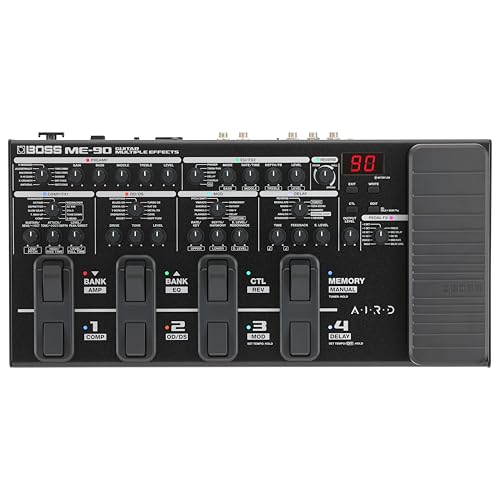
- 11 AIRD amps and 60 GT-1000-derived effects
- Eight multifunction footswitches and expression pedal
- Effects loop, IR loading, and battery operation
Best For: Performers wanting direct stompbox-style control
Portable Modeling Power

- 200 presets, 170 effects, and 55 amp models
- Up to 9 hours of integrated battery life
- NAM/MNRS support with extensive sample slots
Best For: Mobile players and deep tone experimentation
Practice Powerhouse

- 71 effects and 13 amp models
- 30-second looper and 68 rhythm patterns
- Built-in expression pedal
Best For: Practice, songwriting, and beginner-friendly tone exploration
Compact Modeling Hub
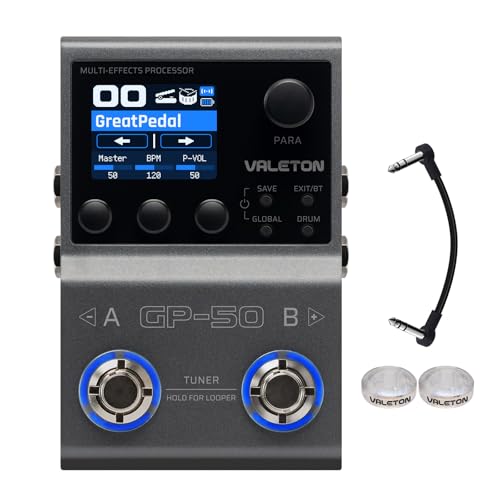
- 100+ effects with NAM and IR loading
- Nine simultaneous modules and 100 patch slots
- Bluetooth app control and USB audio
Best For: Custom digital rigs, recording, and portable performance setups
Stage-Ready Controller

- Eight footswitches with assignable CTRL mode
- Up to nine hours of battery life
- Balanced XLR outputs and 200 preset slots
Best For: Live performance with extensive foot control and direct stage routing
Best Portable Value
SORAN Dual Stomp Multi-Effects Processor

- 99 presets and 125 effects with 11 simultaneous modules
- Rechargeable battery offers up to 6 hours of use
- Includes expression pedal, looper, drums, and USB audio
Best For: Portable practice, streaming, and flexible all-in-one setups
Best for Live Performance
Valeton GP-200 Multi-Effects Processor

- 240+ effects and 140+ amp and cabinet models
- 180-second looper with 100 drum patterns
- USB-C 6-in/4-out interface with loopback and re-amping
Best For: Live players needing rugged control and flexible routing
Best Preset Flexibility
MOOER GE150 Pro Multi-Effects Processor

- 200 presets and 170 effects for broad tonal variety
- Supports MNRS files with 20 amp and 20 cab slots
- Four footswitches, expression pedal, looper, and OTG recording
Best For: Players prioritizing preset depth and flexible tone customization
Flagship Tone Control – BOSS GX-100
The BOSS GX-100 is a powerful choice for guitarists comparing floor guitar effects processors for detailed amp modeling, extensive effects, and flexible live control. Its color touchscreen, rugged metal chassis, AIRD-based amp tones, and broad routing options make it suited to complex setups.
Best For: Players who want extensive sound-design options, authentic amp-style tones, and highly assignable performance controls.
Pros:
- Includes 32 amp types and more than 170 BOSS effects.
- Offers 15 assignable blocks and flexible amp/effect routing.
- Supports WAV speaker IR loading and computer editing through BOSS Tone Studio.
- Provides a color touch display, assignable footswitches, and an expression pedal with toe switch.
Cons:
- Its larger chassis and extensive feature set may be more than beginners need.
- Optional Bluetooth functionality requires an additional adaptor.
The GX-100 stands out when routing flexibility and a large effects library matter most. It is a strong floor-based centerpiece for players building detailed presets and controlling multiple tone elements from one unit.
Practice-Friendly Value – MOOER GE100
The MOOER GE100 is a practical entry point for shoppers seeking floor guitar effects processors with straightforward controls, useful practice tools, and a manageable preset library. It combines 66 effect types with an expression pedal, looper, drum machine, tuner, and headphone output.
Best For: Beginners, home players, and guitarists who want an affordable all-in-one unit for practice and basic performance use.
Pros:
- Provides 80 preset patches and 80 user patches for tone storage.
- Includes 66 effect types across eight effect modules.
- Features a 180-second looper, drum machine, tap tempo, tuner, and headphone output.
- Can run from a DC 9V adapter or four AA batteries.
Cons:
- Its effect and routing scope is more limited than higher-end processors.
- The listed interface relies on a basic LED screen and knob-based control.
The GE100 emphasizes accessibility rather than maximum modeling depth. Its built-in rhythms, looping, learning functions, and battery option make it especially useful for practice, songwriting, and getting started with multi-effects.
Hands-On Performance Choice – BOSS ME-90
BOSS ME-90 Guitar Multi-Effects Guitar Processor | All-In-One Guitar Processor
Check Price On AmazonThe BOSS ME-90 is a strong option for guitarists comparing floor guitar effects processors that prioritize quick, hands-on sound shaping. Its knob-based interface, eight multifunction footswitches, AIRD amp models, effects loop, and battery-powered design support both practice and live use.
Best For: Performing guitarists who want stompbox-style control with modern amp modeling, IR loading, and a compact all-in-one format.
Pros:
- Includes 11 AIRD amp models and 60 effects derived from the GT-1000.
- Offers eight multifunction footswitches and a redesigned expression pedal with toe switch.
- Supports IR loading and includes an effects loop.
- Provides 36 preset patches and 36 user patches in a battery-powered design.
Cons:
- It has fewer amp models and effects than the GX-100.
- Bluetooth editing and audio streaming require an optional adaptor.
The ME-90 is particularly compelling for players who prefer physical knobs and direct foot control over menu-heavy operation. It balances useful modern processing with a familiar pedalboard-style workflow.
Portable Modeling Power – MOOER GE150 Pro Li
The MOOER GE150 Pro Li is a compelling pick among floor guitar effects processors for players who need extensive modeling, preset capacity, and genuine portability. Its integrated lithium battery provides up to nine hours of use, while NAM and MNRS support expands its amp and cabinet-loading flexibility.
Best For: Mobile guitarists, experimental tone builders, and performers who want broad modeling features without depending on mains power.
Pros:
- Offers 200 factory presets, 170 effects, 55 amp models, and 26 cabinet simulations.
- Includes 20 slots for amp samples and 20 cabinet slots, with NAM support after a software update.
- Provides up to nine hours of integrated battery operation.
- Includes four multifunction footswitches, an expression pedal, an 80-second stereo looper, and drum rhythms.
Cons:
- Its advanced sample-loading features may require additional setup and software updating.
- At 1.2 kg, it is less lightweight than the smallest compact processors.
The GE150 Pro Li combines a substantial modeling toolkit with unusually useful battery life. It is a strong fit when portability, preset depth, and sample-based tone expansion are higher priorities than a minimal pedalboard footprint.
Practice Powerhouse – Zoom G1X Four
The Zoom G1X Four is a practical entry point into floor guitar effects processors, combining a built-in expression pedal with 71 effects, 13 amp models, a looper, and rhythm patterns. Its battery-powered design and headphone output also make it well suited to flexible home practice.
Best For: Players who want a broad selection of effects, guided practice tools, and an integrated expression pedal.
Pros:
- Includes 71 effects and 13 amp models for experimenting with different tones.
- Offers a 30-second looper and 68 rhythm patterns for practice and songwriting.
- Supports guitar, auxiliary audio, amp, and headphone connections.
- Includes an expression pedal and works with Zoom Guitar Lab for patch editing.
Cons:
- The 30-second looper is shorter than the looping time offered by some larger processors.
- Its compact feature set may be less suitable for players seeking extensive live-stage routing.
Choose the G1X Four if accessible practice features and lots of built-in sounds matter more than advanced routing. It is a straightforward, portable option for learning, rehearsing, and exploring effects.
Compact Modeling Hub – Valeton GP-50
The Valeton GP-50 packs NAM and cabinet IR loading into a compact floor unit, making it one of the more flexible floor guitar effects processors for players who want modern digital tone shaping. It supports over 100 effects, nine simultaneous modules, app control, and USB audio connectivity.
Best For: Guitarists and bassists who want deep preset customization, third-party modeling support, and recording-friendly connections.
Pros:
- Combines over 100 HD effects with NAM and IR loading.
- Runs up to nine effect modules simultaneously with customizable order.
- Stores third-party cabinet IR files and NAM files, with 100 patch slots.
- Provides Bluetooth app editing, USB audio, USB MIDI, stereo outputs, and headphone connectivity.
Cons:
- The dual-footswitch layout may offer less immediate hands-on control than larger floorboards.
- Its advanced NAM and IR features may require more setup than a simpler multi-effects pedal.
The GP-50 is a strong fit when compact size and advanced digital flexibility are priorities. Its rechargeable battery, wireless editing, and USB audio also help it transition from practice to recording and portable rigs.
Stage-Ready Controller – MOOER GE150 Max Li
The MOOER GE150 Max Li is built for players who need hands-on control from floor guitar effects processors during live performance. Its eight footswitches, integrated expression pedal, rechargeable battery, stereo balanced XLR outputs, and 3.5-inch color display support a flexible stage setup.
Best For: Performing guitarists who want extensive foot control, long battery life, and direct stage-oriented outputs.
Pros:
- Provides eight multi-purpose footswitches and assignable CTRL mode for live control.
- Offers up to nine hours of integrated lithium-battery operation.
- Includes 55 amp preamps, 26 cabinet simulations, third-party IR support, and 200 preset slots.
- Features stereo balanced XLR outputs, an expression pedal, spill-over, an 80-second looper, and a drum machine.
Cons:
- At 3.8 pounds and over 12 inches long, it is less compact than smaller processors.
- The broad preset, modeling, and control options may take time to configure.
The GE150 Max Li stands out for stage practicality rather than minimalist portability. Choose it if footswitch access, balanced XLR routing, preset capacity, and battery-powered performance are central to your rig.
Best Portable Value – SORAN Dual Stomp Multi-Effects Processor
The SORAN Dual Stomp is a versatile option for players seeking floor guitar effects processors with extensive sound shaping, practice tools, and battery-powered portability. It combines 99 presets, 125 effects, amp and cabinet modeling, a built-in expression pedal, and USB audio features in a compact format.
Best For: Guitarists who want a rechargeable all-in-one processor for home practice, recording, streaming, and portable playing.
Pros:
- Offers 99 presets, 125 effects, and up to 11 simultaneous modules.
- Includes an expression pedal with wah and volume modes.
- Provides a 40-second stereo looper, 100 drum patterns, and 6 hours of battery use.
- Supports USB audio, amp modeling, cab modeling, and IR/NAM imports.
Cons:
- The 2-inch display is smaller than the screens on some larger processors.
- Its 40-second looper is shorter than the Valeton GP-200’s 180-second looper.
The Dual Stomp stands out when portability and a broad feature set matter most. Its rechargeable battery and integrated expression pedal make it practical for flexible practice and performance setups.
Best for Live Performance – Valeton GP-200 Multi-Effects Processor
The Valeton GP-200 is a stage-oriented choice among floor guitar effects processors, pairing a rugged metal chassis with a large color display, customizable footswitch layout, and extensive amp and effect modeling. It also includes a gig bag for transport.
Best For: Performing guitarists and bassists who need broad connectivity, hands-on control, and a durable live-use setup.
Pros:
- Includes more than 240 effects and over 140 guitar, bass, and acoustic amp and cabinet models.
- Offers 256 patch slots, 20 user IR slots, and up to 11 simultaneous modules.
- Features a 180-second looper, 100 drum patterns, tuner, and expression pedal.
- Provides a 6-in/4-out USB-C audio interface with loopback and re-amping support.
Cons:
- At 2.37 kg, it is heavier than the SORAN and MOOER units listed here.
- It uses corded power rather than an integrated rechargeable battery.
The GP-200 is the strongest fit for players prioritizing live control and routing flexibility. Its large display, metal construction, long looper, and broad USB audio capabilities make it well suited to performance and recording workflows.
Best Preset Flexibility – MOOER GE150 Pro Multi-Effects Processor
The MOOER GE150 Pro is a practical pick for shoppers comparing floor guitar effects processors with extensive preset storage, modern modeling, and compact performance controls. It offers 200 factory presets, 170 effects, four multifunction footswitches, and an expression pedal.
Best For: Players who want plentiful presets, MNRS amp and cabinet support, and integrated looping and recording tools.
Pros:
- Provides 200 presets, 170 effects, 55 amp models, and 26 cabinet simulations.
- Supports MNRS sample files with 20 amp and 20 cabinet loading slots.
- Includes four multifunction footswitches, an expression pedal, and toe-tap control mapping.
- Offers an 80-second stereo looper, 40 drum rhythms, OTG recording, and AUX input.
Cons:
- The standard GE150 Pro is corded; the supplied notes reserve 9-hour battery life for the separate Pro Li edition.
- Its looper and drum selection are more limited than the GP-200’s listed practice tools.
The GE150 Pro balances deep tone customization with accessible foot control. It is especially appealing to players who value preset capacity and MNRS loading while still wanting looping, rhythm, and phone-recording features.
How We Picked These Floor Guitar Effects Processors
We selected these processors based on the features that matter most in real-world guitar setups: effect and amp-model variety, preset capacity, simultaneous signal-chain control, footswitch layout, expression capability, connectivity, portability, and overall flexibility. We also considered whether each unit is better suited to home practice, recording, rehearsals, live performance, or direct-to-PA use.
Specifications such as NAM or IR loading, USB audio, Bluetooth control, rechargeable batteries, XLR outputs, and looper functions can make a significant difference, but they are useful only when they match your workflow. A larger effects count is not automatically better if the interface is difficult to navigate or the unit lacks the outputs you need.
Quick Comparison
- Best for advanced all-in-one control: BOSS GX-100 and Valeton GP-200.
- Best for broad modeling and modern loading options: MOOER GE150 Pro and Valeton GP-50.
- Best for straightforward preset-based playing: BOSS ME-90 and MOOER GE100.
- Best for practice and portability: Zoom G1X Four and rechargeable MOOER models.
- Best for a budget-friendly feature set: SORAN Dual Stomp, subject to confirming build quality and support.
Key Buying Factors for Floor Guitar Effects Processors
Effects, Amp Models, and Signal-Chain Flexibility
Check whether the processor includes the effects you actually use, such as drives, modulation, delay, reverb, pitch effects, and noise reduction. More advanced units let you arrange modules freely, run several effects simultaneously, and create separate chains for rhythm, lead, and ambient sounds.
Direct Recording and Amplifier Compatibility
For an amplifier setup, look for suitable instrument and effects-loop connections. If you play through headphones, an interface, or a PA, amp modeling, cab simulation, IR loading, and balanced outputs become more important. USB audio can also reduce the need for a separate recording interface.
Footswitches, Expression Control, and Editing
More footswitches generally make preset changes and scene-style control easier during a performance. An expression pedal is useful for volume, wah, pitch, or continuous effect changes. App or computer editing may speed up deep programming, while knob-based interfaces can be faster for quick adjustments.
Power, Size, and Preset Management
Battery-powered models are convenient for rehearsals, street performance, and portable practice, but check expected battery life and charging requirements. Also consider patch capacity, backup options, tuner access, looper time, and whether the unit fits your pedalboard or travel case.
Who Should Buy Which Floor Guitar Effects Processors?
Choose a compact processor if you mainly practice at home, need headphones, or want a lightweight backup rig. Choose a midrange multi-effects unit if you want many sounds and presets without spending time building a complex pedalboard. Choose an advanced modeler if you record directly, perform through a PA, need detailed routing, or want to load custom cabinets and captures.
Before buying, map the processor’s outputs and control layout to your current rig. A model with fewer effects but better switching, easier editing, and the right connections can be more useful than a feature-heavy unit that slows down your setup.