Acoustic treatment can make a home studio easier to record, monitor, and work in—without the permanent installation required by wall panels. The best curtains and sound-dampening blankets help reduce reflections, control room noise, and cover large openings such as windows and doors.
We compared 10 options by size, construction, hanging hardware, light-blocking performance, and practical versatility so you can choose the right solution for your room and budget.
Best 10 Acoustic Curtains for Home Studios Picks for 2026
Best Overall
RYB HOME 3-in-1 Acoustic Curtains

- Three layers with detachable felt liner
- Blackout and thermal insulation
- 104-inch total width across two panels
Best For: Home studios needing sound absorption plus blackout window coverage
Best Large-Coverage Blanket
US Cargo Control Sound Blanket
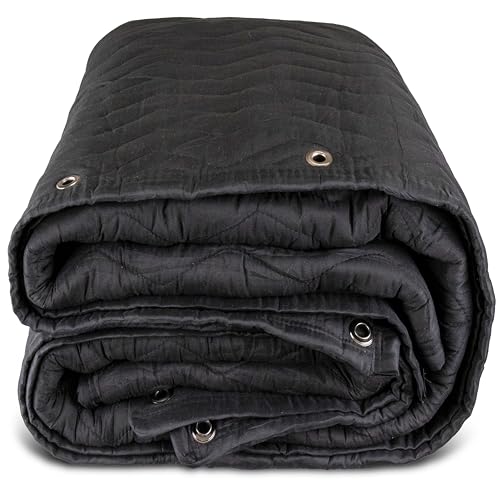
- 96-by-80-inch studio coverage
- NRC rating of 0.35
- 18 grommets for flexible hanging
Best For: Large walls, windows, and doorways where echo reduction matters
Best Room Divider
Extra-Wide Home Theater Curtain

- 180-by-96-inch single panel
- Blocks 85–99% of sunlight and UV rays
- Works with tracks or rods
Best For: Temporary studio partitions and room-darkening setups
Wide-Coverage Pick
VEVOR Sound Dampening Blankets

- Two 96 x 80-inch panels cover broad areas
- Helps absorb echoes and block light
- Grommets and straps simplify hanging
Best For: Large studio windows, doors, and temporary recording spaces
Decor-Friendly Panel
Velvet-Backed Acoustic Curtain

- Soft velvet backing suits modern interiors
- Works as a room divider or acoustic barrier
- Includes mounting accessories
Best For: Compact home studios, offices, bedrooms, and podcast spaces
Heavy-Duty Studio Choice

- Dense 850GSM recycled-cotton filling
- Two large panels with sturdy grommets
- Designed to reduce echo and reverb
Best For: Recording rooms needing substantial acoustic dampening and light blocking
Best Door-Fit Barrier

- Door-sized 37.5 x 86.6-inch panel
- Dense cotton filling reduces echo
- Permanent or temporary mounting hardware
Best For: Standard doorways in studios and offices
Best Washable Two-Pack
Sound Dampening Blanket Panels

- Two 41.33 x 70.86-inch panels
- Three-layer sound-absorbing construction
- Grommets and machine-washable materials
Best For: Podcasting, practice, and flexible studio coverage
Best Extra-Large Coverage

- Two panels measuring about 96 x 80 inches
- Dense, 19.4-pound sound-absorbing construction
- Nine grommets per panel with straps and hardware
Best For: Large walls and temporary recording spaces
Best Overall – RYB HOME 3-in-1 Acoustic Curtains
For acoustic curtains for home studios, the RYB HOME 3-in-1 design combines blackout fabric with a detachable felt liner intended to absorb some annoying noise. The two 52-inch-wide panels provide a total width of 104 inches, while the grommet installation fits rods up to 1.6 inches.
Best For: Home studios that also need blackout coverage, thermal insulation, and conventional window-curtain styling.
Pros:
- Three-layer construction includes a detachable felt fabric liner.
- Blackout design blocks harsh light and UV rays.
- Thermal insulation may help moderate summer heat and winter chill.
- Machine washable after removing the felt liner.
Cons:
- Not completely soundproof; results vary with the room and listener.
- Two-panel width totals 104 inches, which may not suit very wide openings.
- The felt liner must be removed before washing.
This is a practical choice when a studio curtain also needs to function as a room-darkening window treatment. Its noise-reduction effect is best viewed as supplemental absorption rather than full sound isolation.
Best Large-Coverage Blanket – US Cargo Control Sound Blanket
For acoustic curtains for home studios, this 96-by-80-inch sound blanket offers broad coverage for walls, windows, or doorways. Its quilted cotton-and-polyester construction is designed to absorb sound and reduce echoes, and 18 grommets support flexible hanging.
Best For: Recording spaces that need a large wall, doorway, or window treatment rather than a traditional decorative curtain.
Pros:
- Large 96-by-80-inch coverage area.
- 12-pound woven polyester blanket filled with recycled cotton.
- 18 grommets allow hanging from either the 80-inch or 96-inch side.
- Machine washable construction.
Cons:
- Rated for sound absorption, not sound blocking or soundproofing.
- Only one blanket is included.
- Black fabric may fade or wear with prolonged sun exposure.
With an NRC rating of 0.35, this blanket is aimed at reducing reverberation rather than stopping noise transmission. It is a strong utility option for covering large reflective surfaces in a studio.
Best Room Divider – Extra-Wide Home Theater Curtain
For acoustic curtains for home studios, this extra-wide room separator can divide a space while reducing light and helping limit heat transfer. The single 180-by-96-inch polyester panel includes hooks and can hang from a ceiling track or rod.
Best For: Home studios, offices, or media rooms that need a temporary floor-to-ceiling partition with blackout and privacy benefits.
Pros:
- Extra-wide 180-inch panel covers a substantial opening.
- Triple-weave 230GSM polyester blocks approximately 85–99% of sunlight and UV rays.
- Suitable for ceiling tracks or rods.
- Machine washable on a gentle cold cycle.
Cons:
- Only one panel is included.
- Unlined construction may offer less acoustic mass than a specialized sound blanket.
- Noise reduction is listed as a feature, but the product is not described as soundproof.
This curtain is most useful when space division and light control are as important as basic noise reduction. Its broad dimensions make it a convenient temporary studio partition.
Best Portable Blanket – Suvony Studio Acoustic Blanket
For acoustic curtains for home studios, the Suvony blanket provides a portable 96-by-80-inch sound-absorbing surface for windows, doors, walls, or room openings. The 12-pound construction includes reinforced stitching, metal grommets, and straps for flexible installation.
Best For: Recording studios, podcast rooms, home offices, and apartments that need a movable acoustic and light-blocking barrier.
Pros:
- Large coverage suitable for windows and doors.
- Dense non-woven fabric and synthetic-cotton filling help absorb sound waves and vibrations.
- Nine metal grommets and included straps support multiple hanging methods.
- Folds for portability and storage.
Cons:
- Sold as one blanket.
- The manufacturer notes that an odor may be present after shipping and recommends ventilation.
- The notes describe sound dampening and absorption rather than guaranteed soundproofing.
This is a versatile utility blanket for changing studio layouts or treating specific openings. Its portability and multiple hanging options make it easier to deploy than a fixed acoustic panel.
Wide-Coverage Pick – VEVOR Sound Dampening Blankets
For shoppers comparing acoustic curtains for home studios, this two-piece VEVOR set emphasizes broad coverage, blackout performance, and flexible hanging. Its polyester woven surface and recycled-cotton filling can help absorb echoes and sound reflections, though it is intended as a protective sound-dampening barrier rather than complete sound insulation.
Best For: Covering large studio windows, doors, or temporary recording areas where light blocking is also useful.
Pros:
- Two large 96 x 80-inch blankets provide substantial coverage with fewer seams.
- Dense, dark construction helps block light for recording, projection, or home-theater use.
- Metal grommets and woven straps support installation with hooks, screws, or curtain rods.
- Zig-zag quilting and double-stitched binding are designed for repeated hanging.
Cons:
- Provides limited sound insulation and does not fully soundproof a room.
- Not water resistant; dampness can cause odors or material damage.
- Spot-clean care may be less convenient for larger spills.
Choose this set when size and versatility matter most. It is a practical way to soften reflections and darken a space, but studio users should pair it with other acoustic treatment when stronger isolation or control is needed.
Decor-Friendly Panel – Velvet-Backed Acoustic Curtain
This oatmeal-sand panel is a more home-oriented option among acoustic curtains for home studios. Its dense multilayer construction and soft velvet backing are designed to soften reflections, reduce unwanted noise, and function as a room divider without the tarp-like appearance of some sound blankets.
Best For: Bedrooms, home offices, podcast corners, gaming rooms, and shared spaces where appearance and flexibility matter.
Pros:
- Soft velvet backing offers a more refined look and flexible feel.
- Can be hung across windows, doors, walls, or open areas.
- Suitable for temporary recording, streaming, rehearsal, and privacy setups.
- Includes mounting accessories for quicker installation.
Cons:
- At 70.9 x 39.4 inches, one panel provides less coverage than the large blanket options.
- It helps dampen sound but is not presented as complete soundproofing.
- Only one panel is specified in the supplied product details.
This curtain makes sense for compact setups or rooms where a neutral decorative finish is important. Consider additional panels or acoustic treatment if you need broader coverage or more pronounced room control.
Heavy-Duty Studio Choice – 850GSM Acoustic Blankets
For home-studio shoppers seeking substantial sound absorption, this two-pack uses dense 850GSM recycled-cotton filling and weighs about 9.2 pounds per blanket. These acoustic curtains for home studios are designed to absorb echoes and reverb, reduce some ambient noise, and block light, while the manufacturer clearly distinguishes dampening from complete soundproofing.
Best For: Improving vocal clarity, reducing room echo, and covering doors or windows in recording spaces.
Pros:
- Heavy 850GSM construction provides a substantial sound-absorbing mass.
- Two 96-inch by 80-inch blankets offer broad coverage.
- Nine metal grommets per blanket support hanging from hooks, poles, or similar hardware.
- Reinforced Z stitching and double-stitched edges are built for durability.
Cons:
- Does not block 100% of sound or replace structural soundproofing.
- Hardware is not included.
- May have a mild odor initially and should air out for 24–48 hours.
This is the strongest fit of the three for users prioritizing dense, heavy-duty construction and studio acoustics. Hanging two layers with an air gap may improve results, but the blankets remain a sound-dampening aid rather than a complete isolation solution.
Best Door-Fit Barrier – Thick Soundproof Blanket
For acoustic curtains for home studios, the TroyStudio blanket is a door-focused option designed to cover a standard-size doorway. Its dense cotton filling can help absorb sound, reduce echo and reverb, block light, and provide some thermal insulation, though it is not presented as total sound isolation.
Best For: Recording rooms, vocal booths, home offices, rehearsal spaces, and standard doorways needing a heavy, close-fitting acoustic barrier.
Pros:
- 37.5 x 86.6 x 0.8 inches, sized for standard doors.
- Dense, weighted cotton filler helps reduce reverb and echo.
- Includes screws and hooks for permanent mounting plus hook-and-loop strips for temporary use.
- Also blocks light, helps with thermal insulation, and can protect furniture during moving.
Cons:
- The 9.6-pound weight may require sturdy mounting.
- Its door-oriented dimensions may be less convenient for broad windows or walls.
- Odor-sensitive users are advised to ventilate it before use.
This is a practical choice when the main sound leak is a doorway and you want flexible installation. Its utilitarian design and added light-blocking and furniture-protection uses make it versatile beyond studio recording.
Best Washable Two-Pack – Sound Dampening Blanket Panels
These two sound-dampening panels are a flexible pick for acoustic curtains for home studios, especially when you need coverage for a door, window, wall, or instrument area. Their three-layer construction is intended to absorb sound and reduce echo, not provide complete isolation.
Best For: Voice-over work, podcasting, live streaming, instrument practice, home theaters, and offices where reusable coverage and easy hanging matter.
Pros:
- Two panels provide broader coverage than a single blanket.
- Three-layer design combines polyester, high-density sound-absorbing cotton, and a light-blocking layer.
- Reinforced webbing and metal grommets support hanging on walls, windows, or doors.
- Wear-resistant, double-stitched construction is machine-washable.
Cons:
- The panels reduce ambient noise but do not provide total sound isolation.
- The listed product-dimension data appears incomplete, so mounting-space planning may require checking the stated panel measurements.
- At approximately 7.81 pounds per set, the hanging surface should be adequately supported.
Choose this set when you want removable panels that can serve multiple studio and household roles. The grommets and washable construction are particularly useful for setups that are frequently installed and taken down.
Best Extra-Large Coverage – Studio Sound Blanket Panels
For larger walls, windows, or temporary recording areas, these extra-large panels are a substantial option among acoustic curtains for home studios. Each panel measures about 96 x 80 inches, and the dense construction is designed to reduce echoes, reverberation, and some outside noise while also functioning as a blackout or moving blanket.
Best For: Large studio walls, video podcast spaces, home offices, game rooms, apartments, and setups that need extensive, portable coverage.
Pros:
- Two extra-large 96 x 80-inch panels offer extensive coverage.
- Dense non-woven fabric and synthetic cotton construction weighs 19.4 pounds for the pair.
- Double-lock stitching and reinforced edges support repeated use.
- Each panel has nine metal grommets and includes straps, hooks, and screws for mounting.
Cons:
- The large, heavy panels may be cumbersome to hang or reposition.
- They require strong mounting points, particularly when attached to walls or ceilings.
- The description claims noise reduction rather than guaranteed total sound isolation.
This set makes the most sense when coverage area is the priority. Its generous dimensions and multiple hanging options suit temporary studio treatment, while the foldable design allows it to be stored or repurposed when not recording.
How We Picked the Best Acoustic Curtains for Home Studios
We focused on products designed for real home-studio use, including grommeted blankets, lined curtains, and room-divider panels. Our comparison emphasizes coverage, material density, ease of installation, and flexibility rather than treating any curtain as a complete soundproofing system. Products with larger dimensions can cover windows, doors, and temporary partitions, while smaller panels may work better for targeted treatment.
We also considered whether each option can be opened, relocated, or reused in another room. That matters for renters, shared spaces, and creators who regularly change their recording setup.
Quick Comparison
| Best for | Look for | Main advantage |
|---|---|---|
| Windows and doors | Large, dense panels with grommets | Broad coverage and simple hanging |
| Portable room treatment | Blankets or curtains that can be repositioned | Flexible placement between sessions |
| Room separation | Long panels or multi-panel packs | Creates a temporary studio zone |
| Dark recording spaces | Light-blocking or lined construction | Improves visual control for video and monitoring |
Key Buying Factors for Acoustic Curtains for Home Studios
Coverage and Dimensions
Measure the opening before buying, then add overlap on the sides and top. A curtain that barely spans a window or doorway will leave acoustic and light gaps. Extra width also creates folds, which can improve absorption compared with a tightly stretched panel.
Weight and Construction
Dense, heavy materials generally provide better sound reduction than thin decorative curtains, especially for reducing high-frequency reflections and limiting some sound leakage. However, curtains primarily absorb and block a portion of sound; they do not fully soundproof a room or stop bass transmission through walls.
Hanging Hardware
Grommets make blankets easier to mount on curtain rods, hooks, cables, or temporary frames. Check grommet spacing, panel weight, and the load rating of your rod or mounting surface. Use secure anchors for oversized blankets.
Light Control and Appearance
For video calls, vocal recording, or sleep-adjacent spaces, light-blocking fabric can be useful. Velvet-style backings and finished edges may look more at home in a shared room, while industrial blankets prioritize coverage and durability.
Who Should Buy Which Acoustic Curtains for Home Studios?
Choose a large, heavy blanket if you need maximum coverage for a window, door, wall, or temporary vocal booth. Select a curtain-style panel if you want a cleaner appearance and frequent access to the opening. A two-pack is practical for wider walls, corner coverage, or creating a divider between a performance and mixing area.
For renters and multipurpose rooms, prioritize grommets, manageable installation, and easy relocation. For dedicated studios, combine curtains with bass traps, absorptive wall panels, rugs, and door seals. That layered approach will deliver more balanced results than relying on curtains alone.