Keeping steady time is easier when your metronome fits naturally into your practice routine. The best wearable metronomes provide tactile pulses without competing with your instrument, while compact digital models offer familiar audible cues and quick tempo adjustments.
We compared 10 options across vibration strength, tempo range, controls, battery convenience, portability, and instrument compatibility to help you choose the right rhythm tool for practice, rehearsal, lessons, or performance.
Best 10 Wearable Metronomes Picks for 2026
Best Budget Wearable
Adjustable Vibrating Metronome Watch
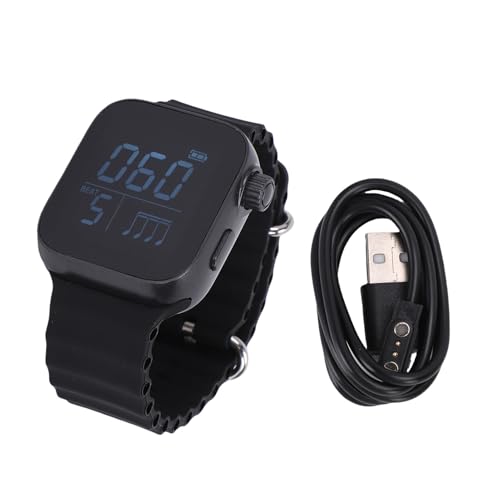
- 40–240 BPM tempo range
- Metronome and exercise modes
- Compact ABS body with LCD
Best For: Beginners and noise-filled practice spaces
Best Traditional Pick

- Visual practice assistance
- Odd-time signature support
- Headphone jack and auto power-off
Best For: Players wanting a rugged handheld metronome
Best Starter Watch
Wearable Metronome Wrist Watch

- Adjustable 40–240 BPM tempo
- Strong tactile vibration feedback
- Includes USB cable and manual
Best For: Musicians and fitness users wanting a simple wearable
Best Connected Model
Soundbrenner Pulse Vibrating Metronome

- App-controlled rhythm customization
- LEDs and strong tactile feedback
- Supports multi-player sync and 6+ hours
Best For: Connected practice, rehearsals, and advanced rhythm control
Reliable Practice Companion

- Loud buzzer with beat visuals
- Tap tempo, timer, and sound-out modes
- Up to 400 hours on alkaline batteries
Best For: Orchestral practice and audible rhythm training
Quiet Wearable Timing
AKLOT Vibrating Metronome Watch

- Vibration-based beat feedback
- App-adjustable intensity and brightness
- Music, sport, and 24-hour modes
Best For: Quiet instrument practice and workout pacing
Flexible Rechargeable Practice
Digital Metronome with Voice Count

- Scroll-wheel control from 30–250 BPM
- Voice counting, tones, and LED beat flash
- USB-C rechargeable with headphone jack
Best For: Instrument practice with flexible audible and visual feedback
Best Wearable Pick
Adjustable Vibrating Metronome Watch

- Vibrating cues stay noticeable in noisy settings
- 40–240 BPM with selectable meters and patterns
- Exercise mode adds pacing and breathing support
Best For: Musicians and exercisers wanting wrist-based tactile timing
Best Clip-On Alternative
LEKATO M65 Rechargeable Metronome

- Compact clip-on body for portable practice
- 30–280 BPM with tap tempo and 10 sounds
- Headphone output supports quieter sessions
Best For: Beginners wanting a rechargeable, pocket-friendly metronome
Best Traditional-Style Option

- Classic-inspired design with a readable display
- 40–208 BPM, tap tempo, and nine rhythms
- Timed practice settings with adjustable volume
Best For: Home practice with visible, sound-based timing
Best Budget Wearable – Adjustable Vibrating Metronome Watch
If you want wearable metronomes without relying on an audible click, this adjustable watch delivers beat vibrations at 40–240 BPM. Its metronome and exercise modes make it a practical option for practice sessions, noisy environments, and paced workouts.
Best For: Beginners, musicians practicing around background noise, and users who want a simple fitness pacing aid.
Pros:
- Provides strong, subtle vibrations designed to remain noticeable in noisy settings.
- Offers adjustable tempo, beat types, and rhythm patterns from 40–240 BPM.
- Compact ABS design includes a detachable silicone strap and LCD display.
Cons:
- Charging uses USB, which may be less convenient than replaceable batteries.
- Its controls and display are simpler than those of app-connected models.
This is a straightforward choice if tactile timing and easy portability matter more than advanced connectivity. The added exercise mode gives it useful flexibility beyond music practice.
Best Traditional Pick – BOSS Dr. Beat DB-30
The BOSS Dr. Beat DB-30 is a portable, conventional metronome rather than one of the wearable metronomes in this roundup. It suits players who prefer visual practice assistance, odd-time support, and play-along patterns in a rugged handheld format.
Best For: Musicians who want a dependable portable metronome with visual guidance and support for less-common time signatures.
Pros:
- Provides visual practice assistance for reinforcing timing.
- Supports odd time signatures and includes play-along patterns.
- Portable construction includes a headphone jack and auto power-off.
Cons:
- It is a handheld unit, so it does not provide wearable vibration feedback.
- Battery-powered operation requires a lithium metal battery.
Choose the DB-30 if audible or visual practice is your priority and you do not need a wrist-worn device. Its portable build and practice-oriented features make it a useful alternative to wearable metronomes.
Best Starter Watch – Wearable Metronome Wrist Watch
This wearable metronome wrist watch combines adjustable tactile timing with a compact, lightweight design. It offers 40–240 BPM settings, selectable beat types and rhythm patterns, plus an exercise mode for users who want one device for musical practice and paced activity.
Best For: Musicians and fitness-minded users seeking a simple rechargeable vibrating watch with broad tempo adjustment.
Pros:
- Delivers vibrations described as five times stronger than traditional devices.
- Supports rock, jazz, and other rhythm patterns across a 40–240 BPM range.
- Includes a detachable strap, USB supply cable, and instruction manual.
Cons:
- The supplied notes do not identify included components beyond the stated cable and manual.
- Its ABS-and-silicone construction and basic design may feel less premium than specialized systems.
- The listed warranty is limited to 90 days.
This model is a practical entry point for shoppers comparing wearable metronomes. Its strong vibration claims and dual music-and-exercise functionality are useful, while the short stated warranty is worth considering.
Best Connected Model – Soundbrenner Pulse Vibrating Metronome
The Soundbrenner Pulse is the most feature-rich option among these wearable metronomes, combining tactile feedback, LED rhythm indicators, and an iOS/Android companion app. It supports detailed rhythm setup, saved presets, setlists, and syncing for group playing or compatible DAW workflows.
Best For: Musicians who want app-based control, customizable rhythms, multi-player synchronization, and flexible placement on the wrist, arm, or ankle.
Pros:
- Provides vibrations described as seven times stronger than an average smartphone.
- App controls include time signatures, subdivisions, accents, presets, and setlists.
- Supports LED rhythm feedback, up to five connected wearables, and 6+ hours of playback.
Cons:
- Requires a compatible smartphone for companion-app features.
- It is not water resistant or waterproof.
- DAW connectivity through MIDI Clock or Ableton Link is listed as currently in beta.
For serious practice, rehearsals, and collaborative timing, the Pulse offers the broadest feature set here. Its app dependence and lack of water resistance are the main trade-offs for the added control and synchronization options.
Reliable Practice Companion – Korg MA-2 Digital Metronome
The Korg MA-2 is a practical alternative to wearable metronomes when you need a clearly audible beat for orchestral instruments. Its larger display, tap tempo, multiple rhythm options, and long alkaline-battery life make it well suited to structured daily practice.
Best For: Orchestral players and students who want a loud, versatile metronome with extended battery life.
Pros:
- Louder buzzer and beat visuals help maintain tempo alongside high-volume instruments.
- Supports pendulum, full-step, and tap-tempo settings, with 0–9 beats and eight rhythm types.
- Offers timer and sound-out modes for more flexible practice sessions.
- Runs for approximately 400 hours on alkaline batteries.
Cons:
- It is a standalone digital unit rather than a wrist-worn or vibrating metronome.
- It uses replaceable alkaline batteries instead of a rechargeable battery.
The MA-2 is a strong choice if audible feedback matters more than wearable convenience. Its broad tempo features and lengthy battery life make it dependable for regular instrument practice.
Quiet Wearable Timing – AKLOT Vibrating Metronome Watch
The AKLOT Vibrating Metronome Watch is a direct fit for shoppers seeking wearable metronomes that deliver rhythm through vibration instead of a disruptive audible beat. Its app-adjustable settings cover music practice, workouts, and everyday timekeeping.
Best For: Musicians and athletes who need a customizable wrist-based pulse with minimal sound disturbance.
Pros:
- Provides vibration-based tempo feedback for quieter practice or performance environments.
- Metronome mode supports 40–240 BPM, 0–9 beats, and six rhythm styles.
- App controls let users adjust vibration intensity and screen brightness.
- Includes sport mode, beat looping, and a 24-hour time mode.
Cons:
- A slight vibration hum is unavoidable during operation.
- It requires a companion app for some adjustment features.
- The product uses a nonstandard rechargeable battery.
Among these options, the AKLOT is the closest match to the wearable metronomes concept. Its adjustable vibration and broad operating modes make it especially useful when audible clicks could disturb others.
Flexible Rechargeable Practice – Digital Metronome with Voice Count
This rechargeable digital metronome is a useful non-wearable alternative to wearable metronomes for musicians who prefer a clear display and audible or visual guidance. A scroll wheel, vocal counting, multiple tones, and headphone support make tempo practice straightforward.
Best For: Piano, guitar, drum, and violin players who want quick tempo changes and several feedback options.
Pros:
- Scroll wheel adjusts tempo smoothly from 30–250 BPM.
- Human voice counting, three digital tones, and a synchronized flashing LED offer varied beat feedback.
- Supports common signatures including 1/4, 2/4, 3/4, 4/4, 3/8, and 6/8.
- USB-C charging, a built-in stand, adjustable volume, and a headphone jack support flexible practice.
Cons:
- Continuous use is limited to up to eight hours per charge.
- It is a tabletop or stand-mounted unit rather than a wearable metronome.
- Its supported time signatures are less broad than some specialized options.
The AM-709 prioritizes easy control and versatile feedback over wrist-worn convenience. It is a solid pick for musicians who want a rechargeable practice tool that can remain audible, visual, or private through headphones.
Best Wearable Pick – Adjustable Vibrating Metronome Watch
For musicians comparing wearable metronomes, this wrist-worn model delivers beat cues through vibration rather than sound. Its 40–240 BPM range, selectable meters, and rhythm patterns make it adaptable for practice, while an exercise mode adds a fitness-oriented use.
Best For: Beginners, musicians practicing in noisy environments, and exercisers who prefer tactile pacing cues.
Pros:
- Strong, precise vibrations designed to remain noticeable in noisy environments.
- Adjustable 40–240 BPM tempo with multiple beat types and rhythm patterns.
- Lightweight design with a removable silicone strap, LCD display, and simple controls.
- Exercise mode can provide 40–240 vibration cues per minute for pacing and breathing.
Cons:
- Moisture-resistant rather than described as fully waterproof.
- Its compact watch-style controls may offer less immediate visibility than a larger metronome.
This is the most purpose-built choice here for users who specifically want wearable metronomes. Choose it when silent, tactile beat guidance and wrist portability matter more than speaker-based practice features.
Best Clip-On Alternative – LEKATO M65 Rechargeable Metronome
The LEKATO M65 is a compact clip-on option for musicians who want portable timing without wearing a wrist device. It offers 30–280 BPM, tap tempo, ten beat sounds including a human voice, and a headphone output for quieter practice.
Best For: Kids, beginners, and players who want a small rechargeable metronome for multiple instruments.
Pros:
- Very small clip-on design with an LCD color screen and lanyard-hole option.
- Wide 30–280 BPM range, tap function, and diverse rhythms.
- Adjustable volume plus a 3.5 mm headphone output for private practice.
- USB rechargeable battery provides approximately 4–5 hours at medium volume after a full charge.
Cons:
- It is a clip-on metronome, not a wearable vibrating wristband.
- Battery runtime is limited to approximately 4–5 hours at medium volume.
Although it does not provide tactile wrist vibrations, the M65 is a practical portable alternative to wearable metronomes. Its clip, rechargeable design, broad tempo range, and headphone connection suit everyday instrument practice.
Best Traditional-Style Option – Electronic Digital Metronome
This electronic digital metronome suits players who prefer a visible, sound-based unit over wearable metronomes. It combines a mechanical-metronome-inspired design with 40–208 BPM, tap tempo, adjustable volume, multiple rhythms, and timed practice settings.
Best For: Instrumentalists who want a classic-looking digital metronome for structured practice at home.
Pros:
- Clear display and one-touch operation with a familiar mechanical-metronome-inspired appearance.
- Supports 40–208 BPM, tap tempo, selectable beats, and nine rhythm patterns.
- Offers electronic or vocal beat sounds with adjustable volume.
- Includes 15-, 30-, 45-, and 60-minute timing settings and supports AAA batteries or USB-C power.
Cons:
- It is not wearable and does not provide vibration-based beat cues.
- Its 40–208 BPM range is narrower than the LEKATO M65’s range.
- Requires three AAA batteries or USB-C power.
This model is a sensible choice when visibility, loud adjustable audio, and timed practice are priorities. It is less suitable for users specifically seeking wearable metronomes or silent tactile feedback.
How We Picked the Best Wearable Metronomes
We focused on the features that matter during real practice sessions: dependable tempo control, readable displays, useful beat subdivisions, comfortable or practical mounting options, and controls that are easy to adjust without interrupting play. Wearable models were also considered for vibration consistency, wrist comfort, app support, charging convenience, and suitability for different instruments.
Because not every musician needs a wrist-based device, this roundup also includes compact clip-on and tabletop-style digital metronomes. These alternatives can be better when audible cues, louder volume, or a conventional display are more important than hands-free operation.
Quick Comparison of These Wearable Metronomes
| Best For | Look For | Recommended Type |
|---|---|---|
| Silent personal practice | Strong, adjustable vibration | Dedicated vibrating wrist metronome |
| Multiple instruments | Wide tempo range and beat options | App-connected or advanced wearable model |
| Lessons and rehearsals | Clear display and fast controls | Compact digital metronome |
| Portable convenience | Rechargeable battery or clip mounting | Mini clip-on metronome |
| Beginners | Simple interface and audible volume | Traditional digital metronome |
Key Buying Factors for Wearable Metronomes
Vibration, Sound, and Volume
Silent vibration is useful for drummers, ensembles, stage work, and focused individual practice. Check whether intensity is adjustable and whether the pulse is strong enough to feel while moving. If you need to hear the click over an acoustic instrument, choose a model with adjustable volume, a speaker, or headphone support.
Tempo Range and Beat Flexibility
A broad BPM range supports slow technical exercises as well as fast passages. Beat subdivisions, accent patterns, and selectable time signatures are helpful for advanced practice, while beginners may prefer fewer controls and a clearer interface.
Comfort, Mounting, and Visibility
A wrist model should stay secure without restricting movement. Consider strap adjustability, weight, screen readability, and whether the display can be checked quickly. Clip-on units are often more versatile for music stands, clothing, or instrument cases.
Battery and Controls
Rechargeable models reduce disposable-battery costs, but charging is another task to remember. App-adjustable devices can offer precise settings, while physical buttons are often faster and more dependable when your phone is unavailable. Confirm expected battery life and charging requirements before buying.
Who Should Buy Which Wearable Metronomes?
Choose a dedicated vibrating wrist metronome if you want discreet, tactile timing support without adding sound to the room. App-compatible wearables are best for musicians who want detailed configuration and quick access to saved settings. A compact conventional metronome is usually the better choice for students, teachers, and players who rely on audible clicks or need straightforward controls.
Drummers and active performers should prioritize secure fit, strong vibration, and easy tempo changes. Pianists, guitarists, and string players may prefer a visible display with flexible beat settings. For occasional practice or travel, a rechargeable clip-on model offers a practical balance of size, convenience, and functionality.