Choosing the right interface can make a bigger difference to your guitar recordings than most people expect. Clean gain, low latency, and the right inputs all affect how easy it is to capture a usable tone.
This roundup of the best audio interfaces for recording guitars in 2026 focuses on player-friendly options for home studios, portable setups, and creators who want reliable results without unnecessary complexity.
Best 10 Audio Interfaces for Recording Guitars Picks for 2026
Compact Starter Pick
Focusrite Scarlett Solo 3rd Gen for Guitar Recording

- 1 Hi-Z input for direct guitar or bass
- Air mode adds brightness to acoustic parts
- 24-bit/192kHz converters for clean recording
Best For: Solo guitarists and singer-songwriters
Best Value Bundle
PreSonus AudioBox 96 for Portable Guitar Tracking
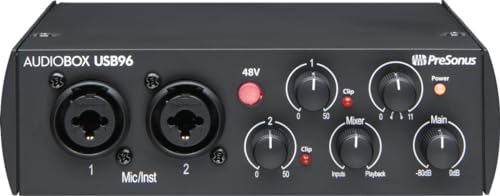
- Two instrument inputs for guitar or bass
- USB bus-powered and portable
- Includes Studio One Artist and plugin bundle
Best For: Portable home recording and first studio setups
Modern USB-C Choice
Alloy Red 2x2 Interface for Guitarists

- Two combo inputs with Hi-Z guitar support
- USB-C plug-and-play with bus power
- 24-bit/192kHz recording with direct monitoring
Best For: Windows laptop players who want a simple USB-C setup
Premium Analog Flavor
Universal Audio Volt 2 for Guitar Recording
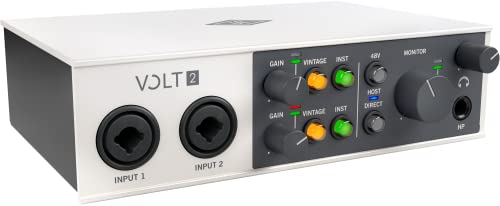
- 610 tube emulation Vintage mode
- 24-bit/192kHz converters for detailed audio
- Mac, Windows, and iOS support with MIDI
Best For: Players who want an analog-style sound and flexible device support
Portable Mobile Guitar Rig
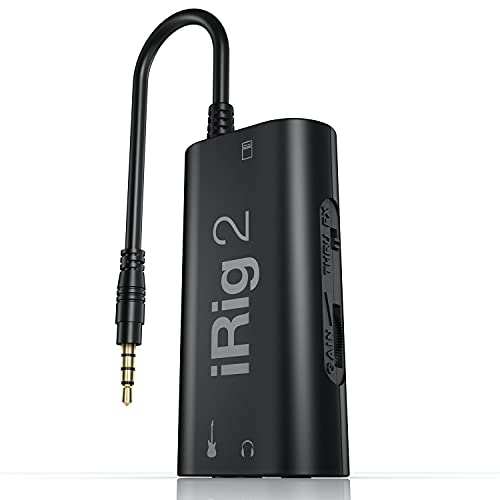
- Plug-and-play with adjustable gain
- Headphone and amp outputs
- Clean thru and processed signal switch
Best For: Mobile guitarists using iPhone, iPad, or Mac
Budget Dual-Input Interface

- Two combo XLR/line/instrument inputs
- Zero-latency USB/Direct monitoring
- Includes recording software
Best For: Affordable guitar and vocal recording on Mac or PC
Studio-Ready Solo Interface
Focusrite Scarlett Solo 4th Gen

- 1 Hi-Z input for guitar
- 24-bit/192kHz and 120dB dynamic range
- Air mode plus bundled software
Best For: Songwriters wanting high-fidelity solo guitar recordings
Mobile Creator Interface
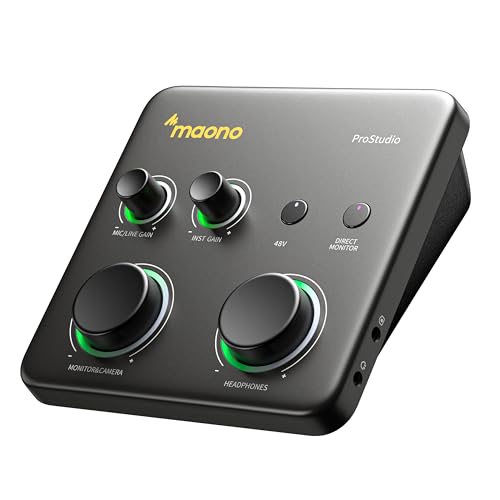
- 70dB gain for guitar and vocal recording
- Dual USB works with computer and phone/iPad
- Loopback and Auto Gain suit streaming workflows
Best For: Solo creators recording guitar and streaming from multiple devices
Studio Starter Pick
Focusrite Scarlett 2i2 4th Gen
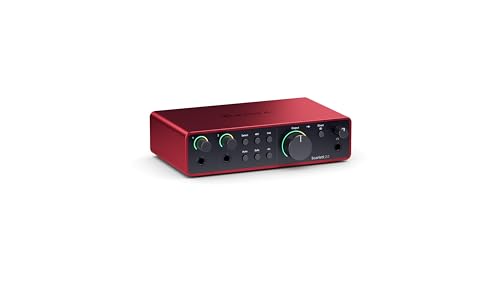
- Two Hi-Z inputs for guitar recording
- Auto Gain and Clip Safe help prevent bad takes
- 120dB dynamic range with 24-bit/192kHz audio
Best For: Guitarists and songwriters wanting a simple, polished 2-input interface
Budget Routing Option

- Dedicated instrument input with impedance control
- 24-bit/192kHz recording and 106dB dynamic range
- ASIO and routing software support low-latency use
Best For: Beginners wanting a compact interface for guitar, vocals, and streaming
Compact Starter Pick – Focusrite Scarlett Solo 3rd Gen for Guitar Recording
If you want audio interfaces for recording guitars that keep things simple, the Scarlett Solo 3rd Gen is a strong place to start. It gives you a dedicated Hi-Z instrument input, up to 24-bit/192kHz recording, and Focusrite’s Air mode for a brighter acoustic-guitar sound.
Best For: Solo guitarists and singer-songwriters who want a straightforward USB interface with polished sound.
Pros:
- 1 Hi-Z instrument input is ready for direct guitar or bass recording.
- Air mode can add extra clarity to acoustic instruments.
- 24-bit/192kHz converters support studio-quality recording and playback.
- Gain Halo indicators help prevent clipping during takes.
Cons:
- Only a 2-channel design, so it is not built for bigger multi-source setups.
- Best suited to simple recording workflows rather than advanced routing.
Overall, this is a practical choice if you mainly record guitar and vocals and want dependable results without a steep learning curve. It also includes useful software, which helps you start tracking right away.
Best Value Bundle – PreSonus AudioBox 96 for Portable Guitar Tracking
For buyers comparing audio interfaces for recording guitars on a budget, the PreSonus AudioBox 96 stands out with two instrument inputs, low-latency mixer control, and bus-powered portability. It is designed for personal recording setups where you want simple operation and a full software bundle.
Best For: Guitarists who want a portable 2-channel interface with useful bundled software and MIDI support.
Pros:
- 2 high-headroom instrument inputs handle guitar, bass, or line-level gear.
- USB bus power makes it easy to use on the go.
- Mixer control supports a custom monitor blend with zero latency.
- Includes Studio One Artist, Ableton Live Lite, and Studio Magic Plug-In Suite.
Cons:
- Max sample rate is 24-bit/96kHz, which is lower than some competing interfaces.
- Requires USB 2.0, so it is less modern than newer USB-C options.
This is a solid all-around pick if you want an affordable, portable interface with enough flexibility for guitar tracking and small home setups. The bundled software adds a lot of value for new recordists.
Modern USB-C Choice – Alloy Red 2×2 Interface for Guitarists
If you want audio interfaces for recording guitars with a modern, compact layout, this 2×2 USB-C model is built around plug-and-play simplicity. It offers two combo inputs, Hi-Z guitar-friendly recording, 24-bit/192kHz fidelity, and zero-latency direct monitoring.
Best For: Guitarists using a Windows laptop or mobile-style setup who want a simple USB-C interface.
Pros:
- Two combo jacks give you flexible input options for guitar and mic recording.
- Hi-Z support makes it suitable as a guitar interface for PC.
- USB-C bus power and plug-and-play operation simplify setup.
- Direct Monitor and headphone output support low-latency tracking.
Cons:
- Listed compatibility is focused on Windows, so it is less versatile than cross-platform models.
- No bundled software is mentioned in the supplied details.
This interface makes sense if you want a clean, contemporary recording tool with simple monitoring and no extra power brick. It is especially appealing for straightforward guitar tracking on a laptop.
Premium Analog Flavor – Universal Audio Volt 2 for Guitar Recording
Among audio interfaces for recording guitars, the Universal Audio Volt 2 is aimed at players who want a more characterful front end. Its 610 tube emulation Vintage mode, 24-bit/192kHz converters, and MIDI support make it a flexible option for home studios and mobile rigs.
Best For: Musicians who want a polished, analog-style recording path for guitar and other instruments.
Pros:
- Vintage mode delivers UA 610-style preamp character.
- Up to 24-bit/192kHz quality supports detailed recording and mixing.
- Works with MacOS, Windows, iPad, and iPhone for flexible use.
- Includes access to LUNA and UAD plug-ins and instruments.
Cons:
- Requires an external power supply, so it is less convenient than bus-powered models.
- iOS use needs an Apple Lightning to USB Camera Adapter on most devices.
If you want a guitar interface with a more finished, record-ready feel, this one brings a premium sound and useful cross-platform support. It is a strong step up for players who care about tone shaping during tracking.
Portable Mobile Guitar Rig – IK Multimedia iRig 2
If you want a simple way to use audio interfaces for recording guitars on iPhone, iPad, or Mac, the iRig 2 keeps the setup compact and easy to carry. It offers plug-and-play operation, an adjustable gain dial, and both headphone and amplifier outputs so you can record or practice without a complicated signal chain.
Best For: Guitarists who want a lightweight mobile interface for quick recording, monitoring, and practice with Apple devices.
Pros:
- Plug-and-play design with an adjustable gain dial
- 1/4″ output jack for connecting to an amplifier without extra adapters
- Built-in headphone output for direct monitoring
- Processed signal and clean thru switch for flexible use
Cons:
- Designed around iOS and Apple-device workflows
- Uses adapter-based compatibility on newer devices
- Not built for multi-input studio recording
This is a practical choice if your priority is portability and fast setup over advanced studio features. For basic guitar recording and mobile practice, the iRig 2 keeps things straightforward.
Budget Dual-Input Interface – M-AUDIO M-Track Duo
The M-AUDIO M-Track Duo is a flexible pick for audio interfaces for recording guitars when you need more than a simple instrument input. With two combo XLR/line/instrument inputs, 48kHz resolution, and zero-latency monitoring options, it works well for guitar tracking, vocals, and streaming from a Mac or PC.
Best For: Players who want an affordable dual-input interface for guitar plus vocals or other sources.
Pros:
- Two combo XLR/line/instrument inputs for versatile recording
- USB/Direct switch for zero-latency monitoring
- 1/4″ headphone output plus stereo main outputs
- Includes MPC Beats software and a software suite
Cons:
- 48kHz maximum sample rate is modest by modern standards
- Bulkier than a tiny mobile guitar adapter
- May be more interface than needed for solo guitar-only use
Overall, this is a sensible all-rounder if you want a simple desktop interface that can handle guitar now and other recording tasks later. It trades premium specs for practicality and flexibility.
Studio-Ready Solo Interface – Focusrite Scarlett Solo 4th Gen
For guitarists who want a more polished result from audio interfaces for recording guitars, the Focusrite Scarlett Solo 4th Gen brings studio-style specs in a compact USB package. It offers one Hi-Z instrument input, 24-bit/192kHz conversion, a 120dB dynamic range, and Air mode for adding presence to guitars and vocals.
Best For: Songwriters and guitarists who want high-fidelity solo recording with a simple one-guitar, one-mic layout.
Pros:
- 1 Hi-Z instrument input for direct guitar recording
- 24-bit/192kHz recording with 120dB dynamic range
- Air mode adds musical presence and harmonic drive
- Includes Pro Tools Intro+, Ableton Live Lite, Cubase LE, and Hitmaker Expansion
Cons:
- Single instrument input limits larger setups
- Only one XLR mic preamp for minimal expansion
- More focused on solo tracking than multi-source recording
This is the strongest pick here if sound quality matters most and you want an interface that can move from home demos to more serious recording. It stays simple, but the specs and included software give it a clear studio edge.
Mobile Creator Interface – MAONO P1 USB Audio Interface
If you want audio interfaces for recording guitars that also handle streaming, the MAONO P1 is built for flexible home and mobile setups. It records to Mac, PC, iPhone, Android, tablets, and cameras, while the dual USB design lets you keep a computer and phone or iPad connected at the same time.
Best For: Solo creators who want one interface for guitar recording, streaming, and mobile content capture.
Pros:
- Up to 70dB gain and -130dB EIN support clean recording for guitar and vocal sources.
- Auto Gain, independent mute controls, and direct monitoring simplify live sessions and take management.
- Built-in loopback and ProStudio2 routing make it easier to combine guitar, voice, backing tracks, and desktop audio.
- Compact zinc-alloy housing and a 15° tilt angle suit desk-friendly or portable use.
Cons:
- Its feature set is aimed more at creators and streamers than stripped-down guitar-only rigs.
- Complex routing software may be more than some beginners need.
The P1 stands out if you want a single interface that can cover guitar recording, streaming, and mobile workflows without constant reconfiguration. It is especially appealing for creators who value onboard controls and flexible connectivity over a minimalist layout.
Studio Starter Pick – Focusrite Scarlett 2i2 4th Gen
For buyers comparing audio interfaces for recording guitars, the Focusrite Scarlett 2i2 4th Gen is a straightforward studio choice with two Hi-Z instrument inputs and Auto Gain. It focuses on clean capture, easy level-setting, and bundled software for users who want to start recording quickly.
Best For: Guitarists and songwriters who want a dependable 2-input interface with simple controls and polished sound.
Pros:
- Two Hi-Z instrument inputs make it easy to plug in one or two guitars.
- Auto Gain and Clip Safe help set levels and avoid clipping on takes.
- 120dB dynamic range and 24-bit/192kHz recording support high-fidelity tracking.
- Air mode adds extra presence and harmonic drive to guitars and vocals.
Cons:
- It is a compact 2-input interface, so larger multi-source setups will need more channels.
- Best value depends on whether you will use the included software bundle.
This is a strong pick if you want a proven, music-first interface that keeps guitar recording simple while still offering studio-grade specs. The combination of instrument inputs, automatic level tools, and software bundle makes it easy to build around.
Budget Routing Option – MAONO PS22 Lite USB Interface
If you are shopping for audio interfaces for recording guitars on a tighter budget, the MAONO PS22 Lite packs the core features many home users need. It offers a dedicated instrument input, 24-bit/192kHz recording, low-noise preamp support, and routing tools for DAW work or streaming.
Best For: Beginners and home-studio users who want an easy USB interface for guitar, vocals, and streaming.
Pros:
- Dedicated guitar input with impedance adjustment for instrument recording.
- 24-bit/192kHz audio and 106dB dynamic range support detailed capture.
- ProStudio routing software and ASIO support add low-latency flexibility.
- Plug-and-play design with direct monitoring keeps setup simple.
Cons:
- Feature depth is centered on entry-level creators rather than advanced studio expansion.
- Its small, compact layout may feel basic if you want more hands-on hardware control.
The PS22 Lite is appealing if you want a compact interface that gets guitar recording, vocals, and routing features into one affordable-friendly package. It is most convincing for users who value simplicity and software tools over a more traditional studio layout.
How We Picked the Best Audio Interfaces for Recording Guitars
We looked for interfaces that make guitar recording simple and dependable: solid preamps, low-latency monitoring, easy connection options, and enough headroom for pickups and pedal chains. We also considered software support, portability, and whether each unit is practical for solo guitarists versus multi-instrument home setups.
Quick Comparison
If you mainly record one guitar at a time, compact 1-in/2-out models are usually the easiest starting point. If you want to track vocals and guitar together, dual-input interfaces offer more flexibility. For mobile recording, phone-and-tablet compatibility can matter more than extra I/O. The best Audio Interfaces for Recording Guitars are the ones that match your workflow, not just your spec sheet.
Key Buying Factors for Audio Interfaces for Recording Guitars
Input Type and Instrument Mode
Make sure the interface has a true instrument input or Hi-Z mode for direct guitar connection. Without it, your tone may sound weak, dull, or noisy.
Gain Range and Noise Floor
Passive pickups often need more clean gain than expected. A quieter preamp with enough gain helps you avoid hiss and keeps dynamics intact, especially on clean parts and fingerstyle playing.
Monitoring and Latency
Direct monitoring is valuable when tracking guitars, particularly if you use amp sims. Low-latency drivers also help performances feel natural while recording.
Connectivity and Workflow
USB-C, USB-A, iOS support, loopback, and MIDI can all be useful depending on how you record. Streamers and hybrid creators may want extras beyond basic guitar capture.
Build Quality and Portability
If you move between rooms, rehearsals, or travel rigs, compact and bus-powered interfaces are easier to live with. Desktop units may offer better controls, but portability can be the deciding factor.
Who Should Buy Which Audio Interfaces for Recording Guitars?
Solo guitarists who want a simple setup should look at compact one-channel interfaces. Singer-songwriters benefit from two-input models that can handle guitar and vocal recording at the same time. Mobile players and iPhone or iPad users should prioritize portable options with strong app compatibility. If you want a broader creator setup, choose one of the more flexible Audio Interfaces for Recording Guitars with loopback, MIDI, or stronger routing features.
In short, start with your recording style, then choose the interface that removes friction from your sessions. That approach will get you better results than chasing specs alone.