Recording in a spare bedroom, office, or living room does not have to mean muddy vocals. The right mic can help reduce room noise and capture a more controlled, polished sound.
Below, we’ve rounded up 10 of the best options for creators who need strong results without a fully treated studio.
Best 10 Studio Microphones for Untreated Rooms Picks for 2026
Broadcast-Ready Dynamic Mic
Shure SM7B for Podcasting & Streaming
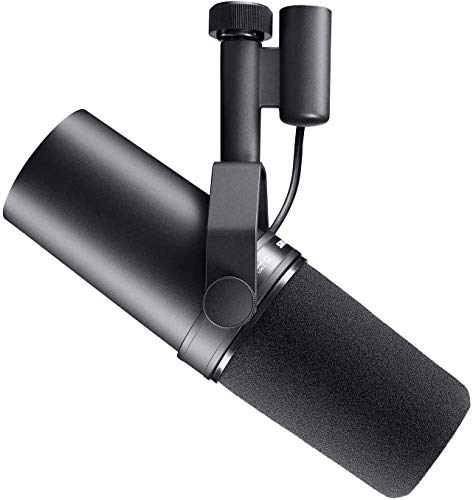
- Dynamic cardioid design helps reduce room noise
- Built-in pop filter and windscreen tame plosives
- Durable XLR mic with shielding and pro broadcast tone
Best For: Creators in untreated rooms who want a warm, noise-resistant vocal mic
Detailed Condenser Pick
Sony C-80 for Clean Vocal Capture

- Unidirectional condenser with dual-diaphragm design
- Low-cut filter and -10dB pad help manage noise and levels
- Rich mid-low focus suited to vocal recording
Best For: Vocalists who need condenser detail with basic room-noise controls
Flexible USB/XLR Dynamic

- Directional dynamic mic helps reduce background noise
- USB and XLR outputs support flexible setups
- Includes mute, gain control, monitoring, windscreen, and shock mount
Best For: Home creators who want an easy, noise-resistant mic with upgrade paths
Versatile Studio Condenser

- Multipattern condenser with cardioid, figure-8, and omni
- Pad and high-pass filter help control loud sources and rumble
- Includes professional shockmount for reduced handling noise
Best For: Users who want a flexible condenser with useful noise-control features
Quiet-First Studio Condenser

- 4 dBA self-noise helps keep recordings clean
- Cardioid large-diaphragm condenser with smooth response
- Includes shock mount, pop filter, and 6 m XLR cable
Best For: Vocal recording and streaming in untreated rooms
Budget Studio Standard

- Cardioid pattern reduces pickup from the sides and rear
- High SPL handling and wide dynamic range
- Affordable XLR condenser for home and project studios
Best For: Affordable home-studio recording with basic room rejection
All-In-One USB Recording Kit

- USB plug-and-play for PC and laptop
- Cardioid capsule helps avoid ambient noise
- Includes boom arm, shock mount, and double pop filter
Best For: Easy desktop recording without extra hardware
Most Flexible Pattern Choice
AKG C114 Multi-Pattern Studio Mic

- Cardioid, omni, and figure-8 patterns
- Low-noise large-diaphragm condenser design
- Includes shock mount and runs on XLR
Best For: Users who need adjustable pickup patterns for vocals, streaming, and variable room setups
Best Noise-Control Kit
Shure SM4 XLR Studio Condenser Kit

- Uniform cardioid pattern rejects off-axis noise
- Built-in pop filtering and RF shielding
- Includes shock mount, pop filter, and case
Best For: Vocal and podcast recordings in home studios that need strong noise rejection
Solid All-Around Workhorse
Audio-Technica AT2035 Cardioid Condenser

- Cardioid pattern improves source isolation
- Large diaphragm with low-noise performance
- High-pass filter, pad, and shock mount included
Best For: Budget-conscious home studios that need a dependable vocal and streaming mic
Broadcast-Ready Dynamic Mic – Shure SM7B for Podcasting & Streaming
If you’re shopping for studio microphones for untreated rooms, the Shure SM7B is a strong choice because its dynamic cartridge and cardioid pattern are built to focus on your voice while minimizing background noise, vibrations, and room interference. It is designed for close-mic vocal work and gives you a warm, balanced sound that suits podcasting, voiceover, streaming, and studio recording.
Best For: Podcasters, streamers, and voiceover creators working in noisy or untreated spaces who want a forgiving, broadcast-style dynamic mic.
Pros:
- Dynamic capsule and cardioid pickup help reject room noise and keep vocals centered
- Built-in pop filtering and detachable windscreen reduce plosives and breath noise
- Rugged all-metal construction with electromagnetic shielding for reliable use
- XLR output gives you full control over gain, EQ, and tone shaping
Cons:
- Needs substantial gain from your interface or a compatible preamp
- XLR-only setup adds more gear and setup than USB options
- Best results come from close vocal technique
The SM7B is a practical pick when your room acoustics are less than ideal and you want a proven broadcast sound without leaning on heavy post-processing. It is especially appealing if you already have, or plan to build around, an XLR chain with enough clean gain.
Detailed Condenser Pick – Sony C-80 for Clean Vocal Capture
For buyers comparing studio microphones for untreated rooms, the Sony C-80 stands out as a condenser mic with a unidirectional pattern, low-cut filter, and -10dB pad to help manage noise and louder sources. Its dual-diaphragm configuration and noise-elimination construction are aimed at delivering a rich mid-low range with clear vocal detail.
Best For: Singers and voice recordists who want a condenser sound with useful controls to manage less-than-perfect room conditions.
Pros:
- Unidirectional pattern helps focus on the source
- Low-cut filter reduces low-frequency noise in the room
- -10dB pad adds flexibility for louder performances
- Dual-diaphragm design and noise-elimination construction support clean capture
Cons:
- Requires 44–52V phantom power
- Condenser mics can pick up more room detail than dynamics
- Best suited to careful mic placement and a controlled recording chain
The C-80 is a thoughtful condenser choice if you want articulate vocals but still need some tools to manage room rumble and level spikes. It is a better fit for users who can supply phantom power and are comfortable working a little closer to the mic.
Flexible USB/XLR Dynamic – FIFINE K688 for Home Studios
If you’re browsing studio microphones for untreated rooms, the FIFINE AmpliTank K688 is appealing because it uses a directional dynamic capsule to help cut down background noise from fans, drives, and other room clutter. Its USB and XLR outputs make it versatile for home studios, podcasting, gaming, and voice-over work.
Best For: Creators who want a noise-conscious dynamic mic with both USB convenience and XLR upgrade options.
Pros:
- Cardioid pattern helps reduce unwanted room noise
- USB and XLR connectivity offer flexible recording workflows
- Built-in mute, gain control, and headphone monitoring support USB use
- Includes windscreen and shock mount for added noise reduction
Cons:
- All control features are only available over USB
- XLR cable, arm stand, and mic stand are not included
- Needs close-mic technique to perform at its best
The K688 is a smart value option if you want a dynamic microphone that stays practical in a noisy room and can grow with your setup. It gives you easier everyday use over USB while still leaving room to move into a more traditional XLR chain later.
Versatile Studio Condenser – Warm Audio WA-87jr for Vocals
When looking at studio microphones for untreated rooms, the Warm Audio WA-87jr is worth considering if you still want the detail of a large-diaphragm condenser and some useful controls to keep recordings manageable. It offers cardioid, figure-8, and omnidirectional patterns, plus a built-in pad and high-pass filter to help handle louder sources and unwanted low-frequency noise.
Best For: Musicians and vocalists who want a multipattern condenser with shockmount support and room-noise management tools.
Pros:
- Multipattern design adds flexibility for different recording situations
- Built-in pad helps capture louder sources
- High-pass filter reduces unwanted low-frequency noise
- Includes a professional shockmount to cut handling noise
Cons:
- Requires phantom power
- Condenser design will be less forgiving than a dynamic mic in poor rooms
- Best suited to users who want a more traditional studio condenser setup
The WA-87jr is a flexible condenser for users who want one mic that can cover vocals, instruments, and podcast-style recording with more control than a basic large-diaphragm model. In an untreated room, its filter and shockmount features help, but placement and recording technique still matter.
Quiet-First Studio Condenser – RØDE NT1 Signature Series
If you’re shopping for studio microphones for untreated rooms, the RØDE NT1 Signature Series is built around one key advantage: very low self-noise. Its cardioid large-diaphragm design helps keep the focus on your voice or instrument, while the included shock mount, pop filter, and XLR cable make it easier to set up a cleaner recording chain right away.
Best For: Vocal tracking, streaming, and podcasting in spaces where you want a quiet mic with included accessories.
Pros:
- Exceptionally low 4 dBA self-noise for cleaner capture in less-than-ideal rooms
- Cardioid large-diaphragm condenser with smooth response and high sensitivity
- Included SM6 shock mount, pop filter, and 6 m XLR cable add immediate value
- High SPL handling makes it usable for a range of studio sources
Cons:
- Requires XLR gear and phantom power
- Condenser mics will still pick up room sound, even with the cardioid pattern
Overall, this is a strong pick if you want a premium condenser that starts quiet and comes ready for serious studio work. The bundled accessories help you get recording quickly, and the low-noise design is especially appealing when your room treatment is limited.
Budget Studio Standard – Audio-Technica AT2020
For buyers comparing studio microphones for untreated rooms, the Audio-Technica AT2020 is a practical cardioid condenser that focuses on value and usability. Its side-address design, low-mass diaphragm, and side/rear rejection make it a straightforward choice for home or project studios where you want better isolation from the room.
Best For: Home studio users who want an affordable XLR condenser with solid isolation and a proven track record.
Pros:
- Cardioid pattern helps reduce pickup from the sides and rear
- High SPL handling and wide dynamic range add versatility
- Low-mass diaphragm supports extended frequency response and good transient response
- Widely positioned as a price/performance standard for project and home studios
Cons:
- Requires phantom power and an audio interface
- No included accessory bundle in the supplied details
The AT2020 makes sense when you want a dependable studio mic without overcomplicating the purchase. It won’t erase an untreated room, but the cardioid pattern and versatile spec sheet make it a smart entry point for cleaner recordings.
All-In-One USB Recording Kit – FIFINE T669
If you want studio microphones for untreated rooms without adding an interface, the FIFINE T669 is a simple USB condenser kit that’s easy to place and ready to use. The cardioid capsule is designed to capture sound from the front while avoiding ambient noise, and the included boom arm, shock mount, and double pop filter help you build a more controlled desktop setup.
Best For: Beginners, streamers, and podcasters who want a plug-and-play USB kit with accessories included.
Pros:
- USB plug-and-play setup works directly with PC and laptop
- Cardioid condenser capsule helps avoid ambient noise
- Includes boom arm, shock mount, and double pop filter
- Long 8.2 ft USB cable adds flexibility for desktop setups
Cons:
- USB connection may be less flexible than an XLR setup
- Incompatible with Xbox, per the supplied notes
This is the most convenience-focused option here, especially if you want an easy path to better voice recordings in a less-treated room. The included stand and filters reduce the need to buy extra gear, which makes it a strong value for straightforward recording, streaming, and voice work.
Most Flexible Pattern Choice – AKG C114 Multi-Pattern Studio Mic
If you want studio microphones for untreated rooms that can adapt to different setups, the AKG C114 is built around flexibility. Its cardioid, omni, and figure-8 patterns let you choose tighter pickup for solo sources or wider capture when the room sound is part of the recording.
Best For: Creators who want one condenser that can handle vocals, instruments, podcasting, and changing room conditions.
Pros:
- Three polar patterns add useful control in less-than-ideal spaces
- Large-diaphragm capsule aims for a smooth top end and balanced response
- Low noise and up to 145 dB SPL support both quiet and loud sources
- Includes an H84 shock mount and comes from an authorized AKG dealer
Cons:
- Figure-8 and omni modes can capture more room sound when used without care
- Requires XLR setup and phantom power like most studio condensers
- Best results still depend on proper mic placement in an untreated room
Overall, the C114 stands out for buyers who need one mic that can be tailored to the source and the space. If your room is not treated, its pattern options make it easier to work around reflections than with a fixed-pattern condenser.
Best Noise-Control Kit – Shure SM4 XLR Studio Condenser Kit
For studio microphones for untreated rooms, the Shure SM4 is aimed at keeping the sound source front and center. Its uniform cardioid pattern, internal pop filter, and RF interference shielding are all designed to help you record cleaner audio when the room itself is not doing you any favors.
Best For: Vocal recording, podcasting, and home-studio use where off-axis rejection and mix-ready sound matter most.
Pros:
- Uniform cardioid pattern helps reject unwanted side noise
- Internal pop filter and woven mesh Faraday cage reduce plosives and interference
- Large sweet spot reduces proximity effect for more consistent close-mic sound
- Includes shock mount, magnetic pop filter, adapter, and carrying case
Cons:
- Cardioid only, so it is less flexible than multi-pattern mics
- Needs phantom power and an XLR recording setup
- Its benefits still depend on sensible placement in a reflective room
The SM4 makes a strong case for untreated spaces because it focuses on controlling what gets into the mic before you reach the DAW. If you want a straightforward home-studio condenser that prioritizes isolation and clean capture, this kit is an easy fit.
Solid All-Around Workhorse – Audio-Technica AT2035 Cardioid Condenser
The Audio-Technica AT2035 is a practical pick if you are shopping for studio microphones for untreated rooms and want a straightforward cardioid condenser. Its side-address design, large diaphragm, and included shock mount are built for home and project studios where you want clear source focus and low noise.
Best For: Home and project studio users who want a dependable cardioid mic for vocals, streaming, and general recording.
Pros:
- Cardioid pattern helps reduce pickup from the sides and rear
- Large diaphragm delivers smooth, natural sound with low noise
- High SPL handling plus 80 Hz high-pass filter and 10 dB pad add versatility
- Includes a custom shock mount, pouch, and threaded adapter
Cons:
- No multi-pattern options for changing room situations
- Cardioid mics still need careful placement in reflective spaces
- Requires XLR input and proper gain staging
For untreated rooms, the AT2035 leans on simple cardioid isolation and useful onboard controls rather than extra complexity. It is a solid all-around studio microphone when you want a reliable, low-noise workhorse without spending on more advanced features.
How We Picked the Best Studio Microphones for Untreated Rooms
For Studio Microphones for Untreated Rooms, we prioritized mics that are easier to manage in reflective spaces: strong off-axis rejection, controlled pickup patterns, usable sensitivity, and sound signatures that stay clear without overemphasizing room echo. We also considered build quality, included accessories, connection type, and how well each option fits common use cases like podcasting, streaming, voice-over, and home recording.
Quick Comparison
Dynamic mics are usually the safest choice when your room is not acoustically treated, because they tend to capture less ambient noise and reflections. Condenser mics can sound more detailed and open, but they also reveal more of the room, so they work best when placement is careful or the room is at least somewhat controlled. USB models are convenient for simple setups, while XLR mics offer more flexibility and future upgrade potential.
Key Buying Factors for Studio Microphones for Untreated Rooms
Pickup Pattern and Off-Axis Rejection
A cardioid or similarly focused pattern helps isolate your voice and reduce side-room reflections. This is one of the most important features to look for if your recording space is not treated.
Mic Type and Sensitivity
Dynamic microphones are generally more forgiving in echoey rooms. Condensers can sound more detailed, but they demand better technique, closer placement, and sometimes some basic room softening.
Connection and Workflow
Choose USB if you want the easiest plug-and-play setup. Choose XLR if you want better upgrade paths, more control over gain staging, and the option to build a more professional signal chain over time.
Included Accessories
Shock mounts, pop filters, boom arms, and cables can matter more than they seem, especially in a budget or starter setup. They help you get better results right away and reduce handling noise or plosives.
Voice Tone and Use Case
For spoken word, a warmer, controlled dynamic mic often works well. For singing or acoustic recording, a condenser may be worth the extra room sensitivity if your space is manageable.
Who Should Buy Which Studio Microphones for Untreated Rooms?
If you podcast, stream, or record narration in a typical home environment, start with a dynamic mic. If you want a more detailed vocal sound and can control your setup, a condenser may be the better fit. Beginners who want convenience should look at USB or dual-output options, while creators planning long-term upgrades may prefer XLR-first models. In short, the best Studio Microphones for Untreated Rooms are the ones that match your space, your voice, and how much setup you want to manage.