Choosing the right mixer can make a small venue sound polished, controlled, and easy to manage. The best compact live sound mixers for small venues balance clean preamps, enough input flexibility, and a footprint that fits tight setups.
In this roundup, we focus on practical options for solo acts, duos, small bands, houses of worship, schools, and event spaces that need reliable sound without excess complexity.
Best 10 Compact Live Sound Mixers for Small Venues Picks for 2026
Ultra-Compact 6-Channel with Effects

- 6-channel analog mixer
- 2 mic preamps plus 4 stereo line channels
- Built-in digital effects and EQ
Best For: Small venues and acoustic setups needing a tiny mixer with effects
High-Headroom 8-Channel Workhorse

- 8-channel compact mixer
- 2 mic/line inputs with phantom power
- 3-band EQ on every channel
Best For: Small venues needing a simple 8-channel mixer with basic routing
Portable 10-Channel Mixer/Recorder

- 10 channels with SD multitrack recording
- 32-bit float audio with no gain setting needed
- Battery powered with effects and MIDI
Best For: Performers and small venues that need mixing plus recording
Ultra-Compact 4-Channel Preamps

- 4-channel ultra-compact mixer
- 2 Onyx mic preamps with phantom power
- High-headroom line inputs and RF rejection
Best For: Very small venues and lean live setups with limited space
Portable Analog Workhorse
Yamaha MG10 10-Input Stereo Mixer

- 10-channel analog mixer with XLR connectivity
- D-PRE preamps, 3-band EQ, high-pass filters
- One-knob compressors and rugged metal chassis
Best For: Small venues needing clean, simple analog mixing
Bluetooth-Ready Compact Board

- Bluetooth input plus USB recording and playback
- Built-in digital effects and channel compression
- Slim low-profile design with tablet cradle
Best For: Small gigs and DJ-friendly setups with wireless streaming
Powered All-in-One Reinforcement
Yamaha EMX5 12-Input Powered Mixer

- Mixer and power amp in one portable unit
- 12 inputs with DSP effects and feedback suppression
- 2x 630W@4Ω output for direct reinforcement
Best For: Venues wanting a self-contained powered mixing solution
Compact USB Mixer
Mackie ProFX10v3 10-Channel Mixer Bundle

- 10-channel layout with 4 mic/line inputs
- Built-in GigFX with 24 presets
- 2-in/4-out USB at 24-bit/192 kHz
Best For: Small venues needing effects and USB recording
Powered Event Mixer
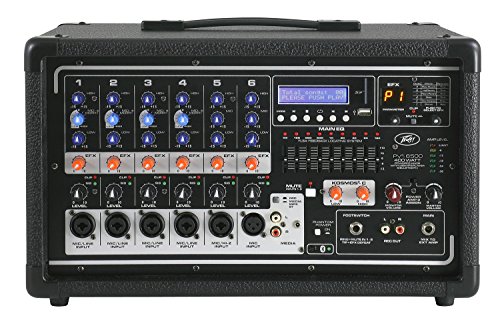
- All-in-one powered mixer for portable setups
- 5 channels with XLR/1/4" combo inputs
- FLS feedback system plus master mute
Best For: Karaoke, church events, and simple small-venue rigs
Portable Live Console

- 7 channels with flexible input options
- RCA and 1/8" media input included
- Feedback locating system and master mute
Best For: Portable bands and events needing more inputs
Ultra-Compact 6-Channel with Effects – Yamaha MG06X
If you want compact live sound mixers for small venues, the Yamaha MG06X is a simple, portable option that keeps the footprint tiny while still giving you six channels, two mic preamps, and dedicated stereo line inputs. It adds onboard digital effects and EQ, which makes it useful for quick vocal and small-band setups where you need basic shaping without extra gear.
Best For: Small venues, acoustic sets, and compact setups that need built-in effects.
Pros:
- 6-channel analog layout with 2 microphone preamps
- 4 dedicated stereo line channels for simple source expansion
- Built-in digital effects and EQ
- Very small size for easy placement
Cons:
- Fewer channels than larger small-venue mixers
- Wired, corded design only
This is a practical pick when you need a straightforward mixer with onboard processing and a minimal footprint. It is best suited to smaller live jobs where simplicity matters more than advanced routing.
High-Headroom 8-Channel Workhorse – Mackie Mix8
The Mackie Mix8 fits well among compact live sound mixers for small venues when you need a straightforward 8-channel board with clean handling and simple tone control. It offers two mic/line inputs, two stereo line inputs, 3-band EQ on every channel, and an aux send with stereo returns for basic live mixing and monitor or effects routing.
Best For: Small venues, basic live bands, and simple event setups that need 8 channels.
Pros:
- 8-channel compact format with high-headroom, low-noise design
- 2 mic/line inputs with phantom power for condenser mics
- 2 stereo 1/4-inch line inputs
- 3-band EQ on all channels plus 1 aux send
Cons:
- Only two mic/line inputs, so larger vocal setups may feel limited
- Uses RCA output connector type, which may not fit every rig
For small venues that need a no-fuss mixer with a bit more channel count than entry-level 4-input models, the Mix8 is a solid utility choice. It focuses on clean operation and basic control rather than extra onboard features.
Portable 10-Channel Mixer/Recorder – Zoom LiveTrak L6
The Zoom LiveTrak L6 stands out in compact live sound mixers for small venues if you want mixing plus multitrack recording in one battery-powered box. It records 10 discrete tracks to SD cards, includes 32-bit float operation for clip-free audio, and adds effects, EQ, MIDI, sound pads, and USB connectivity for flexible live and creator workflows.
Best For: Bands, streamers, and solo performers who want compact mixing and recording together.
Pros:
- 10 channels with 10-track recording to SD cards up to 1TB
- 32-bit float recording for clip-free capture without gain setting
- Battery powered and very compact for portable use
- Effects, EQ, MIDI, and assignable sound pads
Cons:
- More feature-rich than a basic live-only mixer, so it may be more than some users need
- Battery-powered design may not suit every fixed-install setup
This is the most versatile option in the group if your small-venue setup also needs recording and interface functionality. It is especially strong for performers who want one compact device to handle live sound and capture at the same time.
Ultra-Compact 4-Channel Preamps – Mackie 402VLZ4
If your priority is a very small mixer for small venues, the Mackie 402VLZ4 keeps things simple with four channels, two Onyx mic preamps, and high-headroom line inputs. It is a good fit when you need clean input handling for broadcast-style, live event, or studio use in a tiny footprint.
Best For: Very small live setups, broadcast use, and minimal rigs that need clean mic preamps.
Pros:
- Ultra-compact 4-channel design
- 2 Onyx mic preamps with phantom power
- High-headroom line inputs for simple source handling
- Improved RF rejection and sealed rotary controls
Cons:
- Only 4 channels, so it is limited for more complex small-venue mixes
- Fewer built-in mixing features than larger compact models
The 402VLZ4 is best when space is tight and you want reliable, clean preamps over extra channel count. It makes sense for lean setups where the mixer needs to stay out of the way and do its job well.
Portable Analog Workhorse – Yamaha MG10 10-Input Stereo Mixer
If you need compact live sound mixers for small venues without extra software or onboard FX, the Yamaha MG10 is a straightforward analog option built for clean, dependable mixing. Its 10 input channels, D-PRE preamps, 3-band EQ, high-pass filters, and one-knob compressors give you the core tools to shape vocals and instruments quickly.
Best For: Small venue operators who want a rugged, no-frills mixer focused on clean sound and fast control.
Pros:
- Studio-grade D-PRE preamps aim for natural bass and smooth highs.
- 3-band EQ and high-pass filters help clean up unwanted noise.
- One-knob compressors simplify control of vocals, guitars, bass, and snare.
- Rugged metal chassis and 48V phantom power add practical live-use flexibility.
Cons:
- No USB connectivity for direct recording or playback.
- No built-in effects, so you’ll need external gear for reverb or delay.
- Analog layout may feel basic if you want modern digital features.
Overall, the MG10 is a solid pick when reliability and clean signal path matter more than features. For small venues that want a compact mixer that stays out of the way and does the job well, it’s an easy model to consider.
Bluetooth-Ready Compact Board – Peavey PV 10 BT Compact Mixer
The Peavey PV 10 BT is a compact live sound mixer for small venues that blends wireless convenience with practical control. With Bluetooth input, USB streaming and recording, built-in digital effects, and a slim low-profile design, it suits operators who want a small footprint without giving up useful modern features.
Best For: Small gigs, DJ setups, and simple live rigs that benefit from Bluetooth and USB connectivity.
Pros:
- Bluetooth wireless input makes quick music playback easy.
- USB to PC and stereo USB-B streaming support recording and playback.
- Built-in digital effects, compression, and channel EQ add useful shaping tools.
- Slim design and tablet cradle help keep the setup tidy and compact.
Cons:
- Only 4 channels, so larger input lists may need a bigger mixer.
- 90-day warranty is shorter than many alternatives.
- Feature-heavy layout may be more than you need for very basic setups.
For small venues that value wireless streaming and easy playback as much as live mixing, the PV 10 BT offers a lot in a small frame. It is especially appealing when you want one board that can handle both stage sound and casual music input.
Powered All-in-One Reinforcement – Yamaha EMX5 12-Input Powered Mixer
The Yamaha EMX5 is a compact live sound mixer for small venues that combines mixing and amplification in one portable unit. With 12 inputs, DSP effects, feedback suppression, output EQ, and a 2x 630W@4Ω power amp, it is built for users who want a self-contained sound reinforcement setup.
Best For: Small venues and events that need a mixer and power amp in one easy-to-carry system.
Pros:
- Built-in power amplifier reduces the need for separate external amplification.
- 12-input layout gives more room for microphones and sources.
- SPX effects and feedback suppression add practical live-sound control.
- Lightweight, portable design is useful for events and first-time users.
Cons:
- Heavier than a basic tabletop mixer at 22.4 pounds.
- Auxiliary-focused connectivity is less flexible than mixers with broader digital options.
- May be more mixer than needed for very small, low-input setups.
If you want an all-in-one solution for small venue reinforcement, the EMX5 stands out for convenience and output power. It makes sense when portability matters, but you still need a system that can drive speakers directly.
Compact USB Mixer – Mackie ProFX10v3 10-Channel Mixer Bundle
For compact live sound mixers for small venues, the Mackie ProFX10v3 gives you a practical 10-channel layout with 4 mic/line inputs, additional stereo/line options, and built-in GigFX effects. It also adds 2-in/4-out USB with 24-bit/192 kHz recording, making it a useful pick if you want a small-format mixer that can handle both live gigs and basic computer integration.
Best For: Small venues that need a compact mixer with onboard effects and USB connectivity for live sound plus simple recording.
Pros:
- 10 channels with 4 mic/line inputs and 2 mono/stereo line inputs
- Built-in GigFX engine with 24 effect presets
- 2-in/4-out USB interface supports 24-bit, 192 kHz audio
- Bundle includes a mixer bag and 10′ stereo cable
Cons:
- Not the lightest option at 7.34 kg
- USB features may be more than some small venues need
This is a strong all-around choice if you want a compact live sound mixer that does more than basic channel mixing. The combination of FX, USB, and multiple input types makes it flexible for smaller gig setups.
Powered Event Mixer – Peavey PVi 6500 Compact Board
The Peavey PVi 6500 is aimed at compact live sound mixers for small venues where an all-in-one powered board is easier than a separate mixer and amp. With 5 channels, combination XLR/1/4″ inputs, and support for XLR, TRS, and RCA connectivity, it fits straightforward event setups like karaoke nights and church services.
Best For: Small venues and portable event setups that want a powered mixer with simple connectivity and built-in processing.
Pros:
- All-in-one powered mixer design for portable use
- 5 channels with combination XLR and 1/4″ input jacks
- FLS Feedback Locating System for easier troubleshooting
- Master mute and foot-switchable effects defeat
Cons:
- Only 5 channels, so input count is limited
- At 22.3 pounds, it is less compact than smaller tabletop mixers
- 90-day warranty is relatively short
If you want a simple powered solution for smaller events, this Peavey keeps the setup focused on practicality. Its feature set is geared more toward easy live operation than advanced channel expansion.
Portable Live Console – Peavey PVi 8500 Event Mixer
Among compact live sound mixers for small venues, the Peavey PVi 8500 stands out as a powered option with 7 channels and a broad set of input choices. It includes combination XLR and 1/4″ input jacks, RCA and 1/8″ media input, plus FLS Feedback Locating System and master mute, which makes it practical for bands, karaoke, and church setups.
Best For: Portable live sound jobs that need a powered mixer with more channel flexibility and media input options.
Pros:
- 7 channels provide more headroom than smaller powered mixers
- Combination XLR/1/4″ inputs and RCA plus 1/8″ media input
- FLS Feedback Locating System helps with problem channels
- Master mute and foot-switchable effects defeat add control during use
Cons:
- Weighs 26 pounds, so it is not especially lightweight
- Powered design may be more mixer than some tiny venues require
- Voltage note is specific to 230 volts, which may affect compatibility
This model makes sense when you want a compact board with a little more flexibility than a 5-channel powered mixer. Its media input options and feedback tools support quick event setups without a lot of extra gear.
How We Picked the Best Compact Live Sound Mixers for Small Venues
We looked for models that suit real-world small-room use: portable sizing, sensible channel layouts, usable EQ and effects, dependable mic preamps, and features that help you set up quickly. For powered models, we also considered whether built-in amplification adds value for simple PA systems. For recording and streaming-friendly mixers, we favored clean signal paths and modern connectivity.
Quick Comparison
The best choice depends on your input needs and how you run sound. Smaller 4- to 6-channel mixers work well for solo performers and compact acoustic rigs. 8- to 10-channel models are better for small bands, multiple vocalists, and mixed mic-plus-line setups. Powered mixers make sense when you want an all-in-one solution with fewer external components.
Key Buying Factors for Compact Live Sound Mixers for Small Venues
Channel Count and Input Types
Start with the number of microphones, instruments, and playback sources you need at once. If you expect future growth, choose a little more headroom than your current setup.
Effects, EQ, and Feedback Control
Built-in reverb or delay can be very helpful for vocals in small rooms. EQ matters just as much, especially when you need to tame harsh highs, muddy low mids, or room resonance. Simple, effective tone shaping is often more useful than a long feature list.
Power and Speaker Matching
If you want one-box convenience, a powered mixer can simplify your rig. If you already own powered speakers or an external amp, a standard unpowered mixer may be the better fit.
Recording and Streaming Features
Some Compact Live Sound Mixers for Small Venues also support USB audio, onboard recording, or Bluetooth playback. These extras are helpful for rehearsal capture, livestreaming, background music, or quick show documentation.
Build Quality and Control Layout
In smaller spaces, a clear layout and sturdy knobs matter. You want controls you can reach fast, even in dim or crowded environments.
Who Should Buy Which Compact Live Sound Mixers for Small Venues?
Solo performers and presenters usually do best with smaller mixers that are simple to operate and easy to transport. Duos and acoustic groups should look for a bit more channel flexibility and vocal effects. Small bands, churches, and event spaces often benefit most from 8- to 10-channel models or powered mixers, depending on whether they need an all-in-one PA solution. If you also create content, choose a mixer with recording or USB features so one setup can cover both live and online work.
Bottom line: match the mixer to your actual input count, venue size, and workflow. The right compact mixer should make setup faster, sound cleaner, and leave you with enough control to handle real performance conditions.