Great in-ear monitoring can make a drummer tighter, cleaner, and far easier to hear on a loud stage. The right system helps you lock in with the click, follow the band, and protect your hearing without guessing through wedges.
In this roundup, we focus on practical in ear monitoring systems for drummers, from simple wired headphone amps to wireless IEM setups for rehearsal and live performance.
Best 10 In Ear Monitoring Systems for Drummers Picks for 2026
Portable 2.4GHz IEM for Small Gigs
Xvive U4 Wireless in-Ear Monitor System

- Less than 5ms latency
- Metal build with built-in limiter
- Simple plug-and-play setup
Best For: Drummers and small bands needing a compact wireless monitor system
Budget Personal Monitor Amp
ANLEON S1 Personal In-Ear Monitor Headphone Amplifier
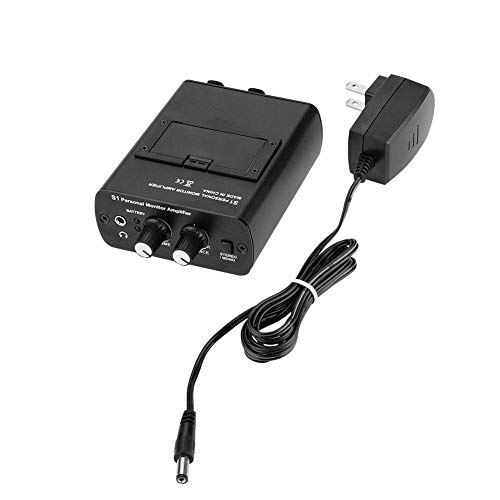
- Mono and stereo output modes
- XLR and wireless input support
- Lightweight aluminum enclosure
Best For: Players who need a basic personal monitor amplifier
Wired Pro IEM Earphones

- 10-mm dynamic broadband transducer
- Strong shielding and secure fit
- Includes foam and silicone ear tips
Best For: Drummers wanting wired in-ears with solid isolation
Long-Run Wireless IEM Kit
LEKATO MS-20 Wireless In-Ear Monitor System

- Up to 30 hours with charging case
- OTG support for phones and USB-C devices
- One transmitter to multiple receivers
Best For: Bands and drummers needing long battery life and easy pairing
Wired isolation pick
BASN Professional In Ear Monitor Headphones

- 38 dB noise-isolating silicone tips
- Detachable MMCX cables for easy replacement
- Over-ear memory wire fit with included case
Best For: Drummers wanting a wired, isolating IEM for stage and studio
Wireless multi-receiver pick
LEKATO MS-1 Wireless in Ear Monitor System
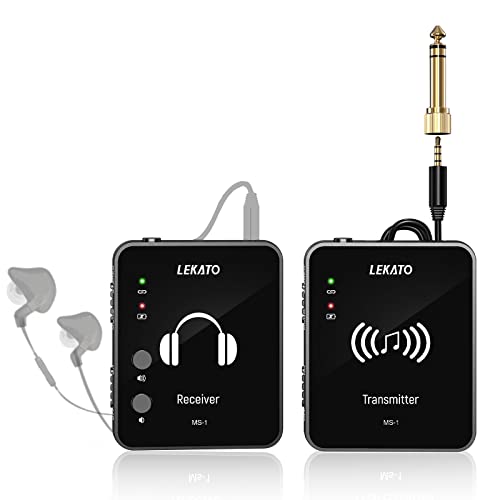
- Pairs one transmitter with up to 6 receivers
- Auto-pairing and stereo transmission
- About 100 feet range in open areas
Best For: Small bands and rehearsal setups that need shared wireless monitoring
Low-latency practice pick
JOYO JW-07 Wireless IEM System

- Less than 5 ms delay for real-time feedback
- Over 8 hours of battery life
- 12 channel banks across 4 groups
Best For: Solo practice and personal wireless monitoring with simple setup
Compact Wireless Starter
Compact 2.4G IEM for Rehearsal and Stage

- 2.4GHz wireless with stereo/mono modes
- Up to 30M open-area range
- Rechargeable clip-on receiver lasts up to 5 hours
Best For: Drummers and band members wanting a simple wireless IEM for practice and small gigs
Low-Latency Multi-Receiver Pick
MS-02 Low-Latency Multi-Receiver IEM

- Mono mode latency listed under 4.5ms
- One transmitter supports up to 4 receivers
- 6-8 hour battery life with LED indicators
Best For: Drummers and small bands needing low-latency monitoring for shared rehearsal setups
Clean-Signal Long-Run Choice
AK-680 5.8G Long-Run Wireless IEM
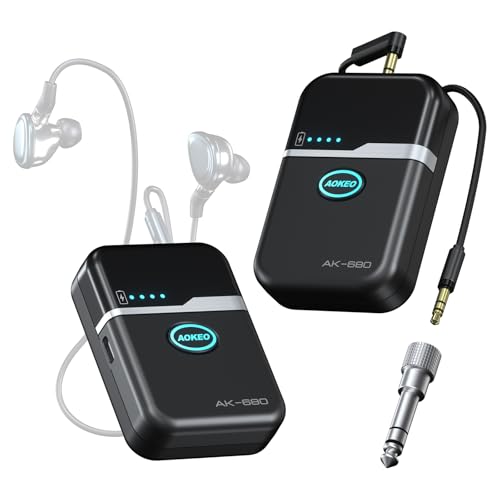
- 5.8G design targets cleaner, less crowded wireless use
- Up to 12 hours of battery life
- Receiver includes built-in volume buttons
Best For: Drummers who want long battery life and a cleaner wireless signal for stage or practice
Portable 2.4GHz IEM for Small Gigs – Xvive U4 Wireless in-Ear Monitor System
If you want a straightforward option in the world of in ear monitoring systems for drummers, the Xvive U4 focuses on easy setup, low latency, and clear wireless monitoring. It uses a 2.4GHz connection, supports mono XLR or mono TS input, and is designed for quick use in rehearsals, studio sessions, and live performance.
Best For: Drummers and small bands that want a compact wireless IEM setup with simple operation.
Pros:
- Less than 5ms latency for real-time monitoring.
- Up to 6 simultaneous channels with no interference.
- Metal housing and built-in limiter for tougher stage use.
- Rechargeable battery with about 5 hours of life.
Cons:
- Battery life is relatively short compared with longer-running systems.
- Monophonic input only, so it is not a full stereo routing solution.
- Earphones are not included.
Overall, the U4 is a practical pick if you prioritize portability and quick plug-and-play monitoring over advanced routing features. It keeps the system simple while still delivering the low-latency response drummers need on stage.
Budget Personal Monitor Amp – ANLEON S1 Personal In-Ear Monitor Headphone Amplifier
The ANLEON S1 is a wired personal monitor amp built for players who want a simple way to feed their own in ear monitoring systems for drummers setup from a source with XLR or wireless connectivity. With mono and stereo output modes, it is aimed at rehearsals and live use where you need your monitor signal close at hand.
Best For: Drummers, guitarists, and vocalists who want a basic personal monitor amplifier.
Pros:
- Supports both mono and stereo audio output modes.
- Uses corded electric power for consistent operation.
- Compatible with wireless and XLR connections.
- Lightweight aluminum enclosure.
Cons:
- Not a full standalone wireless IEM kit.
- Limited to one output channel.
- Best suited to simpler monitoring setups.
For players building a personal monitor path rather than an all-in-one wireless package, the S1 keeps things focused and uncomplicated. It is a practical fit when you want monitoring flexibility without extra system complexity.
Wired Pro IEM Earphones – SENNHEISER IE 100 PRO Clear
SENNHEISER Professional IE 100 PRO Dynamic In-Ear Monitoring Headphones, Clear
Check Price On AmazonThe Sennheiser IE 100 PRO is a wired in-ear option for musicians who want isolation, comfort, and accurate monitoring from their in ear monitoring systems for drummers. It uses a dynamic 10-mm broadband transducer, includes foam and silicone ear adapters, and is designed for rehearsal, performance, and monitoring work.
Best For: Drummers who want wired in-ear headphones with a secure fit and stage-ready shielding.
Pros:
- Dynamic 10-mm driver for precise monitoring.
- Secure ergonomic fit with good wearing comfort.
- Excellent shielding for stage use.
- Includes foam and silicone ear adapters plus protective case.
Cons:
- Wired design may not suit players wanting wireless mobility.
- Single-driver layout is more focused on monitoring than flashy extras.
- Sound isolation depends on selecting the right ear tip fit.
If you want dependable wired earphones rather than a transmitter-receiver system, the IE 100 PRO is built for that job. It is a strong choice for players who value fit, isolation, and straightforward stage monitoring.
Long-Run Wireless IEM Kit – LEKATO MS-20 Wireless In-Ear Monitor System
The LEKATO MS-20 is built for musicians who need a portable wireless option among in ear monitoring systems for drummers, especially when battery life and simple pairing matter. It offers 2.4GHz wireless audio, auto-pairing, OTG support for phones and USB-C devices, and a transmitter that can send to multiple receivers.
Best For: Drummers and bands that want long battery life and an easy multi-receiver wireless monitor setup.
Pros:
- Up to 30 hours of battery life with the charging case.
- Supports one transmitter to many receivers, up to 10 pairs.
- OTG input works with smartphones and USB-C devices.
- 150-foot range and low-noise, low-latency monitoring.
Cons:
- Earphones are not included.
- Plastic enclosure is less rugged than metal-bodied alternatives.
- Best performance depends on open-area range conditions.
The MS-20 stands out if you want a flexible wireless monitoring system that is easy to carry and simple to pair. Its long runtime and multi-receiver support make it especially appealing for rehearsals, gigs, and shared band setups.
Wired isolation pick – BASN Professional In Ear Monitor Headphones
If you want wired in ear monitoring systems for drummers that focus on isolation and a secure fit, the BASN Bsinger PRO is built around those basics. It uses MMCX detachable cables, over-ear memory wire hooks, and noise-isolating tips to help keep stage sound focused and consistent.
Best For: Drummers and musicians who want a wired, noise-isolating in-ear monitor for stage or studio use.
Pros:
- Universal fit with multiple silicone sleeves for up to 38 dB of noise isolation
- Detachable MMCX cables make replacement or upgrades easier
- Over-the-ear memory wire design adds a secure, all-day fit
- Includes carry case, cleaning brush, extra tips, and a 1/4 inch adapter
Cons:
- Wired design may be less convenient than a wireless monitor system
- Not water resistant
- Best suited to users comfortable with in-ear tips and a cable setup
Overall, this is a practical wired IEM option if your priority is isolation, accessory value, and a reliable fit for rehearsals or live monitoring.
Wireless multi-receiver pick – LEKATO MS-1 Wireless in Ear Monitor System
For drummers comparing in ear monitoring systems for drummers, the LEKATO MS-1 stands out as a simple wireless option for practice and smaller gigs. It supports stereo transmission, auto-pairing, and up to six receivers on one transmitter, which makes it useful when more than one player needs monitoring from the same source.
Best For: Bands, rehearsal rooms, and small stages where multiple receivers may need to share one transmitter.
Pros:
- One transmitter can pair with up to 6 receivers
- Auto-pairing keeps setup straightforward
- True stereo transmission with low latency under 12 ms
- About 100 feet of wireless range in open areas
Cons:
- Battery life is rated at just over 5 hours
- Best range is in open space, not crowded RF-heavy setups
- Designed for small to medium performances rather than larger stages
This is a strong pick if you want wireless freedom and easy setup, especially for rehearsal or smaller live environments where sharing one transmitter matters.
Low-latency practice pick – JOYO JW-07 Wireless IEM System
If you need in ear monitoring systems for drummers or practice use and want a compact wireless setup, the JOYO JW-07 is built for straightforward monitoring and real-time feedback. It offers low latency, frequency hopping for interference resistance, and a simple transmitter-plus-receiver design for individual use.
Best For: Guitar players, drummers, and practice-focused users who want a simple wireless monitor for one receiver.
Pros:
- Low latency under 5 ms for real-time monitoring
- 12 channel banks across 4 groups for flexible setup
- Over 8 hours of battery life on a full charge
- 40 to 60 feet of stable range in open space
Cons:
- One transmitter does not support multiple receivers
- Wireless system is better suited to personal use than band sharing
- Compatible devices are listed specifically for guitar use
For a solo practice or personal monitoring setup, this model offers a good mix of low delay, decent battery life, and simple operation without extra complexity.
Compact Wireless Starter – Compact 2.4G IEM for Rehearsal and Stage
If you want in ear monitoring systems for drummers that make practice and small-stage work easier, this 2.4GHz wireless option keeps you moving without a monitor cable in the way. It supports stereo and mono monitoring, offers up to 30 meters of range in open areas, and works with mixers, interfaces, tablets, computers, and active speakers.
Best For: Drummers, singers, and band members who need a simple wireless IEM setup for rehearsals, livestreams, and small performances.
Pros:
- 2.4GHz wireless transmission with stereo and mono modes
- Up to 30M range in open environments for flexible movement
- Rechargeable clip-on design with up to 5 hours of use
- Compatible with mixers, audio interfaces, amplifiers, and more
Cons:
- Best performance depends on direct line-of-sight positioning
- Battery life is shorter than some longer-runtime alternatives
- No noise control feature is listed
This is a practical pick for players who need straightforward wireless monitoring rather than a feature-heavy system. It keeps the setup simple while covering the essentials for rehearsal and stage use.
Low-Latency Multi-Receiver Pick – MS-02 Low-Latency Multi-Receiver IEM
For in ear monitoring systems for drummers who need tighter timing and the option to share one transmitter, the LEKATO MS-02 is built around low-latency wireless monitoring and simple pairing. It supports mono and stereo modes, can send one transmitter to multiple receivers, and reaches up to 100 feet in open space.
Best For: Drummers, churches, and small bands that want a low-latency wireless monitor system with multi-receiver support.
Pros:
- Upgraded low latency with mono mode listed at under 4.5ms
- One transmitter can connect to up to 4 receivers
- 6-8 hours of battery life with LED battery and volume indicators
- Includes mute function and easy mono/stereo switching
Cons:
- Earbuds are not included and must be purchased separately
- Open-area range is better suited to line-of-sight setups
- More of a monitoring system than a complete out-of-box earbud bundle
This model stands out when you want a more flexible setup for rehearsals or multi-performer use. It adds helpful controls and receiver sharing without complicating the basic workflow.
Clean-Signal Long-Run Choice – AK-680 5.8G Long-Run Wireless IEM
For drummers comparing in ear monitoring systems for drummers, the AOKEO AK-680 focuses on cleaner wireless performance and longer runtime. Its 5.8G transmission is designed to avoid crowded 2.4GHz environments, while the receiver adds onboard volume control and the battery lasts up to 12 hours.
Best For: Drummers and performers who want a cleaner wireless band, longer battery life, and simple on-body control.
Pros:
- 5.8G wireless design aims for less interference in busy WiFi environments
- Up to 12 hours of continuous playtime
- Receiver has built-in volume buttons for quick adjustments
- Includes 3.5mm cable and 6.35mm adapter for broad compatibility
Cons:
- Only one item is listed in the package details
- 5.8G may be less common than 2.4GHz systems
- Specific range is not stated in the supplied notes
This is a strong option if battery life and a cleaner wireless environment matter more than extra bells and whistles. It keeps the setup simple while still covering stage, studio, and home practice use.
How We Picked the Best In Ear Monitoring Systems for Drummers
We prioritized gear that makes sense for real drummer use: low-latency monitoring, stable wireless behavior, usable battery life, clear stereo or mono operation, and enough flexibility for rehearsal, studio work, and small-to-medium gigs. We also favored models that are easy to set up quickly, since drummers usually need a dependable system rather than a complicated one.
Quick Comparison: Wired Versus Wireless
Wired personal monitor amps are the simplest and often the most affordable choice. They are a strong fit if you mainly play in one spot, want minimal setup, and value consistency over mobility. Wireless systems offer more freedom on stage and a cleaner setup, but they add battery management, pairing, and potential RF concerns.
For In Ear Monitoring Systems for Drummers, wired is best for practice rooms, home studios, and budget-conscious buyers. Wireless is usually better for live bands, moving around the kit, and players who want a fast stage-ready workflow.
Key Buying Factors for In-Ear Monitoring Systems for Drummers
Latency and Signal Stability
Drummers are especially sensitive to timing. Look for systems marketed as low latency or ultra-low latency, and avoid anything with unpredictable dropouts. Even small delays can make tight playing feel off.
Stereo Vs. Mono
Stereo monitoring can help you place click, vocals, and backing tracks more naturally in the mix. Mono is simpler and sometimes more reliable, especially for basic band monitoring.
Battery Life and Charging
Wireless units should last long enough for rehearsals and gigs with margin to spare. Charging cases and rechargeable packs are convenient, but only if they fit your routine and are easy to keep topped off.
Fit, Isolation, and Earphone Compatibility
For drummers, isolation matters almost as much as sound quality. Better seal means less cymbal bleed and less need to turn the mix up. Check whether the included earphones fit well, and whether the system uses standard connectors like 3.5mm or MMCX if you plan to upgrade later.
One-To-Many and Expansion
If you rehearse with a full band, one transmitter feeding multiple receivers can be a big advantage. That makes it easier to share a monitor feed without building a more complex setup.
Who Should Buy Which In Ear Monitoring Systems for Drummers?
If you want the easiest, most affordable setup, choose a wired personal monitor amp. If you play live and need freedom around the kit, pick a wireless IEM system with strong battery life and low latency. If hearing protection and tone are your top priorities, invest in better isolating in-ear headphones and pair them with a reliable transmitter/receiver system.
For most drummers, the best choice is the one that keeps the mix clear, the timing consistent, and setup simple enough that you’ll actually use it every time you play.