If you need clean, portable capture for interviews, music, film, or field work, handheld audio recorders with XLR inputs are a smart all-in-one tool. They let you plug in professional microphones, record on location, and often work as USB audio interfaces too.
This roundup focuses on models that balance sound quality, input flexibility, and ease of use so you can choose the right recorder without overpaying for features you will not use.
Best 10 Handheld Audio Recorders with Xlr Inputs Picks for 2026
Flagship handheld recorder
Zoom H5 Studio with 32-bit float

- Large 19.4mm X/Y stereo mics
- Two XLR/TRS combo inputs
- 32-bit float, up to 4-track recording
Best For: Filmmakers and musicians who want clip-free portable recording
Ultra-compact XLR mic recorder
TASCAM DR-10X clip-on recorder

- Directly mounts to a handheld XLR mic
- Dual recording adds a backup safety copy
- Manual/auto gain with limiter and low-cut filter
Best For: Reporters and interviewers needing a tiny mic-mounted recorder
Classic interchangeable-capsule handheld
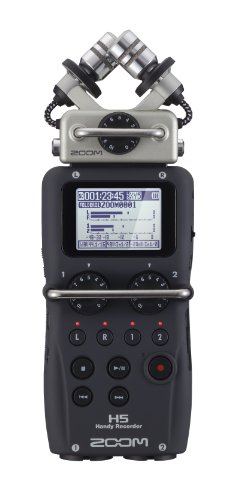
- Interchangeable input capsules
- Two XLR/TRS combo inputs with phantom power
- Four-track simultaneous recording
Best For: Creators who want modular handheld recording with XLR/TRS inputs
Compact DSLR rig recorder

- Two locking XLR inputs with phantom power
- Dual 3.5mm inputs for extra sources
- Upgraded HDDA preamps with up to 64dB gain
Best For: Videographers who need multi-input recording under a DSLR rig
Portable Stereo Recorder
Tascam DR-07X Handheld Recorder

- Dual built-in condenser mics in A-B and X-Y positions
- Records WAV up to 24-bit/96 kHz
- USB audio interface mode for computer recording
Best For: Portable stereo recording with easy USB interface support
Compact XLR Recorder
Zoom H1 XLR 2-Channel Recorder

- Two locking XLR/TRS combo inputs
- 32-bit / 96 kHz recording with waveform display
- 3.5 mm stereo in/out for extra flexibility
Best For: Small recording rigs that need simple XLR/TRS input support
4-Channel Field Recorder
TASCAM DR-40XP Handheld Recorder
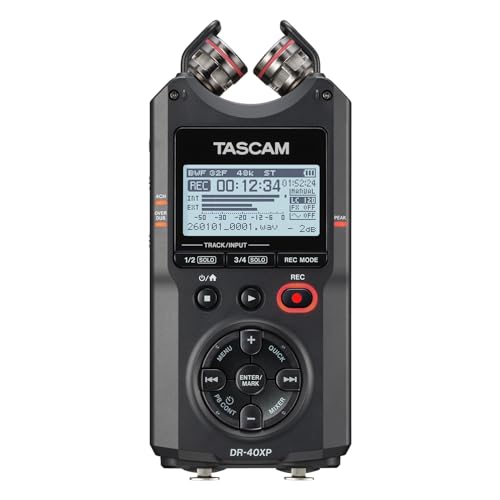
- Two XLR/TRS inputs plus adjustable built-in mics
- 4-channel recording with 32-bit float support
- USB-C audio interface for computer or mobile use
Best For: Portable 4-channel recording with XLR/TRS inputs and onboard mics
Studio-Ready Multitrack Choice
Zoom H6 Studio for Filmmakers & Musicians

- Up to 6 tracks plus stereo mix in 32-bit float
- Four XLR/TRS inputs for multi-source recording
- Large onboard mics and look-ahead limiters
Best For: Users who need the most flexible handheld recorder for music, film, and field recording
Accessible Bundle Pick
Zoom H4essential with Accessories

- 32-bit float recorder with built-in X/Y mics
- Two XLR/TRS inputs plus USB-C interface mode
- Includes card, batteries, charger, cable, and bag
Best For: Creators who want an accessible starter bundle for recording, streaming, and field use
Compact Everyday Option
Zoom H4 Essential Handheld Recorder

- Built-in stereo mics plus two XLR/TRS inputs
- 32-bit float recording and USB-C connectivity
- Spoken menu guidance for easier navigation
Best For: Podcasters and creators who want a compact, easy-to-use recorder with XLR input support
Flagship handheld recorder – Zoom H5 Studio with 32-bit float
If you want handheld audio recorders with xlr inputs that feel ready for film sets, field work, or music sessions, the Zoom H5 Studio is built around fast capture and strong sound quality. Its large stereo mics, 32-bit float recording, and two XLR/TRS inputs make it a flexible choice when you need clip-free takes and hands-on level control.
Best For: Filmmakers, musicians, and field recordists who want a portable recorder with built-in mics and XLR/TRS input flexibility.
Pros:
- 19.4mm X/Y mics deliver a wide stereo image and detailed capture.
- 32-bit float recording helps prevent clipped takes in unpredictable environments.
- Two XLR/TRS combo inputs add room for external mics or line sources.
- Dedicated gain knobs make level adjustments quick and intuitive.
Cons:
- Uses 4 AA batteries, so battery planning matters for longer shoots.
- Only up to 4 tracks simultaneous recording, which may be limiting for bigger setups.
This is a strong all-around handheld recorder if you want built-in stereo mics plus external input options in one portable unit. It is especially appealing when you need reliable, high-resolution capture without worrying about unexpected peaks.
Ultra-compact XLR mic recorder – TASCAM DR-10X clip-on recorder
Among handheld audio recorders with xlr inputs, the TASCAM DR-10X stands out because it mounts directly to a handheld microphone for a tiny interview or news-gathering setup. It records to microSD, offers manual or automatic gain, and includes tools like a low-cut filter, limiter, and dual recording for safer takes.
Best For: Reporters, interviewers, and news shooters who need a compact recorder attached to an XLR handheld mic.
Pros:
- Captive XLR connector lets it attach directly to a handheld microphone.
- Dual recording provides a lower-level backup copy for added safety.
- Manual/auto gain, limiter, and low-cut filter help manage tough recordings.
- MicroSD recording can hold days of audio, and headphones support live monitoring.
Cons:
- Mono recording only, so it is not aimed at stereo capture.
- Very small size favors mic-mounted use over broader field-recording versatility.
If you need a recorder that stays out of the way during interviews, this model is a practical, purpose-built option. It is less of an all-purpose handheld and more of a dedicated XLR mic companion.
Classic interchangeable-capsule handheld – Zoom H5 4-track recorder
The Zoom H5 remains a useful pick if you are shopping for handheld audio recorders with xlr inputs and want a proven, modular design. It includes a detachable X/Y capsule, two XLR/TRS combo inputs with phantom power, and four-track simultaneous recording for flexible sessions in the field or in the studio.
Best For: Creators who want a compact handheld recorder with interchangeable capsules and XLR/TRS combo inputs.
Pros:
- Interchangeable input capsules add flexibility for different recording jobs.
- Two XLR/TRS combo inputs include selectable phantom power and a -20dB pad.
- Four-track simultaneous recording supports more complex captures.
- Runs on 2 AA batteries and records to SD/SDHC cards.
Cons:
- Records directly to SD/SDHC cards up to 32GB, which is more limited than larger media options.
- Battery life and compact design may feel modest for longer sessions.
This model is still appealing when you want a familiar handheld format with real input flexibility. It is a solid middle-ground option for users who value modularity and straightforward multitrack recording.
Compact DSLR rig recorder – TASCAM DR-60DmkII 4-channel
If your search for handheld audio recorders with xlr inputs is really about a recorder that lives under a camera rig, the TASCAM DR-60DmkII is designed for that exact role. It records up to four channels, uses locking XLR inputs with phantom power, and adds dual 3.5mm inputs for wireless or lav sources in a compact body.
Best For: Videographers who want a recorder that fits under a DSLR rig and handles multiple audio sources.
Pros:
- Two locking XLR inputs support 48V phantom power.
- Dual 3.5mm inputs add flexibility for wireless and lav mics.
- Upgraded HDDA preamps provide up to 64dB of gain and low noise.
- Can record up to 4 channels at once to internal SD card.
Cons:
- Its design is more camera-rig focused than true grab-and-go handheld use.
- Uses 4 AA batteries, which adds another power consideration on shoots.
This is a strong fit when you need reliable external inputs in a compact video workflow. It makes the most sense for creators who want a recorder to integrate with a camera setup rather than replace one.
Portable Stereo Recorder – Tascam DR-07X Handheld Recorder
If you want handheld audio recorders with xlr inputs, the Tascam DR-07X is worth a look for its simple workflow, built-in stereo mics, and USB audio interface mode. It is aimed more at portable stereo capture than external mic expansion, so it fits users who need a compact recorder for voice, music, field notes, or streaming without a complicated setup.
Best For: Creators who want a compact handheld recorder with built-in stereo mics and USB interface support.
Pros:
- Dual built-in condenser microphones with A-B and X-Y positions
- Records up to 24-bit/96 kHz WAV audio
- USB audio interface mode for voiceover, live streaming, podcasting, and songwriting
- Long battery life, with up to 17.5 hours on two AA batteries
Cons:
- Does not include XLR inputs
- Uses a 2.5 mm headphone jack rather than a standard full-size output
This is a practical choice if your priority is a lightweight handheld recorder with flexible built-in mics and easy computer connectivity. It is less suitable if you specifically need XLR mic support.
Compact XLR Recorder – Zoom H1 XLR 2-Channel Recorder
For shoppers comparing handheld audio recorders with xlr inputs, the Zoom H1 XLR is a compact option built around two locking XLR/TRS combo inputs and 32-bit / 96 kHz recording. It is a good fit when you want a simple recorder for interviews, podcasts, cameras, or mobile setups with flexible input options and easy level monitoring.
Best For: Filmmakers, podcasters, and musicians who need two locking XLR/TRS inputs in a small recorder.
Pros:
- Two locking XLR/TRS combo inputs for microphones, instruments, and more
- 32-bit / 96 kHz recording for detailed capture
- OLED waveform display helps monitor levels at a glance
- 3.5 mm stereo input and headphone output add flexibility
Cons:
- Uses two AA batteries
- Battery life is rated at 10 hours
- Only two channels of recording
This model stands out for users who want straightforward XLR/TRS connectivity in a very portable recorder. Its feature set is focused and practical rather than overloaded, which makes it easy to deploy in small recording rigs.
4-Channel Field Recorder – TASCAM DR-40XP Handheld Recorder
If you need handheld audio recorders with xlr inputs for music, video, or interviews, the TASCAM DR-40XP brings four-channel recording, 32-bit float support, and two XLR/TRS inputs into a portable body. Its adjustable built-in mics and USB-C interface make it a strong all-around field recorder for creators who want more routing options than a basic stereo unit.
Best For: Creators who want a portable 4-channel recorder with XLR/TRS inputs and built-in mics.
Pros:
- Two XLR/TRS inputs plus adjustable built-in A-B or X-Y mics
- 4-channel recording captures built-in mics and external inputs together
- 32-bit float support for clip-free recording workflow
- USB-C audio interface mode for computer or mobile recording
Cons:
- microSD card and batteries are not included
- More complex than a basic handheld stereo recorder
The DR-40XP is the most flexible of the three for users who want both onboard mics and XLR input capability. It is a strong option when you need a single portable recorder that can handle multiple capture scenarios.
Studio-Ready Multitrack Choice – Zoom H6 Studio for Filmmakers & Musicians
If you want handheld audio recorders with xlr inputs for serious field work, the Zoom H6 Studio is built around flexibility and clean capture. It records up to 6 individual tracks plus a stereo mix in 32-bit float, adds large 19.4mm onboard mics, and gives you four XLR/TRS inputs for plugging in external gear.
Best For: Filmmakers, musicians, and field recordists who need more inputs, longer runtime, and distortion-resistant capture.
Pros:
- Records up to 6 individual tracks plus a stereo mix with 32-bit float audio.
- Large 19.4mm mics handle up to 140 dB SPL for loud environments.
- Four XLR/TRS inputs make it easy to connect multiple mics or instruments.
- Look-ahead limiters help prevent overloads before distortion happens.
Cons:
- Larger and heavier than simpler pocket recorders at 1.05 pounds.
- Uses 4 AA batteries, so long sessions may require spares.
This is the most input-rich option in the group, and it stands out if you routinely need to capture several sources at once. The combination of 32-bit float recording, four XLR/TRS inputs, and extended battery life makes it a strong all-around choice for demanding production days.
Accessible Bundle Pick – Zoom H4essential with Accessories
For buyers comparing handheld audio recorders with xlr inputs, this Zoom H4essential bundle covers the essentials and then some. It offers 32-bit float recording, built-in X/Y mics, dual XLR/TRS combo inputs with phantom power, and USB-C interface use for recording or streaming to a computer or smart device.
Best For: Creators who want a compact recorder bundle with accessible controls and enough connectivity for mics, instruments, and streaming.
Pros:
- 32-bit float recording and X/Y mics for clean, flexible capture.
- Two XLR/TRS combo inputs with +48V phantom power.
- Works as a 4-in / 2-out USB-C audio interface.
- Bundle includes a 64GB card, cables, batteries, charger, and travel bag.
Cons:
- Only two XLR/TRS inputs, so it is less expandable than 4-input models.
- Designed for up to 10 hours on two AA batteries, which may be limiting on longer days.
This bundle is a practical way to get recording right away without shopping for extra accessories. It is especially appealing if you value accessibility features like spoken menu navigation and want a recorder that can move between field capture, podcasting, and USB audio interface use.
Compact Everyday Option – Zoom H4 Essential Handheld Recorder
The Zoom H4 Essential is a straightforward pick if you want handheld audio recorders with xlr inputs without stepping up to a larger multitrack unit. It combines built-in stereo mics with two XLR/TRS inputs, 32-bit float recording, and USB-C connectivity for direct recording or streaming while backing up to SD card.
Best For: Podcasters, musicians, and filmmakers who want a compact recorder with simple operation and core XLR flexibility.
Pros:
- Two XLR/TRS inputs let you plug in external mics, instruments, or mixers.
- 32-bit float recording helps avoid clipped takes.
- USB-C support allows recording or streaming to a phone, tablet, or computer.
- Spoken menu guidance makes it easier to navigate for more users.
Cons:
- Only 4 tracks total, so it is less capable for larger sessions.
- Fewer inputs than the 4-input Zoom H6 Studio.
This model keeps the feature set focused on practical everyday recording rather than maximum channel count. If you want a portable handheld recorder that covers interviews, demos, and video audio with minimal fuss, it offers a strong balance of simplicity and capability.
How We Picked the Best Handheld Audio Recorders with Xlr Inputs
We prioritized Handheld Audio Recorders with Xlr Inputs that offer dependable input quality, practical channel counts, and useful on-device controls. We also looked for models that suit real-world use, including field recording, interviews, filmmaking, podcasting, and music capture.
Strong picks needed a sensible mix of portability, preamp quality, battery or USB power options, and straightforward workflow. Where available, 32-bit float recording, dual-purpose USB audio interface support, and onboard microphones were valuable extras rather than requirements.
Quick Comparison
Think first about how many sources you need to record at once. Two-input models are usually best for solo creators, interviewers, and lightweight video rigs. Four-input recorders make more sense for multi-mic setups, while compact XLR-only units are ideal for adding a single pro mic to a camera or run-and-gun kit.
Also consider whether you need integrated microphones, physical gain knobs, headphone monitoring, and locking XLR or combo inputs. These details often matter more than headline specs once you are in the field.
Key Buying Factors for Handheld Audio Recorders with Xlr Inputs
Input Type and Channel Count
Check whether you need XLR-only, XLR/TRS combo jacks, or a mix of both. Combo inputs offer more flexibility if you use microphones, mixers, or line-level gear. More channels are useful, but only if you regularly record multiple sources.
Recording Format and Headroom
For unpredictable environments, 32-bit float recording can reduce the risk of clipping and make level setting much easier. If you prefer traditional workflows, look for solid limiters, gain control, and clear meters.
Monitoring and Workflow
Headphone output, tactile controls, and readable screens make a bigger difference than many buyers expect. If you work alone, fast arm/record access and simple navigation help you stay focused on the scene instead of the device.
Power, Size, and Expansion
Some handheld units are truly pocketable, while others trade size for more inputs and better ergonomics. Decide whether you need long battery life, USB-C power, or interface mode for live streaming and direct recording to a computer.
Who Should Buy Which Handheld Audio Recorders with Xlr Inputs?
If you are a filmmaker or videographer, choose a recorder with at least two XLR inputs, strong monitoring, and good handling of line-level sources. Musicians should prioritize clean preamps, multi-track flexibility, and stable gain behavior. Podcasters and interviewers may prefer compact units with simple operation and reliable voice capture. For solo field reporters or mobile creators, a lightweight XLR recorder with 32-bit float can offer the best mix of convenience and safety.
In short, the best choice depends on your workflow more than the biggest spec sheet. Match the recorder to your microphone setup, your need for portability, and how much control you want in the field.