If you want to record vocals, guitar, podcasts, or livestreams without distracting delay, the right interface matters. The best audio interfaces for low latency monitoring let you hear yourself naturally while keeping playback clean and sessions efficient.
Below, we’ve narrowed the field to 10 standout options across solo creators, streamers, and small studios, with choices for simple plug-and-play setups and more demanding production rigs.
Best 10 Audio Interfaces for Low Latency Monitoring Picks for 2026
Studio-Ready Low Latency Pick
MOTU M4 4x4 USB-C Audio Interface

- Hardware monitoring for low-delay tracking
- 4-in/4-out USB-C with MIDI I/O
- Loopback and LCD screen for routing clarity
Best For: Creators who want flexible monitoring and routing in a compact interface
Simple Vocal-and-Guitar Option
Focusrite Scarlett Solo 3rd Gen

- 24-bit/192kHz recording and playback
- Air mode adds clarity for vocals and guitar
- Compact 2-channel design with balanced outputs
Best For: Solo vocal and guitar recording with a simple desktop setup
Streaming-Friendly Low Latency Interface
Zoom AMS-24 USB Audio Interface

- Direct monitoring and loopback on hardware
- Music and streaming modes for fast switching
- Two headphone outputs for shared listening
Best For: Creators who switch between recording and live streaming
Creator Workflow Low Latency Pick
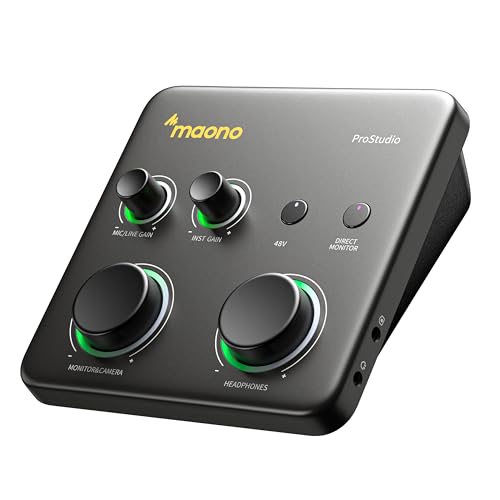
- Up to 70dB gain for dynamic mics
- ASIO, loopback, and direct monitoring
- Dual USB works with computer and phone/iPad
Best For: Solo creators who want mobile-friendly routing and low-latency monitoring
Compact Zero-Latency Mic Interface
Shure MVX2U XLR-to-USB Interface

- Zero-latency headphone monitoring
- 60dB gain with 48V phantom power
- Compact XLR-to-USB setup
Best For: Solo streamers and recorders who want a simple low-latency XLR interface
Portable Monitor-and-Loopback Interface
Zoom AMS-22 USB Audio Interface

- Direct Monitor and Loopback switches
- Bus-powered USB-C portability
- Music and Streaming mode toggle
Best For: Mobile creators who need simple low-latency monitoring and loopback
Ultra-Low-Latency XLR Mixer Interface

- Ultra-low-latency monitoring
- 80dB gain for demanding XLR mics
- Built-in voice effects and Wave Link
Best For: Streamers who want low-latency monitoring with DSP and software routing
Zero-Latency Creator Pick

- Zero-latency direct monitoring
- 24-bit/96kHz audio support
- Dedicated mobile device channel
Best For: Creators who want simple low-latency monitoring and flexible source mixing
Hybrid Studio Workhorse
Low-Latency Hybrid Studio Interface

- Custom low-latency drivers
- Eight MAX-HD mic preamps
- 16-in, 8-out with expanded line inputs
Best For: Hybrid studios and multi-source recording setups
Budget Monitoring Pick
Budget Zero-Latency Monitoring
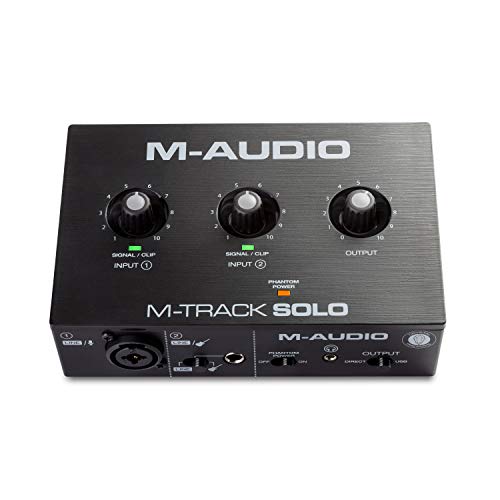
- USB/Direct switch for zero-latency monitoring
- Combo XLR/Line plus instrument input
- Compact 2-channel portable design
Best For: Beginners and budget-conscious users needing simple direct monitoring
Studio-Ready Low Latency Pick – MOTU M4 4×4 USB-C Audio Interface
If you want audio interfaces for low latency monitoring with a more full-featured desktop setup, the MOTU M4 is built for recording, mixing, and podcasting. It adds 4×4 USB-C connectivity, hardware monitoring, MIDI I/O, loopback, and a clear LCD screen, making it a practical choice for users who want flexible control and simple routing.
Best For: Creators who need hardware monitoring, loopback, and MIDI in one compact USB-C interface.
Pros:
- Hardware monitoring helps keep input delay low during tracking.
- 4-in/4-out USB-C connectivity supports recording and mixing workflows.
- Loopback is useful for podcasting, streaming, and desktop audio capture.
- MIDI I/O adds extra flexibility for production setups.
Cons:
- It may be more interface than needed for very simple solo recording.
- Does not include onboard software details as prominently as some creator-focused bundles.
The M4 stands out when you want a straightforward interface that still covers monitoring, routing, and connectivity needs well. Its combination of hardware monitoring and loopback makes it especially useful if you record, stream, or produce from the same desk.
Simple Vocal-and-Guitar Option – Focusrite Scarlett Solo 3rd Gen
For buyers comparing audio interfaces for low latency monitoring, the Focusrite Scarlett Solo 3rd Gen is a simple two-channel option aimed at guitarists, vocalists, podcasters, and producers. It offers a mic preamp, a Hi-Z instrument input, low-noise balanced outputs, and direct compatibility with macOS, Windows, and iPadOS.
Best For: Solo artists and podcasters who want a compact interface for vocals and guitar.
Pros:
- 24-bit/192kHz conversion supports studio-quality recording and playback.
- Air mode adds extra clarity for acoustic instruments and vocals.
- Low-noise balanced outputs and headphone monitoring suit private listening.
- Includes recording software and a long warranty period.
Cons:
- Only one XLR mic preamp and one Hi-Z input limit multi-source tracking.
- It is less flexible than interfaces with hardware monitoring features and more outputs.
The Solo 3rd Gen is a clean, beginner-friendly choice if your sessions are mostly one voice or one instrument at a time. It focuses on strong core audio quality rather than expanded routing or multi-output monitoring.
Streaming-Friendly Low Latency Interface – Zoom AMS-24 USB Audio Interface
If you are looking at audio interfaces for low latency monitoring with a strong streaming focus, the Zoom AMS-24 is designed to switch between music and streaming workflows. It includes direct monitoring, loopback, two inputs, two headphone outputs, and hardware controls that make routing easier on PC, Mac, iOS, and Android devices.
Best For: Streamers and musicians who want a simple interface that can move between recording and live content.
Pros:
- Music mode and streaming mode simplify workflow changes.
- Direct monitoring and loopback are built into the hardware controls.
- Two headphone outputs support shared monitoring.
- Compatible with PC, Mac, iOS, and Android devices.
Cons:
- 48kHz maximum sample rate is lower than some recording-focused interfaces.
- Only two inputs limit larger recording sessions.
The AMS-24 makes sense if you want an interface that prioritizes quick switching and straightforward control. Its monitoring tools and routing options are especially helpful for creators who stream and record from the same setup.
Creator Workflow Low Latency Pick – MAONO P1 USB Audio Interface
The MAONO P1 is aimed at creators who want audio interfaces for low latency monitoring plus flexible routing for podcasts, streams, and mobile recording. It offers up to 70dB gain, ASIO support, loopback, direct monitoring, and dual USB connectivity so you can work with a computer and phone or iPad at the same time.
Best For: Solo creators who need strong mic gain, routing tools, and mobile-friendly connectivity.
Pros:
- Up to 70dB gain helps drive demanding dynamic microphones.
- ASIO support and direct monitoring are designed for lower-latency tracking.
- Loopback and ProStudio2 simplify routing for streaming and recording.
- Dual USB connectivity supports computer plus phone or iPad workflows.
Cons:
- It is built around solo creator workflows rather than multi-input recording.
- Advanced routing features may be more than casual users need.
The P1 is a strong fit if you want one interface that handles recording, streaming, and mobile content without constant cable swapping. Its mix of gain, monitoring, and routing features makes it especially practical for creators working across multiple devices.
Compact Zero-Latency Mic Interface – Shure MVX2U XLR-to-USB Interface
If you want audio interfaces for low latency monitoring in the simplest possible form, the Shure MVX2U is built around real-time headphone monitoring and straightforward XLR-to-USB operation. It adds up to 60dB of clean gain, 48V phantom power, and a 3.5mm headphone jack, making it a practical fit for streaming, voice work, and recording with either dynamic or condenser microphones.
Best For: Solo creators who want a compact XLR-to-USB interface with direct headphone monitoring and flexible mic support.
Pros:
- Zero-latency monitoring through the built-in 3.5mm headphone jack
- Up to 60dB of clean gain plus 48V phantom power for a wide range of XLR mics
- Compact design with dual mounting options for direct or inline use
- USB-C connectivity and Mac/Windows compatibility
Cons:
- Single-channel design only
- Best suited to one microphone at a time
- Limited to 48kHz maximum sample rate
Overall, the MVX2U is a clean, portable choice if you mainly care about low-delay monitoring and simple setup. It emphasizes core recording and streaming essentials rather than extra routing features.
Portable Monitor-and-Loopback Interface – Zoom AMS-22 USB Audio Interface
For audio interfaces for low latency monitoring that also need easy stream handling, the Zoom AMS-22 stands out with a Direct Monitor switch and a Loopback switch. It combines one XLR/TRS combo input, one stereo 3.5mm input, and bus-powered USB-C operation, so it works well as a lightweight option for recording, livestreaming, and mobile setups.
Best For: Creators who want a portable interface with real-time monitoring and simple software-free loopback streaming.
Pros:
- Direct Monitor switch for real-time input monitoring
- Loopback mode for combining input audio with computer playback
- Music mode and Streaming mode for quick workflow changes
- Bus-powered over USB-C with no external power supply needed
Cons:
- Only one XLR/TRS combo input for mic or instrument use
- Maximum sample rate is limited to 48kHz
- Designed more for simplicity than advanced routing
The AMS-22 is a strong pick if you want direct monitoring and loopback without extra setup. Its switching modes and portable power make it especially practical for creators moving between studio and streaming tasks.
Ultra-Low-Latency XLR Mixer Interface – Elgato Wave XLR MK.2
If low-delay headphone monitoring is your top priority, the Elgato Wave XLR MK.2 is aimed directly at audio interfaces for low latency monitoring with an ultra-low-latency monitoring design and strong XLR preamp gain. It also adds onboard voice effects, touch mute controls, LED level feedback, and Wave Link software integration, so it fits into a more feature-rich streaming or voice workflow.
Best For: Streamers and voice creators who want ultra-low-latency monitoring plus built-in DSP tools.
Pros:
- Ultra-low-latency monitoring for real-time headphone feedback
- 80dB gain supports demanding XLR microphones
- Onboard voice enhancer, compressor, EQ, and other effects
- Touch mute and LED level feedback for quick control
Cons:
- Requires Wave Link software for the full control experience
- Windows 11 or Apple Silicon Mac support only
- Primarily focused on a single XLR input workflow
The Wave XLR MK.2 is the most feature-rich option here, especially if you want monitoring and processing in one compact interface. It makes the most sense when you want both low-latency monitoring and integrated software control.
Zero-Latency Creator Pick – Zero-Latency 4-Channel Mixer
If you want audio interfaces for low latency monitoring with a simple, creator-friendly layout, the Creative Live! Audio A3 is built around direct monitoring and flexible input control. It supports up to 24-bit/96kHz recording and playback, so it suits recording, streaming, and quick audio capture without adding unnecessary complexity.
Best For: Solo creators and streamers who need zero-latency monitoring plus easy control over multiple sources, including a mobile device channel.
Pros:
- Zero-latency direct monitoring for real-time playback without delay
- 24-bit/96kHz support for high-resolution recording and playback
- Dedicated mobile device channel for flexible on-the-go mixing
- Balanced stereo outputs with level control for cleaner routing
Cons:
- Four-channel design is less expansive than larger studio interfaces
- Best suited to straightforward setups rather than complex multi-input sessions
Overall, the Audio A3 is a practical pick if low-latency monitoring matters more than huge I/O counts. Its direct monitor path, individual input controls, and compact feature set make it a useful fit for creators who want fast, fuss-free tracking.
Hybrid Studio Workhorse – Low-Latency Hybrid Studio Interface
For buyers comparing audio interfaces for low latency monitoring in a larger studio setup, the Fender Quantum LT 16 stands out with custom low-latency drivers and a high-headroom monitoring section. Its 16-in, 8-out layout, eight MAX-HD mic preamps, and broad line-input expansion make it a strong choice when you need both responsive tracking and serious connectivity.
Best For: Hybrid studios, multi-mic recording, and creators who need low-latency monitoring with lots of input and routing flexibility.
Pros:
- Custom low-latency drivers for responsive monitoring
- Eight MAX-HD mic preamps with up to +75 dB of gain
- 14 line inputs plus MIDI I/O for expanded hardware setups
- Balanced outputs and a high-headroom headphone amp for accurate monitoring
Cons:
- More interface than needed for basic solo recording
- Best value depends on using the expanded I/O and routing features
This is the most capable option here for larger sessions and hardware-heavy studios. If low-latency monitoring is a priority but you also need room to grow, the Quantum LT 16 offers a much deeper feature set than a compact 2-channel interface.
Budget Monitoring Pick – Budget Zero-Latency Monitoring
If you need audio interfaces for low latency monitoring on a tight budget, the M-AUDIO M-Track Solo keeps things simple with a USB/Direct switch for zero-latency monitoring. It’s a compact 2-channel interface that covers recording, streaming, and podcasting, while still giving you a mic input with phantom power and a separate line/instrument input.
Best For: Beginners and budget buyers who want straightforward monitoring, basic recording inputs, and a portable setup.
Pros:
- USB/Direct switch enables zero-latency monitoring
- Transparent Crystal Preamp for microphone recording
- Combo XLR/Line input with phantom power plus line/instrument input
- Very portable at 10.6 ounces
Cons:
- 48kHz maximum sample rate is lower than the higher-end options here
- 2-channel design limits more complex recording sessions
The M-Track Solo is the most stripped-down choice in this group, but that’s also what makes it easy to recommend for basic low-latency monitoring. If you mainly need clean direct monitoring for vocals, guitar, or streaming, it covers the essentials without extra bulk.
How We Picked the Best Audio Interfaces for Low Latency Monitoring
We focused on interfaces that make real-time monitoring practical: solid driver performance, direct or zero-latency monitoring options, enough gain for common microphones, and the right input/output layout for typical creator workflows. We also favored models with dependable software support, bus-powered convenience where useful, and features that reduce friction during tracking and streaming.
Quick Comparison
For simple voice or instrument recording, compact 1-in/2-out interfaces are usually the easiest fit. If you need more flexibility for streaming, loopback, or dual-source recording, 2-in/4-out models are often a better balance. Larger desktop studios should look at multi-input units with stronger preamps and more routing options. In practice, the best Audio Interfaces for Low Latency Monitoring are the ones that match your session size without adding unnecessary complexity.
Key Buying Factors for Audio Interfaces for Low Latency Monitoring
Monitoring Path
Look for direct monitoring, zero-latency monitoring, or a built-in mixer that lets you hear input before it reaches the computer. This is the most important feature if you want to avoid echo or timing distractions while recording.
Driver Stability and System Support
Low latency depends on more than hardware. Well-supported drivers on Mac and Windows, plus stable ASIO support on PC, can make a noticeable difference in real-world performance.
Gain and Input Type
Dynamic microphones often need more clean gain than beginners expect. Check the preamp range if you use gain-hungry mics, and make sure the interface supports XLR, instrument, or line inputs that fit your setup.
Outputs, Loopback, and Routing
Streamers and content creators may need loopback, independent headphone control, or extra outputs for routing audio to software and monitors. These features can be more valuable than extra specs on paper.
Who Should Buy Which Audio Interfaces for Low Latency Monitoring?
Solo vocalists, podcasters, and guitarists should prioritize a straightforward interface with strong direct monitoring and simple controls. Streamers should look closely at loopback and headphone monitoring flexibility. If you record multiple sources, choose a model with more inputs, more outputs, and enough gain headroom to keep sessions clean. For anyone shopping specifically for Audio Interfaces for Low Latency Monitoring, the best choice is usually the one that keeps monitoring immediate, routing simple, and driver behavior predictable.