The right microphone can make singing recordings sound clearer, fuller, and more controlled without requiring a complicated studio. This roundup compares 10 condenser microphones for singing across USB, XLR, and hybrid setups.
Whether you are recording demos at home, streaming performances, or building a dedicated vocal chain, the best choice depends on connectivity, room acoustics, accessories, and how much control you want over your sound.
Best 10 Condenser Microphones for Singing Picks for 2026
Studio Standard
- Cardioid XLR condenser for home studios
- High SPL handling and wide dynamic range
- Low-mass diaphragm for detailed response
Best For: Home-studio vocal recording with an audio interface
Budget Vocal Pick

- Affordable large-diaphragm XLR condenser
- Cardioid pattern reduces room ambience
- Shock mount and XLR cable included
Best For: Budget-conscious home or large-studio vocal recording
Flexible Hybrid Kit

- USB and XLR connections for flexible use
- USB mode supports 192 kHz/24-bit recording
- Includes arm stand, shock mount, and pop filter
Best For: Singers who want USB convenience and XLR expansion
Quiet Vocal Specialist
- Very low 4.5 dBA self-noise
- Tight cardioid pattern focuses on vocals
- Shock mount, pop filter, and XLR cable included
Best For: Detailed, quiet vocal recording through an audio interface
Best XLR Starter Kit

- 16mm condenser capsule for detailed vocals
- Includes boom arm, shock mount, and pop filter
- Requires 48V phantom power and XLR gear
Best For: Home singers building an XLR recording setup
Best Plug-and-Play Bundle

- Direct USB connection for PC and laptop
- Includes boom arm, shock mount, and double pop filter
- Cardioid capsule supports focused vocal capture
Best For: Computer-based singing and home recording
Easy USB Pick

- Plug-and-play USB recording
- Cardioid pickup for focused vocals
- Includes tripod and volume knob
Best For: Beginners recording vocals on a computer
Studio XLR Value

- XLR connection for studio interfaces
- Detailed cardioid vocal capture
- Handles levels up to 150 dB
Best For: Home-studio singers with phantom power
All-in-One Vocal Kit

- USB kit with mobile adapters
- Includes isolation shield and pop filter
- Built-in mute, echo, and headphone controls
Best For: Singers wanting a bundled home-recording setup
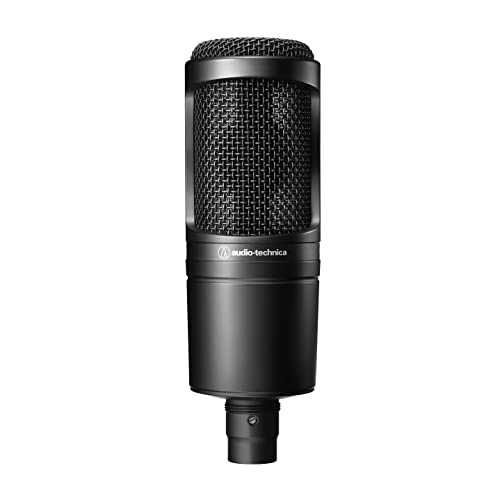
Studio Standard – Audio-Technica AT2020
For singers seeking dependable condenser microphones for singing, the Audio-Technica AT2020 is a practical XLR option for project and home studios. Its cardioid pattern helps reduce sound from the sides and rear, while high SPL handling supports a versatile recording setup.
Best For: Home-studio vocal recording with an audio interface
Pros:
- Cardioid pattern improves isolation from side and rear sounds.
- High SPL handling and wide dynamic range suit varied recording tasks.
- Low-mass diaphragm supports extended frequency and transient response.
- Includes a two-year parts-and-labor warranty.
Cons:
- XLR connectivity requires an audio interface or compatible recording setup.
- The package is the microphone only, without a listed shock mount or cable.
The AT2020 is a straightforward choice when you want a proven, wired studio microphone and already have the supporting XLR equipment. Its focused pickup pattern and broad handling make it especially useful for home vocal recording.
Budget Vocal Pick – Mackie EM-91C
The Mackie EM-91C is an affordable large-diaphragm XLR condenser for singers building a studio setup on a budget. Its cardioid pattern is designed to reduce ambience, and the included shock mount and XLR cable help you get started with fewer extra purchases.
Best For: Budget-conscious home or large-studio vocal recording
Pros:
- Large-diaphragm condenser capsule is designed for studio vocals and instruments.
- Cardioid pickup helps reduce surrounding ambience.
- Rugged construction is suited to regular studio use.
- Includes a shock mount and XLR cable.
Cons:
- Uses XLR connectivity, so it needs a compatible audio mixer or interface.
- Only a one-year warranty is listed.
The EM-91C keeps the setup simple by pairing an affordable studio microphone with two useful accessories. It is a sensible entry point for singers who need an XLR condenser without stepping up to a more specialized package.
Flexible Hybrid Kit – MAONO A04 Gen2
The MAONO A04 Gen2 stands out among condenser microphones for singing because it offers both USB and XLR connections. USB provides plug-and-play recording with a computer or phone, while XLR supports an interface or mixer; USB mode also adds software controls for gain, noise reduction, EQ presets, compression, and limiting.
Best For: Singers who want one microphone for USB recording and XLR studio use
Pros:
- Dual USB and XLR connectivity supports flexible recording setups.
- USB mode offers up to 192 kHz/24-bit recording and MAONO Link controls.
- Cardioid pickup, pop filter, and windscreen help manage unwanted noise.
- Kit includes a shock mount, adjustable arm stand, and USB cable.
Cons:
- An XLR cable is not included.
- XLR use requires phantom power.
- The software noise-reduction features apply only in USB mode.
This is the most adaptable package in the group for singers who may record directly to a computer now and move to an interface later. The included mounting and wind-protection accessories make it particularly convenient for home content and vocal recording.
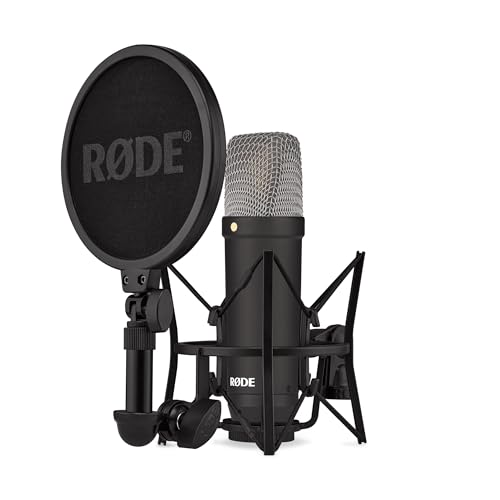
Quiet Vocal Specialist – RØDE NT1 Signature
The RØDE NT1 Signature is a focused choice for singers who prioritize a quiet vocal recording chain. Its large-diaphragm condenser design uses a tight cardioid pattern to focus on the voice and reject room sound, while the package includes the key accessories needed to record through an interface.
Best For: Detailed vocal recording in a controlled home or studio space
Pros:
- Very low 4.5 dBA self-noise helps keep recordings quiet.
- Large-diaphragm voicing is designed for vocals and studio recording.
- Tight cardioid pattern focuses on the singer and rejects room sound.
- Includes an SM6 shock mount with pop filter, XLR cable, and dust cover.
Cons:
- XLR connectivity requires an audio interface.
- It is less plug-and-play than a USB microphone.
- The package does not list an audio interface or mixer.
The NT1 Signature is a strong fit when clean, quiet vocal capture matters more than direct computer connectivity. With its included shock mount, pop filter, and cable, it provides a polished foundation once paired with an interface.
Best XLR Starter Kit – MAONO PM320S for Singing
If you want condenser microphones for singing with a traditional studio connection, the MAONO PM320S is a practical all-in-one option. Its 16mm condenser capsule, cardioid pickup, and included pop-filter accessories are suited to vocal tracking, streaming, podcasting, and home-studio recording. Keep in mind that it requires an audio interface, mixer, or preamp with 48V phantom power.
Best For: Singers and home creators who already have, or plan to add, an XLR interface and want a bundled boom-arm setup.
Pros:
- 16mm condenser capsule captures detailed vocal sound across a broad frequency range.
- Cardioid pattern helps reduce off-axis room noise.
- Includes boom arm, shock mount, pop filter, windscreen, and XLR cable.
- Metal housing and high-SPL handling suit regular home-studio use.
Cons:
- Requires 48V phantom power and an XLR audio interface, mixer, or preamp.
- Not a direct USB plug-and-play microphone.
The PM320S is a strong value when you need both a vocal microphone and basic positioning accessories. Its main limitation is the additional equipment required for power and computer connection, so it is better for an expanding studio than a no-hardware setup.
Best Plug-and-Play Bundle – FIFINE T669 USB Condenser Mic
For shoppers comparing condenser microphones for singing that connect directly to a computer, the FIFINE T669 offers a straightforward USB setup. It includes a boom arm, shock mount, double pop filter, and detachable USB cable, making it convenient for vocal recording, podcasting, streaming, and voice-over work without a separate interface.
Best For: Singers and creators who want a simple PC or laptop recording setup with included positioning and pop-filter accessories.
Pros:
- USB connection provides direct plug-and-play use with PCs and laptops.
- Cardioid condenser capsule focuses on sound from the front and helps reduce ambient noise.
- Includes a sturdy adjustable boom arm, shock mount, double pop filter, and long USB cable.
- Detachable USB cable supports USB Type-A and Type-C connections.
Cons:
- Incompatible with Xbox according to the supplied product notes.
- USB design offers less traditional studio connectivity than an XLR microphone.
The T669 is the easiest choice here for singers who want to record directly to a computer. Its accessory bundle reduces setup costs, while the cardioid pattern and pop filters help produce cleaner vocal recordings in a home environment.
Best Desktop XLR Setup – PROAR XLR Condenser Mic
The PROAR desktop microphone is a practical pick among condenser microphones for singing when you prefer an anchored tabletop setup. Its cardioid back-electret capsule, metal chassis, shock mount, and pop filter are designed for focused vocal capture, while its claimed 130dB maximum SPL handling also accommodates loud singing and instrument tracking.
Best For: Singers, podcasters, and streamers who want a compact desktop XLR setup with included stand and vibration-control accessories.
Pros:
- Weighted desktop base avoids the need for a separate clamp-style boom arm.
- Cardioid pattern supports focused voice reproduction.
- Includes shock mount, pop filter, XLR cable, and desktop stand.
- Handles up to 130dB maximum SPL for louder vocals and instruments.
Cons:
- Requires an external interface or mixer with 48V phantom power.
- Audio interface and 48V power supply are not included.
- Desktop placement may offer less positioning flexibility than a boom arm.
This model makes sense if you want a complete tabletop microphone bundle and already have the necessary XLR power equipment. Its high-SPL specification is useful for energetic vocals, but the missing interface means the true setup cost is higher than the bundle alone suggests.
Easy USB Pick – FIFINE K669B
The FIFINE K669B is a practical entry point for anyone shopping for condenser microphones for singing and wants a simple computer-based setup. Its USB connection, included tripod, and built-in volume knob make it convenient for vocals, streaming, voiceovers, and casual recording without a separate audio interface.
Best For: Singers, streamers, and home users recording directly to a PC, laptop, or compatible PlayStation console.
Pros:
- Plug-and-play USB setup with USB-A/C cable options.
- Cardioid pickup focuses on the main voice and helps reduce background noise.
- Metal construction, tripod stand, and onboard volume control are included.
- Works without a 48V phantom-power supply.
Cons:
- Not compatible with Xbox or phones.
- USB connectivity is less suitable for traditional studio interfaces.
The K669B is a sensible choice when ease of use matters more than advanced studio routing. It offers clear vocal capture in a compact desktop package, making it well suited to beginners and computer-based singing sessions.
Studio XLR Value – AKG P120
The AKG P120 is a more traditional option among condenser microphones for singing, using an XLR connection for audio-interface and studio setups. Its low-mass diaphragm is designed to deliver clear vocal detail, while high SPL handling gives it flexibility for louder sources and instruments.
Best For: Home-studio singers who already have an audio interface or mixer with phantom power.
Pros:
- Clear, detailed sound for vocals, speech, and instruments.
- Cardioid pattern helps focus capture toward the singer.
- Handles sound levels up to 150 dB without distortion.
- Includes a stand adapter and features a bass-cut filter and -20 dB pad.
Cons:
- Requires phantom power and an XLR-compatible interface or mixer.
- Does not provide the direct USB convenience of a computer microphone.
The P120 makes the most sense for a developing recording setup rather than casual plug-and-play use. If you have the required interface, its flexible controls and high SPL capability make it a capable vocal and instrument microphone.
All-in-One Vocal Kit – Dejasound DJM5
The Dejasound DJM5 stands out among condenser microphones for singing by combining a USB microphone with a foldable isolation shield, pop filter, monitoring headphone jack, and mobile adapters. It is aimed at singers and creators who want a bundled home-recording setup for computers, laptops, or compatible smartphones.
Best For: Vocalists, podcasters, and streamers seeking a portable, accessory-rich USB recording kit.
Pros:
- Plug-and-play USB connection with Lightning and Type-C adapters.
- Includes foldable five-panel isolation shield and pop filter.
- Provides echo control, volume adjustment, mute, and headphone monitoring.
- Includes tripod, foam cover, microphone clip, cables, and headphones.
Cons:
- The large accessory kit is less compact than a basic desktop microphone.
- Its listed 30 Hz–16 kHz response is narrower than some studio-oriented options.
- Mobile compatibility depends on the included adapters and device connection.
The DJM5 is a convenient package for singers building a starter recording station, especially when reducing setup complexity is a priority. Its bundled shield and controls add flexibility, though users wanting a conventional XLR studio chain may prefer a dedicated interface microphone.
How We Picked These Condenser Microphones for Singing
We focused on microphones suited to vocal recording, considering pickup pattern, connection type, included accessories, ease of setup, and likely use case. The selection includes established studio models such as the Audio-Technica AT2020, RØDE NT1 Signature, and AKG P120, along with USB and bundled options designed for beginners, podcasters, and home vocalists.
Because singing exposes harsh highs, room noise, and handling vibrations, we also considered practical features such as pop filters, shock isolation, boom arms, desktop stands, and gain flexibility. No microphone sounds identical in every room, so the best option is the one that matches your voice, equipment, and recording environment.
Quick Comparison
USB microphones, including the FIFINE K669B and T669, connect directly to a computer and are generally the simplest choices for casual recording, meetings, streaming, and songwriting. XLR microphones require an audio interface or mixer but typically provide a more upgradeable path and finer control over preamps, monitoring, and processing.
Hybrid models such as the MAONO A04 Gen2 can be useful when you want both USB convenience and XLR flexibility. Studio-focused microphones like the RØDE NT1 Signature are better suited to singers who already have a quality interface and want a more serious long-term recording setup.
Key Buying Factors for Condenser Microphones for Singing
USB Vs. XLR Connectivity
Choose USB for plug-and-play recording with a computer. Choose XLR if you already own, or plan to add, an audio interface. XLR systems are especially useful when you want external preamps, hardware monitoring, or future microphone upgrades.
Polar Pattern and Room Acoustics
Most options here use a cardioid-style pickup pattern that emphasizes sound from the front and reduces some rear noise. Condenser microphones remain sensitive, however, so untreated rooms may produce audible reflections. Position the microphone away from bare walls and use acoustic treatment or soft furnishings where possible.
Accessories and Vocal Protection
A pop filter helps reduce plosive sounds from “p,” “b,” and “t” consonants, while a shock mount or stable stand can reduce bumps and desk noise. Bundles with a boom arm or isolation shield may offer better value for beginners, although included accessories vary in durability.
Sensitivity, Tone, and Recording Technique
Condenser microphones capture detail, which benefits clear vocal performances but also reveals sibilance, breathing, background noise, and inconsistent mic technique. Maintain a steady distance, sing slightly off-axis if your “s” sounds are sharp, and leave enough input headroom to avoid clipping.
Who Should Buy Which Condenser Microphones for Singing?
For a first home setup: Consider a USB bundle such as the FIFINE T669, FIFINE K669B, or MAONO PM320S if you need a straightforward path from microphone to computer.
For flexible connectivity: The MAONO A04 Gen2 is a practical choice when USB convenience matters now but an XLR interface may be added later.
For a traditional studio setup: The Audio-Technica AT2020, Mackie EM-91C, or AKG P120 offers a familiar XLR workflow for vocals and instruments.
For a more ambitious vocal chain: The RØDE NT1 Signature is the strongest fit for singers who want a polished studio microphone and already have suitable interface and room conditions.
For occasional or budget recording: The desktop-stand and isolation-shield bundles can reduce the need for separate accessories, making them convenient starting points. Before buying, confirm connector compatibility, phantom-power requirements for XLR models, and whether your computer supports the included USB connection.