Choosing a drum machine for beginners can be surprisingly difficult: compact grooveboxes, pad controllers, guitar pedals, and full electronic drum kits serve very different purposes.
This roundup compares 10 accessible options, from simple portable rhythm makers to mesh-pad kits with lessons, headphones, and USB connectivity. Use the guide below to match the controls, sounds, practice features, and setup to your goals.
Best 10 Drum Machine for Beginners Picks for 2026
Classic Choice
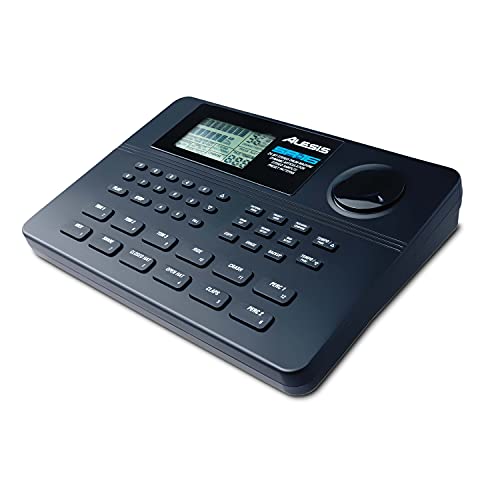
- 233 sounds with 50 preset and 50 user kits
- Velocity-sensitive pads with Dynamic Articulation
- MIDI, stereo outputs, effects, and footswitch inputs
Best For: Standalone songwriting, practice, and live performance
Computer Beatmaking Pick

- 16 velocity-sensitive MPC pads with three banks
- USB-powered controller with assignable knobs
- Includes MPC Beats, Ableton Live Lite, and Drum Synth 500
Best For: Portable computer- and iOS-based beat production
Portable Practice Pick

- 16 touch-sensitive finger pads
- 48 drum kits and 100 preset patterns
- USB-C or battery-powered operation
Best For: Portable rhythm practice and pattern exploration
Complete Learning Kit
Donner DED-70 Electronic Drum Kit

- Quiet mesh pads, cymbals, pedals, throne, headphones, and sticks
- 150 sounds, 15 kits, and 10 demo songs
- Includes USB MIDI and 40 Melodics virtual lessons
Best For: Young beginners learning on a complete electronic drum kit
Best Compact Pick

- Four drum kits and four bass sounds
- Click track, tempo lock, and layered recording
- Battery-powered with built-in speaker
Best For: Portable beginner beat-making and rhythm practice
Best Full Practice Setup
Alesis Nitro Max Electric Drum Set
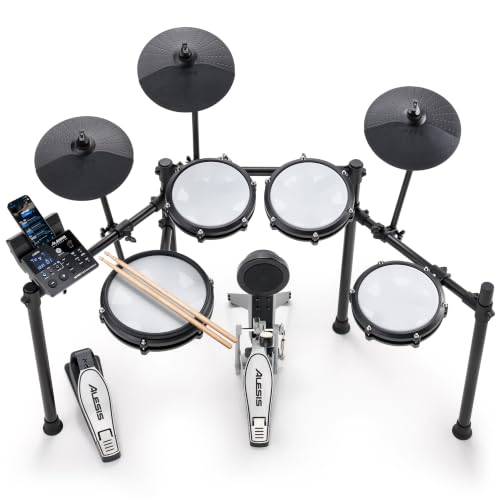
- Quiet mesh heads with realistic playing feel
- 440-plus sounds and customizable drum kits
- Bluetooth, USB/MIDI, rack, pedals, and sticks included
Best For: Beginners learning on a complete electronic drum kit
Best Classic Sequencer

- 15 analog drum sounds
- 34 rhythm presets for quick starts
- 16-step sequencer in a compact design
Best For: Hands-on beginner beat programming and live-oriented production
Best Quiet Practice Pick
Donner DED-20 Roll-Up Drum Pad

- Seven pads with built-in kits, songs, and accompaniments
- Headphone output and roll-up design for quiet, portable practice
- USB MIDI, MIDI output, recording, and 40 Melodics lessons
Best For: Beginners, kids, and compact home practice
Best for Guitarists

- 121 grooves across 11 styles with customizable song banks
- Tap tempo, fills, and footswitch control for hands-free use
- Stereo connectivity, EQ, and editor software support
Best For: Guitarists and bassists needing practice backing rhythms
Best Full-Kit Starter
Donner DED-80 Mesh Electronic Drum Set

- Complete kit with mesh pads, cymbals, pedals, throne, and headphones
- 180 sounds, 15 kits, coaching tools, and accompaniment tracks
- USB MIDI, app support, and 40 Melodics lessons
Best For: Beginners wanting a realistic home drum-kit layout
Classic Choice – Alesis SR-16
The Alesis SR-16 is a strong drum machine for beginners who want a self-contained unit for practicing, songwriting, or live performance. It includes 233 sounds, preset and user kits, velocity-sensitive pads, effects, and MIDI connectivity for integration with keyboards, computers, DAWs, and electronic drum kits.
Best For: Beginners who want a standalone groovebox with traditional drum-machine controls and room to expand into MIDI-based production.
Pros:
- Includes 233 assignable sounds and 50 preset plus 50 user drum kits.
- Velocity-sensitive pads and Dynamic Articulation support expressive playing.
- Offers MIDI connectivity, stereo outputs, footswitch inputs, and built-in effects.
Cons:
- Its plastic construction and older standalone design may feel less modern than software-based options.
- It does not include the broader pad count or kit hardware of an electronic drum set.
The SR-16 is a practical pick if you prefer dedicated hardware over a computer-based setup. Its substantial sound library and flexible MIDI connections make it useful beyond the beginner stage.
Computer Beatmaking Pick – Akai MPD218
The Akai MPD218 is a compact drum machine for beginners who plan to make beats with a computer, iOS device, or compatible music software. Its 16 velocity-sensitive MPC pads, three pad banks, assignable knobs, note repeat, and included MPC Beats software provide a hands-on entry into beat production.
Best For: New producers who want a portable USB MIDI controller for triggering drums, samples, effects, and virtual instruments.
Pros:
- Provides 48 assignable pad locations through three banks.
- Includes 16 velocity-sensitive pads, note repeat, and full-level controls.
- Comes with MPC Beats, Ableton Live Lite, and Drum Synth 500 software.
Cons:
- It is a MIDI controller, so it requires compatible software or apps for sound generation.
- The Camera Connection Kit needed for iOS use is sold separately.
The MPD218 makes sense for beginners who already use, or intend to learn, computer-based music production. It is more portable than a standalone drum machine, but less independent without a connected device.
Portable Practice Pick – Medeli MR101S
The Medeli MR101S is a straightforward drum machine for beginners who value portability and quick access to built-in rhythms. It features 16 touch-sensitive finger pads, 48 drum kits, 100 preset patterns, and flexible USB-C or battery power.
Best For: Beginners seeking a lightweight practice and pattern-playing unit that can operate away from a wall outlet.
Pros:
- Offers 48 drum kits and 100 preset drum patterns for variety.
- Its 16 touch-sensitive pads support hands-on rhythm playing.
- USB-C or battery power improves portability.
Cons:
- The supplied notes do not specify MIDI connectivity, built-in effects, or software support.
- It has fewer documented production features than more connectivity-focused options.
The MR101S is best suited to beginners who want a simple, portable way to explore drum patterns. Its pattern library and battery capability are useful when convenience matters more than advanced integration.
Complete Learning Kit – Donner DED-70 Electronic Drum Kit
The Donner DED-70 is an electronic drum kit rather than a traditional tabletop drum machine, making it a practical drum machine for beginners who want a more physical playing experience. It includes quiet mesh pads, cymbals, pedals, a throne, headphones, 150 sounds, customizable kits, and access to Melodics lessons.
Best For: Young beginners ages 6–14 who want a complete, apartment-friendlier electronic drum setup with guided lessons.
Pros:
- Includes four quiet mesh drum pads, three cymbals, two pedals, throne, headphones, and sticks.
- Provides 150 sounds, 15 customizable kits, and 10 demo songs.
- Offers USB MIDI, Type-C power-bank support, and 40 virtual Melodics lessons.
Cons:
- At 21 pounds, it is substantially less compact than a tabletop drum machine.
- An amplifier is required for speaker output, although headphones are included.
- The Melodics offering does not include a subscription service.
The DED-70 is a strong choice when beginner learning and realistic drumming matter more than minimal size. Its quiet mesh pads, included accessories, adjustable rack, and lesson support create a fuller starter setup.
Best Compact Pick – Stylophone Beat
If you want a portable drum machine for beginners, the Stylophone Beat keeps the controls approachable while offering four drum kits, four bass sounds, pattern recording, and layered performances. Its built-in speaker and battery power make it convenient for casual practice away from a studio.
Best For: Beginners seeking a compact, battery-powered rhythm machine for experimenting with beats and bass lines.
Pros:
- Compact design with four drum kits and four bass sounds
- Click track and tempo lock help with timing
- Supports multiple patterns, layered recording, and muting
- Built-in speaker, volume control, and wired headphone support
Cons:
- Requires three AA batteries, which are not included
- Plastic construction may feel less substantial than larger machines
The Stylophone Beat is a straightforward entry point for learning rhythm programming without committing to a larger setup. It is best suited to portable beat-making and basic pattern exploration rather than an extensive sound-design workflow.
Best Full Practice Setup – Alesis Nitro Max Electric Drum Set
For beginners who want a complete playing experience rather than a tabletop unit, the Alesis Nitro Max is an electronic drum set with quiet mesh heads, a foldable rack, Bluetooth, and a substantial selection of built-in sounds. It offers a more realistic practice approach while still supporting USB/MIDI computer connections.
Best For: Beginners who want a full electronic drum kit for quiet practice, structured learning, and computer-based music work.
Pros:
- Eight-piece configuration with a 10-inch dual-zone snare, mesh toms, kick tower, and cymbals
- Quiet mesh heads provide realistic rebound and feel
- Drum module includes 32 BFD kits, 16 user kits, and 440-plus sounds
- Includes Bluetooth, USB/MIDI, a kick pedal, sticks, and 90-day Drumeo access
Cons:
- Much larger and heavier than a compact drum machine
- Requires a dedicated setup area and included power supply
The Nitro Max is a strong choice if learning means physically playing a kit as well as programming rhythms. Its foldable rack and low-noise mesh heads support home practice, while USB/MIDI and computer compatibility leave room to expand into recording.
Best Classic Sequencer – Behringer RD-78 Drum Machine
The Behringer RD-78 is a practical drum machine for beginners who want to learn classic step sequencing. Its 15 analog drum sounds, 34 rhythm presets, and 16-step sequencer provide a focused way to build patterns for music production or live performance.
Best For: Beginners who prefer hands-on pattern programming with classic analog-style drum sounds.
Pros:
- Offers 15 analog drum sounds across different production styles
- Includes 34 rhythm presets for quick starting points
- 16-step sequencer supports hands-on beat programming
- Compact alloy-steel design is suited to studio or live use
Cons:
- Focused drum sound set may be less versatile than a full electronic kit
- Does not include the playing hardware of an electronic drum set
The RD-78 keeps the learning curve centered on rhythm patterns and sequencing rather than a large menu of features. It is a sensible option for beginners who want a compact, durable unit for creating programmed beats and exploring classic drum-machine workflows.
Best Quiet Practice Pick – Donner DED-20 Roll-Up Drum Pad
If you want a compact drum machine for beginners, the Donner DED-20 combines simple practice features with portable storage. Its seven pads, built-in sounds, accompaniment options, recording function, and headphone output make it suitable for home practice, casual playing, and early rhythm development.
Best For: Beginners, children, and players who need a quiet, portable electronic drum pad.
Pros:
- Seven drum sets, 12 demonstration songs, and nine accompaniments support practice and entertainment.
- Soft silicone pads, headphone output, and adjustable volume help reduce disruption at home.
- Roll-up design, USB MIDI, standard MIDI output, and a 180-second recording function add flexibility.
- Includes access to 40 Melodics lessons designed for beginner-to-advanced practice.
Cons:
- Strike force is single and does not change with harder hits.
- The compact pad format may feel less like a full drum kit.
The DED-20 is a practical entry point when portability and quiet practice matter more than full-kit realism. Its MIDI connections also leave room for basic computer-based music creation.
Best for Guitarists – MOOER Drummer X2 Rhythm Pedal
The MOOER Drummer X2 is a different kind of drum machine for beginners: a foot-controlled rhythm pedal for guitar or bass players. It provides a broad selection of grooves, straightforward knob controls, tap tempo, fills, and preset storage without requiring a separate electronic drum kit.
Best For: Beginner guitarists and bassists who want adjustable backing rhythms for practice or performance.
Pros:
- Includes 121 grooves across 11 music styles, with 11 variations per genre.
- Seven rhythm slots in each of 11 customizable song banks store favorite patterns and tempos.
- Tap tempo, fill triggering, and dual footswitch control support hands-free operation.
- Stereo inputs and outputs, EQ control, external control support, and editor software expand setup options.
Cons:
- It is a rhythm pedal rather than a playable multi-pad drum kit.
- Its features are primarily aimed at guitar and bass setups.
- It requires the included 9V DC adapter for power.
Choose the Drummer X2 if your goal is to practice timing against grooves or add rhythms while playing another instrument. Its footswitch-based controls make it more performance-oriented than lesson-oriented.
Best Full-Kit Starter – Donner DED-80 Mesh Electronic Drum Set
For shoppers seeking a more traditional drum machine for beginners, the Donner DED-80 offers a complete electronic kit layout with mesh pads, cymbals, pedals, throne, headphones, and sticks. Its coaching features and broad sound library make it a stronger choice for structured practice than a tabletop pad.
Best For: Beginners who want a realistic full-kit layout and an included setup for home practice.
Pros:
- Includes four mesh drum pads, three cymbals, a metal frame, throne, pedals, sticks, headphones, and cables.
- Double-layer mesh heads provide a more realistic playing feel than a flat pad.
- Offers 180 sounds, 15 drum kits, 30 demo songs, a drum coach, and 30 accompaniment tracks.
- Supports USB MIDI, Donner Play APP, and 40 Melodics lessons for guided learning.
Cons:
- The drum set requires a power amplifier for sound output; headphones are included for silent practice.
- Its full frame needs considerably more space than a roll-up drum pad.
- The included lessons require contacting customer service to receive access.
The DED-80 is the better fit when developing kit technique and pedal control is a priority. Its foldable frame and headphones help with home use, while the mesh heads provide a more conventional drumming experience.
How We Picked the Best Drum Machine for Beginners
We focused on products that make rhythm practice or beat creation approachable without requiring advanced production knowledge. The selection includes standalone drum machines, USB MIDI controllers, compact beat makers, guitar pedals, and electronic drum kits because “beginner” can mean learning finger drumming, building loops, practicing a full kit, or adding rhythm to a live instrument.
We considered control layout, preset variety, sequencing or lesson features, connectivity, portability, headphone support, included accessories, and how easily each product can fit into a first setup. A good choice should offer a clear path to making useful sounds quickly while leaving room to develop skills.
Quick Comparison
| Best For | Look For | Most Suitable Type |
|---|---|---|
| Making beats at a desk | Pads, sequencing, USB MIDI | Standalone drum machine or pad controller |
| Learning full-kit technique | Responsive pads, pedals, lessons | Electronic drum set |
| Practicing guitar or bass | Tap tempo, fills, footswitch control | Drum machine pedal |
| Travel and casual practice | Battery-friendly design, speaker, simple controls | Portable rhythm machine |
| Classic hardware sounds | Dedicated controls, analog-style voices | Performance-focused drum machine |
Key Buying Factors for a Drum Machine for Beginners
Choose the Right Playing Style
Pad-based machines suit beat-making and finger drumming, while electronic kits better replicate the coordination of kick, snare, cymbals, and hi-hat pedals. If you mainly need backing rhythms for guitar or bass, a pedal format is usually more practical than a tabletop unit.
Check Sounds, Patterns, and Sequencing
Preset counts can be useful, but straightforward pattern editing matters more when you are starting out. Look for easily accessible tempo controls, fills, pattern changes, and recording functions. A large sound library is helpful only if navigation remains manageable.
Consider Noise, Space, and Accessories
Mesh pads and headphone outputs are valuable for quiet practice, especially in apartments. Full kits require more floor space and may need a throne or additional accessories, so check what is included before comparing prices.
Review Connectivity
USB MIDI is useful for connecting to music software, while audio outputs make standalone machines easier to integrate with mixers or amplifiers. Bluetooth, USB-C, and built-in speakers can improve convenience but should not replace checking the connections your existing equipment requires.
Who Should Buy Which Drum Machine for Beginners?
Choose a standalone unit such as the Alesis SR-16 or Behringer RD-78 if you want dedicated rhythm hardware with patterns and physical controls. The Akai MPD218 is better for computer-based production because it is a MIDI controller rather than a self-contained sound source.
For learning kit technique, the Donner DED-70, Alesis Nitro Max, and Donner DED-80 are the strongest matches. Compare pad feel, included pedals, lesson access, headphones, and available space. The DED-80 is particularly suited to buyers who want a more complete starter bundle.
Pick the Medeli MR101S or Stylophone Beat for portable, casual rhythm-making, especially when simplicity matters more than extensive editing. Guitarists and bassists should consider the MOOER pedal for hands-free accompaniment, tempo control, and fills during practice or performance. Finally, a roll-up Donner pad can suit children or highly portable practice, provided expectations are realistic about its compact playing surface.