The best drum machines for techno make it easier to build driving rhythms, shape distinctive sounds, and perform patterns without relying entirely on a computer. The right choice depends on whether you prioritize analog punch, deep sequencing, sampling, portability, or an all-in-one workflow.
We selected 10 options across those categories, including classic-style rhythm boxes, flexible groove machines, and compact tools for sketching ideas anywhere. Use the guide below to compare their strengths and choose a setup that matches your music, studio, and performance style.
Best 10 Drum Machines for Techno Picks for 2026
Analog Techno Punch

- Analog-focused drum machine
- Per-drum accents and Song mode
- Color sound shaping on most instruments
Best For: Hands-on techno drum programming
Portable Idea Station

- Integrated drums, synths, and sequencing
- Onboard sampling with microphone
- Rechargeable, compact, and speaker-equipped
Best For: Mobile techno sketching and arrangement
Deep Sequencing Powerhouse

- 4 analog and 8 digital tracks
- 35 drum and melodic sound machines
- Per-track filters, LFOs, and Overbridge
Best For: Advanced techno production and live performance
Portable Acid Rhythm Box

- TR-808, TR-909, and TR-606 drum sounds
- TB-303 bass and 16-step sequencing
- Portable with effects and USB-C audio/MIDI
Best For: Acid techno jams and mobile beatmaking
Portable Sampling Pick

- Battery-powered standalone sampler and sequencer
- 16 pads with fast chopping and resampling tools
- Built-in effects, speaker, microphone, and microSD storage
Best For: Portable sample-based techno production
Flagship Performance Choice

- TR-808 and TR-909 sounds with analog and ACB engines
- Advanced TR-REC sequencing with probability and motion control
- Deep sampling, effects, routing, and hardware connectivity
Best For: Advanced studio and live techno performance
Standalone Production Hub

- MPC3 standalone workflow for sampling and full song arrangement
- Up to 16 stereo audio tracks and 32 plugin instruments
- USB-C audio/MIDI integration with a 7-inch touchscreen
Best For: Complete standalone techno production and hybrid studios
Portable Sampling Powerhouse
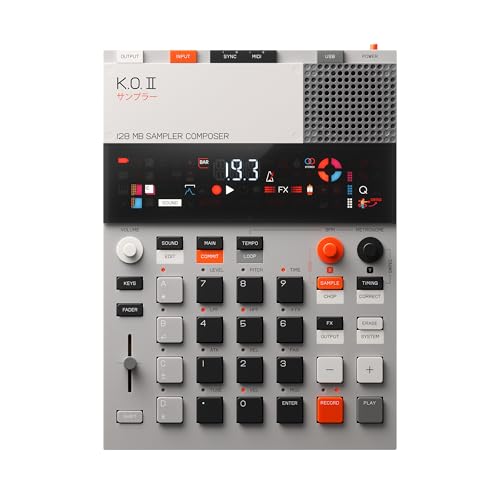
- 128MB sampler with built-in microphone and 999 sample slots
- Four-group sequencer with 99 patterns per group
- Portable battery or USB-C operation with live effects
Best For: Portable sampling, beatmaking, and live techno performance
Quick Rhythm Sketchpad

- Four drum kits and four bass sounds
- Records patterns, layers, and muted parts
- Built-in speaker with wired headphone support
Best For: Simple portable rhythm programming and beat practice
Classic Analog Rhythm Engine

- 15 analog drum sounds for classic rhythm tones
- 34 rhythm presets for quick pattern starting points
- 16-step sequencer in a durable alloy-steel body
Best For: Hands-on analog rhythm programming and live performance
Analog Techno Punch – Arturia DrumBrute Impact
The Arturia DrumBrute Impact is a focused analog option for producers seeking punchy, hands-on drum programming. Its separate per-drum accents, Song mode, and optional Color sound shaping make it a practical choice among drum machines for techno.
Best For: Techno producers who want dedicated analog drum controls and pattern chaining.
Pros:
- Separate accent control for each drum.
- Song mode supports chaining patterns.
- Optional Color sound shaping is available across the instruments except Cowbell.
- Metal construction with a 2-year manufacturer warranty.
Cons:
- Sound-shaping Color control does not apply to the Cowbell.
- Its dedicated drum-machine design may be less versatile than an all-in-one workstation.
The DrumBrute Impact is best suited to a direct, rhythm-first workflow. Choose it when analog drum emphasis and performance-oriented pattern control matter more than onboard synths or sampling.
Portable Idea Station – Yamaha SEQTRAK
The Yamaha SEQTRAK combines drums, synths, sound design, sequencing, and onboard sampling in a compact system. For producers comparing drum machines for techno, its built-in speaker, microphone, rechargeable battery, and real-time controls support mobile sketching and arrangement.
Best For: Mobile producers who want to capture and develop techno ideas away from a studio.
Pros:
- All-in-one workflow covering drums, synths, sound design, and sequencing.
- Advanced sequencer supports composition, arrangement, and dynamic playback.
- Built-in speaker, microphone, rechargeable battery, and onboard sampler.
- Compact 16-ounce design with USB-C connectivity.
Cons:
- Plastic construction may feel less rugged than metal-bodied alternatives.
- Its broad all-in-one workflow may be less specialized for dedicated drum performance.
The SEQTRAK is a strong fit for capturing complete musical ideas quickly. It makes the most sense when portability, sampling, and integrated sequencing are priorities alongside techno rhythm creation.
Deep Sequencing Powerhouse – Elektron Syntakt
The Elektron Syntakt pairs four analog tracks with eight digital tracks, offering a broad platform for drums and melodic parts. Its 35 sound-generating machines, per-track filters and LFOs, and extensive MIDI connectivity make it a powerful contender among drum machines for techno.
Best For: Studio and live performers who want deep sequencing, sound shaping, and hybrid analog-digital tracks.
Pros:
- Combines 4 analog and 8 digital tracks.
- Includes 35 sound-generating machines for drum and melodic sounds.
- Multimode filters and assignable LFOs are available per track.
- Overbridge, MIDI In/Out/Thru, DIN Sync, and 48 kHz/24-bit converters support studio integration.
Cons:
- Its extensive feature set may require more learning than a simpler beat machine.
- The 2.17 kg body is less ultraportable than compact battery-powered options.
The Syntakt is the most expansive choice here for building layered techno arrangements inside one instrument. Select it if advanced track-level shaping and DAW or MIDI integration are central to your workflow.
Portable Acid Rhythm Box – Roland AIRA Compact T-8
The Roland AIRA Compact T-8 combines TR-808, TR-909, and TR-606 drum sounds with TB-303 bass in an ultra-portable format. Its 16-step sequencer, probability and velocity controls, effects, and USB-C audio/MIDI interface make it a compelling compact pick among drum machines for techno.
Best For: Beginners and mobile performers making acid techno, classic Roland-style rhythms, and quick jams.
Pros:
- Includes TR-808, TR-909, and TR-606-style drums plus TB-303 bass.
- Supports up to 64 user patterns with up to 32 steps each.
- Offers probability, sub step, last step, velocity, and live performance tools.
- Built-in delay, reverb, overdrive, and sidechain compression add processing options.
Cons:
- Its compact format provides a narrower instrument scope than larger production systems.
- The product is oriented toward Roland-style drums and bass rather than broad multi-synthesis.
The T-8 is especially appealing for immediate acid and classic electro-inspired techno ideas. Its portable design and performance-focused sequencer make it easy to jam, while USB-C, MIDI, and sync connections support integration with a wider setup.
Portable Sampling Pick – Akai MPC Sample
If you want drum machines for techno that can also capture and reshape external sounds, the Akai MPC Sample offers a compact, battery-powered option. Its 16 pads, sample-chopping tools, sequencing workflow, and onboard effects make it well suited to portable, hands-on beatmaking.
Best For: Beginners, DAWless creators, finger drummers, and producers who want a portable sampler-sequencer for techno sketches and sample-based grooves.
Pros:
- Standalone operation with a rechargeable battery, built-in speaker, microphone, and microSD storage.
- Fast sampling features include Instant Sample Chop, timestretching, repitching, and internal resampling with effects.
- Four internal effects processors offer 60 effect types with dedicated knob control.
Cons:
- Its focus is sampling and beatmaking rather than a dedicated analog drum-synthesis architecture.
- MIDI DIN connections require a separate 1/8-inch-to-DIN adapter.
The MPC Sample is a flexible entry point for techno producers who value portability and sample manipulation. It is especially appealing when spontaneous recording and DAWless workflow matter more than extensive dedicated drum-machine synthesis.
Flagship Performance Choice – Roland TR-1000
For producers seeking powerful drum machines for techno, the Roland TR-1000 combines modeled classics, a newly developed analog engine, deep sequencing, and extensive performance control. It is built for detailed sound design, hybrid setups, and live manipulation.
Best For: Experienced techno producers and performers who need extensive drum modeling, sampling, sequencing, routing, and hands-on effects.
Pros:
- Includes TR-808 and TR-909 sounds alongside ACB, FM, VA, and PCM engines.
- Advanced TR-REC sequencing adds probability, off-grid control, motion recording, step timing, and dedicated layer tracks.
- Offers over 2,000 onboard sounds, stereo sampling, resampling, time-stretching, and 46 GB of memory for user samples.
- Expansive connections include individual outputs, MIDI, trigger I/O, DIN sync, clock out, CV, and USB-C audio/MIDI.
Cons:
- Its 19.1-pound metal-bodied design is considerably less portable than compact desktop units.
- The breadth of engines, effects, routing, and sequencing features may be more than beginners need.
The TR-1000 is the most comprehensive choice here for building and performing complex techno rhythms. Its combination of classic Roland-inspired sounds, modern synthesis, sampling, and deep external connectivity supports both studio production and live hardware rigs.
Standalone Production Hub – Akai MPC One G2
The Akai MPC One G2 is a strong option among drum machines for techno when you want a broader standalone production center rather than a focused rhythm box. Its MPC3 workflow handles sampling, sequencing, arranging, audio tracks, plugins, and external hardware control without a laptop.
Best For: Producers who want to build complete techno tracks, sequence external gear, and move between standalone and computer-based workflows.
Pros:
- Standalone MPC3 operation supports sampling, drum programming, sequencing, arrangement, and performance.
- New 8-core processing supports up to 16 stereo audio tracks and 32 plugin instruments per project.
- USB-C provides 24×24 multichannel audio, expanded MIDI, and host/device connectivity through one cable.
- Includes a 7-inch touchscreen, 16 velocity- and pressure-sensitive pads, and over 20 GB of factory content.
Cons:
- It is a full production center, so its broader workflow may feel less immediate than a dedicated drum machine.
- Unlike the MPC Sample, the supplied notes do not list a built-in speaker, microphone, or rechargeable battery.
The MPC One G2 suits techno makers who want to progress from drum patterns to complete arrangements in one box. Its extensive standalone production features and USB-C integration make it a practical centerpiece for hybrid studios and compact hardware setups.
Portable Sampling Powerhouse – EP-133 K.O. II
For producers seeking drum machines for techno that can also capture and reshape external sounds, the EP-133 K.O. II combines sampling, sequencing, effects, and portability in one compact unit. Its 128MB memory, built-in microphone, four-group pattern system, and live-oriented controls make it well suited to fast beat creation and performance.
Best For: Portable techno sketching, sampling, and live beat performance.
Pros:
- Built-in microphone, line input, resampling, and 999 sample slots support flexible sound creation.
- Four groups with 99 patterns each, song mode, and a reworked sequencer encourage fast arrangement.
- Includes master and punch-in effects, MIDI and sync connectivity, and battery or USB-C power.
- Compact design with built-in speaker makes it practical for travel and everyday carry.
Cons:
- Its plastic construction may feel less rugged than metal-bodied production hardware.
- The feature-rich workflow may take longer to master than a simpler rhythm machine.
- AAA batteries and a USB-C cable are required for power; batteries are not listed as included.
The K.O. II is a strong choice when you want more than preset drum patterns. It offers a broad sampling and performance workflow in a portable format, making it especially attractive for producers who build techno around found sounds, resampling, and hands-on pattern changes.
Quick Rhythm Sketchpad – Stylophone Beat
The Stylophone Beat is a compact option for anyone comparing drum machines for techno and wanting a straightforward rhythm tool. It provides four drum kits, four bass sounds, pattern recording, layering, muting, and tempo-focused features in a small battery-powered unit.
Best For: Beginners, casual beatmakers, and portable rhythm sketching.
Pros:
- Four drum kits and four bass sounds offer a simple starting palette.
- Supports multiple recorded patterns, layered parts, and muted sounds.
- Click track and tempo lock help maintain timing while programming.
- Built-in speaker and wired headphone support make it easy to use without extra equipment.
Cons:
- Its sound selection is substantially smaller than more advanced sampling or analog machines.
- It requires three AA batteries, which are not included.
- The compact feature set may be limiting for detailed techno arrangements or extensive sound design.
The Stylophone Beat prioritizes accessibility and portability over deep sequencing or sound manipulation. It can work well as an inexpensive idea generator, but producers wanting extensive effects, sampling, or complex arrangements should consider a more capable machine.
Classic Analog Rhythm Engine – Behringer RD-78
For shoppers who prefer dedicated hardware and classic drum-machine operation, the Behringer RD-78 offers 15 analog drum sounds, 34 rhythm presets, and a 16-step sequencer. Its direct interface and compact metal-bodied design make it a practical candidate among drum machines for techno, particularly for hands-on studio work and live performance.
Best For: Producers who want classic analog drum sounds and straightforward step sequencing.
Pros:
- Fifteen analog drum sounds provide a focused classic-style rhythm palette.
- Thirty-four rhythm presets can quickly supply starting points for production or performance.
- The 16-step sequencer supports direct programming of beats and patterns.
- Alloy-steel construction is designed for durability in studio and live settings.
Cons:
- The 16-step sequencer is less expansive than machines designed for long-form arrangement.
- Its focused 15-sound architecture offers less sampling flexibility than a sampler-based unit.
- The supplied notes identify USB connectivity but do not specify broader MIDI or sync features.
The RD-78 is best suited to producers who value immediate controls, classic analog drum character, and a dedicated step-sequencing workflow. It is less versatile than a sampler, but its focused design can make building punchy, repeatable techno rhythms quick and intuitive.
How We Picked the Best Drum Machines for Techno
We compared these machines by focusing on the features that matter most in techno production and performance: kick and percussion character, sequencing depth, pattern variation, hands-on control, synchronization, portability, and overall workflow. We also considered whether each device is best suited to live jamming, studio arrangement, sampling, or quick idea generation.
The selection includes analog drum machines, digital drum computers, sampler-based workstations, and hybrid instruments. That range matters because techno producers may want anything from immediate 808-style sounds to detailed parameter automation and full standalone song construction.
Quick Comparison
- Best for analog impact: Arturia DrumBrute Impact and Behringer RD-78.
- Best for advanced sequencing: Elektron Syntakt and Yamaha SEQTRAK.
- Best for classic Roland-style sounds: Roland TR-1000.
- Best compact beat machine: Roland AIRA Compact T-8.
- Best for sampling and production: Akai MPC One G2 and Akai MPC Sample.
- Best for portable sampling: teenage engineering EP–133 K.O. II.
- Best budget-friendly novelty option: Stylophone Beat.
Key Buying Factors for Drum Machines for Techno
Sound Engine and Character
Analog circuits often provide forceful kicks, sharp claps, and hands-on tonal variation, while digital and modeled engines can offer more sounds, reliable recall, and deeper editing. Decide whether you want a focused voice set or a broader palette for multiple subgenres.
Sequencing and Pattern Control
Look for parameter locks, probability, motion recording, fills, song mode, and pattern chaining if you plan to create evolving loops. Straightforward step sequencers can be faster for live performance, while advanced sequencing is better for intricate arrangements and long-form development.
Sampling and Standalone Workflow
A sampler can turn field recordings, vocals, and external drum hits into techno material. Standalone production centers are useful when you want to arrange complete tracks without a computer, but they typically require more menu navigation and setup than dedicated rhythm machines.
Connectivity and Performance
Check MIDI, USB, audio inputs, outputs, sync options, and multitrack or individual outputs before buying. Built-in speakers and batteries improve portability, while robust pads, encoders, and performance effects are valuable for live sets.
Who Should Buy Which Drum Machines for Techno?
Choose the DrumBrute Impact or RD-78 if you want immediate, tactile analog-style rhythm programming. The Syntakt is a strong fit for producers who want one compact instrument capable of drums and synthesized parts, while the SEQTRAK suits mobile creators seeking sequencing, sampling, and built-in monitoring.
The TR-1000 is aimed at producers who want a broad Roland-inspired sound library with modern control. Choose the T-8 for compact 808/909-style jams and portable sketching. MPC users should consider the MPC One G2 for a fuller standalone studio, while the MPC Sample is better for a sampler-centered setup. The EP–133 K.O. II favors quick resampling and playful performance. The Stylophone Beat is best for simple, inexpensive rhythm experiments rather than demanding production work.