The right stand keeps an instrument accessible while reducing the risk of tip-overs, scratches, and unnecessary handling. This roundup compares 10 instrument stands spanning compact A-frames, adjustable guitar holders, wooden stands, and multi-instrument racks.
Use the buying guide below to match stand design, padding, footprint, and capacity to your instrument collection and available space.
Best 10 Instrument Stands Picks for 2026
Best Budget A-Frame

- Adjustable A-frame fits most guitars
- Padded arms and backrest
- Folds flat; no assembly required
Best For: Portable acoustic and electric guitar storage
Best Multi-Instrument Support
Hercules Multi Orchestral Stand

- 20-kilogram load capacity
- Locking folding yoke
- Adjustable backrest for support
Best For: Heavier compatible orchestral instruments
Best Adjustable Tripod

- Height-adjustable upper yoke
- Supports guitars, basses, and banjos
- Padded, foldable tripod base
Best For: Portable home and practice setups
Best for Small Instruments

- Fits ukuleles and small strings
- EVA foam protective padding
- Compact folding wood X-frame
Best For: Ukulele, mandolin, violin, and banjo storage
Most Adjustable
CAHAYA Folding Guitar Tripod Stand
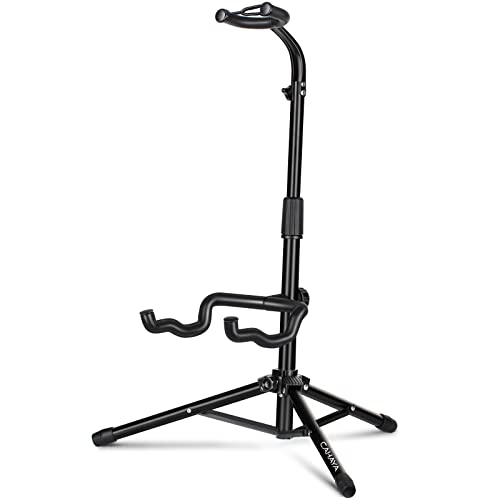
- Adjusts from 30.7 to 37 inches
- Padded arms fit several string instruments
- Folds flat for storage and travel
Best For: Players seeking adjustable support for guitars, basses, and similar instruments
Best-Looking
MUSO Hardwood Folding Instrument Stand

- Polished hardwood zebra finish
- Adjustable 7- to 9-inch cradle arms
- Folds flat and includes foam padding
Best For: Home display and portable storage for lighter instruments
Best Compact Value

- Ready to use with no installation
- Four silicone feet and padded arms
- Folds flat for travel and storage
Best For: Portable everyday support for guitars and other compatible instruments
Compact Wood Pick

- Solid acacia wood with padded contact points
- Adjustable fit for ukuleles and violins
- Folds for storage and travel
Best For: Small stringed instruments and portable storage
Three-Instrument Workhorse

- Holds three instruments at once
- 99-pound listed load capacity
- Adjustable, locking, and foldable design
Best For: Stage, studio, or travel setups with multiple instruments
Everyday Adjustable Pick

- Adjustable height for common guitar sizes
- Padded, non-slip protective support
- Folds at both cradles for transport
Best For: Single guitars in home, studio, or travel settings
Best Budget A-Frame – Portable Folding Guitar Stand
For shoppers seeking practical instrument stands for everyday guitar storage, this Amazon Basics A-frame model offers adjustable width, protective padding, and a fold-flat design. It arrives fully assembled and supports both acoustic and electric guitars.
Best For: Guitarists who want a lightweight, portable stand for standard acoustic or electric guitars.
Pros:
- Three adjustable-width settings accommodate most guitar shapes.
- Soft foam arms and backrest help protect the instrument.
- Folds flat for transport and storage.
- Non-slip rubber feet and metal construction support stability.
Cons:
- Its 10-kilogram load capacity is intended for guitars rather than broader instrument use.
- The A-frame design provides one support level.
This is a straightforward choice when portability and simple setup matter most. Its adjustable width makes it more versatile than a fixed guitar stand, while the padded contact points add useful everyday protection.
Best Multi-Instrument Support – Hercules Multi Orchestral Stand
Among instrument stands designed for heavier orchestral instruments, the Hercules DS538B emphasizes secure positioning and a substantial 20-kilogram load capacity. Its folding yoke, locking pins, and adjustable backrest are geared toward dependable support.
Best For: Players who need a sturdy stand for compatible orchestral instruments and value locking support components.
Pros:
- Supports up to 20 kilograms.
- Folding yoke includes a locking pin to secure its position.
- Adjustable backrest supports the instrument safely.
- Locking mechanism allows the stand to fold for storage.
Cons:
- At 4.7 pounds, it is heavier than lightweight portable stands.
- The supplied specifications do not identify specific instrument types it accommodates.
The DS538B is a sensible option when load capacity and locking support are more important than minimal weight. Its adjustable backrest and folding hardware make it practical for organized storage and transport.
Best Adjustable Tripod – Foldable Guitar Stand
This height-adjustable guitar stand is built for flexible home, practice, and temporary setups. Its foldable tripod base, self-centering lower yoke, rubber padding, and friction-lock adjustment provide practical support for many standard guitars and similar instruments.
Best For: Guitarists who want a lightweight adjustable stand for acoustic, electric, and bass guitars on flat surfaces.
Pros:
- Compatible with most acoustic, electric, and bass guitars, plus similar instruments.
- Foldable, lightweight design is easy to transport and store.
- Height adjusts with a friction knob and locking mechanism.
- Rubber padding and anti-slip feet help prevent scratches and slipping.
Cons:
- Not recommended for oversized or non-standard body shapes.
- Stability depends on fully extended legs, a flat surface, and proper tightening.
- It is intended for everyday or temporary use rather than heavy-duty permanent studio applications.
This model suits players who need adjustability without a bulky setup. The support is versatile, but careful placement and tightening are important for stable use.
Best for Small Instruments – Wood Folding Stand
For smaller stringed instruments, this wood X-frame is a compact alternative to full-size instrument stands. It is designed for ukuleles, mandolins, violins, banjos, and similar instruments, with EVA foam at contact points and a folding format.
Best For: Owners of ukuleles and other small instruments who want a portable stand that also works as room décor.
Pros:
- Designed for several small instruments, including ukuleles, mandolins, and violins.
- EVA foam padding helps protect contact points from scratches.
- Folds to a compact length of about 11 inches for carrying.
- Natural wood-grain styling can complement a living room or studio.
Cons:
- The listed 300-gram load capacity limits it to small, lightweight instruments.
- It is not intended for full-size guitars or heavier instruments.
- The X-shaped design must be assembled or disassembled for use and storage.
This stand is best viewed as a compact display and storage solution rather than a universal stand. Its low capacity and small-instrument focus are restrictive, but the padded wood construction is appealing for ukulele and similar instrument owners.
Most Adjustable – CAHAYA Folding Guitar Tripod Stand
If you need instrument stands with flexible height and broad compatibility, the CAHAYA tripod is a practical choice. Its height adjusts from 30.7 to 37 inches, while padded, uneven arms accommodate acoustic and electric guitars, basses, banjos, mandolins, and more.
Best For: Musicians who want a height-adjustable floor stand for multiple string instruments.
Pros:
- Adjustable height and base cradle for flexible positioning.
- Tripod structure, extended legs, and rubber feet promote stability.
- Thick sponge padding protects contact points from scratches.
- Folds flat for transport and compact storage.
Cons:
- The tripod footprint may require more floor space than an A-frame stand.
- Designed for one instrument at a time.
With its reinforced cradle, secure neck support, and adjustable design, this stand is well suited to players who regularly switch between instruments or need a customized playing-height setup.
Best-Looking – MUSO Hardwood Folding Instrument Stand
Among instrument stands, the MUSO hardwood model stands out for its polished zebra finish and furniture-like appearance. Adjustable 7- to 9-inch cradle arms support guitars, basses, ukuleles, violins, banjos, and other compatible instruments while folding flat for storage or travel.
Best For: Home displays and musicians who want a compact wooden stand that complements their instrument.
Pros:
- Hardwood construction and polished edges create a decorative display.
- Adjustable cradle arms support a range of instruments.
- Soft foam padding helps prevent scratches and scuffs.
- Hinge lock and non-slip feet support stable placement.
Cons:
- Its listed load capacity is 1.7 pounds, so heavier instruments may not be suitable.
- Wood construction may be less practical than metal for demanding transport use.
The MUSO is a strong fit when appearance matters as much as storage. Its folding design keeps it travel-friendly, while the hardwood finish makes it suitable for leaving an instrument on display at home.
Best Compact Value – DkOvn Folding A-Frame Stand
The DkOvn A-frame is one of the simplest instrument stands for musicians who prioritize quick setup and portability. It arrives ready to use, folds flat in seconds, and supports guitars, basses, violins, ukuleles, banjos, cellos, and other instruments with padded arms.
Best For: Home practice, travel, and players who need a lightweight stand with minimal setup.
Pros:
- No installation is required, making setup quick and straightforward.
- A-frame design and four silicone feet provide a stable base.
- EVA foam arms help protect instruments from scratches.
- Folds flat for storage and transport.
Cons:
- It has a single level and holds one instrument at a time.
- The unfinished metal design is more utilitarian than decorative.
For a no-fuss stand that can move from home to a rehearsal or party, the DkOvn offers a compact A-frame format, broad instrument compatibility, and a listed 15.5-pound load capacity.
Compact Wood Pick – Donner Ukulele & Violin Stand
For musicians seeking compact instrument stands for smaller stringed instruments, the Donner stand combines solid acacia wood with a foldable A-frame design. Its adjustable width accommodates ukuleles and violins, while padded contact points help protect finishes.
Best For: Ukulele, violin, mandolin, banjo, and other small-instrument storage at home or while traveling.
Pros:
- Solid acacia wood construction offers a stable, attractive base.
- Adjustable width fits soprano, concert, and tenor ukuleles plus violins.
- Soft foam arms, rubber backrest, and non-slip feet help protect instruments.
- Folds quickly and includes a bow-storage opening.
Cons:
- Its 1.5-pound load capacity limits it to smaller instruments.
- The Hush Guitar must be inserted into the stand before placement.
This is a practical choice when portability, wood construction, and gentle support matter more than holding full-size guitars or multiple instruments.
Three-Instrument Workhorse – GUITTO Triple Guitar Stand
Among instrument stands for players managing several guitars, the GUITTO GGS-06T is built to hold three instruments at once. Its wide tripod base, auto gravity lock, adjustable height, and foldable design suit studios, stages, and transport.
Best For: Musicians who need one stand for three acoustic, electric, or bass guitars, with room for compatible banjos, mandolins, and ukuleles.
Pros:
- Holds three instruments with a listed 99-pound load capacity.
- Auto Gravity Lock system supports quick, secure placement.
- Height adjusts from 33 to 51 inches for different instrument sizes.
- Foam padding and a foldable frame add protection and portability.
Cons:
- The 3.7 kg frame is heavier than a basic single-instrument stand.
- Its three-instrument footprint requires more floor space than a solo stand.
This stand is a strong fit for players who prioritize capacity and stability, especially when several instruments need to remain accessible during rehearsals or performances.
Everyday Adjustable Pick – CG-4 Folding Guitar Stand
For everyday instrument stands that fit common guitar sizes, the CG-4 offers adjustable positioning, padded support, and a folding frame. It is designed for 36- to 42-inch guitars along with compatible ukuleles, banjos, and violins.
Best For: Home, studio, recording-room, shop, and travel use with electric, classical, and bass guitars.
Pros:
- Height adjusts from 25.6 to 28.4 inches for flexible positioning.
- Soft backrest, foam-padded arms, and non-slip feet help prevent damage and movement.
- Upper and lower cradles fold for compact storage and transport.
- Supports instruments up to a listed 20-pound capacity.
Cons:
- It is not compatible with Jazz Bass or Jazz Guitar models.
- The adjustment range is narrower than that of a full multi-instrument stand.
The CG-4 balances protective padding, adjustability, and portability, making it a sensible single-instrument stand for routine storage and accessible display.
How We Picked These Instrument Stands
We focused on practical features that matter in everyday storage and performance spaces: compatibility, stability, portability, protective padding, adjustability, folding design, and capacity. The selection includes stands for acoustic, electric, classical, and bass guitars, plus smaller instruments such as ukuleles, violins, mandolins, and banjos.
We also considered different use cases rather than treating every stand as interchangeable. A compact A-frame can work well for one guitar, while a multi-instrument stand is better suited to rehearsal rooms, studios, or collections that need to stay organized.
Quick Comparison
- Best for basic guitar storage: A-frame and tripod stands with padded contact points.
- Best for portability: Lightweight folding stands that assemble quickly or arrive fully assembled.
- Best for mixed instruments: Adjustable or universal stands with broad support compatibility.
- Best for multiple instruments: Heavy-duty triple stands with locking or auto-locking features.
- Best for smaller instruments: Compact wooden or folding stands designed for ukuleles, violins, mandolins, and similar instruments.
Key Buying Factors for Instrument Stands
Compatibility and Support
Check that the stand supports your instrument’s body width, neck shape, and overall weight. Electric, acoustic, classical, and bass guitars can require different clearances. A universal label is useful, but measurements and the manufacturer’s compatibility list are more dependable.
Stability and Protection
Look for a wide, balanced base, non-slip feet, and padded arms or contact points. Foam and rubber padding help protect finishes, while locking mechanisms can reduce accidental folding or shifting. Place any stand on a level surface away from walkways, pets, and doors.
Portability and Storage
Foldable designs are convenient for gigs, lessons, and small rooms. Consider folded dimensions as well as setup speed. A slightly larger stand may be worthwhile if it offers better stability or accommodates several instruments.
Capacity and Floor Space
Single stands are generally easier to position and move. Multi-instrument racks save space when several instruments remain out, but they need enough clearance to prevent instruments from touching one another.
Who Should Buy Which Instrument Stands?
Choose a simple A-frame if you need an affordable, compact option for one acoustic or electric guitar. Choose an adjustable tripod if you want broader fit flexibility for guitars or basses. Choose a wooden mini stand for ukuleles, violins, mandolins, or other smaller instruments.
Choose a reinforced multi-guitar stand for a rehearsal space, studio, or household with several frequently used instruments. If portability is the priority, favor a lightweight folding model; if permanent organization matters more, prioritize base stability, padding, and capacity over the smallest folded size.