Finding the right looper on the road is about more than features—it’s about weight, footprint, power options, and how quickly you can build ideas between gigs.
This roundup of the best loop stations for traveling musicians focuses on compact, dependable pedals and tabletop units that make practice, songwriting, and live performance easier anywhere.
Best 10 Loop Stations for Traveling Musicians Picks for 2026
Flagship compact looper

- 32-bit audio and floating-point processing
- 13 hours of stereo recording, 99 memories
- MIDI, USB, and 57 rhythms onboard
Best For: traveling musicians who want pro features in a compact looper
Tour-ready multitask looper
Zoom MS-90LP+ MultiStomp Looper

- 90 minutes per loop, 13 hours total
- Five dedicated footswitches
- 68 rhythms and 8 loop effects
Best For: traveling performers who want long loops and easy foot control
Simple travel-friendly starter

- Compact looper with simple controls
- 24-segment LED loop status indicator
- Up to 12 minutes of stereo recording
Best For: traveling musicians who want an easy, compact starter looper
Dual-track performance looper
Sheeran Looper + Dual Track Pedal

- Four looping modes for flexible performance
- Stores up to 128 loops with 3+ hours audio
- USB audio interface and battery power
Best For: traveling musicians who need dual-track looping and recording capability
Advanced Dual-Track Looper

- Dual-track looping with deep performance control
- 13 hours stereo recording and 99 phrase memories
- Built-in rhythms, MIDI, and USB loop backup
Best For: traveling musicians who need pro-level looping and flexible live control
Simple Compact Starter

- Easy-to-use looping with record and overdub
- 12 minutes of stereo recording time
- Battery powered with optional AC adaptor support
Best For: players who want a compact, easy looper for practice or small gigs
Tabletop Performance Looper

- Five stereo tracks for layered performances
- Two XLR mic inputs with phantom power
- Two stereo line input pairs and rhythm generator
Best For: vocalists and tabletop performers who need a powerful looping workstation
Compact Solo Looper
- Compact stompbox design for travel
- Up to 3 hours of stereo recording
- 99 memories plus USB WAV import/export
Best For: traveling guitarists who need a small looper with plenty of memory
Three-Track Performance Hub

- Three stereo tracks with dedicated footswitches
- Per-track faders and expression pedal control
- Up to 3 hours recording with 99 memories
Best For: solo performers who want a larger, more controllable looping setup
Feature-Rich Multi-Track Station
Boss RC-600 Loop Station Looper Pedal
- Six stereo phrase tracks for deep layering
- Two XLR mic inputs with phantom power
- Two stereo instrument/line input pairs
Best For: musicians who need a high-capacity looper with mic and multi-input flexibility
Flagship compact looper – BOSS RC-5 Loop Station
If you want loop stations for traveling musicians that still feel stage-ready, the BOSS RC-5 packs a lot into a small pedal. It offers 32-bit AD/DA and 32-bit floating-point processing, plus up to 13 hours of stereo recording and 99 phrase memories, so it works well when you need reliable loops on the road without giving up pro-level control.
Best For: Traveling players who want a compact, feature-rich looper with strong audio quality and deep connectivity.
Pros:
- 32-bit AD/DA and floating-point processing for high-quality loop capture and playback
- 13 hours of stereo recording with 99 phrase memories for storing ideas and performances
- 57 rhythms with A/B variations and 7 drum kits for practice or live backing
- MIDI I/O, USB, and external control support for more advanced setups
Cons:
- Single-track looping may be limiting if you want a true multi-track workflow
- External control options add flexibility, but also extra gear to pack
- Battery operation is supported, though longer sessions may favor an adapter
The RC-5 is a strong pick if you want premium looping in a pedalboard-friendly format. It balances portability with the kind of memory, rhythm support, and control options that traveling musicians often need.
Tour-ready multitask looper – Zoom MS-90LP+ MultiStomp Looper
For loop stations for traveling musicians who need long recording time and hands-free control, the Zoom MS-90LP+ is built around performance convenience. It records up to 90 minutes per loop, stores up to 100 loops, and includes dedicated switches for Undo, Stop, Loop FX, and Rhythm, making it easy to manage complex looping on stage or while composing on the move.
Best For: Gigging guitarists, keyboardists, and composers who want long loop times and straightforward foot control.
Pros:
- Up to 90 minutes per loop and 13 hours total storage
- Five footswitches for dedicated hands-free control
- 68 rhythm patterns and 8 loop effects for more creative options
- Stereo I/O, MIDI, and USB support for flexible routing and syncing
Cons:
- Larger control layout may take more space than a minimal travel pedal
- Feature set is broad, which may be more than casual users need
- Powered operation depends on the included supply or batteries
The MS-90LP+ is a practical choice when you want longer loops and more direct control than a basic looper. It stands out for performers who value usable footswitches, rhythm support, and solid connectivity in one unit.
Simple travel-friendly starter – Boss RC-1 Loop Station
If you are looking for loop stations for traveling musicians and want something simple to carry, the Boss RC-1 keeps the workflow straightforward. It offers up to 12 minutes of stereo recording, a clear 24-segment LED loop indicator, and battery power, making it a practical compact option for practice, songwriting, or lightweight gigs.
Best For: Players who want a no-fuss, portable looper with easy operation and basic stereo flexibility.
Pros:
- Compact design with simple knob-based operation
- 24-segment LED indicator makes loop status easy to read
- Up to 12 minutes of stereo recording for extended phrases
- Runs on a single 9V battery and supports an optional AC adaptor
Cons:
- Limited recording time compared with higher-end loopers
- Fewer advanced features than multi-mode or MIDI-equipped units
- Best suited to straightforward looping rather than complex setups
The RC-1 is a sensible pick if you want an easy looper that does the essentials well. It is especially appealing for travelers who prefer simple controls, small size, and dependable phrase retention.
Dual-track performance looper – Sheeran Looper + Dual Track Pedal
For loop stations for traveling musicians who want more than a basic single-track pedal, the Sheeran Looper + is built around dual-track flexibility and performance features. It includes single and dual-track looper modes, 32-bit audio, internal storage for up to 128 loops, and over 6 hours of battery life, so it suits players who need portable looping with a more polished workflow.
Best For: Guitarists, bassists, keyboardists, and vocal performers who want a rugged dual-track looper for gigs and streaming.
Pros:
- Four looping modes, including single, multi, sync, and song
- Up to 128 loops and over 3 hours of total audio storage
- USB audio interface support for recording and live streaming
- Steel chassis and battery operation for travel and stage use
Cons:
- Larger footprint than a compact single-pedal looper
- More advanced workflow may be unnecessary for very simple looping
- Battery life is stated under typical use, so heavier sessions may vary
The Looper + is a strong travel option if you want a looper that can also handle recording and streaming tasks. Its mix of rugged hardware, multiple modes, and USB connectivity makes it versatile for players on the move.
Advanced Dual-Track Looper – BOSS RC-500 Loop Station
If you want loop stations for traveling musicians that can handle more than basic layering, the BOSS RC-500 is built for deeper performance control in a compact stompbox format. It offers dual-track looping, 32-bit AD/DA conversion, 32-bit floating-point processing, built-in rhythms, and 99 phrase memories, plus USB backup for your WAV loops.
Best For: Traveling musicians who need pro-level looping, onboard rhythms, and flexible control options for live sets.
Pros:
- Dual-track design with advanced onboard mixing and control
- 13 hours of stereo recording time and 99 phrase memories
- 16 drum kits and 57 preset rhythms for performance support
- MIDI I/O, footswitch, expression pedal, and USB support
Cons:
- More complex than a simple beginner looper
- Requires more setup if you want to use its deeper control features
The RC-500 is the strongest choice here for players who want a fully featured looping hub rather than a stripped-down pedal. Its extra track, rhythm tools, and memory make it especially useful for prepared live performances on the road.
Simple Compact Starter – BOSS RC-1 Loop Station Pedal
For traveling musicians who want a straightforward looper, the BOSS RC-1 keeps things simple and portable. It supports record, playback, overdub, undo/redo, and stereo operation, with a clear loop indicator and up to 12 minutes of recording time.
Best For: Players who want an easy-to-use loop station for quick practice, layering, or small live setups.
Pros:
- Very user-friendly stompbox layout
- Record, overdub, undo, and redo are all included
- 12 minutes of stereo recording time
- Battery or optional AC power support
Cons:
- Far fewer features than multi-track loopers
- No built-in rhythm section or advanced control options
The RC-1 is a practical pick if you value simplicity over feature depth. It is best suited to musicians who want a reliable, compact loop pedal they can pack and use without a learning curve.
Tabletop Performance Looper – Boss RC-505 Mk2 Loop Station
The Boss RC-505 Mk2 is one of the most capable loop stations for traveling musicians who perform from a tabletop setup. It offers five stereo tracks, two XLR mic inputs with phantom power, two stereo line input pairs, and rhythm generator controls, making it well suited to vocalists and multi-source performers.
Best For: Vocalists, beatmakers, and tabletop performers who need a feature-rich looping workstation.
Pros:
- Five stereo tracks for more layered performances
- Two XLR mic inputs with phantom power
- Two stereo line input pairs for flexible routing
- Includes rhythm generator and looping controls
Cons:
- Tabletop design is less grab-and-go than a floor pedal
- Not as simple as basic one-switch loopers
If you need a desktop looper with serious input flexibility, the RC-505 Mk2 stands out. It is especially appealing for performers who build arrangements from vocals and multiple audio sources rather than guitar alone.
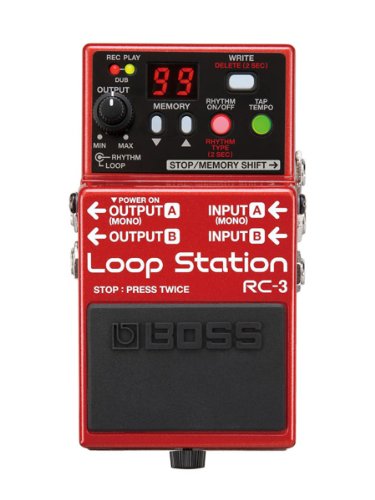
Compact Solo Looper – BOSS RC-3 Loop Station Pedal
If you want loop stations for traveling musicians in a small, straightforward stompbox, the BOSS RC-3 keeps the footprint compact while still offering serious recording capacity. It gives you stereo looping, up to three hours of internal recording time, 99 onboard memories, and a rhythm guide with real drums, making it a practical pick for practice, writing, and live solo sets on the road.
Best For: Traveling guitarists who want a compact looper with plenty of memory and simple stage-friendly control.
Pros:
- Compact stompbox format is easy to pack and travel with.
- Up to three hours of stereo recording time with 99 onboard memories.
- USB 2.0 port supports WAV import and export with a PC.
- Rhythm guide with real drums adds useful backing for practice.
Cons:
- Single-pedal format offers less hands-on control than larger stations.
- Corded power means you still need access to a compatible supply.
The RC-3 is a strong fit if portability matters more than an expanded control layout. It balances a travel-friendly size with enough memory and utility features to cover most solo looping needs.
Three-Track Performance Hub – BOSS RC-300 Loop Station
For traveling musicians who need more control than a basic pedal, the BOSS RC-300 is a full-featured loop station with three stereo tracks, dedicated footswitches, and a fader for each track. It also includes up to three hours of internal recording, 99 onboard memories, expression pedal control, and USB connectivity, making it better suited to more layered performances and repeatable set building.
Best For: Solo performers who want a larger, more controllable looping setup for live use.
Pros:
- Three stereo tracks with dedicated footswitches and track controls.
- Dedicated fader per track helps with hands-on level control.
- Expression pedal support adds real-time effects control.
- USB connectivity and 99 memories support organized looping.
Cons:
- Larger layout is less compact than smaller travel pedals.
- Designed for more complex setups, so it may be more than casual users need.
The RC-300 is a good choice when the priority is control and flexibility rather than minimum size. It gives traveling players a more complete performance surface without giving up the core recording and memory features that matter on the road.
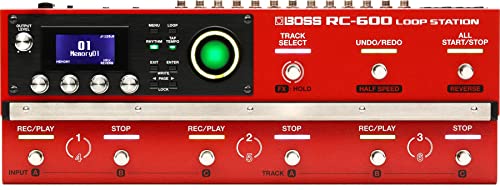
Feature-Rich Multi-Track Station – Boss RC-600 Loop Station Looper Pedal
Among loop stations for traveling musicians, the Boss RC-600 is the most expansive option here, with six stereo phrase tracks, two XLR mic inputs with phantom power, and two stereo instrument/line input pairs. It also includes 99 phrase memory presets, rhythm guide support, USB connectivity, and track/input effects, so it suits players who need a highly configurable live looping rig.
Best For: Musicians who need a high-capacity looper with microphone and multi-input flexibility.
Pros:
- Six stereo phrase tracks offer the most layering capacity in this group.
- Two XLR inputs with phantom power support microphone use.
- Two stereo instrument/line input pairs add flexible routing options.
- Rhythm guide, 99 presets, and USB support round out the feature set.
Cons:
- Larger and heavier than simpler travel-focused pedals.
- Feature depth may be excessive for users who only need basic looping.
The RC-600 is best when you want maximum functionality and can accommodate a bigger pedalboard presence. It is the most capable choice here for performers who mix vocals, instruments, and layered loops in one setup.
How We Picked the Best Loop Stations for Traveling Musicians
We prioritized portability, build quality, ease of use, and real-world reliability. For Loop Stations for Traveling Musicians, the best choices balance a small footprint with enough memory, track control, and audio quality to handle rehearsals, street performances, and set changes without slowing you down.
We also looked at power needs, pedalboard compatibility, input/output flexibility, and how intuitive each unit is when you’re working fast. A good traveling looper should help you create quickly, not add setup friction.
Quick Comparison: What Matters Most
Compact single-track pedals are usually best for players who want the lightest possible rig. Multi-track units suit performers who layer parts, trigger transitions, or need more arrangement control. Tabletop loopers can be excellent for studio-style creativity, but they are less convenient if you’re packing light or moving between venues often.
Also consider whether you need hands-free switching, separate inputs for vocals and instruments, longer loop time, or built-in memory for saving ideas between sessions.
Key Buying Factors for Loop Stations for Traveling Musicians
Size and Weight
If you travel frequently, pedalboard-friendly dimensions matter. Smaller enclosures are easier to pack, protect, and power.
Ease of Operation
Simple record, overdub, stop, and undo controls are essential when you’re performing in changing environments or limited lighting.
Loop Capacity and Memory
Longer recording times and stored phrases are valuable for artists who need to revisit ideas or run full arrangements on the fly.
Connectivity
Check for stereo I/O, external footswitch support, USB, and multiple input options if you play guitar, vocals, or both.
Durability and Power
Travel gear takes a beating. A sturdy chassis and common power requirements can make a big difference on the road.
Who Should Buy Which Loop Stations for Traveling Musicians?
Solo guitarists and buskers usually do best with a compact, straightforward pedal that gets out of the way. Singer-songwriters may want a unit with strong audio quality and flexible input routing. Players building layered performances or synchronized arrangements should look at multi-track or tabletop options with deeper control.
If portability is your top priority, choose the smallest reliable model that still covers your core workflow. If performance complexity matters more than packability, step up to a looper with more tracks, memory, and hands-free control.