The best looper pedals for home studios make it easier to practice, arrange songs, and build layered performances without a computer. The right model can turn a basic guitar or bass setup into a flexible songwriting station.
This roundup compares 10 options across simple loop recording, overdubbing, drum accompaniment, stereo operation, effects, and storage capacity, so you can choose a pedal that fits your workflow and budget.
Best 10 Looper Pedals for Home Studios Picks for 2026
Classic Control

- 12 minutes of stereo recording
- Simple overdub, undo, and redo workflow
- 24-segment loop-mode indicator
Best For: Straightforward looping for guitar, bass, and keyboards
Minimalist Pick

- Five minutes of looping time
- Unlimited overdubs with undo/redo
- True bypass and analog dry-through
Best For: Guitarists wanting a compact, transparent looper
Rhythm-Ready Choice

- Looper and drum machine in one pedal
- 40 slots with 160 minutes total capacity
- USB transfer, tap tempo, and fade out
Best For: Layered practice arrangements with built-in rhythms
Feature-Packed Compact
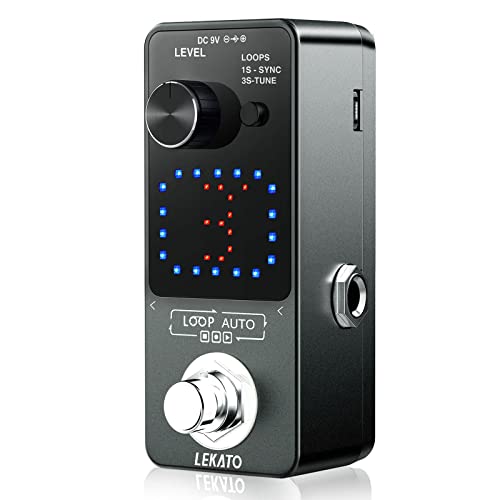
- Three loops and 18 minutes total recording
- Built-in tuner and sync function
- USB WAV import/export with auto-save
Best For: Guitar and bass players needing compact studio flexibility
Best All-in-One Studio Pick
STRICH Pipe Tones Multi-Effects Processor

- 40-second stereo looper with Auto Rec
- USB audio for 48 kHz/24-bit recording
- Amp models, effects, drums, and included foot pedal
Best For: Home studios needing looping and complete guitar or bass processing
Best for Extended Loop Libraries

- Three independent loop slots
- Up to 90 minutes total recording time
- Unlimited overdubs and automatic saving
Best For: Songwriters building and storing multiple long song sections
Best Compact Stereo Looper

- Stereo input and output with channel volume control
- 10 minutes of looping and unlimited overdubs
- Reverse and speed playback modes
Best For: Players wanting a small dedicated stereo looper for creative practice
Flexible Practice Hub
FLAMMA FF03 Looper Drum Machine

- 160 minutes of stereo recording in 40 slots
- 121 grooves with sync, quantization, and tap tempo
- USB-C transfer plus headphone output
Best For: Quiet practice, rhythmic looping, and saving song ideas
Compact Bedroom Jammer
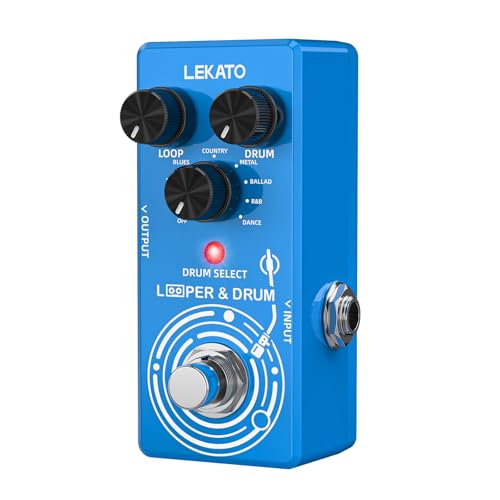
- 24-bit looper with unlimited overdubs
- Six minutes of loop time with auto-save
- Independent loop and drum volume controls
Best For: Compact bedroom sessions and quick solo arrangements
Large-Scale Loop Station
FLAMMA FF20 Looper Drum Machine

- 300 minutes of stereo recording in 100 slots
- 220 grooves across 11 drum styles
- Color screen with time stretch and auto record
Best For: Layered guitar or bass arrangements and large loop libraries
Classic Control – BOSS RC-1 Loop Station
For home studios seeking straightforward looper pedals for home studios, the BOSS RC-1 keeps the workflow simple: record, play, overdub, undo, and redo from a compact stompbox. Its 12 minutes of stereo recording, intuitive loop indicator, and stereo connectivity make it a practical choice for guitar, bass, and keyboard players.
Best For: Musicians who want an easy-to-use stereo looper for layering phrases and practicing at home.
Pros:
- Simple record, playback, overdub, undo, and redo controls.
- 12 minutes of stereo recording time.
- 24-segment LED indicator shows the current loop mode.
- Recorded phrases remain in memory after powering off.
Cons:
- AC adapter is optional and sold separately.
- Includes a single 9-volt battery rated for approximately 4.5 hours.
The RC-1 is a strong fit when reliability and quick operation matter more than built-in drum patterns or extensive memory management. Its five-year BOSS warranty is an additional benefit for a long-term studio pedal.
Minimalist Pick – TC Electronic DITTO LOOPER
The TC Electronic DITTO LOOPER is a compact option for musicians comparing looper pedals for home studios and wanting an uncluttered guitar-focused workflow. It provides five minutes of looping, unlimited overdubs, undo/redo, true bypass, and analog dry-through.
Best For: Guitarists who prioritize transparent tone and simple phrase layering over extended storage or extra features.
Pros:
- Five minutes of loop time with unlimited overdubs.
- Undo and redo functions support flexible experimentation.
- True bypass and analog dry-through help preserve the dry signal.
- Compact, guitarist-oriented design.
Cons:
- Requires a 9-volt power supply providing 100 mA or more.
- Power supply is not included.
- Offers less loop time than the larger-capacity options in this roundup.
Choose the DITTO when your home-studio setup calls for a focused, no-frills looper. Its transparent signal approach and basic controls make it easy to place in a guitar pedal chain.
Rhythm-Ready Choice – Donner Circle Looper Pedal
For home producers who want more than basic phrase capture, the Donner Circle combines a stereo looper and drum machine. Among looper pedals for home studios, it stands out with 40 memory slots, 160 minutes of total capacity, 110 drum grooves, USB import/export, tap tempo, and fade-out control.
Best For: Players building layered practice arrangements with built-in rhythms and substantial onboard loop storage.
Pros:
- Two-in-one looper and drum machine with 110 grooves across 11 styles.
- 40 memory slots and 160 minutes of total recording capacity.
- Screen displays loop mode, timing, and progress.
- USB import/export, tap tempo, and fade-out functions.
Cons:
- Power adapter is not included.
- Requires a 9V DC center-negative adapter with 500 mA current.
- External footswitch support is available, but the footswitch is not included.
The Circle is the most feature-rich choice here for rhythm-based home practice and arranging. Its digital storage and USB functionality are especially useful if you want to save or transfer loop material rather than keep every session purely live.
Feature-Packed Compact – LEKATO Looper Pedal
The LEKATO Looper is aimed at home-studio players who want compact looping with synchronization and tuning features. It offers three loops, up to 18 minutes of total recording time, unlimited overdubs, a visual time indicator, USB WAV import/export, and a built-in tuner.
Best For: Guitar and bass players who want multiple saved loops, hands-free editing commands, and USB file management in a small pedal.
Pros:
- Three loops with six minutes per loop and 18 minutes total recording time.
- Synchronization mode and built-in high-sensitivity tuner.
- 48 kHz/24-bit recording with analog dry-through.
- USB import/export and automatic saving after power-off.
Cons:
- 9V center-negative power supply is not included.
- Designed around a one-button foot-control workflow, which may require learning the commands.
- External pedal support is available but adds to the setup.
The LEKATO offers a useful middle ground between a basic looper and a larger loop station. Its tuner, synchronization, multiple loops, and computer connectivity make it particularly versatile for guitar-centered home recording.
Best All-in-One Studio Pick – STRICH Pipe Tones Multi-Effects Processor
For guitarists comparing looper pedals for home studios, the STRICH Pipe Tones combines looping with amp modeling, effects, drums, and USB recording in a compact desktop unit. Its 40-second stereo looper, 48 kHz/24-bit USB audio interface, and included foot pedal make it suited to practice, songwriting, and direct computer recording.
Best For: Home-studio musicians who want a looper combined with broad tone-shaping and recording tools.
Pros:
- 40-second stereo looper with Auto Rec mode
- Built-in USB audio supports 48 kHz/24-bit recording and ASIO
- 125 effects, 30 amp models, 100 drum patterns, and up to 10 simultaneous modules
- Includes an external foot pedal and rechargeable battery
Cons:
- More complex than a dedicated looper pedal
- Its compact desktop format may not fit a traditional pedalboard setup
This is the most feature-rich option here for building complete practice or recording setups. Choose it if you want looping alongside amp sounds, effects, drums, and computer connectivity rather than a standalone loop station.
Best for Extended Loop Libraries – Donner Triple Looper
The Donner Triple Looper is a practical choice among looper pedals for home studios when you want long recording capacity and multiple saved song sections. It provides three independent loop slots, up to 90 minutes total recording time, unlimited overdubs, and a screen that shows loop status and recording progress.
Best For: Songwriters and solo players who want to save and switch between longer verse, chorus, and solo loops.
Pros:
- Three loop slots with up to 30 minutes per loop
- 90 minutes of total recording time
- Unlimited overdubs with undo and redo functions
- Auto-save preserves loops after powering off
Cons:
- Power supply is not included
- Its single-footswitch design may require more tap timing than multi-switch loopers
With its unusually large storage capacity and automatic saving, the Triple Looper works well for developing arrangements over multiple sessions. It is a focused looper rather than a multi-effects unit, making it easier to evaluate if looping is your main priority.
Best Compact Stereo Looper – VSN Twin Looper Pedal
The VSN Twin Looper is a compact option for musicians seeking straightforward looper pedals for home studios. It offers stereo input and output, 10 minutes of looping, unlimited overdubs, undo/redo, and creative reverse and speed options, while its 44.1 kHz/24-bit audio specification supports detailed loop playback.
Best For: Players who want a small, dedicated stereo looper with creative playback modes.
Pros:
- Stereo input and output with independently adjustable channel volume
- 10 minutes of loop time with unlimited overdubs
- Reverse, half-speed, and combined playback options
- True bypass, analog dry-through, and a sturdy metal case
Cons:
- Power adapter is not included
- Offers less loop storage than the Donner Triple Looper
- USB connection is for computer software use, not power input
This pedal keeps the core looping workflow simple while adding stereo control and useful performance effects. It is a good fit for a compact home setup, especially if reverse and speed manipulation matter more than extensive loop storage.
Flexible Practice Hub – FLAMMA FF03 Looper Drum Machine
For home studios needing looper pedals for home studios that can also provide a rhythmic foundation, the FLAMMA FF03 combines stereo looping with a built-in drum machine. Its 160 minutes of recording, 40 memory slots, USB-C transfer, and headphone output make it practical for developing and monitoring ideas quietly.
Best For: Guitarists who want synced drum grooves, generous loop storage, and headphone-friendly practice.
Pros:
- Stores up to 160 minutes of stereo audio across 40 memory slots.
- Includes 121 drum grooves with tap tempo, quantization, count-in, and sync.
- Offers USB-C WAV transfer and a headphone output for silent sessions.
Cons:
- Uses 44.1kHz/16-bit recording rather than the higher 24-bit format offered by some competitors.
- Requires a 9V, 200mA power source.
The FF03 is a capable middle-ground option for home recording and practice. Its storage and rhythm features are especially useful when you want to save ideas and build parts without adding separate equipment.
Compact Bedroom Jammer – LEKATO 2-in-1 Looper Pedal
The LEKATO is a compact choice for looper pedals for home studios, pairing a 24-bit looper with an independent drum machine. Six minutes of loop time, unlimited overdubs, automatic saving, and USB import/export keep it focused on quick songwriting and practice sessions.
Best For: Bedroom players and solo performers who want a small pedal with separate loop and drum volume controls.
Pros:
- Combines a 44.1kHz/24-bit looper and drum machine in one pedal.
- Supports unlimited overdubs, auto-save, and PC/Mac loop transfer.
- Provides independent volume controls and buffer bypass for signal management.
Cons:
- Offers up to 6 minutes of loop time, considerably less than the FLAMMA options.
- Automatic drum synchronization supports only 4/4 phrases.
- Power adapter and cable are not included.
Choose the LEKATO when simplicity, compact size, and higher-resolution looping matter more than extensive onboard storage. Its independent modules also make it easy to balance a backing groove against layered parts.
Large-Scale Loop Station – FLAMMA FF20 Looper Drum Machine
For home studios that need extensive storage and hands-on visibility, the FLAMMA FF20 is one of the more feature-rich looper pedals for home studios in this group. It provides 300 minutes of stereo recording, 100 memory slots, 220 drum grooves, a color screen, and USB/headphone connectivity.
Best For: Guitar and bass players building layered arrangements, organizing many ideas, or practicing with detailed visual feedback.
Pros:
- Stores up to 300 minutes of stereo loops across 100 memory slots.
- Includes 220 drum grooves across 11 styles.
- Color screen shows loop status, recording time, BPM, patterns, and menus.
- Adds time stretch, auto record, one-shot mode, USB transfer, and headphone monitoring.
Cons:
- Its broader feature set may be more than casual loopers need.
- Requires a 9V, 300mA power source.
The FF20 is the strongest fit here for users who expect to build a substantial loop library. Its screen and performance tools can reduce guesswork, while time stretch and auto record add flexibility for arranging guitar and bass parts.
How We Picked the Best Looper Pedals for Home Studios
We compared these pedals by looking at the features that matter most in a home setup: recording time, loop storage, overdub and undo functions, footswitch layout, drum patterns, audio routing, and ease of use. We also considered whether each pedal is best suited to straightforward practice, songwriting, live-style layering, or all-in-one experimentation.
Simple units such as the BOSS RC-1 and TC Electronic Ditto prioritize fast, dependable looping. Other models add drum machines, multiple independent loops, effects, screens, tuners, or larger memory capacities. Those extras can be valuable, but they may also require more setup and menu navigation.
Quick Comparison
| Best For | What to Look For |
|---|---|
| First-time users | One-button recording, clear status indicators, and simple overdubbing |
| Songwriting | Long recording time, undo/redo, multiple loop slots, and reliable saving |
| Rhythm practice | Built-in drum grooves, tap tempo, and independent volume controls |
| Layered arrangements | Multiple loops, unlimited overdubs, stereo inputs and outputs, or sync functions |
| Compact rigs | Small footprint, low power requirements, and minimal menu operation |
Key Buying Factors for Looper Pedals for Home Studios
Loop Time and Storage
Check both the maximum length of a single loop and the number of saved slots. A short loop may be enough for practice, while songwriters often benefit from several minutes of recording and enough memory for different sections or ideas.
Controls and Footswitch Design
Loopers should be easy to operate while playing. Dedicated controls for record, play, stop, undo, and redo reduce mistakes. A display can improve visibility, although simpler pedals may be faster to learn.
Drums, Effects, and Connectivity
Built-in drums are useful for timing practice and solo songwriting, especially when the pedal offers tap tempo and separate rhythm volume. Multi-effects models can save space, but a dedicated looper may provide a more focused workflow. Stereo I/O, true bypass, analog-dry-through, and sync features are worth considering if you use a broader pedalboard or recording interface.
Power and Signal Routing
Confirm whether the pedal uses a standard 9V adapter, batteries, or a manufacturer-specific supply. Also check input and output placement, stereo compatibility, and whether the pedal preserves your dry signal when bypassed.
Who Should Buy Which Looper Pedals for Home Studios?
Choose a compact, straightforward model if you want quick practice loops with minimal setup. A drum-equipped looper is a better fit for players who want a metronome-like backing track without opening a DAW. Songwriters building complete sections should prioritize longer recording times, multiple slots, and undo/redo controls. If you want one pedal to cover looping, rhythm, and basic sound shaping, a multi-effects looper offers more versatility at the cost of a steeper learning curve.
For most home studios, the best choice is the pedal whose controls match your playing habits—not necessarily the one with the largest feature list. Make sure the loop length, storage, connections, and footswitch behavior support the way you actually practice and record.