A dependable metronome can make practice more focused by keeping rhythm steady while you work on timing, technique, and musical expression. Mechanical models add a visible pendulum and tactile wind-up operation that many players find intuitive and distraction-free.
We selected 10 mechanical metronomes for different practice needs, including piano, guitar, violin, drums, bass, and other instruments. The guide below explains the features that matter most before you choose.
Best 10 Mechanical Metronomes Picks for 2026
Best All-Around Choice
AUPHY M350 Mechanical Metronome

- 40–208 BPM range with five beat settings
- Accent bell with optional silent-beat setting
- Stable body and metal clockwork
Best For: Versatile practice across multiple instruments
Classic Brand Pick
Yamaha MP-90BK Mechanical Metronome

- Spring-driven pendulum mechanism
- Traditional triangular pyramid design
- Matte black finish with rich sound
Best For: Traditional Yamaha-style practice
Best for Beginners
High-Precision Wood-Grain Metronome

- Metal movement for stable timing
- 40–208 BPM with five beat choices
- Simple setup for children and beginners
Best For: Learning rhythm across common instruments
Best Tower Design
Ueteto Wood-Grain Mechanical Metronome

- Classic tower shape with wood-grain finish
- 40–208 BPM and five beat settings
- Approximately 2,160 clicks per full wind
Best For: Decorative home practice and multi-instrument use
Colorful Rhythm Practice
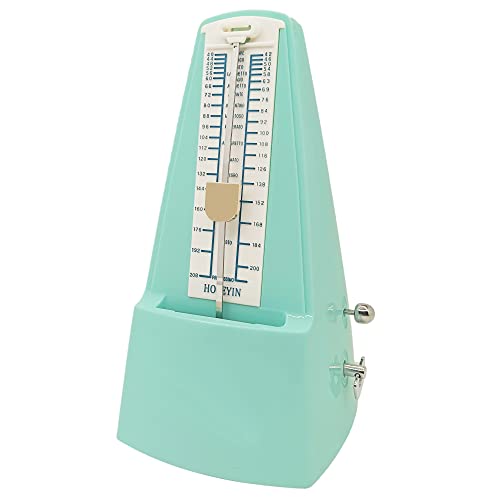
- 40–208 BPM tempo range
- Selectable 0, 2, 3, 4, and 6-beat bells
- 30-day returns and one-year warranty
Best For: Beginners and children practicing multiple instruments
Audible Tempo Control
Ueteto Black Mechanical Metronome

- Audible click and bell ring
- Battery-free wind-up mechanism
- 40–208 BPM with five beat settings
Best For: Musicians who want a clearly audible practice beat
Foundational Beat Training
AODSK Universal Mechanical Metronome

- Clear, loud sound for practice
- Battery-free mechanical operation
- 40–208 BPM and five beat settings
Best For: Students developing timing across multiple instruments
Best Classic Value
Donner DPM-1 Mechanical Metronome

- 40–208 BPM range with five beat options
- Loud wood-block-style sound for practice
- Battery-free wood pyramid design
Best For: Beginners and budget-conscious multi-instrument musicians
Best Protected Travel Pick
Linrax M2 Mechanical Metronome

- Supports many instruments and practice setups
- 40–208 BPM with five downbeat options
- Cover, grooves, and brake help protect it
Best For: Students and musicians transporting a metronome between spaces
Best All-Around Choice – AUPHY M350 Mechanical Metronome
The AUPHY M350 is a practical choice for musicians seeking mechanical metronomes with a classic woodgrain appearance, audible accent bell, and broad tempo coverage. Its metal clockwork and POM gears are designed for stable, accurate operation without relying on batteries.
Best For: Beginners and instrumentalists practicing piano, guitar, drums, violin, saxophone, and other instruments.
Pros:
- 40–208 BPM range with 0, 2, 3, 4, and 6 beat selections.
- Accent bell can emphasize selected beats or be switched off with the 0 setting.
- Stable, low-center-of-gravity body with a transparent dust cover.
- Factory-rated timing error is controlled within 1%.
Cons:
- Its plastic PC body may feel less substantial than a wooden housing.
- Requires manual winding before practice.
With its versatile beat settings, long wind capacity, and clear accent function, the M350 offers a well-rounded mechanical practice tool for a wide range of players.
Classic Brand Pick – Yamaha MP-90BK Mechanical Metronome
The Yamaha MP-90BK is a straightforward option for shoppers comparing mechanical metronomes from an established musical-instrument brand. It uses a spring-driven pendulum design and the familiar triangular pyramid form, with a matte black finish that helps resist fingerprints.
Best For: Musicians who prefer a traditional Yamaha pendulum metronome with a compact black design.
Pros:
- Spring-driven mechanical operation.
- Traditional triangular pyramid styling.
- Rich, deep sound for audible timing practice.
- Matte finish helps prevent fingerprints from sticking.
Cons:
- The supplied details do not specify its tempo range or beat-selection settings.
- Plastic construction may not suit shoppers seeking a wooden metronome.
The MP-90BK keeps the focus on familiar mechanical operation and a clear, resonant sound, making it a simple choice for players who value classic styling over extensive listed features.
Best for Beginners – High-Precision Wood-Grain Metronome
This wood-grain model is one of the more accessible mechanical metronomes for beginners, combining simple controls with a broad 40–208 BPM range. Its metal movement is designed for stable long-term use, while the audible beat and bell support rhythm practice across many instruments.
Best For: Beginners and children learning steady tempo on piano, guitar, violin, bass, drums, or similar instruments.
Pros:
- Metal movement is intended to support long-term accuracy.
- Offers 40–208 BPM and 0, 2, 3, 4, and 6 beat selections.
- Simple wind-up operation is suitable for beginners and children.
- Supports rhythm development and more accurate playing.
Cons:
- Plastic and metal construction may feel less premium than solid wood.
- Manual winding is required for each practice session.
Its wide tempo range and uncomplicated setup make this a useful entry-level pick for students who need a clear, adjustable beat while building basic timing skills.
Best Tower Design – Ueteto Wood-Grain Mechanical Metronome
The Ueteto Tower Design metronome suits shoppers who want mechanical metronomes with a decorative wood-grain appearance and straightforward controls. Its wind-up mechanism, audible click, and bell provide a familiar way to maintain tempo without batteries.
Best For: Home practice spaces and players using piano, violin, guitar, bass, drums, or other instruments.
Pros:
- Classic tower design with an attractive wood-grain finish.
- 40–208 BPM range and 0, 2, 3, 4, and 6 beat selection.
- One full wind produces approximately 2,160 clicks and lasts at least 18 minutes, depending on tempo.
- Plastic housing with metal mechanism and stated tolerance below 1%.
Cons:
- Requires manual winding and setup before use.
- Plastic housing may not provide the feel of a solid-wood case.
The Ueteto combines useful tempo controls with a display-friendly tower shape, making it a solid option for musicians who want both practical timing support and a traditional look.
Colorful Rhythm Practice – Green Universal Metronome
This mechanical metronome is a practical choice for beginners, children, and players practicing piano, guitar, violin, drums, or other instruments. Its adjustable 40–208 BPM range and selectable accent bells provide flexible rhythm practice without complicated controls.
Best For: Beginners and families seeking an easy-to-use mechanical metronome with color options and broad instrument compatibility.
Pros:
- Adjustable tempo range from 40 to 208 BPM.
- Selectable 0, 2, 3, 4, and 6-beat bell settings.
- Plastic-and-metal movement is designed for precise, stable performance.
- Includes a 30-day unconditional return policy and one-year manufacturer warranty.
Cons:
- Plastic construction may feel less substantial than an all-metal model.
- The supplied notes do not specify the loudness of its click.
With simple operation, wide tempo adjustment, and multiple accent options, this model covers the core needs of everyday rhythm practice while adding a choice of colors.
Audible Tempo Control – Ueteto Black Mechanical Metronome
For musicians who want a clearly audible practice reference, this mechanical metronome combines a click and bell ring with a battery-free wind-up mechanism. It supports piano, violin, guitar, bass, drums, and other instruments across a 40–208 BPM range.
Best For: Players who prioritize an audible click and bell, straightforward setup, and battery-free operation.
Pros:
- Produces an audible click and bell ring for tempo tracking.
- Requires no batteries and delivers at least 18 minutes from an average full wind.
- Offers 40–208 BPM tempo adjustment and 0, 2, 3, 4, and 6-beat selection.
- Designed for easy use by children and beginners.
Cons:
- A full wind lasts at least 18 minutes, depending on the selected tempo.
- Mechanical operation requires winding before practice.
The Ueteto stands out among mechanical metronomes for its stated loud sound and clear setup sequence, making it a useful option when hearing the beat is more important than portability or electronic convenience.
Foundational Beat Training – AODSK Universal Mechanical Metronome
This AODSK mechanical metronome is built around clear, loud beats for developing timing and rhythmic awareness. The pendulum-style control, 40–208 BPM range, and selectable beat settings make it suitable for practice with piano, guitar, violin, bass, drums, and other instruments.
Best For: Students and developing musicians who want a loud, battery-free tool for building foundational rhythm skills.
Pros:
- Clear, loud sound helps track beats and tempo during practice.
- Operates without batteries.
- Supports 40–208 beats per minute and 0, 2, 3, 4, and 6-beat selections.
- Universal design works with a wide range of musical instruments.
Cons:
- Plastic body and components may not feel as substantial as metal alternatives.
- The notes do not provide a specific winding duration or runtime.
Its focus on a loud, easy-to-follow beat makes this model a sensible practice aid for learners working on tempo, accents, and consistent rhythm without relying on batteries.
Best Classic Value – Donner DPM-1 Mechanical Metronome
If you want dependable mechanical metronomes without batteries, the Donner DPM-1 offers a broad 40–208 BPM range, selectable beats, and a loud wood-block-style sound. Its traditional pyramid design also makes it a practical choice for learners who want a clear visual and audible tempo reference.
Best For: Beginners, children, and multi-instrument practice on a budget.
Pros:
- Wide 40–208 BPM tempo range with 0, 2, 3, 4, and 6 beat selections.
- Loud sound helps players follow rhythm and recognize accents during practice.
- Battery-free wind-up movement and durable wood body.
- Classic pyramid styling with a five-position on/off bell.
Cons:
- Its 1.32-pound wood-bodied design is less compact than a digital metronome.
- Mechanical operation requires winding before use.
The DPM-1 is a straightforward, economical option among mechanical metronomes, especially when loud output and beginner-friendly controls matter more than portability.
Best Refined Design – NALU Classic Mechanical Metronome
The NALU is one of the more polished mechanical metronomes for musicians who want a traditional wood-grain look with an all-metal movement. It combines a 40–208 BPM range, five rhythm patterns, and a bell accent to make timing practice easier across instruments.
Best For: Players seeking classic studio aesthetics and a clear first-beat accent.
Pros:
- Durable all-metal mechanical mechanism requires no batteries.
- Adjustable 40–208 BPM range with 0, 2, 3, 4, and 6 beat patterns.
- Bell marks the first beat of each measure for rhythm practice.
- Clear dust cover and simple wind-up operation suit beginners and professionals.
Cons:
- Wind-up operation is less immediate than using a digital metronome.
- The 9-inch wooden design may take more practice-space room than compact alternatives.
With its retro finish, metal movement, and useful bell accent, the NALU is a strong choice when appearance and traditional mechanical operation are both priorities.
Best Protected Travel Pick – Linrax M2 Mechanical Metronome
The Linrax M2 is a versatile option for musicians comparing mechanical metronomes for many different instruments. It provides 40–208 BPM control, five downbeat choices, loud output, and protective grooves and a brake designed to help secure the metronome when it is stored or transported.
Best For: Students and multi-instrument players who need broad compatibility and added storage protection.
Pros:
- Works with a wide range of instruments, including piano, strings, guitars, drums, and winds.
- Offers 40–208 BPM and 0, 2, 3, 4, and 6 downbeat selections.
- Loud sound supports tempo tracking during practice.
- Top and bottom grooves, a cover, and a brake help protect the mechanism when not in use.
Cons:
- Users must wind the spring and engage the brake correctly for storage.
- Its wood-bodied mechanical design is less compact than electronic alternatives.
The M2 stands out for its instrument versatility and thoughtful protection features, making it a practical pick for students, families, or musicians who move their metronome between practice spaces.
How We Picked These Mechanical Metronomes
We focused on practical features that affect everyday practice: tempo consistency, beat visibility, sound projection, beat and accent options, construction, ease of use, and instrument versatility. The selection includes classic tower-style designs, wood-look models, compact options, and metronomes with bells or accent mechanisms.
Because product specifications and included features can vary, confirm the listed tempo range, beat settings, finish, and dimensions before ordering. A metronome should be easy to hear and simple to adjust without interrupting practice.
Quick Comparison
| Best For | What to Look For |
|---|---|
| General practice | Stable tempo, readable scale, and straightforward controls |
| Piano and ensemble work | A clearly audible tone and optional accent bell |
| Quiet home practice | Moderate volume and a smooth, non-distracting mechanism |
| Students | Simple wind-up operation, durable housing, and visible pendulum motion |
| Multiple instruments | Flexible beat settings and a broad usable tempo range |
Key Buying Factors for Mechanical Metronomes
Tempo Range and Accuracy
Check the available tempo range to ensure it covers slow exercises, moderate practice, and faster passages. Consistency matters more than having an unusually wide range, particularly for students building timing skills.
Sound and Accent Options
Choose a louder model for piano, drums, or group practice, while a softer sound may suit bedrooms and shared spaces. An accent bell can help mark the first beat of each measure, but it may be unnecessary if you prefer an even click.
Beat Settings
Multiple beat modes are useful for practicing meters such as 2/4, 3/4, and 4/4. If you regularly change time signatures, prioritize a model with accessible beat controls and clear markings.
Build and Ease of Use
Wood-grain and tower-style cases can look attractive, but the internal movement and stable base are more important for dependable use. Look for a pendulum that is easy to see, a scale that is easy to read, and a winding mechanism that operates smoothly.
Who Should Buy Which Mechanical Metronomes?
Beginners and students should choose a simple, stable model with a visible pendulum and uncomplicated controls. Piano players and ensemble musicians may prefer a louder metronome with an accent bell. Guitarists, violinists, and singers can benefit from a versatile model with clear beat settings and a broad tempo range.
For practice across several instruments, prioritize sound projection, durable construction, and easy tempo adjustment over decorative styling. If appearance matters in a studio or living space, a wood-grained or classic tower design can provide the traditional look without sacrificing core functionality.