Good timing is one of the fastest ways to make electric-guitar playing sound tighter, whether you are practicing riffs, recording layered parts, or building speed. The right metronome makes steady practice easier without getting in the way of your setup.
We selected 10 metronomes with useful combinations of tempo control, volume, portability, tuning support, and sound projection. This roundup includes compact digital models, rechargeable multifunction devices, and a traditional mechanical option.
Best 10 Metronomes for Electric Guitars Picks for 2026
Best Rechargeable Pick
Sondery ProBeat Digital Metronome
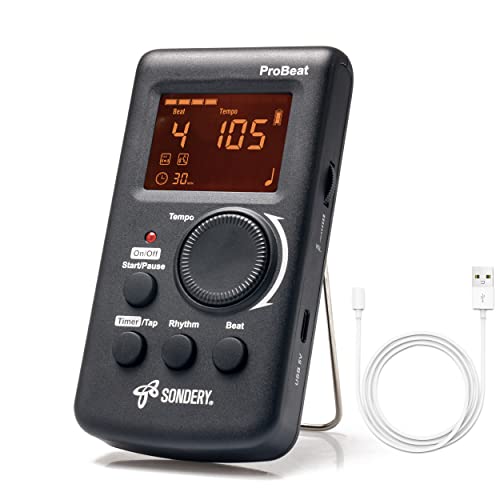
- Rechargeable USB-powered design
- Visual LED, vocal counting, and headphone output
- 40–208 BPM with tap tempo and timer
Best For: Electric-guitarists wanting flexible, rechargeable practice
Best Feature-Rich Classic

- Eight selectable metronome sounds
- Nineteen beat and rhythm patterns
- Memory backup plus reference-tone mode
Best For: Players wanting varied rhythms and saved practice settings
Best 3-in-1 Practice Tool

- Metronome, tuner, and tone generator
- Direct cable, clip, and microphone pickup
- 30–250 BPM with headphone output
Best For: Guitarists wanting timing and tuning in one device
Best Battery-Free Option

- No batteries or charging required
- Loud click and bell with metal construction
- 40–208 BPM and simple beat selection
Best For: Traditional, straightforward guitar practice
Best All-in-One Pick
MT-41 Rechargeable Metronome Tuner

- Metronome, tuner, and tone generator in one
- Rechargeable battery with long practice runtime
- Color LCD and LED beat indicator
Best For: Electric guitarists wanting one compact practice device
Best for Silent Practice
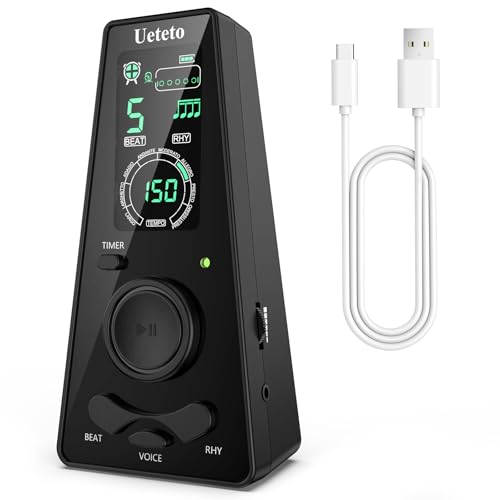
- Headphone jack for quieter practice
- Nine rhythms and 40–208 BPM range
- Up to 16 hours of rechargeable use
Best For: Guitarists seeking flexible headphone-based practice
Best Classic-Style Option

- Eight metronome sounds, including mechanical style
- Nineteen beat patterns for varied practice
- Simple controls and readable display
Best For: Players wanting a dedicated, easy-to-use metronome
Versatile Practice Pick
Donner DMT-01 3-in-1 Metronome Tuner

- Metronome, tuner, and tone generator in one unit
- 30–260 BPM with eight rhythms and 0–9 beats
- ±0.5-cent tuning and large angled LCD
Best For: Electric guitarists wanting an all-in-one practice tool
Portable Feature Choice
Aroma AMT-560 Digital Metronome Tuner

- Pocket-sized metronome, tuner, and tone generator
- Headphone jack, adjustable volume, and backlit LCD
- 30–260 BPM with 10 beat patterns and eight rhythms
Best For: Portable electric-guitar practice with silent monitoring
Noise-Resistant Practice Tool

- 3-in-1 metronome, tuner, and tone generator
- Corded pickup helps with tuning in noisy settings
- 30–260 BPM, eight rhythms, and adjustable volume
Best For: Focused practice where reliable clip-on tuning matters
Best Rechargeable Pick – Sondery ProBeat Digital Metronome
For guitarists seeking metronomes for electric guitars, the Sondery ProBeat combines clear visual feedback, vocal counting, and rechargeable convenience in a compact design. Its rotary tempo control, tap function, and headphone output make it practical for focused practice.
Best For: Players who want a rechargeable metronome with visual and headphone-friendly practice features.
Pros:
- Rechargeable lithium battery charges from any 5V USB source.
- Color screen, top LED, and three digital sounds provide flexible feedback.
- Offers 40–208 BPM, 10 beat patterns, tap tempo, vocal counting, and timer settings.
- Compact 5 x 3 x 1-inch design with a 3.5mm headphone jack.
Cons:
- The plastic-and-metal construction may not feel as substantial as a mechanical model.
- Its many settings may be more than beginners need.
The ProBeat is a versatile choice for electric-guitar practice, especially when you value adjustable feedback, quiet headphone use, and a rechargeable battery.
Best Feature-Rich Classic – Korg KDM-3 Digital Metronome
The Korg KDM-3 gives electric-guitar players a compact digital metronome with a mechanical-style appearance and a powerful built-in speaker. Its broad beat-pattern selection and memory backup make it convenient for repeat practice sessions.
Best For: Musicians who want varied sounds, extensive rhythm patterns, and saved settings in a compact unit.
Pros:
- Eight sounds include mechanical metronome, cowbell, rimshot, and voice options.
- Nineteen beat patterns cover 0–9 beats per measure, triplets, claves, and more.
- Sound Out mode provides C4–B4 reference tones and adjustable A4 calibration from 410–480 Hz.
- Memory backup retains tempo, beat, and tuning settings; auto power-off follows 20 minutes.
Cons:
- Uses a CR2 battery rather than a rechargeable battery.
- It does not list a headphone output among the supplied specifications.
With its strong speaker and broad selection of sounds and patterns, the KDM-3 is a capable option when electric-guitar practice calls for more than a basic click.
Best 3-in-1 Practice Tool – Rechargeable Metronome Tuner
This rechargeable device is a practical choice among metronomes for electric guitars because it combines a metronome, tuner, and tone generator. Direct guitar-cable pickup, an included clip pickup, and adjustable volume make it useful for practice, setup, and lessons.
Best For: Guitarists who want one compact device for timing, tuning, and reference tones.
Pros:
- Combines metronome, tuner, and tone generator in one pocket-sized unit.
- Supports guitar-cable, clip-pickup, and microphone pickup methods.
- Metronome offers 30–250 BPM, 0–9 beats, and eight rhythms.
- Rechargeable battery, color LCD, LED indicator, adjustable volume, and headphone jack support portable practice.
Cons:
- Its broad feature set may be unnecessary if you only need a click track.
- The supplied notes do not specify the rechargeable battery’s operating time.
For electric guitarists who also need accurate tuning, this unit offers strong everyday value by combining several essential practice tools without adding much bulk.
Best Battery-Free Option – Ueteto Mechanical Metronome
The Ueteto mechanical metronome offers a straightforward, battery-free way to build timing on guitar. Its audible click and bell, wind-up mechanism, and metal body suit players who prefer traditional operation over digital controls.
Best For: Beginners and traditionalists who want a loud, simple metronome without batteries.
Pros:
- Wind-up operation requires no batteries or charging.
- Audible click and bell ring provide clear rhythmic cues.
- Supports 40–208 BPM with beat selections of 0, 2, 3, 4, and 6.
- Metal construction is designed for durability and produces a loud sound.
Cons:
- One full wind lasts at least 18 minutes, depending on tempo.
- Beat selection is less extensive than on the digital alternatives.
- At 1.2 pounds, it is heavier and less pocket-friendly.
The Ueteto is a good fit for structured guitar practice when you want an unmistakable physical click and simple controls, provided you are comfortable rewinding it during longer sessions.
Best All-in-One Pick – MT-41 Rechargeable Metronome Tuner
For guitarists comparing metronomes for electric guitars, the MT-41 is a practical choice when tuning and rhythm practice need to happen in one compact device. Its rechargeable design, visual beat indicator, and support for electric guitar make it convenient for regular practice.
Best For: Electric guitarists who want a metronome, tuner, and tone generator in one portable unit.
Pros:
- Combines a metronome, tuner, and tone generator.
- Rechargeable battery supports extended practice sessions.
- Color LCD and dual-color LED provide clear visual feedback.
- Compact 2.82-ounce design fits easily in an instrument case.
Cons:
- Uses a nonstandard rechargeable battery rather than replaceable standard cells.
- Its feature set may be more than needed if you only want a basic metronome.
The MT-41 stands out for electric guitar practice because it combines timing, tuning, and tone generation without adding much bulk. The adjustable A4 range and broad instrument support also make it a flexible long-term practice tool.
Best for Silent Practice – Ueteto Digital Metronome
The Ueteto is a versatile option among metronomes for electric guitars, especially if you need audible or headphone-based timing cues. It offers a broad 40–208 BPM range, rhythm patterns, visual tempo feedback, and a rechargeable battery for practice at home or on the go.
Best For: Guitarists who want headphone monitoring, multiple rhythm settings, and extended rechargeable use.
Pros:
- 3.5mm headphone jack supports quieter practice and monitoring.
- Offers nine rhythm patterns, ten beat settings, and 40–208 BPM control.
- Rechargeable battery provides up to 16 hours of continuous use after charging.
- Includes volume control, timer options, and a flashing LED tempo reference.
Cons:
- At 5.8 ounces, it is heavier than the MT-41.
- The many settings may feel less immediate than a simple one-function metronome.
- Headphones are not included.
Choose the Ueteto when flexible timing practice matters more than the smallest possible footprint. Its headphone output and adjustable volume are particularly useful for focused sessions where a built-in speaker would be distracting.
Best Classic-Style Option – Korg KDM3WH Digital Metronome
The Korg KDM3WH offers a straightforward, easy-to-read approach for electric guitarists who prefer a familiar metronome format. Its mechanical-metronome-inspired styling, one-touch operation, and broad beat-pattern selection make it suitable for structured rhythm practice.
Best For: Players who prioritize simple controls, readable display, and classic metronome sounds.
Pros:
- Includes eight metronome sounds, including a mechanical-style sound.
- Provides 19 beat patterns for different musical styles.
- Easy one-touch operation and an easily readable display.
- Compact 3 x 2.5 x 4.5-inch form factor.
Cons:
- Does not include the tuner or tone-generator functions offered by the MT-41.
- Uses a CR2 battery rather than a rechargeable battery.
- The supplied notes do not indicate a headphone output or visual beat light.
The KDM3WH is a good fit if you want a dedicated, uncomplicated timing tool with more sound and beat-pattern variety than a basic click. Its classic styling and simple operation may appeal to players who value immediate control over extra features.
Versatile Practice Pick – Donner DMT-01 3-in-1 Metronome Tuner
For guitarists looking for metronomes for electric guitars, the Donner DMT-01 combines tempo practice, chromatic tuning, and reference tones in one compact unit. Its 30–260 BPM range, eight rhythms, and 0–9 beats per measure provide useful flexibility for practice and performance.
Best For: Electric guitarists who want one device for timing, tuning, and ear training.
Pros:
- Combines a metronome, tuner, and tone generator.
- Offers 30–260 BPM, eight rhythms, and 0–9 beats per measure.
- Provides ±0.5-cent tuning accuracy with a sensitive vibration clip.
- Large LCD and 45° bracket help with screen visibility.
Cons:
- Requires a separate AAA battery.
- The feature set may be more than needed if you only want a basic metronome.
The DMT-01 is a practical all-in-one choice when timing work is only part of your setup. Its jog dial and broad rhythm selection make it especially useful for structured electric-guitar practice.
Portable Feature Choice – Aroma AMT-560 Digital Metronome Tuner
The Aroma AMT-560 is a pocket-sized option for players comparing metronomes for electric guitars. It pairs a digital metronome with chromatic tuning and a tone generator, while its adjustable volume and headphone jack support louder or quieter practice.
Best For: Guitarists who prioritize portability, display visibility, and flexible practice feedback.
Pros:
- Compact 3-in-1 design fits easily in an instrument case.
- Supports 30–260 BPM, 10 beat patterns, and eight rhythm styles.
- Offers ±0.5-cent accuracy, 430–450Hz calibration, and A0–C8 range.
- Includes a backlit LCD, LED and sound cues, volume adjustment, and headphone jack.
Cons:
- It is not suitable for piano tuning.
- Requires two AAA batteries.
With its small footprint and headphone output, the AMT-560 suits focused practice at home, in lessons, or on the move. It is a strong fit when silent monitoring and clear visual feedback matter as much as tempo control.
Noise-Resistant Practice Tool – WINGO MT-90 Metronome Tuner
The WINGO MT-90 gives electric guitar players a straightforward three-in-one practice device. Along with a 30–260 BPM metronome and eight rhythms, its corded pickup is designed to provide reliable tuning in noisy environments without relying on a phone app.
Best For: Players who want dependable clip-on tuning alongside basic tempo and reference-tone functions.
Pros:
- Combines metronome, tuner, and tone generator functions.
- Corded pickup supports tuning in noisy environments.
- Provides 30–260 BPM, eight rhythms, and adjustable volume.
- Offers ±0.5-cent accuracy, 430–450Hz calibration, and A0–C8 detection.
Cons:
- Requires two AAA batteries, although batteries are included.
- Its feature set is more focused than models with additional rhythm patterns or headphone features.
The MT-90 is a sensible choice for players who value simple controls and reliable instrument pickup. It covers the core needs of electric-guitar practice while adding tuning and reference tones in the same compact device.
How We Picked These Metronomes for Electric Guitars
We focused on features that matter during real guitar practice rather than choosing by price alone. Our selection considers tempo accuracy, audible beat projection, ease of adjustment, display readability, portability, power source, and useful extras such as chromatic tuning or tone generation. Because electric guitars are often used with amplifiers, headphones, or backing tracks, we also favored models that can remain clear in a busy practice environment.
The list includes both dedicated metronomes and 3-in-1 devices. Multifunction models can be especially practical for guitarists who want to tune, establish a reference pitch, and practice rhythm with one compact unit.
Quick Comparison
| Type | Best For | What to Look For |
|---|---|---|
| Rechargeable digital | Frequent practice and portability | Battery life, charging convenience, and clear controls |
| Digital metronome with tuner | All-in-one guitar setups | Responsive tuning, readable display, and tone generation |
| Mechanical | Traditional practice and strong acoustic projection | Tempo range, winding mechanism, and audible click |
| Compact battery-powered digital | Travel and occasional practice | Size, replacement batteries, and volume control |
Key Buying Factors for Metronomes for Electric Guitars
Volume and Sound Clarity
A metronome must cut through guitar sound without becoming harsh or distracting. Look for adjustable volume, a strong speaker, headphone compatibility where available, or a visual beat indicator for quiet practice.
Tempo Range and Control
Choose a model with enough range for slow exercises, groove work, and speed-building drills. Large buttons or a responsive dial make it easier to change tempo in small increments while practicing.
Tuner and Tone-Generator Functions
A built-in chromatic tuner can simplify your setup, particularly for guitarists who switch between standard and alternate tunings. A tone generator is useful for ear training, pitch references, and warming up.
Power and Portability
Rechargeable units reduce battery waste and are convenient for regular use, while replaceable-battery models can be easier to keep running away from a charger. Check size, display visibility, and whether the controls are practical on a music stand or pedalboard.
Who Should Buy Which Metronomes for Electric Guitars?
Choose a rechargeable digital model if you practice often and want low-maintenance portability. A tuner-equipped 3-in-1 device is the better choice for guitarists who want one tool for tuning, pitch reference, and rhythm work. A mechanical metronome suits players who prefer a traditional visual pendulum and a naturally projecting acoustic click. For beginners, prioritize simple controls, visible beat indication, and adjustable volume over advanced functions. Recording musicians and players working on speed should favor precise tempo adjustment and a sound that remains audible alongside an amplified electric guitar.