The right microphone stand keeps your mic stable, correctly positioned, and easier to use—whether you are recording vocals, streaming, rehearsing, or performing live.
This roundup compares 10 microphone stand options, including portable tripods, weighted-base floor stands, desk boom arms, and studio-focused mounts, so you can match the design to your setup.
Best 10 Microphone Stand Picks for 2026
Best Portable Boom Stand
Amazon Basics Sturdy Portable Boom Arm
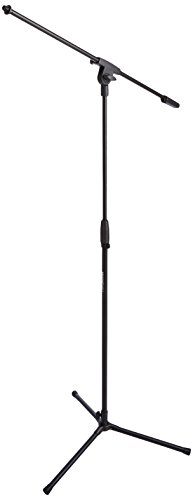
- Reaches up to 85.75 inches
- Folds flat for transport
- Supports microphones up to 2 pounds
Best For: Mobile singers, speakers, and musicians
Best Traditional Tripod Stand

- Steel tripod construction
- 30-inch adjustable boom reach
- Folds flat for travel
Best For: Vocal and instrument microphone setups
Best Studio Desk Arm
RØDE PSA1+ Professional Boom Arm
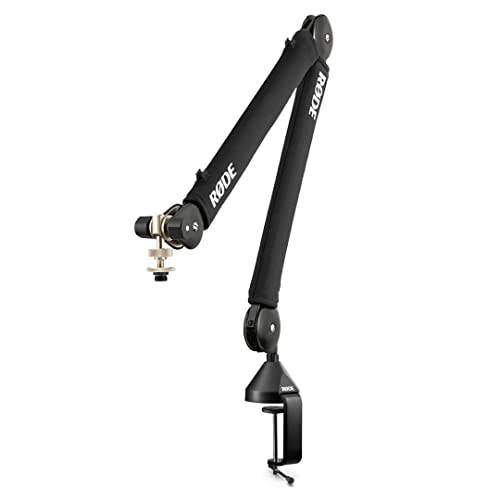
- Quiet internal spring damping
- 360-degree arm rotation
- Supports up to 1.2kg
Best For: Podcast and streaming desks
Best Dual-Use Floor Stand
CAHAYA Heavy-Duty Tripod Boom Microphone Stand

- Adjusts from 37 to 90.5 inches
- Removable boom converts to a straight stand
- Includes two clips, cable holders, and adapter
Best For: Flexible vocal, presentation, and recording setups
Best Desktop Heavy-Duty Stand
InnoGear Adjustable Desk Microphone Stand

- Weighted base helps absorb vibrations
- Adjustable boom and 11- to 15.8-inch height range
- Supports up to 4.4 pounds when partially extended
Best For: Podcasts, broadcasts, amplifiers, and drum miking
Best Compact Floor Stand
Pyle PMKS5 Universal Microphone Stand

- Adjusts from 33.5 to 60.24 inches
- Compact 9.8-inch die-cast weighted base
- Standard 5/8-inch thread for general-purpose setups
Best For: Portable home, studio, and live vocal use
Portable Performer Pick
GLEAM Adjustable Tripod Boom Stand
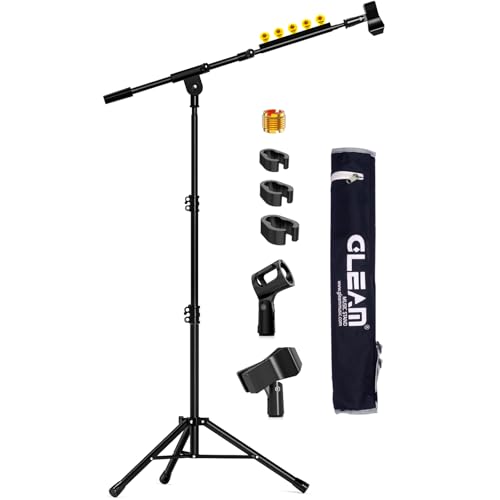
- 21–69-inch adjustable height
- Detachable, rotating boom arm
- Bag, two clips, and adapter included
Best For: Portable singing, rehearsals, and performances with lighter microphones
Creator Setup Pick
GUITTO Stand with Phone and Tablet Holder

- Integrated phone/tablet holder
- Height adjusts up to 70 inches
- Heavy-duty tripod base
Best For: Streaming, podcasting, and recording with a mobile device
Two-Stand Value Pick
InnoGear Adjustable Boom Stand Set

- Two stands in one package
- 28.1–89.8-inch height range
- Clips, adapter, cable clips, and bags included
Best For: Multi-microphone performances and recording setups
Best Portable Boom Stand – Amazon Basics Sturdy Portable Boom Arm
If you need a flexible microphone stand for singing, speaking, or playing an instrument, this Amazon Basics boom stand offers adjustable positioning and a foldable tripod base. Its steel construction, cable holder, and compact transport design make it a practical choice for mobile setups.
Best For: Performers and presenters who want a lightweight, height-adjustable microphone stand with a boom arm.
Pros:
- Adjusts up to 85.75 inches for standing or seated use.
- Folds flat and weighs just 3.3 pounds for easier transport.
- Includes a clip-on cable holder and 3/8-inch to 5/8-inch adapter.
- Steel construction supports microphones up to 2 pounds.
Cons:
- Microphone clip is sold separately.
- The lightweight design may be less suitable for microphones over 2 pounds.
This is a versatile microphone stand for users who prioritize portability and broad height adjustment. Confirm your microphone and accessory weight before buying.
Best Traditional Tripod Stand – On-Stage MS7701B Euro Boom
The On-Stage MS7701B is a conventional tripod microphone stand built for vocal, instrument, studio, and stage use. Its adjustable boom provides a 30-inch reach, while the steel body, rubber feet, and folding design support dependable everyday handling.
Best For: Vocalists, instrumentalists, and creators seeking a sturdy, folding tripod microphone stand.
Pros:
- Steel construction and non-slip rubber feet provide stable support.
- Adjusts to a maximum height of 61.5 inches.
- Removable boom arm offers 30 inches of reach and angle adjustment.
- Folds flat for storage and travel.
Cons:
- At 5.3 pounds, it is heavier than some portable stands.
- Its maximum height is lower than some extra-tall boom stands.
The MS7701B is a straightforward microphone stand for users who value a stable tripod base and proven versatility over minimum weight.
Best Studio Desk Arm – RØDE PSA1+ Professional Boom Arm
The RØDE PSA1+ is a desk-mounted microphone stand designed for podcasting, streaming, and other studio work. It clamps to desks up to 70mm thick, rotates 360 degrees, and uses internal spring damping to reduce creaks and handling noise during repositioning.
Best For: Podcasters and streamers who want a quiet, cable-managed boom arm for a permanent or semi-permanent desk setup.
Pros:
- Internal spring damping enables quiet mid-recording adjustments.
- 360-degree rotation and full extension provide flexible positioning.
- Integrated cable management keeps XLR runs hidden.
- Supports microphones and shock mounts from 0.25kg to 1.2kg.
Cons:
- Requires a desk up to 70mm thick for clamping.
- It is not a floor stand for stage or room-wide placement.
For a desk-based microphone stand, the PSA1+ emphasizes quiet movement, clean cable routing, and compatibility with common 3/8-inch and 5/8-inch mounts.
Best Weighted Floor Stand – InnoGear MS250 Mic Stand
The InnoGear MS250 is a floor microphone stand with a weighted 4.5-pound round base and adjustable boom arm. Its 34- to 60-inch height range, rotatable clip, detachable design, and included thread adapter make it suitable for performances, rehearsals, and compatible desktop microphones.
Best For: Singers and performers who want a stable weighted-base microphone stand that can also be broken down for transport.
Pros:
- Weighted 9.8-inch base and non-slip pads improve stability.
- Adjusts from 34 to 60 inches with a 180-degree rotatable mic clip.
- Detaches into three parts for easier carrying and setup.
- Supports microphones up to 4.5 pounds and includes a thread adapter.
Cons:
- The 6.6-pound weight makes it less convenient than lightweight stands.
- Shock mounts are not included.
This microphone stand is a strong fit when floor stability matters more than minimum carry weight. Its detachable construction adds useful flexibility for gigs and mobile events.
Best Dual-Use Floor Stand – CAHAYA Heavy-Duty Tripod Boom Microphone Stand
If you need a versatile microphone stand for singing, speaking, or recording, the CAHAYA combines a low-profile base with an adjustable boom. Its broad contact area is designed to help reduce vibrations and tilting, while the removable boom lets you switch between boom and straight-stand configurations.
Best For: Performers, presenters, podcasters, and households needing a floor stand that works for both seated and standing use.
Pros:
- Height adjusts from 37 to 90.5 inches, with an 18.7- to 32.7-inch, 360-degree rotating boom.
- Removable boom converts the stand into a traditional straight microphone stand.
- Includes two adjustable microphone clips, cable holders, and a 3/8-inch-to-5/8-inch adapter.
- Low-profile base can be stepped on and is designed to improve stability and reduce vibration.
Cons:
- At 2.17 kg, it is not the lightest option for frequent transport.
- The many adjustable components may be more than needed for simple vocal setups.
Choose this CAHAYA microphone stand if flexibility is a priority. Its broad height range and dual-use design make it suitable for varied performance positions and applications.
Best Desktop Heavy-Duty Stand – InnoGear Adjustable Desk Microphone Stand
The InnoGear is a compact microphone stand for desks, studios, and floor-level amplifier or drum miking. Its weighted cast-iron base, rubber gasket, and adjustable boom provide a stable platform for microphones such as the Blue Yeti, Blue Snowball, and other compatible models.
Best For: Podcasters, broadcasters, musicians, and audio users who need a stable desktop stand with floor-miking versatility.
Pros:
- Heavy-duty weighted base with a rubber gasket helps absorb vibrations and maintain balance.
- Adjustable boom arm supports independent length and angle changes.
- Height adjusts from 11 to 15.8 inches, and the stand supports up to 4.4 pounds when the boom is extended halfway.
- Includes a 3/8-inch-to-5/8-inch adapter and cable-management clips.
Cons:
- The 15.8-inch maximum height is limited for conventional standing vocal use.
- Its 4.4-pound weight makes it less convenient to move than lighter desk stands.
This InnoGear microphone stand is a strong choice when stability matters more than portability. The adjustable boom and broad application range make it useful beyond a typical podcast desk setup.
Best Compact Floor Stand – Pyle PMKS5 Universal Microphone Stand
The Pyle PMKS5 is a straightforward floor microphone stand with a compact weighted base and adjustable height. It raises from 33.5 to 60.24 inches and uses a standard 5/8-inch thread, making it a practical choice for vocal, instrumental, studio, and concert setups.
Best For: Musicians and home users who want a compact, transport-friendly floor microphone stand for general-purpose use.
Pros:
- Height adjusts from 33.5 to 60.24 inches.
- Solid die-cast base measures approximately 9.8 inches in diameter for stable placement.
- Compact design and sleek black finish support easier transport.
- Suitable for studio recording, live performances, and home use.
Cons:
- Uses a 5/8-inch thread and does not list the broader adapter range included with some competing stands.
- Its maximum height is lower than some full-range floor stands.
- The supplied notes describe a compact base but do not mention a boom arm.
The Pyle PMKS5 favors simplicity and portability. It is a sensible microphone stand for users who need reliable height adjustment and a stable base without a more elaborate boom configuration.
Portable Performer Pick – GLEAM Adjustable Tripod Boom Stand
If you need a portable microphone stand for singing, rehearsals, or small performances, the GLEAM offers flexible positioning in a compact tripod design. Its height adjusts from 21 to 69 inches, while the detachable boom arm can be converted to a straight stand when needed.
Best For: Performers who want a versatile, travel-ready microphone stand for lighter microphones.
Pros:
- Adjusts from 21 to 69 inches for children and adults.
- Boom arm extends from 16 to 28.5 inches and rotates horizontally and vertically.
- Includes two mic clips, a 3/8-to-5/8-inch adapter, and a carrying bag.
- Thickened steel tripod weighs about 3 pounds for improved stability.
Cons:
- Maximum recommended microphone weight is 16 ounces.
- Its height range is shorter than some extra-tall stands.
The GLEAM is a practical choice when portability and setup flexibility matter most. Keep its 16-ounce weight recommendation in mind when pairing it with a microphone.
Creator Setup Pick – GUITTO Stand with Phone and Tablet Holder
The GUITTO combines a microphone stand with a phone or tablet holder, making it a convenient microphone stand for streaming, podcasting, recording, and live performance setups. Its boom arm and height adjust to help position both your microphone and recording device.
Best For: Content creators who want to mount a microphone and a phone or tablet in one floor-standing setup.
Pros:
- Built-in holder supports phones and tablets up to 10 inches.
- Height adjusts up to 70 inches with an adjustable boom arm.
- Includes a 3/8-to-5/8-inch adapter for broad microphone compatibility.
- Heavy-duty base is designed to reduce wobbling and tipping.
Cons:
- The phone/tablet holder is limited to devices up to 10 inches.
- At about 2.15 kg, it may be less convenient to carry than lighter stands.
For creators who monitor notes, comments, or recording controls from a mobile device, the GUITTO’s integrated holder can simplify the workspace. It is a strong fit for home studios and portable content setups.
Two-Stand Value Pick – InnoGear Adjustable Boom Stand Set
The InnoGear two-pack is a useful microphone stand option when you need matching stands for multiple performers, instruments, or recording positions. Each stand reaches from 28.1 to 89.8 inches, includes a flexible detachable boom arm, and packs into the supplied carrying bag.
Best For: Buyers who need two adjustable stands for performances, podcasts, or shared recording setups.
Pros:
- Two stands are included in the set.
- Wide 28.1-to-89.8-inch height range accommodates varied setups.
- Boom arms extend 16 to 30 inches and rotate horizontally and vertically.
- Includes mic clips, cable clips, an adapter, and carrying bags.
Cons:
- The two-pack may be unnecessary if you only need one stand.
- Each stand weighs about 4 pounds, adding bulk for transport.
This set stands out for its quantity, height range, and accessory package. It can reduce the need to buy a second microphone stand later, especially for duets, multi-mic recordings, or flexible stage layouts.
How We Picked the Best Microphone Stands
We focused on the features that have the greatest effect on everyday use: stability, height and boom adjustment, portability, mounting compatibility, cable management, and setup convenience. The selection includes floor stands for singers and performers, desk-mounted and desktop options for creators, and specialized designs for studio or streaming work.
We also considered the needs of different microphones. A lightweight USB mic may work well with a compact desk stand or boom arm, while a heavier dynamic or condenser microphone needs a stronger clutch, base, and boom support. Product claims such as weight capacity, thread size, and included accessories should be checked against your specific microphone and holder.
Quick Comparison
| Stand type | Best for | Main advantage |
|---|---|---|
| Tripod boom stand | Vocals, instruments, rehearsals | Adjustable and easy to transport |
| Weighted-base floor stand | Fixed performance or recording spaces | Good stability with a smaller footprint |
| Desk boom arm | Streaming, podcasting, voice recording | Convenient positioning without floor space |
| Studio boom arm | Dedicated recording setups | Smooth adjustment and cleaner cable routing |
Key Buying Factors for a Microphone Stand
Base Stability and Footprint
A tripod spreads its weight across multiple feet and usually folds for transport. A weighted base can be more compact around a desk or vocal position, but it may be less convenient to carry. For energetic performances, prioritize a broad, sturdy base and secure leg locks.
Height and Boom Adjustment
Check both the minimum and maximum height, not just the advertised maximum. A boom arm is useful when you need to position the microphone in front of you without placing the stand directly between your feet. Strong adjustment knobs and clutches help prevent drift during use.
Microphone and Thread Compatibility
Confirm that the stand includes a compatible mic clip or shock-mount adapter. Common 3/8-inch and 5/8-inch threads are widely supported, but adapters may be needed for some microphones, phone mounts, or accessories.
Portability and Cable Management
Foldable legs, a removable boom, and a carrying bag matter for gigs, lessons, and mobile recording. Cable clips or built-in routing can reduce snags and keep the setup tidy, especially with floor stands.
Who Should Buy Which Microphone Stand?
For Singers and Live Performers
Choose a sturdy tripod boom or weighted-base floor stand with a dependable clutch and enough height range for standing vocals. A foldable model is preferable if you regularly travel.
For Streamers and Podcasters
A desk boom arm or compact desktop stand is usually the most practical choice. It keeps the microphone close, saves floor space, and makes it easier to move the mic out of the way between sessions.
For Home Studios
Prioritize smooth positioning, low mechanical noise, cable management, and compatibility with your microphone’s shock mount. Heavier bases and better-supported boom arms are worthwhile for frequent recording.
For Buyers on a Budget
Start with a basic tripod or weighted-base stand that matches your microphone’s weight. Spend more on stability and adjustment hardware before paying for extras you will not use.