Recording a loud concert is harder than it looks: peaks can overload quickly, crowd noise can bury detail, and weak microphones can make great performances sound flat.
This roundup of portable audio recorders for loud concerts focuses on models with strong input headroom, flexible gain control, and practical features for live music capture.
Best 10 Portable Audio Recorders for Loud Concerts Picks for 2026
Clip-Free Multitrack Pick
Zoom H4 Essential Handheld Recorder for Musicians

- 32-bit float recording helps avoid clipped live takes
- Built-in stereo mics and 2 XLR/TRS inputs add flexibility
- USB-C recording/streaming plus SD backup support
Best For: Loud concerts, music capture, and flexible handheld recording
High-Storage Voice Saver

- 76GB built-in memory supports very long recording capacity
- Voice activation and DSP 6.0 noise reduction add convenience
- OTG transfer works with smartphones and tablets
Best For: Lectures, meetings, and basic portable voice recording
Concert Travel Bundle
Zoom H1essential Recorder Bundle
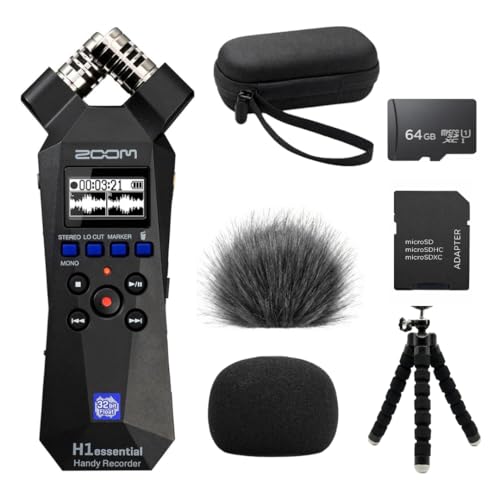
- 32-bit float recording helps avoid clipping on loud sources
- X/Y mics are rated up to 120 dB SPL
- Bundle includes 64GB card, case, windscreens, and tripod
Best For: Live shows, travel, and field recording with useful accessories
High-SPL Handheld Choice
TASCAM DR-05XP Portable Handheld Field Recorder

- Omnidirectional mics handle loud sources up to 125 dB SPL
- Supports 32-bit float, 24-bit, and 16-bit recording
- USB-C interface can connect directly to a computer
Best For: Loud concerts, music recording, and easy handheld capture
Quiet Control Bundle
Zoom H4essential for Concert Recording

- Soft-touch controls for quieter operation
- Supports SDXC cards up to 1TB
- Includes memory card, headphones, batteries, charger, and tripod
Best For: concertgoers who want an easy starter bundle with long-session storage
Flexible Stereo Capture

- Dual internal condenser mics handle subtle to loud sources
- Adjustable A-B and X-Y mic positions
- Up to 17.5 hours on two AA batteries
Best For: buyers who want flexible built-in stereo mics and long battery life
32-Bit Float Recorder
Zoom H1 XLR for Clean Concert Audio

- 32-bit / 96kHz recording for detailed sound
- Two locking XLR/TRS combo inputs
- OLED waveform display for level monitoring
Best For: users who want clean capture and flexible input options at loud events
Concert-Ready Float Capture
Zoom H1essential Stereo Handy Recorder with 32-Bit Float

- 32-bit float stereo recording
- X/Y mics handle up to 120 dB SPL
- Records to SD card and works as USB mic
Best For: Simple, compact recording of loud concerts without gain hassles
All-Around Live Audio Pocket Recorder
Zoom H1 Essential Recorder for Musicians
- 32-bit float stereo capture for loud audio
- X/Y mics for live music and ambience
- 10-hour battery and USB-C mic mode
Best For: Musicians and fans who want a lightweight live-recording tool
Flexible Multi-Track Live Recorder
Zoom R4 4-Track 32-Bit Float Recorder

- 4-track recording with bounce workflow
- 2 XLR/TRS combo inputs for external sources
- 32-bit float plus USB interface mode
Best For: Portable concert recording when you want multi-track expansion
Clip-Free Multitrack Pick – Zoom H4 Essential Handheld Recorder for Musicians
If you want portable audio recorders for loud concerts, the Zoom H4 Essential is built for capturing big performances without stressing over clipped takes. Its 32-bit float recording, built-in stereo mics, and 4-track layout make it a practical choice when you need headroom for unpredictable live sound.
Best For: Musicians, creators, and videographers who need flexible handheld recording for loud live shows and other demanding sessions.
Pros:
- 32-bit float recording helps reduce the risk of distorted concert recordings.
- Built-in stereo mics plus two XLR/TRS inputs support both quick capture and external gear.
- USB-C works for recording or streaming to a phone, tablet, or computer.
- Spoken menu guidance can make the recorder easier to navigate.
Cons:
- Uses 2 AA batteries, so you’ll want spares for longer events.
- Its 4-track design is useful, but it’s more recorder than all-in-one concert kit.
Overall, this is a strong pick if your priority is capturing loud performances with more protection against overload. It fits creators who want a handheld recorder that can move from concerts to interviews and video work.
High-Storage Voice Saver – 76GB Voice Activated Recorder
This portable recorder is more of a voice memo tool than a dedicated concert machine, but it can still fit some portable audio recorders for loud concerts needs if you want a lightweight, easy-to-carry device. Its big storage, voice activation, and DSP 6.0 noise reduction are aimed at simple, grab-and-go recording.
Best For: Users who want a compact recorder for meetings, lectures, or basic audio capture with lots of built-in storage.
Pros:
- 76GB built-in memory offers very large storage capacity.
- Voice activation can help automate recording starts and stops.
- DSP 6.0 noise reduction is designed to filter background noise.
- OTG support allows direct transfer to smartphones or tablets.
Cons:
- Mono recording is less ideal for capturing live concert width and ambience.
- Its feature set is aimed at lectures and meetings, not performance recording.
For loud concerts, this is not the strongest specialist option in the group, but it may suit buyers who value portability and storage over advanced live-sound features. It makes the most sense for general voice capture rather than serious music recording.
Concert Travel Bundle – Zoom H1essential Recorder Bundle
If you’re comparing portable audio recorders for loud concerts, this Zoom H1essential bundle adds helpful accessories to a compact 32-bit float recorder. The high-quality X/Y mics are rated up to 120 dB SPL, and the included windscreens and case make it easier to travel with the recorder and use it in different environments.
Best For: Buyers who want a small recorder bundle with storage and accessories for live shows, travel, and field recording.
Pros:
- 32-bit float recording helps prevent clipping on loud sources.
- X/Y mics are designed to capture clean audio up to 120 dB SPL.
- Includes a 64GB microSD card, protective case, windscreens, and tripod.
- USB-C recording works with PC, Mac, iOS, or Android.
Cons:
- Digital recording time is listed at 16 hours, so it’s less spacious than some larger units.
- It runs on 2 AAA batteries, which may be a consideration for long concert days.
This bundle is a smart value play if you want a ready-to-go kit rather than buying the recorder and accessories separately. For loud concerts, the combination of 32-bit float recording and a 120 dB SPL mic rating is especially useful.
High-SPL Handheld Choice – TASCAM DR-05XP Portable Handheld Field Recorder
For shoppers looking at portable audio recorders for loud concerts, the TASCAM DR-05XP stands out with omnidirectional condenser microphones rated for sources up to 125 dB SPL. It also supports 32-bit float recording, making it a practical option when live sound can swing from quiet passages to very loud peaks.
Best For: Concerts, music recording, and creators who want a simple handheld recorder that handles loud sources well.
Pros:
- Omnidirectional condenser mics handle loud environments up to 125 dB SPL.
- 32-bit float, 24-bit, and 16-bit modes offer flexible recording options.
- USB-C 2-in/2-out interface lets it work directly with a computer.
- Compact handheld design keeps it easy to carry to shows.
Cons:
- SD card and batteries are not included.
- Battery life is listed at about 17.5 hours, which may still require planning for long events.
Overall, this is one of the strongest concert-focused options here because its loud-source rating is clearly stated and its recording formats are flexible. If you want a straightforward handheld recorder for live music, it’s an easy model to consider.
Quiet Control Bundle – Zoom H4essential for Concert Recording
If you want one of the more practical portable audio recorders for loud concerts, the Zoom H4essential bundle gives you a simple way to capture long shows with low-noise handling and plenty of storage. The soft-touch controls are designed for quiet operation, and the included accessories make it easier to start recording right away.
Best For: Concertgoers who want a bundled recorder with quiet controls, long-session storage support, and useful extras.
Pros:
- Soft-touch controls help keep operation quiet during recording.
- Supports SDXC cards up to 1TB for hours and hours of audio.
- Includes a 32GB memory card, headphones, batteries, charger, tripod, and cloth.
- 3.5mm line output and mic/line input add flexible connection options.
Cons:
- Bundle weight is 2.7 pounds, so it is less pocket-friendly than smaller recorders.
- Uses AA batteries rather than a built-in rechargeable pack.
- Its strengths here are more about convenience and storage than advanced concert-specific features.
Overall, this bundle is a straightforward pick if you want a recorder that is ready to go out of the box and can handle extended concert recordings with minimal fuss.
Flexible Stereo Capture – Tascam DR-07X for Loud Shows
The Tascam DR-07X is a solid option for portable audio recorders for loud concerts when you want straightforward stereo capture and simple level control. Its dual internal condenser microphones are designed to handle anything from subtle to loud, and the adjustable A-B and X-Y positions give you flexibility depending on the room and stage sound.
Best For: Listeners who want a compact handheld recorder with adjustable stereo mics and long battery life.
Pros:
- Dual internal condenser microphones can handle subtle to loud sources.
- Adjustable A-B and X-Y mic positions add recording flexibility.
- Up to 17.5 hours of battery life on two AA batteries.
- Can also work as a USB audio interface for computer-based use.
Cons:
- MicroSD support tops out at 128GB.
- Its headphone jack is listed as 2.5 mm, so you may need the right adapter or headphones.
- It lacks the bundled accessories that some buyers may want.
For concert recording, this model stands out for its adjustable built-in mics and dependable battery life, making it a practical choice when you want simple stereo recordings without extra setup.
32-Bit Float Recorder – Zoom H1 XLR for Clean Concert Audio
Among portable audio recorders for loud concerts, the Zoom H1 XLR is built for users who want clean, detailed capture with less level anxiety. Its 32-bit / 96kHz recording, waveform display, and 32-bit float workflow are aimed at helping you avoid clipped audio while keeping setup simple.
Best For: Users who want 32-bit float recording, XLR/TRS input flexibility, and easy level monitoring.
Pros:
- Records in 32-bit / 96kHz for clear, detailed sound.
- Two locking XLR/TRS combo inputs support microphones, instruments, and more.
- OLED waveform display helps monitor levels at a glance.
- Supports SDXC cards up to 1TB for extended sessions.
Cons:
- Battery life is listed at 10 hours, which is shorter than some alternatives.
- Its built-in recording mode is centered on mono/stereo rather than a larger multi-mic setup.
- Users wanting a more accessory-heavy bundle will need to add extras separately.
This is a strong fit if your priority is protecting against bad levels at loud shows and keeping your recording chain flexible with XLR/TRS inputs.
Concert-Ready Float Capture – Zoom H1essential Stereo Handy Recorder with 32-Bit Float
If you want portable audio recorders for loud concerts that can handle high SPL without making gain staging a worry, the Zoom H1essential is built for straightforward stereo capture. Its 32-bit float recording and X/Y microphones are aimed at clean, clip-free recording, while the tiny body makes it easy to bring into crowded venues.
Best For: Recording loud live shows when you want simple, no-gain stereo capture in a very small recorder.
Pros:
- 32-bit float stereo recording reduces the need to set gain.
- X/Y mics are rated to capture clean audio up to 120 dB SPL.
- Records directly to SD card for easy portable use.
- USB-C mic mode adds flexibility for computer, phone, or tablet use.
Cons:
- Designed as a stereo handheld recorder, not a multi-input rig.
- No built-in mention of XLR/TRS connections for external mics.
For concert-goers who mainly need a compact recorder that can tolerate loud sound and keep setup simple, this model hits the practical basics well. It is especially appealing if you value clip-free recording and portability over advanced routing.
All-Around Live Audio Pocket Recorder – Zoom H1 Essential Recorder for Musicians
For portable audio recorders for loud concerts, the Zoom H1 Essential is a practical pick if you want a small stereo recorder that is easy to carry and ready for live music. Its 32-bit float capture and X/Y stereo mics are meant to keep recordings clear and clip-free, while USB-C mode gives it extra utility beyond show recording.
Best For: Musicians and concert fans who want a lightweight recorder for live sets, rehearsals, and general stereo capture.
Pros:
- 32-bit float recording helps avoid clipping in loud environments.
- X/Y stereo mics are suited to live music and room capture.
- 10-hour battery life supports longer sessions.
- USB-C microphone mode works for streaming, calls, and desktop/mobile recording.
Cons:
- Only stereo capture is described, so it is not a multi-track solution.
- Best suited to simple run-and-gun recording rather than complex stage hookups.
This is a strong all-purpose option if you want one recorder that can handle concerts, rehearsals, and content creation without much fuss. It balances portability with the protection of 32-bit float, which is a real advantage when the venue gets loud.
Flexible Multi-Track Live Recorder – Zoom R4 4-Track 32-Bit Float Recorder
If you need portable audio recorders for loud concerts and also want more flexibility than a simple handheld stereo unit, the Zoom R4 stands out. It combines 32-bit float recording with 2 XLR/TRS combo inputs, a built-in mic, and 4-track layering, making it useful for more involved live recording setups.
Best For: Recording concerts, rehearsals, and idea capture when you want multi-track flexibility in a portable unit.
Pros:
- 4-track recording with bounce functions lets you keep building layers.
- 32-bit float audio is designed for clip-free capture without gain adjustments.
- 2 XLR/TRS combo inputs support microphones, instruments, and other sources.
- Works as a USB audio interface and runs on batteries or USB-C.
Cons:
- More complex than a basic pocket recorder if you only need simple concert capture.
- Heavier and bulkier than the small Zoom H1-style handheld units.
For buyers who want a recorder that can do more than just point-and-capture a show, the R4 offers a useful step up. It is the most versatile option here for users who may also want to connect external sources or expand beyond a single stereo recording.
How We Picked the Best Portable Audio Recorders for Loud Concerts
We prioritized recorders that are better suited to intense live sound than basic voice recorders. That means solid dynamic range, 32-bit float or robust manual control, usable built-in mics, reliable file formats, and portable designs you can actually carry into a venue.
We also considered battery life, media support, USB-C connectivity, and whether each unit is easier to monitor and set up quickly in a crowded, noisy environment.
Quick Comparison
For most buyers, the biggest tradeoff is simplicity versus control. Handy stereo recorders are the easiest to deploy and are often ideal for audience recording. Models with XLR or combo inputs are better if you want to feed an external mic, stereo bar, or board mix. Multi-track units add flexibility, but they can be more complex than casual concertgoers need.
Key Buying Factors for Portable Audio Recorders for Loud Concerts
Headroom and 32-Bit Float
High SPL environments can spike unexpectedly. Recorders with 32-bit float can be a major advantage because they reduce the risk of clipping and make level-setting less stressful. If a model does not use 32-bit float, it should still offer reliable input pads and careful manual gain control.
Microphones and Inputs
Built-in X/Y microphones are great for compact audience recording, but external input options matter if you want better placement, a dedicated stereo mic, or a board feed. For Portable Audio Recorders for Loud Concerts, flexibility is often more important than raw feature count.
Monitoring and Workflow
Good headphones, clear meters, and easy access to record controls help you react fast when a performance gets louder. A simple interface can be more valuable than advanced menus if you need to start recording quickly between sets.
Durability and Portability
Concert recording often means tight spaces, low light, and limited setup time. Choose a recorder that feels sturdy, fits in a bag or pocket, and can run long enough on common batteries or USB power.
Who Should Buy Which Portable Audio Recorders for Loud Concerts?
If you want the easiest grab-and-go option, choose a compact stereo handheld recorder with 32-bit float and built-in mics. If you expect to record from a mixer or use higher-end external mics, look for XLR or combo-input models. If you need more than a simple stereo capture and may multitrack rehearsals or live sessions, a compact multitrack recorder is the smarter long-term pick.
In short, the best choice depends on how you record: audience perspective, direct board feed, or a hybrid setup. For loud shows, prioritize headroom, reliable monitoring, and a layout you can operate without thinking.