If you need clean audio outside the studio, the right recorder can make all the difference. The best portable field recorders balance sound quality, input flexibility, battery life, and easy operation.
This roundup focuses on practical picks for filmmakers, musicians, podcasters, and creators who want dependable recording without a steep learning curve.
Best 10 Portable Field Recorders Picks for 2026
Run-and-Gun 32-Bit Choice
Zoom F3 for Filmmakers & Musicians

- 32-bit float recording for wide dynamic range
- Dual locking XLR inputs for secure rigs
- Low-noise preamps and flexible power
Best For: Filmmakers and recordists working in unpredictable conditions
Compact Multi-Input Option

- 32-bit float capture up to 192kHz
- 4 inputs and 6 tracks for flexible setups
- Sidus app control with USB-C charging
Best For: Users needing compact multi-input recording with app control
Interchangeable Capsule Recorder
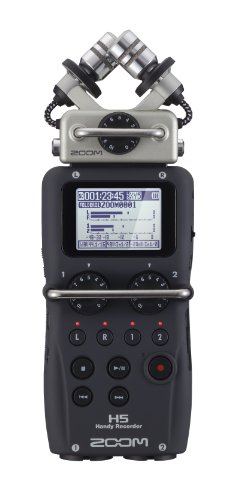
- Interchangeable input capsules for flexibility
- Four-track recording with 2 XLR/TRS inputs
- Works as a USB audio interface
Best For: Creators who want a versatile handheld recorder for mixed workflows
Stereo 32-Bit Float Pick
TASCAM DR-05XP Handheld Recorder

- 32-bit float plus 24-bit and 16-bit modes
- Built-in mics handle loud sources up to 125dB SPL
- USB-C audio interface with long battery life
Best For: Simple handheld recording for music, voice, and video
Compact XLR Flexibility
Zoom H1 XLR 2-Channel Recorder

- 32-bit / 96kHz recording
- Two XLR/TRS combo inputs
- OLED waveform display for level checks
Best For: Creators needing a small recorder with flexible XLR/TRS inputs
Ready-to-Go Bundle
Zoom H4essential 4-Track Recorder Bundle
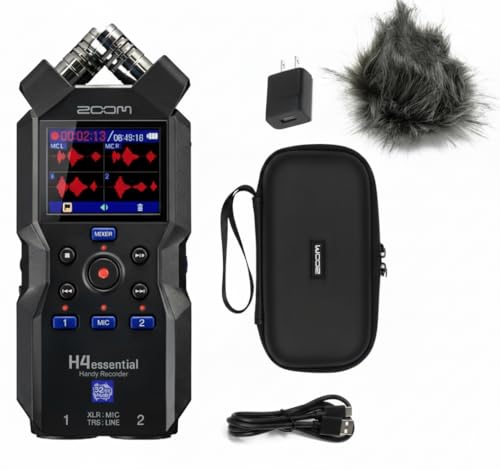
- Includes recorder plus APH-4e accessory pack
- 32-bit float recording helps avoid clipping
- Up to 20 hours of battery life
Best For: Users who want a recorder kit with accessories included
Versatile 4-Track Capture
Zoom H4 Essential Handheld Recorder

- 4-track 32-bit float recording
- Built-in stereo mics plus two XLR/TRS inputs
- USB-C recording and SD card backup
Best For: Creators needing a flexible handheld recorder for mixed recording tasks
Track-and-Layer Pick
Zoom R4 Multi-Track Recorder for Musicians

- Up to 4 tracks with bounce-to-free-channels workflow
- 32-bit float recording avoids clipping and gain tweaking
- 2 XLR/TRS combo inputs plus USB interface mode
Best For: Musicians and creators who want a portable multi-track recorder for layering ideas
All-Purpose Handheld Pick
Zoom H2 Essential Handheld Recorder

- Three built-in mics with nine selectable patterns
- 32-bit float recording at up to 96kHz
- USB mic mode plus simultaneous SD-card backup
Best For: Journalists, podcasters, and field recorders who need flexible handheld capture
Compact Everyday Pick

- X/Y stereo mics in a very compact body
- 32-bit float recording for clip-free capture
- USB-C mic mode for calls, streaming, and desktop use
Best For: Creators who want a small portable recorder for simple stereo capture
Run-and-Gun 32-Bit Choice – Zoom F3 for Filmmakers & Musicians
If you need portable field recorders that can handle unpredictable levels without constant gain riding, the Zoom F3 is built for that job. Its 32-bit float workflow is aimed at real-world shoots, while the dual locking XLR inputs and low-noise preamps help keep the signal secure and clean in demanding setups.
Best For: Filmmakers, recordists, and musicians who want a compact recorder for run-and-gun work and complex rigs.
Pros:
- 32-bit float recording helps capture quiet dialogue and sudden peaks without stopping to adjust levels.
- Dual locking XLR inputs are useful when the recorder is mounted out of reach or used in a larger rig.
- Ultra-low-noise preamps support cleaner audio in unpredictable environments.
- Flexible power options and standalone or USB workflows suit long days on set or on location.
Cons:
- Built around XLR connectivity, so it is less of a simple all-purpose pocket recorder.
- The 2-inch screen is small if you want a larger on-device display.
The Zoom F3 stands out as a practical field tool when reliability matters more than extras. If your priority is clip-free capture in tough recording conditions, this is a strong, focused option.
Compact Multi-Input Option – Deity PR-4 Portable Recorder
Among portable field recorders, the Deity PR-4 is aimed at users who need a compact unit with flexible input options and high-resolution capture. Its 32-bit float design, up to 192kHz recording, and four-input / six-track capability make it a capable choice for more technical recording setups.
Best For: Recordists who want a compact recorder with multiple input formats, app control, and extended track options.
Pros:
- 32-bit float and up to 192kHz support give it a strong spec sheet for detailed capture.
- 4 inputs / 6 tracks provide flexibility for more involved recording setups.
- Sidus app control adds convenient remote operation.
- USB-C rechargeable design improves everyday usability.
Cons:
- Its listed runtime is 8+ hours, which is shorter than some battery-focused alternatives.
- The feature set may be more than casual users need for simple grab-and-go recording.
The PR-4 makes sense if you want a compact recorder with more routing and control options than a basic handheld model. It is best viewed as a flexible production tool rather than a stripped-down pocket recorder.
Interchangeable Capsule Recorder – Zoom H5 4-Track Handheld
The Zoom H5 remains a versatile pick in portable field recorders because it combines handheld convenience with modular input capsules. With four-track simultaneous recording, two XLR/TRS combo inputs, and use as a USB audio interface, it fits a wide range of video and music workflows.
Best For: Creators who want a handheld recorder with interchangeable capsules and straightforward multitrack flexibility.
Pros:
- Interchangeable input capsules add flexibility for different recording tasks.
- Four-track simultaneous recording supports more complex captures.
- Two XLR/TRS combo inputs include selectable phantom power and a -20dB pad.
- Can function as a multichannel or stereo USB audio interface for PC, Mac, and iPad.
Cons:
- Records to SD/SDHC cards up to 32GB, which is less capacity than some newer options.
- Its listed 10-hour digital recording time may not suit very long sessions without planning.
The H5 is a good all-around choice when you want one recorder that can adapt to different jobs. It is especially appealing if capsule versatility matters as much as the recorder itself.
Stereo 32-Bit Float Pick – TASCAM DR-05XP Handheld Recorder
For buyers comparing portable field recorders, the TASCAM DR-05XP is a straightforward handheld option built for music, voice, meetings, and audio-for-video work. It offers 32-bit float alongside 24-bit and 16-bit recording modes, plus built-in omnidirectional condenser microphones that are rated for loud sources up to 125dB SPL.
Best For: Users who want a simple stereo handheld recorder for everyday capture and direct USB-C use with a computer.
Pros:
- 32-bit float, 24-bit, and 16-bit recording modes give you format flexibility.
- Built-in omnidirectional microphones can handle loud environments up to 125dB SPL.
- USB-C 2-in/2-out audio interface support makes computer recording easy.
- Lightweight at 4.48 ounces with up to 17.5 hours of battery operation.
Cons:
- It is a stereo recorder, so it is not designed for more complex multi-input rigs.
- SD card and batteries are not included.
The DR-05XP is a practical choice if you want a compact recorder that keeps operation simple while still offering modern 32-bit float support. It is especially appealing for users who value portability and direct USB-C interfacing.
Compact XLR Flexibility – Zoom H1 XLR 2-Channel Recorder
If you want one of the most portable field recorders for simple interviews, podcast setups, or quick location audio, the Zoom H1 XLR keeps things straightforward while still offering pro-style inputs. Its 32-bit / 96kHz recording, OLED waveform display, and dual XLR/TRS combo jacks make it a practical grab-and-go option for creators who need flexibility without a lot of setup time.
Best For: Filmmakers, podcasters, and musicians who need a small recorder with XLR/TRS input flexibility.
Pros:
- 32-bit / 96kHz recording for clear, detailed capture
- Two XLR/TRS combo inputs for microphones, instruments, and more
- OLED waveform display helps monitor levels at a glance
- 3.5mm stereo input and headphone output add monitoring options
Cons:
- Two AA batteries required
- Built around 2 channels, so it is less suited to larger multi-source sessions
- Smaller screen may feel basic compared with larger recorders
Overall, the H1 XLR is a compact recorder that focuses on the essentials: clean sound, flexible inputs, and easy level monitoring. For portable field recording jobs where simplicity matters, it is a strong fit.
Ready-to-Go Bundle – Zoom H4essential 4-Track Recorder Bundle
For buyers comparing portable field recorders that are ready to use out of the box, this Zoom H4essential bundle stands out because it includes the recorder plus the APH-4e accessory pack. You get 32-bit float recording, a full-color LCD, XLR/TRS combo jacks, and a stereo mini-jack input, making it a versatile choice for location recording, interviews, and content creation.
Best For: Creators who want a bundled recorder kit with accessories included for immediate use.
Pros:
- Bundle includes hairy windscreen, padded case, AC adapter, and USB-C cable
- 32-bit float recording helps prevent clipping without gain adjustments
- Up to 20 hours of battery life for long sessions
- Full-color 2.0-inch LCD and simple interface for easier operation
Cons:
- Accessory bundle may be more than you need if you already own the extras
- Uses AA lithium batteries for the stated battery life
- Smaller recorder format may still feel limited for users who need more than 4 tracks
This bundle is a convenient route into 32-bit float recording because it adds useful accessories from the start. If you want a portable recorder that is easier to set up for field work, it delivers strong value.
Versatile 4-Track Capture – Zoom H4 Essential Handheld Recorder
The Zoom H4 Essential is a strong pick if you want portable field recorders that can handle music, interviews, podcasts, and video audio without a complicated workflow. It combines built-in stereo microphones, two XLR/TRS inputs, USB-C connectivity, and 32-bit float recording, so it can serve as both a field recorder and a recording interface for a range of everyday creator needs.
Best For: Creators who want a flexible handheld recorder for interviews, music, and video audio.
Pros:
- 4-track recording with 32-bit float support
- Built-in stereo mics plus two XLR/TRS inputs
- USB-C connection for recording or streaming to a device
- Spoken menu guidance can make navigation easier
Cons:
- Digital recording time is listed at 10 hours
- Requires two AA batteries
- Full-featured layout may still take a little learning for first-time users
As a portable recorder, the H4 Essential offers a balanced mix of flexibility and convenience. It is a practical choice when you need more inputs and easier file backup to SD card, but still want a handheld form factor.
Track-and-Layer Pick – Zoom R4 Multi-Track Recorder for Musicians
For portable field recorders that also handle idea capture and overdub-style sessions, the Zoom R4 stands out with 32-bit float recording, combo inputs, and built-in bounce workflow. It’s a practical choice when you want clip-free audio, simple setup, and the ability to keep building tracks without constantly managing gain.
Best For: Musicians and creators who want a battery-powered portable recorder for layering parts, rough productions, and on-the-go recording.
Pros:
- Records up to 4 tracks and lets you bounce to a dedicated track to free channels for more layers.
- 32-bit float capture means no clipping and no gain adjustments needed.
- 2 XLR/TRS combo inputs work with microphones, instruments, keyboards, and more.
- Built-in rhythms and USB audio interface mode add flexibility for practice and computer recording.
Cons:
- Geared more toward music production than ultra-compact run-and-gun field use.
- Requires 4 AA batteries or USB-C power, so it is not a self-charging unit.
Overall, the R4 is a smart fit if your portable field recorder needs to do more than capture one take—it also supports arranging, bouncing, and repeated overdubbing in a compact package.
All-Purpose Handheld Pick – Zoom H2 Essential Handheld Recorder
The Zoom H2 Essential is a versatile choice among portable field recorders when you need one handheld unit that can handle interviews, music, and ambient capture. With three built-in mics, nine selectable patterns, and 32-bit float recording, it’s designed to stay simple while still giving you flexible coverage for different recording situations.
Best For: Journalists, podcasters, musicians, and field recorders who need a lightweight handheld recorder with multiple mic patterns.
Pros:
- Three built-in microphones with nine recording patterns for a wide range of use cases.
- 32-bit float/96kHz recording helps keep audio clip-free without gain adjustments.
- Works as a USB microphone and records to SD card at the same time for backup.
- Bluetooth sync support can help align multiple units for multi-recorder setups.
Cons:
- Uses 2 AA batteries rather than a built-in rechargeable battery.
- Some advanced features, like wireless sync, are more useful in multi-device workflows.
If you want a handheld recorder that can move easily from field recording to podcasting to music capture, the H2 Essential offers a strong balance of portability and flexibility.
Compact Everyday Pick – Zoom H1 Essential Recorder
The Zoom H1 Essential is a compact option for portable field recorders when you want better sound than a phone or camera without carrying much gear. Its X/Y stereo mics, 32-bit float recording, and USB-C mic mode make it useful for quick content capture, voice work, and ambient audio on the move.
Best For: Creators, musicians, and interviewers who want a small stereo recorder for simple mobile capture.
Pros:
- X/Y stereo microphones are built in for clear stereo recording.
- 32-bit float capture helps prevent clipping during unpredictable recordings.
- USB-C mode lets it work as a microphone for livestreams, calls, and desktop or mobile recording.
- Lightweight design and AA battery power make it easy to carry for quick sessions.
Cons:
- Two AAA batteries and 10 hours of recording time are more limited than larger handheld models.
- It is focused on straightforward stereo capture, not multi-track production.
For buyers who value size and simplicity, the H1 Essential is an easy-to-pack field recorder that still covers interviews, ambience, and content creation well.
How We Picked the Best Portable Field Recorders
We focused on models that offer strong real-world value: clear preamps, dependable gain control, useful input options, and formats that fit modern workflows. We also favored recorders that are easy to carry, quick to set up, and suited to both capture-on-the-run and more controlled sessions.
Since Portable Field Recorders are used by different creators for different jobs, we looked for a mix of compact handheld units, 32-bit float models, and devices with XLR or combo inputs for more flexible rigs.
Quick Comparison
Think of these recorders in three broad groups: ultra-compact options for simple voice, scratch, and ambient capture; mid-range handheld models for run-and-gun video and music; and more advanced recorders with XLR inputs and 32-bit float recording for higher-stakes work. The best choice depends on whether you prioritize portability, input count, or the ability to avoid clipping in fast-changing environments.
Key Buying Factors for Portable Field Recorders
Inputs and Connectivity
Check whether you need built-in microphones, XLR inputs, combo jacks, or USB-C audio interface support. Filmmakers and musicians often need external mic compatibility, while podcasters may value plug-and-play convenience.
Recording Format
32-bit float recording is especially helpful when levels are unpredictable, since it reduces the risk of distortion. If you work in more controlled settings, traditional 24-bit recording may still be perfectly fine.
Size, Controls, and Battery Life
A recorder should be easy to use in the field, even with one hand. Clear screens, physical gain controls, and long battery life matter when you are moving quickly or recording away from power.
Monitoring and Workflow
Headphone monitoring, onboard metering, and simple file transfer can save time. If you edit often, look for models that fit your preferred workflow without extra adapters or complicated menus.
Who Should Buy Which Portable Field Recorders?
Choose a compact handheld if you want something simple for interviews, voice notes, or ambient sound. Choose a 32-bit float model if you record unpredictable sources and want more protection against bad levels. Choose a recorder with XLR or combo inputs if you plan to use professional mics, build a small production kit, or need more routing options. In short, the best Portable Field Recorders are the ones that match your typical recording scenario, not just the spec sheet.