If you need clean, flexible recording on the move, portable multitrack recorders with XLR inputs are hard to beat. They let you connect professional microphones, capture multiple sources, and keep your workflow compact.
This roundup focuses on models that balance input count, preamp quality, portability, and real-world usability for podcasting, filmmaking, music, and field recording.
Best 10 Portable Multitrack Recorders with Xlr Inputs Picks for 2026
AI-Enhanced Podcast Hub
Zoom PodTrak P4next 4-XLR portable podcast recorder

- 4 XLR inputs with up to +70 dB gain and 48V phantom power
- AI noise reduction plus tone shaping and compression for speech
- 4 headphone outputs, mix-minus, USB-C interface mode
Best For: Podcasters and interview creators who want portable multitrack recording with XLR inputs
Compact 4-Track Layering Rig
Zoom R4 compact multitrack recorder with 2 XLR inputs

- Records up to four tracks with a separate bounce track
- Two XLR/TS combo inputs plus integrated microphone
- Onboard EQ and effects for creative layering and sketching
Best For: Musicians and creators who need a lightweight recorder for simple multitrack work
Camera-Rig Field Recorder
TASCAM DR-60DmkII portable 4-channel camera recorder

- Fits under a DSLR rig and records up to 4 channels
- Two locking XLR inputs with 48V phantom power
- HDDA preamps offer up to 64 dB gain and low noise
Best For: Videographers who need a compact recorder for DSLR-based audio capture
32-Bit Float Travel Recorder
Zoom H4essential 4-track 32-bit float handheld recorder

- 4-track 32-bit float recording with dual A/D converters
- Two XLR/TRS combo inputs plus built-in XY mic
- Runs up to 10 hours on AA batteries or USB-C power
Best For: Podcasters, musicians, and interviewers who want clip-free portable recording
Field Recorder
TASCAM DR-70D 4-Input Portable Recorder
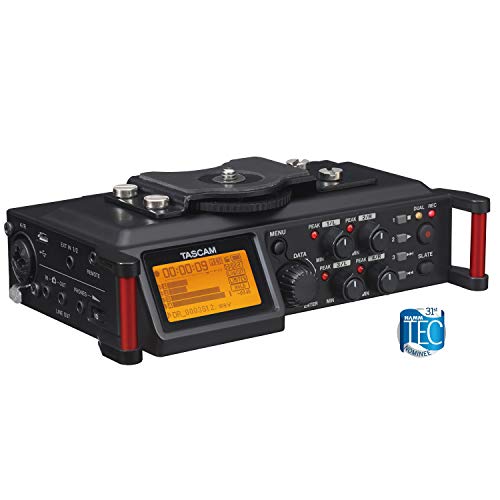
- 4 balanced XLR inputs with phantom power
- Built-in mics plus Dual Recording safety copy
- 64dB gain HDDA preamps with individual controls
Best For: Video crews needing compact multi-track capture with XLR inputs
Podcast Hub
Zoom PodTrak P4 Portable Multitrack Recorder Bundle

- 4 XLR inputs with phantom power and gain control
- 4 headphone outputs with individual volume knobs
- Mix-Minus, sound pads, and separate-track recording
Best For: Podcast teams and remote interviews with multiple mics
Music Studio
Zoom R12 Portable 8-Track Recorder

- 8-track recording with two XLR/TRS combo inputs
- Built-in drum loops, synths, and touchscreen editing
- USB-C interface plus Hi-Z and phantom power
Best For: Musicians wanting a portable songwriting and recording workstation
Ultra-Portable XLR Starter
Zoom H1 XLR 2-Channel Recorder

- Two locking XLR/TRS combo inputs
- 32-bit / 96kHz recording
- OLED waveform display and 3.5mm I/O
Best For: Quick interviews, podcasts, and compact field recording
Flexible 4-Track Bundle
Zoom H5 Portable Handy Recorder

- 4-input recording with 2 XLR/TRS inputs
- Interchangeable XYH-5 capsule system
- 24-bit/96 kHz recording and USB interface use
Best For: Creators who want expandable handheld recording
Layering Made Easy

- Up to 4 tracks with bounce-and-undo workflow
- Two XLR/TS combo inputs and 32-bit float
- Built-in rhythm patterns for songwriting
Best For: Songwriters and musicians building layered ideas
AI-Enhanced Podcast Hub – Zoom PodTrak P4next 4-XLR portable podcast recorder
If you’re comparing portable multitrack recorders with xlr inputs for podcasting, interviews, or mobile content creation, the Zoom PodTrak P4next is built around fast, polished speech capture. It gives you four XLR inputs with up to +70 dB of gain, switchable 48V phantom power, and 48 kHz/24-bit recording, plus AI noise reduction to help clean up hums, buzzes, and other distractions before post.
Best For: Podcasters, interview hosts, and mobile creators who want a compact recorder with multitrack flexibility and built-in speech cleanup.
Pros:
- Four XLR inputs with up to +70 dB gain and 48V phantom power.
- AI noise reduction, tone shaping, and compression for cleaner voice recordings.
- Four independent headphone outputs with dedicated volume controls.
- Records 48 kHz/24-bit audio to microSD and works as a USB-C interface.
Cons:
- Built around podcast and speech workflows rather than full music-production routing.
- Bundle-centric offering may include accessories some buyers don’t need.
The P4next stands out if you want a travel-friendly recorder that simplifies spoken-word capture without adding extra processing gear. Its mix-minus, guest support, and onboard sound pads make it especially practical for modern podcast and livestream setups.
Compact 4-Track Layering Rig – Zoom R4 compact multitrack recorder with 2 XLR inputs
For buyers focused on portable multitrack recorders with xlr inputs, the Zoom R4 takes a simple approach: two XLR/TS combo inputs, up to four recorded tracks, and a bounce-track workflow for layering ideas. It also adds an integrated microphone, onboard EQ, and effects, making it a practical handheld option for quick captures and creative sketching.
Best For: Musicians and creators who want a lightweight recorder for tracking ideas, overdubs, and basic multitrack sessions.
Pros:
- Records up to four tracks with a separate bounce track for layering.
- Two XLR/TS combo inputs with Zoom preamps.
- Onboard EQ and effects, including amp simulation, delays, and distortion on Input A.
- Integrated microphone for reference recordings, vocals, or acoustic guitar.
Cons:
- Only two external input channels, so it is less expandable than four-XLR recorders.
- More focused on creative capture than full podcast guest routing.
The R4 is a compact choice when you need quick, no-fuss recording and want to build layers without carrying a larger rig. It makes the most sense for simple sessions where portability and basic onboard processing matter more than high-input-count flexibility.
Camera-Rig Field Recorder – TASCAM DR-60DmkII portable 4-channel camera recorder
If you need portable multitrack recorders with xlr inputs for video work, the TASCAM DR-60DmkII is designed to sit under a DSLR rig and capture up to four channels to internal SD. Two locking XLR inputs with 48V phantom power handle mics, while the other inputs are suited to wireless and lav setups, giving videographers a flexible on-camera audio solution.
Best For: Videographers and camera-based creators who want a compact recorder that integrates cleanly into a DSLR rig.
Pros:
- Fits under a DSLR camera rig for compact video production.
- Two locking XLR inputs with 48V phantom power.
- Records up to 4 channels at 96kHz/24-bit WAV.
- HDDA preamps provide up to 64 dB of gain with low noise.
Cons:
- Only two true XLR mic inputs, with the other channels handled through 3.5mm connectivity.
- Best suited to camera rigs rather than stand-alone podcast workflows.
The DR-60DmkII is a strong fit when your recorder needs to travel with your camera, not replace it. Its low-profile design and multichannel input layout make it especially useful for interviews, run-and-gun filming, and wireless/lavalier combinations.
32-Bit Float Travel Recorder – Zoom H4essential 4-track 32-bit float handheld recorder
Among portable multitrack recorders with xlr inputs, the Zoom H4essential is appealing if you want clip-free recording and a simple battery-powered setup. It combines 32-bit float capture with dual A/D converters, a built-in XY mic, and two XLR/TRS combo inputs, so it can handle everything from interviews to music sessions without manual gain-setting.
Best For: Podcasters, musicians, and interview recordists who want a compact 32-bit float recorder with flexible input options.
Pros:
- 4-track 32-bit float recording with dual A/D converters for clip-free capture.
- Two XLR/TRS combo inputs with locking connectors.
- Built-in XY mic plus a 3.5mm mic/line input for lavaliers or line sources.
- Runs up to 10 hours on AA batteries or USB-C bus power and works as an interface.
Cons:
- Only two XLR/TRS combo inputs, so larger mic setups need another solution.
- Bundled accessories add value, but they may not be necessary for every buyer.
The H4essential is a practical choice when you want easy, reliable recording without worrying about gain staging. Its portable format, onboard mixer, and interface mode make it versatile for field work, home use, and mobile production.
Field Recorder – TASCAM DR-70D 4-Input Portable Recorder
If you need portable multitrack recorders with xlr inputs for video work, the TASCAM DR-70D is built around compact, on-camera production. It gives you four balanced XLR mic inputs with phantom power, plus two built-in mics for additional on-set capture, so it can handle everything from indie shoots to documentary dialogue.
Best For: Filmmakers, videographers, and documentarians who want a compact recorder with four XLR inputs and safety features.
Pros:
- Four balanced XLR mic inputs with phantom power
- Built-in microphones for on-set recording
- Dual Recording mode creates a safety copy at a lower level
- HDDA mic preamps provide up to 64dB of gain with individual input controls
Cons:
- Designed mainly for production audio rather than music creation
- SD card-based workflow may be less immediate than a touchscreen recorder
Overall, the DR-70D stands out when you need a compact recorder that can mount above or below a camera and keep levels under control. It is a practical choice for location sound where XLR connectivity, safety recording, and quick control matter more than extra creative features.
Podcast Hub – Zoom PodTrak P4 Portable Multitrack Recorder Bundle
For buyers comparing portable multitrack recorders with xlr inputs for podcasting, the Zoom PodTrak P4 is aimed squarely at multi-host sessions and remote interviews. It offers four XLR mic inputs with phantom power, four independent headphone outputs, and separate-track recording so each voice stays easy to manage.
Best For: Podcasters and interview teams who need a portable recorder with individual monitoring and call-in support.
Pros:
- Four XLR mic inputs with phantom power
- Four headphone outputs with individual volume control
- Mix-Minus and TRRS support for phone calls and remote guests
- Records all sources on separate tracks and includes sound pads
Cons:
- Battery life is listed at up to 3 hours, so longer sessions may need USB power
- Built for podcast workflows more than music recording
The P4 is a strong fit when your priority is easy podcast control rather than studio-style production complexity. The included accessories and SD card make it ready to use quickly, while the XLR inputs and Mix-Minus features help keep multi-person recordings clean and manageable.
Music Studio – Zoom R12 Portable 8-Track Recorder
If you want portable multitrack recorders with xlr inputs for songwriting and mobile production, the Zoom R12 brings more than basic capture. It records up to 8 tracks, includes two XLR/TRS combo inputs with phantom power, and adds onboard editing, drum loops, synths, and USB-C interface functions for a more complete portable studio setup.
Best For: Musicians who want a portable recorder with editing tools, built-in loops, and XLR/TRS inputs.
Pros:
- Records up to 8 tracks with two XLR/TRS combo inputs
- 48V phantom power on both inputs and Hi-Z on input 1
- Built-in drum loops, FM synths, and DAW-style editing tools
- Works as a USB-C audio interface and DAW control surface
Cons:
- Only two physical inputs, so it is less suited to larger ensembles
- Battery runtime is up to 5 hours, which may require planning for long sessions
The R12 is the most feature-rich option here for musicians who want to sketch ideas, edit on the device, and integrate with a computer later. Its combo inputs and creative tools make it better suited to music creation than a basic field or podcast recorder.
Ultra-Portable XLR Starter – Zoom H1 XLR 2-Channel Recorder
For buyers comparing portable multitrack recorders with xlr inputs, the Zoom H1 XLR is a simple, carry-anywhere option that focuses on clean capture and fast setup. It records in 32-bit/96kHz, uses two locking XLR/TRS combo inputs, and adds a 3.5mm stereo input/output for flexible small-scale recording.
Best For: Filmmakers, podcasters, musicians, and interview setups that need a compact recorder with straightforward XLR input handling.
Pros:
- Two locking XLR/TRS combo inputs for microphones, instruments, and other sources
- 32-bit / 96kHz recording for detailed audio and easier level management
- OLED waveform display helps you monitor levels at a glance
- 3.5mm stereo input and headphone output add monitoring and connection flexibility
Cons:
- Designed as a 2-channel recorder rather than a larger multi-input unit
- Runs on 2 AA batteries, so long sessions require battery planning
- No built-in microphone is listed in the supplied notes
If you want a lightweight recorder that keeps the essentials focused and portable, this model is built for quick grab-and-go use. It is a practical choice when you want XLR connectivity without a more complex setup.
Flexible 4-Track Bundle – Zoom H5 Portable Handy Recorder
If you need portable multitrack recorders with xlr inputs and want more routing flexibility, the Zoom H5 brings 4-input recording, interchangeable microphone capsules, and a rugged handheld design. It supports XLR mics, 3.5mm mini-jacks, phantom power for condenser mics, and direct recording to SD with USB interface use for computer or iPad workflows.
Best For: Documentary work, podcasting, music recording, and creators who want a versatile handheld recorder with expandable mic options.
Pros:
- 4-input capability with 2 XLR/TRS inputs plus support for additional sources
- Interchangeable capsule system includes the XYH-5 stereo mic capsule
- Dedicated gain knobs and a backlit LCD make operation easier in the field
- Can record up to 24-bit/96 kHz and double as a 4-in/2-out USB audio interface
Cons:
- Heavier bundle package than a bare recorder setup
- Records at 24-bit/96 kHz rather than 32-bit float as listed on some competing models
- More features mean a slightly more involved handheld workflow than simpler units
The H5 is a strong choice when you want a portable recorder that can grow with different mic configurations. It balances input flexibility, tactile controls, and interface features in a familiar handheld format.
Layering Made Easy – Zoom R4 Multi-Track Recorder
For portable multitrack recorders with xlr inputs, the Zoom R4 stands out as a compact sketchpad for musicians who want to build parts quickly. It captures up to 4 tracks, includes two XLR/TS combo inputs, records in 32-bit float WAV, and adds bounce-track workflow so you can keep layering without running out of channels.
Best For: Musicians and songwriters who want a pocketable recorder for overdubs, ideas, and rough productions.
Pros:
- Up to 4 tracks with a dedicated bounce track for layering and undo
- Two XLR/TS combo inputs with Zoom preamps for mics, instruments, and keyboards
- 32-bit float recording helps avoid clipping without gain adjustments
- Built-in rhythm section with 80+ drum patterns for practice and songwriting
Cons:
- Built-in microphone is mono rather than a full stereo mic setup
- Not aimed at large ensemble or high-channel-count recording
- Battery operation is flexible, but extended sessions still depend on AA batteries or USB-C power
The R4 is especially useful if your priority is fast idea capture and easy track stacking. Its bounce workflow and 32-bit float design make it a practical tool for portable music creation.
How We Picked the Best Portable Multitrack Recorders with Xlr Inputs
We prioritized Portable Multitrack Recorders with Xlr Inputs that offer reliable gain, practical track counts, and features that matter in the field: phantom power, low-noise preamps, monitoring, and straightforward file handling. We also favored units that fit common use cases, from solo content creation to multi-person interviews and small music sessions.
Quick Comparison
Some recorders are built around podcasting convenience, while others lean toward music or location sound. If you want simple voice capture, a compact 2-input model may be enough. For panels, bands, or more flexible routing, look for 4 XLR channels or XLR/TRS combo inputs. 32-bit float recording can be a major advantage when levels are unpredictable.
Key Buying Factors for Portable Multitrack Recorders with Xlr Inputs
Input Count and Connector Type
Start with how many microphones or sources you need to record at once. XLR-only inputs are ideal for mics, while combo XLR/TRS inputs add more flexibility for instruments and line-level gear. More inputs can mean more options, but also a larger body and a more complex workflow.
Preamp Quality and Gain
Good gain matters, especially for dynamic microphones and quiet dialogue. Higher gain reduces the need for external boosters, and quieter preamps help preserve detail. If you work with speech, check whether the recorder includes limiting, auto-level tools, or noise reduction.
Recording Format and Headroom
For unpredictable shoots, 32-bit float is a standout feature because it helps prevent clipping and can simplify level-setting. If you prefer traditional workflows, 24-bit recording still works well as long as you can monitor input levels carefully.
Monitoring, Power, and Portability
Multiple headphone outputs, clear meters, and tactile controls can make a big difference during real sessions. Battery options, USB power, and SD card support affect how portable the recorder truly is. Think about whether you need a pocketable field unit or a tabletop podcast hub.
Who Should Buy Which Portable Multitrack Recorders with Xlr Inputs?
Podcast teams should look for easy routing, multiple headphone feeds, and enough mic inputs for every speaker. Filmmakers may benefit from compact units with robust XLR/TRS connectivity and dependable limiters. Musicians should favor recorders with better multitrack workflow, effects, and editing tools. If you want one device that can handle several jobs, choose a model with strong preamps, flexible inputs, and 32-bit float or dependable gain control.