The best portable multitrack recorders make it easier to capture complete song ideas, rehearsals, interviews, and live performances without carrying a full studio setup. The models in this roundup range from compact battery-powered recorders to larger tabletop workstations with built-in effects, drum patterns, and multiple inputs.
Use the guide below to compare track counts, connectivity, recording formats, portability, and workflow so you can choose a recorder that fits the way you actually create.
Best 10 Portable Multitrack Recorders Picks for 2026
Best All-Around Choice

- Four XLR/TRS inputs with phantom power
- 24-bit/96kHz recording to up to 128GB SD cards
- Includes XY and MS stereo microphone capsules
Best For: Musicians, podcasters, and video creators needing flexible inputs
Best for Built-In Production Tools

- Eight simultaneous playback tracks and 64 V-Tracks
- Built-in guitar, vocal, and pitch-correction effects
- Drum machine with velocity-sensitive pads
Best For: Songwriters and guitarists wanting onboard production features
Best Modern Touchscreen Workflow

- Eight-track recording with touchscreen editing
- 150 drum loops and 18 FM synth instruments
- USB-C interface with phantom power and Hi-Z input
Best For: Musicians building arrangements without a computer
Best Simple Songwriting Recorder

- Eight-track battery-operated Pocketstudio
- Built-in stereo microphones for quick recording
- Includes 2GB SD card and USB cable
Best For: Songwriters capturing demos and ideas on the move
Best Computer-Free Workstation
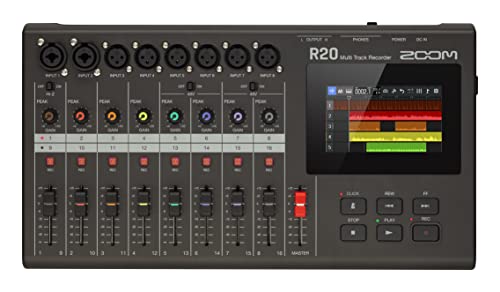
- 16-track recording with up to 8 tracks simultaneously
- Touchscreen editing, mixing, effects, rhythms, and synth
- Six XLR inputs, including two XLR/TRS combo inputs
Best For: Computer-free music production and demos
Best Pocket Songwriting Recorder

- Six-track recording with two-track simultaneous capture
- Built-in stereo omnidirectional condenser microphones
- Battery powered and weighs 1.8 pounds
Best For: Mobile songwriting and quick acoustic demos
Best Mixer-Recorder Hybrid

- 10-track recording plus stereo mix to SD cards up to 1TB
- 32-bit float recording helps avoid clipping and gain setting
- Mixer controls, effects, MIDI, USB, and four sound pads
Best For: Live mixing, podcasting, streaming, and performance recording
Best for Filmmakers
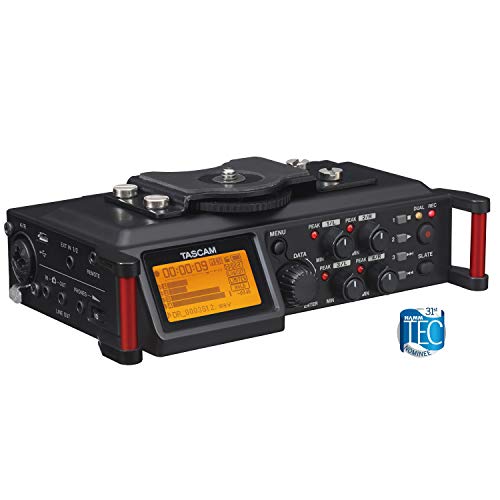
- Four balanced XLR/TRS inputs with phantom power
- Camera-mountable design with built-in microphones
- Dual Recording safety-copy mode
Best For: Production sound, DSLR video, and documentary recording
Best for Multitrack Tabletop Sessions

- Records up to eight tracks simultaneously
- Provides 16-track playback from SD memory
- Adds sampler, rhythm, and USB interface functions
Best For: Layered music demos and tabletop recording
Best for Clip-Free Mobile Ideas

- 32-bit float recording helps avoid clipping
- Layer, bounce, and repeat across four tracks
- Includes rhythms, effects, and USB audio interface
Best For: Portable songwriting, demos, and quick music ideas
Best All-Around Choice – Zoom H6
The Zoom H6 is a flexible option for shoppers comparing portable multitrack recorders for music, podcasts, video, and field work. It records up to 24-bit/96kHz audio to SD cards, offers four XLR/TRS inputs, and can also function as a USB audio interface.
Best For: Musicians, podcasters, and video creators who need expandable inputs and high-resolution recording.
Pros:
- Records directly to SD cards up to 128GB.
- Four XLR/TRS inputs include individual gain controls, pads, and phantom power.
- Includes XY and MS microphone capsules for stereo recording.
- Works as a multichannel or stereo USB audio interface.
Cons:
- Requires four AA batteries for portable operation.
- The optional hot-shoe adapter is needed for direct DSLR or camcorder mounting.
With interchangeable microphone options, multiple inputs, and computer connectivity, the H6 is a strong general-purpose pick when flexibility matters more than having built-in songwriting tools.
Best for Built-In Production Tools – Boss BR-600
The Boss BR-600 combines portable multitrack recorders functionality with onboard production features. It provides eight simultaneous playback tracks, 64 V-Tracks, a built-in stereo microphone, effects, a drum machine, and battery power for recording away from the studio.
Best For: Songwriters and guitarists who want built-in effects and rhythm tools in a compact recorder.
Pros:
- Supports eight simultaneous playback tracks and 64 V-Tracks.
- Includes a guitar and vocal effects processor with pitch correction.
- Built-in drum machine features velocity-sensitive pads.
- Built-in stereo microphone and battery operation support mobile recording.
Cons:
- Uses CompactFlash media and includes only a 128MB card.
- Four 9V batteries are required for battery operation.
The BR-600 is especially appealing for self-contained songwriting: its effects and drum machine reduce the need for additional gear, while the multitrack layout supports layered arrangements.
Best Modern Touchscreen Workflow – Zoom R12
The Zoom R12 brings a computer-free touchscreen workflow to portable multitrack recorders. It records up to eight tracks, includes DAW-style editing, built-in effects and rhythm tools, and doubles as a USB-C audio interface and DAW control surface.
Best For: Musicians who want touchscreen editing, drum loops, synths, and direct guitar or bass connection.
Pros:
- Records up to eight tracks with onboard cutting, copying, looping, and mixing.
- Includes 150 drum loops and 18 FM synth instruments.
- Both inputs provide 48V phantom power; input 1 also offers Hi-Z.
- Runs for up to five hours on four AA batteries.
Cons:
- Provides two XLR/TRS combo inputs, fewer than some larger multitrack setups.
- Battery life is rated at up to five hours.
For modern, hands-on recording, the R12 stands out with its touchscreen interface and integrated musical tools. It is a practical choice for developing complete arrangements without a computer.
Best Simple Songwriting Recorder – TASCAM DP-008EX
The TASCAM DP-008EX is a straightforward choice among portable multitrack recorders for songwriting and basic mobile production. This battery-operated 8-track Pocketstudio includes built-in stereo microphones, WAV recording, a 2GB SD card, and USB connectivity.
Best For: Songwriters who want a compact, battery-powered recorder with built-in microphones.
Pros:
- Provides eight-track recording in a portable Pocketstudio design.
- Built-in stereo microphones simplify quick idea capture.
- Includes a 2GB SD card, four AA batteries, and USB cable.
- Records in WAV format and includes a 3.5mm headphone jack.
Cons:
- Supplied notes list 6.5 hours of digital recording time.
- Four AA batteries are required for operation.
- Built-in media capacity is limited to the included 2GB SD card.
The DP-008EX favors uncomplicated recording over extensive integrated effects or touchscreen control. Its built-in microphones and included media make it well suited to capturing demos and song ideas on the move.
Best Computer-Free Workstation – Zoom R20
The Zoom R20 is one of the most capable portable multitrack recorders for musicians who want a DAW-style workflow without bringing a computer. Its touchscreen supports recording, editing, and mixing, while six XLR inputs and up to 16 tracks provide room for full song projects and demos.
Best For: Musicians building complete songs, rehearsing, or recording demos without a computer.
Pros:
- Records up to 16 tracks, with up to 8 tracks simultaneously.
- Six XLR inputs, including two XLR/TRS combo inputs, support varied sources.
- Touchscreen editing, onboard effects, 150 rhythm patterns, and an 18-sound synth expand its standalone workflow.
Cons:
- At 4.3 pounds, it is heavier than the pocket-sized alternatives in this roundup.
- Its maximum sample rate is 44.1 kHz.
The R20 is a strong choice when hands-on editing and generous track capacity matter more than the smallest possible footprint. It can also function as a USB-connected interface for Windows and macOS.
Best Pocket Songwriting Recorder – Tascam DP-006
The Tascam DP-006 is a compact option for portable multitrack recorders shoppers who prioritize simple songwriting and battery-powered use. It records up to six tracks at CD quality, includes two built-in omnidirectional condenser microphones, and stores recordings as WAV files.
Best For: Songwriters capturing ideas, acoustic performances, and layered demos on the go.
Pros:
- Supports up to six tracks with two-track simultaneous recording and six-track playback.
- Built-in stereo microphones allow quick recordings without an external mic.
- Battery operation, included 4 GB storage, and a compact 1.8-pound design suit mobile use.
Cons:
- Its 16-bit/44.1 kHz recording specification is limited to CD quality.
- It offers fewer tracks and inputs than the larger recorders here.
- The listed headphone jack is 2.5 mm.
The DP-006 favors portability and immediacy over extensive studio connectivity. Its built-in microphones and dedicated stereo master track make it a practical sketchpad for developing arrangements away from a computer.
Best Mixer-Recorder Hybrid – Zoom LiveTrak L6
The Zoom LiveTrak L6 combines a compact mixer with the recording features many portable multitrack recorders buyers need for live work, podcasting, and performance setups. It records 10 discrete tracks plus a stereo mix to SD cards up to 1TB and can record to a card and computer simultaneously.
Best For: Bands, podcasters, streamers, and performers who need live mixing plus multitrack recording.
Pros:
- Records 10 tracks and a stereo mix to SD cards up to 1TB.
- 32-bit float operation is designed for clip-free recording without manual gain setting.
- Works as a USB audio interface and includes channel EQ, AUX sends, effects, MIDI, and four assignable sound pads.
Cons:
- It provides two combo inputs plus four stereo inputs, rather than six XLR inputs.
- The 1.4-pound mixer-style unit may require separate microphones or source equipment.
- The supplied specifications do not identify a supported software-update date.
The L6 stands out for users who want recording and real-time control in one battery-powered unit. Its mixer features and simultaneous SD-card/computer recording make it especially flexible for live or streaming workflows.
Best for Filmmakers – TASCAM DR-70D
The TASCAM DR-70D is a practical choice among portable multitrack recorders for filmmakers and production teams who need several balanced microphone inputs in a camera-mountable format. It records four tracks to SD media and includes features aimed at managing unpredictable on-set levels.
Best For: DSLR shooters, documentarians, television producers, and other production-sound users.
Pros:
- Four balanced XLR/TRS inputs with phantom power and individual gain controls.
- Built-in microphones provide an additional stereo recording option.
- Dual Recording mode creates a lower-level safety copy to help prevent distorted takes.
- Can mount above or below a camera and supports SD, SDHC, and SDXC cards up to 128GB.
Cons:
- Its four-track design is more focused on production sound than larger music-arrangement workflows.
- Requires four AA batteries for portable operation.
- The listed warranty is 90 days labor and one year parts.
Choose the DR-70D when multiple microphone connections, camera compatibility, and level protection matter more than extensive onboard music-production tools.
Best for Multitrack Tabletop Sessions – Zoom R8
The Zoom R8 is a tabletop option for musicians who want portable multitrack recorders with recording, playback, and computer-interface functionality in one unit. It can record up to eight tracks simultaneously and play back up to 16 tracks from SD memory.
Best For: Musicians building layered arrangements, demos, and tabletop recording sessions.
Pros:
- Supports simultaneous recording on up to eight tracks.
- Offers 16-track playback for more expansive session arrangements.
- Includes two XLR combo inputs and built-in stereo condenser microphones.
- Combines recorder, USB audio interface, controller, pad sampler, and rhythm machine functions.
Cons:
- Recording is limited to 16- or 24-bit, 44.1kHz WAV files.
- SDHC card support is listed up to 32GB.
- At 2.7 pounds, it is less pocketable than smaller handheld recorders.
The R8 makes sense if your priority is hands-on, multi-track tabletop recording with useful playback and creative functions rather than the lightest possible travel setup.
Best for Clip-Free Mobile Ideas – Zoom R4
The Zoom R4 is a compact choice among portable multitrack recorders for musicians who want to capture and layer ideas without manually setting recording gain. Its 32-bit float workflow, built-in effects and rhythms, and battery or USB-C power support make it suited to flexible songwriting sessions.
Best For: Musicians recording vocals, instruments, demos, and layered ideas on the go.
Pros:
- 32-bit float recording is designed to avoid clipping without manual gain adjustments.
- Supports recording, layering, bouncing, and repeating across up to four tracks plus a dedicated bounce track.
- Two XLR/TS combo inputs accept microphones, instruments, keyboards, and other sources.
- Includes more than 80 rhythm patterns and works as a 2-in/2-out USB audio interface.
Cons:
- Its four-track recording capacity is lower than the Zoom R8’s eight-track simultaneous recording.
- The unit provides two inputs for recording sources at once.
- It requires four AA batteries or USB-C power for operation.
The R4 is a strong fit for fast, mobile songwriting because it combines simple clip-resistant recording with layering tools, rhythms, and computer or smartphone connectivity.
How We Picked the Best Portable Multitrack Recorders
We focused on practical recording needs rather than specifications alone. The selection includes compact field recorders, songwriting-focused pocket studios, tabletop multitrackers, and mixer-recorders for live or podcast workflows. We considered input count, maximum track capacity, built-in microphones, battery operation, storage, effects, overdubbing, USB connectivity, and how easily each model fits into a mobile setup.
Because these products serve different users, a higher track count does not automatically mean a better choice. A simple recorder may be more useful for fast demos, while a larger unit can better support a band, layered production, or live multitrack capture.
Quick Comparison
| Best For | What to Prioritize | Shortlist Types |
|---|---|---|
| Songwriting and demos | Simple overdubbing, built-in microphones, portability | Pocket studios and compact multitrackers |
| Full-band recording | Multiple XLR inputs, track count, monitoring | Tabletop recorders and mixer-recorders |
| Field recording | Battery life, rugged design, low handling noise | Portable audio recorders |
| Podcasting and live production | Flexible routing, mixer controls, USB audio | Recorder-mixers and interface-capable models |
Key Buying Factors for Portable Multitrack Recorders
Inputs and Simultaneous Recording
Count the sources you need to record at the same time. Two combo inputs can cover a vocal and instrument, while four or more inputs are more practical for small ensembles, drum setups, interviews, or live sessions. Check whether every input supports microphones, line-level sources, or instrument connections.
Track Capacity and Workflow
Track count determines how much layering and arrangement flexibility you have. Also check whether the advertised number refers to simultaneous recording, playback tracks, or both. Dedicated physical controls can speed up overdubbing, while touchscreen or menu-based systems may offer more functions in a smaller footprint.
Power, Storage, and Portability
Battery operation is valuable for rehearsals, travel, and locations without convenient power. Confirm the required battery type and expected runtime. SD-card storage is common, but card compatibility and maximum capacity can vary. Built-in microphones reduce setup time, although external microphones generally provide more placement and tonal options.
Audio Features and Computer Connectivity
Look for effects, drum loops, metronomes, punch-in recording, bouncing, and limiter or high-pass-filter options if they match your workflow. USB audio-interface support can let the recorder work with a computer, but the number of available USB channels and operating-system compatibility should be verified before purchase.
Who Should Buy Which Portable Multitrack Recorders?
Choose a Compact Pocket Studio for Quick Songwriting
Songwriters who want to capture ideas away from a computer should favor lightweight models with built-in microphones, straightforward overdubbing, and battery power. These are convenient for sketches, rehearsals, and simple arrangements.
Choose a Larger Tabletop Recorder for Bands and Layered Productions
Musicians recording several sources at once should prioritize multiple XLR or combo inputs, more playback tracks, and a comfortable monitoring workflow. Extra effects, drum patterns, and bouncing can also reduce the need for additional equipment.
Choose a Recorder-Mixer for Live Sessions and Podcasts
Creators who need live level control, flexible routing, or computer integration may prefer a mixer-style unit. For video work, prioritize camera-friendly outputs, input protection, and features such as limiters and filters.
Before buying, match the recorder’s simultaneous input count to your largest planned session, then confirm power, storage, monitoring, and computer-connection requirements. That approach will usually matter more than choosing the model with the highest headline track number.