The right amplifier can give a home cinema cleaner dynamics, stronger bass control, and enough headroom for demanding movie soundtracks. This roundup compares 10 options across multichannel theater systems, stereo upgrades, wireless setups, and value-focused installations.
Before buying, match the amplifier’s channel count, power ratings, connectivity, and speaker-load compatibility to your AV receiver or processor and the room you want to fill.
Best 10 Power Amplifiers for Home Cinema Picks for 2026
Best for Expandable Surround Sound

- Seven-channel Class AB amplification
- Balanced XLR, RCA, and 12V trigger
- Five-year warranty with status LEDs
Best For: Dedicated home theaters needing seven powered channels
Best for High-Current Five-Channel Systems
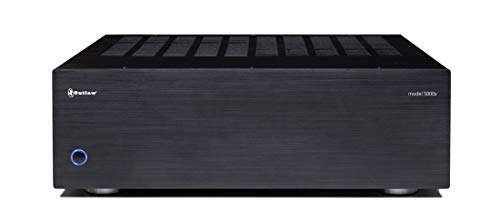
- Five channels at 120W continuous
- XLR and hum-rejecting RCA inputs
- Independent channel protection and power supplies
Best For: Five-channel theaters prioritizing isolation and protection
Best Compact Streaming Amplifier

- 100W stereo or 80W three-channel LCR
- HDMI eARC and BluOS streaming
- Dirac Live ready with wireless expansion
Best For: Compact TV and music systems with networked audio
Best for Two-Channel Front-Stage Power
Marantz MM7025 Stereo Amplifier
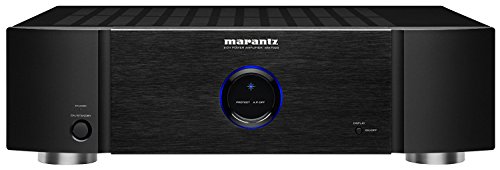
- 140W per channel at 8 ohms
- Balanced XLR and RCA inputs
- Two-channel or two-zone operation
Best For: Front-channel upgrades and two-zone audio systems
Best for Flexible Multi-Channel Power

- Six-channel Class D design
- Bridging up to 400W at 8 ohms
- 12V trigger and crossover controls
Best For: Large home theaters and multi-room systems
Best for Feature-Packed Simplicity
Pyle PDA7BU 5-Channel Amplifier

- 200W five-channel output
- Bluetooth, USB, SD, and FM radio
- Dual-mic karaoke inputs
Best For: Casual 5.1 theaters and entertainment rooms
Best for Refined Five-Channel Systems
Marantz MM7055 5-Channel Power Amplifier
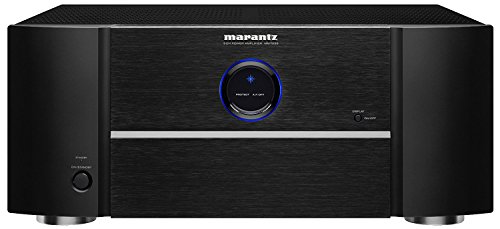
- 140W per channel at 8 ohms
- XLR and RCA inputs
- Current-feedback design with HDAM circuitry
Best For: Dedicated component-based five-channel theaters
Monolith M2100X
2-Channel 90W Home Theater Amplifier

- 90 watts per channel
- RCA and XLR inputs
- Focused two-channel design
Best For: Compatible two-channel home theater setups
Viprh E201
5.1-Channel Home Theater Amplifier

- 5.1 surround with subwoofer channel
- Three microphone inputs
- USB/SD playback and remote
Best For: Home theaters with karaoke and active speakers
Donner MAMP6
6-Channel Bluetooth Stereo Receiver

- Six independently controlled channels
- Bluetooth 5.3 and digital inputs
- Dual microphone and Talk Over functions
Best For: Multi-source home audio and karaoke systems
Best for Expandable Surround Sound – 7-Channel Nero HTA7200
For buyers comparing power amplifiers for home cinema, the OSD Audio Nero HTA7200 is a practical choice when you need seven channels of substantial power. It supports balanced XLR and RCA inputs, includes a 12V trigger, and provides per-channel status monitoring.
Best For: Home theater systems that need powerful seven-channel amplification and flexible integration.
Pros:
- Delivers up to 210W per channel at 4 ohms or 145W at 8 ohms, with all channels driven.
- Balanced XLR and RCA inputs accommodate a range of system configurations.
- Per-channel LEDs show operating, standby, or protection status.
- Includes a five-year warranty and 110 dB signal-to-noise ratio at full power.
Cons:
- At 71 pounds, it is a substantial component to position.
- Its seven-channel design may be more amplifier than smaller systems require.
The Nero HTA7200 makes the most sense for a dedicated theater where multiple speakers need consistent power. Its monitoring LEDs, trigger connection, and long warranty add useful convenience for an installed setup.
Best for High-Current Five-Channel Systems – Outlaw Model 5000x
The Outlaw Model 5000x is a focused option among power amplifiers for home cinema, delivering five channels with a modular design intended to keep signals isolated. Balanced XLR and differential-sensing RCA inputs also help accommodate varied preamp and processor setups.
Best For: Home theater owners who want five-channel power with input-noise rejection and independently protected channels.
Pros:
- Provides five channels rated at 120 watts continuous.
- Balanced XLR and hum-rejecting RCA circuitry support cleaner connections.
- Independent power rectification and modular channel construction promote channel isolation.
- Individual output protection relays help protect speakers from shorts or excessive DC offset.
Cons:
- Its 18-inch depth with the power cord connected requires careful rack or cabinet planning.
- Five channels may not cover a larger theater without additional amplification.
Choose the Model 5000x when channel separation and protection features matter as much as output. It is a substantial five-channel amplifier with a five-year parts-and-labor warranty.
Best Compact Streaming Amplifier – Bluesound Powernode (2025)
The 2025 Bluesound Powernode takes a different approach to power amplifiers for home cinema by combining amplification, streaming, and TV connectivity in one compact component. HDMI eARC, BluOS, wireless expansion, and Dirac Live readiness make it suited to streamlined systems.
Best For: Compact home theaters and music-focused systems that want streaming, room correction readiness, and flexible speaker expansion.
Pros:
- Provides 100W per channel in stereo or 80W per channel in three-channel LCR mode.
- HDMI eARC can connect directly to a TV without a conventional AV receiver.
- BluOS supports numerous streaming services, while AirPlay 2 and aptX Adaptive add wireless options.
- Dirac Live readiness and a dedicated THX AAA headphone output broaden its usefulness.
Cons:
- Its three-channel LCR configuration is not a complete wired multichannel amplifier.
- Some expansion features rely on compatible Bluesound speakers and accessories.
The Powernode is best viewed as an integrated, networked alternative to a traditional amplifier stack. It suits buyers who value a clean installation and broad music features as much as conventional theater expansion.
Best for Two-Channel Front-Stage Power – Marantz MM7025 Stereo Amplifier
The Marantz MM7025 is a straightforward two-channel choice among power amplifiers for home cinema. Its 140 watts per channel at 8 ohms, balanced XLR and RCA inputs, and flexible two-zone configuration make it useful for front-channel or distributed-audio duties.
Best For: Home theater systems needing dedicated two-channel amplification or power for two separate zones.
Pros:
- Delivers 140 watts per channel at 8 ohms for demanding stereo or front-stage duties.
- Offers both balanced XLR and single-ended RCA inputs.
- Can operate as a dedicated two-channel amplifier or support two zones.
- A quiet cooling fan and under-14-inch depth help with cabinet placement.
Cons:
- Only two channels are available, so larger surround systems need additional amplification.
- It lacks the built-in streaming and room-correction features found in integrated network amplifiers.
The MM7025 is a sensible upgrade when a processor or receiver needs more power for two speakers. Its compact depth, connection flexibility, and three-year parts-and-labor warranty make it easy to integrate into a conventional system.
Best for Flexible Multi-Channel Power – OSD Audio Nero HTX-6150
For shoppers comparing power amplifiers for home cinema, the OSD Audio Nero HTX-6150 stands out for its six-channel design and flexible bridging options. It delivers 100W per channel at 8 ohms or 175W at 4 ohms, with Class D amplification and fan cooling for larger theater or multi-room setups.
Best For: Expansive home theaters, multi-room audio systems, and setups that need configurable channel bridging or passive-subwoofer support.
Pros:
- Six channels with strong 4-ohm and 8-ohm power ratings.
- Flexible bridging configurations reaching up to 400W at 8 ohms.
- Includes crossover controls, a 12V trigger, RCA inputs, and channel-status LEDs.
Cons:
- Its 17 x 18 x 5-inch chassis and 23.9-pound weight require substantial space.
- Fan cooling may be less appealing for listeners seeking an entirely silent amplifier.
The HTX-6150 is a particularly adaptable choice when your system may grow or require different power allocations across channels. Its bridging and crossover controls add setup flexibility beyond a straightforward five- or six-channel configuration.
Best for Feature-Packed Simplicity – Pyle PDA7BU 5-Channel Amplifier
Among power amplifiers for home cinema, the Pyle PDA7BU is geared toward buyers who want amplification plus everyday entertainment features in one compact receiver. It provides 200 watts across five channels with a subwoofer output, Bluetooth streaming, USB and SD playback, FM radio, and front-panel microphone inputs.
Best For: Casual 5.1 home theaters, karaoke-friendly entertainment spaces, and users who want Bluetooth and local media playback built in.
Pros:
- Five-channel configuration with subwoofer output for 5.1 setups.
- Bluetooth, USB, SD, 3.5mm auxiliary, and RCA connectivity.
- Dual microphone inputs with adjustable echo and microphone volume.
- Includes a remote, FM antenna, and detachable rack-mount hardware.
Cons:
- The supplied specifications describe stereo audio output modes despite the 5.1 channel configuration.
- Its feature set favors convenience and party use over specialized multi-channel installation flexibility.
The PDA7BU makes the most sense when convenience matters as much as theater amplification. It combines basic five-channel power with streaming, media playback, radio, and karaoke functions in a slim 7.4-pound chassis.
Best for Refined Five-Channel Systems – Marantz MM7055 5-Channel Power Amplifier
For a dedicated setup seeking power amplifiers for home cinema, the Marantz MM7055 focuses on clean five-channel amplification rather than extra streaming or karaoke features. It is rated at 140W per channel at 8 ohms and includes both XLR and RCA inputs, making it suitable for systems built around separate A/V components.
Best For: Dedicated five-channel home theaters using separate processors or receivers with balanced or RCA connections.
Pros:
- 140W per channel across five channels at 8 ohms.
- Offers both XLR and RCA inputs for flexible system integration.
- Uses a current-feedback design with Marantz HDAM circuitry.
- Includes gold-plated terminals and a detachable power cord.
Cons:
- At 37 pounds, it is substantially heavier than the other listed options.
- It provides five channels, so additional amplification may be needed for larger systems.
- The supplied notes do not list Bluetooth, USB, or other built-in media features.
The MM7055 is a focused power amplifier for listeners assembling a component-based theater system. Its five-channel output, XLR/RCA connectivity, and Marantz-focused circuit design prioritize integration and dedicated amplification over all-in-one convenience.
Monolith M2100X – 2-Channel 90W Home Theater Amplifier
The Monolith M2100X is a straightforward option for shoppers comparing power amplifiers for home cinema. It provides two channels rated at 90 watts per channel and supports both RCA and XLR inputs, making it suitable for compatible home theater setups.
Best For: Home theater systems needing a two-channel amplifier with RCA and XLR connectivity.
Pros:
- Delivers 90 watts per channel across two channels.
- Offers both RCA and XLR inputs.
- Simple black finish for easy integration with other components.
Cons:
- Limited to two amplifier channels.
- The supplied notes do not specify wireless, USB, or HDMI connectivity.
This amplifier is best suited to a focused two-channel application rather than a feature-rich all-in-one receiver. Check your processor or source components for compatible RCA or XLR outputs before buying.
Viprh E201 – 5.1-Channel Home Theater Amplifier
The Viprh E201 is a versatile choice among power amplifiers for home cinema, combining 5.1-channel surround output with an independent subwoofer channel. Its USB and SD playback, multiple microphone inputs, and remote control also make it useful for karaoke and casual entertainment.
Best For: Home theaters, karaoke nights, and small gatherings using an active subwoofer or active speakers.
Pros:
- Supports a 5.1-channel surround configuration with an independent subwoofer channel.
- Includes three microphone inputs with adjustable mixing.
- Provides USB/SD playback, RCA inputs, an equalizer, and remote control.
- Built-in protection features are designed to support stable operation.
Cons:
- Audio output is intended for active subwoofers or active speakers only.
- The supplied notes list RCA and USB connectivity but no HDMI input.
- Its karaoke-oriented features may be unnecessary for a dedicated movie-only system.
Choose this model if you want surround playback plus built-in entertainment features. Confirm that your speakers and subwoofer are active and that your source devices match the available connections.
Donner MAMP6 – 6-Channel Bluetooth Stereo Receiver
The Donner MAMP6 is a flexible pick for shoppers seeking power amplifiers for home cinema with broad source compatibility. It combines six independently controlled channels with Bluetooth 5.3, optical and coaxial inputs, USB, FM radio, RCA, and microphone connections.
Best For: Multi-speaker home systems, karaoke, and theater setups that need varied wired and wireless inputs.
Pros:
- Offers six independently controlled channels and 25W × 6 RMS power.
- Supports Bluetooth 5.3, USB, RCA, AUX, FM, optical, and coaxial inputs.
- Includes dual microphone inputs, echo, and Talk Over functions.
- Remote and front-panel controls adjust treble, midrange, and bass.
Cons:
- Uses stereo output rather than a listed 5.1 surround mode.
- There is no HDMI input.
- The remote requires a battery, which is not included.
The MAMP6 makes sense when connectivity and multi-speaker control matter more than dedicated cinematic surround processing. Its optical and coaxial inputs can suit compatible TVs, while Bluetooth and microphone features broaden its everyday use.
How We Picked These Power Amplifiers for Home Cinema
We selected models that cover the most common home theater needs, from dedicated five- and seven-channel power amps to compact stereo designs and all-in-one streaming amplifiers. We considered rated output, channel count, impedance support, balanced and unbalanced inputs, installation flexibility, feature sets, and the type of system each amplifier suits best.
Power figures should be compared carefully. Continuous output at a stated impedance is more useful than an eye-catching peak number, while real-world performance also depends on power-supply capacity, speaker sensitivity, listening distance, and how many channels are driven at once.
Quick Comparison
| Best For | What to Look For |
|---|---|
| Large surround systems | Five or more channels, high current, and reliable cooling |
| AV processor upgrades | RCA and preferably balanced XLR inputs |
| Two-channel music and front speakers | Strong stereo output and flexible input options |
| Simple streaming systems | Built-in network, Bluetooth, or multi-room support |
| Budget or casual setups | Useful connectivity, easy controls, and realistic power claims |
Key Buying Factors for Power Amplifiers for Home Cinema
Channel Count and System Layout
Choose enough channels for your current speakers, but consider future expansion. A five-channel amplifier can cover a traditional surround system, while a seven-channel model may better suit systems with additional height or rear channels. A two-channel unit can power the left and right speakers while an AV receiver handles the remaining channels.
Power, Impedance, and Headroom
Check continuous watts per channel at the impedance your speakers present. Speakers that dip to four ohms may need an amplifier designed for the added demand. More power is not automatically better, but extra headroom can reduce clipping during loud peaks and improve control in larger rooms.
Inputs, Installation, and Cooling
RCA inputs work with most receivers and processors; XLR inputs can be useful with longer cable runs or compatible high-end equipment. Confirm the amplifier’s dimensions, ventilation requirements, trigger connections, and whether its fan or chassis noise will be acceptable in your room.
Features Versus Dedicated Performance
Streaming amplifiers and budget receivers add Bluetooth, USB, microphone inputs, or multi-room functions. Dedicated power amplifiers generally prioritize output and system integration instead. Decide whether you need an amplifier for serious cinema playback, convenient music streaming, or flexible general-purpose use.
Who Should Buy Which Power Amplifiers for Home Cinema?
Choose a high-output multichannel model for a demanding surround system, large listening room, or AV processor-based theater. A five-channel amplifier is a practical match for many conventional home cinemas, while a seven-channel option is better for expanded layouts.
Choose a two-channel amplifier when your priority is upgrading the front left and right speakers, powering a stereo zone, or adding more authority without replacing the rest of the system. A wireless streaming amplifier is the simplest choice for listeners who want music playback and amplification in one component.
Finally, budget-oriented Bluetooth or karaoke-focused models make sense for casual rooms, parties, and flexible entertainment setups. They are less suitable when you need precisely documented power, premium noise performance, balanced connections, or dependable high-volume operation with difficult speakers.