The right amplifier can give a home studio cleaner monitoring, more headroom, and better control over passive speakers. However, studio needs vary widely—from a compact desktop setup to a rack-mounted system driving several zones.
We compare 10 power amplifiers for home studios across output, connectivity, size, and versatility so you can match your choice to your speakers, room, and workflow.
Best 10 Power Amplifiers for Home Studios Picks for 2026
Best Reference-Class Power

- 2 x 400 watts into 4 ohms
- 800 watts in bridged mono
- Quiet convection cooling
Best For: Passive-monitor home studios needing high output
Best Digital-Ready Integrated Amp

- 100 watts per channel
- Built-in USB high-resolution DAC
- Coaxial, optical, analog, and phono inputs
Best For: Computer-based studios using passive stereo speakers
Best Rack-Mount Flexibility
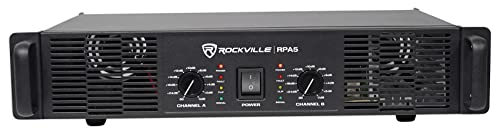
- 200 watts RMS per channel
- Stereo, bridged, and crossover modes
- 2U rack-mountable design
Best For: Rack-based studios and subwoofer-oriented setups
Best Value Integrated Stereo Amp

- Coaxial and optical digital inputs
- A, B, and A+B speaker selection
- Dedicated subwoofer output
Best For: Simple passive-stereo home studio systems
Reliable Rack Power

- 60 watts per side at 4 ohms stereo
- Balanced 1/4-inch and RCA inputs
- Stereo or bridged-mono operation
Best For: Home studios needing conventional, flexible rack-style amplification
Premium Two-Channel Drive
Marantz MM7025 Stereo Power Amplifier
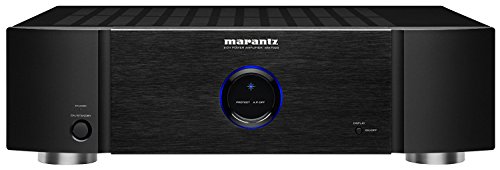
- 140 watts per channel at 8 ohms
- Balanced XLR and RCA inputs
- Supports stereo or two-zone setups
Best For: Higher-output home studios needing flexible two-channel connectivity
Compact Desktop Power
Fosi Audio TB10D Mini Amplifier

- Class D design with TPA3255 chip
- Bass and treble adjustment controls
- RCA input and passive speaker output
Best For: Compact home studios using passive speakers or bass shakers
Flexible Rack-Mount Power

- 2-channel stereo or bridged operation
- Bluetooth, USB, TRS, and XLR connectivity
- Cooling fans and rack-mountable chassis
Best For: Studios needing flexible connections and wireless playback
Clean Rack-Mount Performance

- 2-channel amplifier with 2000W peak power
- 10Hz–50kHz response and under 0.1% THD
- XLR and 1/4-inch inputs with thermal protection
Best For: Studios prioritizing conventional rack amplification and clarity
Multi-Zone Studio and PA Hub

- 8-channel design with stated 4000W output
- Bluetooth, RCA, AUX, USB, and SD inputs
- Independent controls and microphone talk-over
Best For: Multi-speaker studios, theaters, and rehearsal spaces
Best Reference-Class Power – Behringer A800
The Behringer A800 is a practical choice when you need high-output power amplifiers for home studios, passive monitors, or other demanding audio systems. It delivers two-channel operation, can run in bridged mono, and uses convection cooling for quiet operation.
Best For: Home studios using passive speakers that need substantial, low-noise amplification.
Pros:
- Provides 2 x 400 watts into 4 ohms or 800 watts in bridged mono operation.
- Ultra-low impedance design supports a wide range of passive speakers.
- Convection cooling operates without cooling-fan noise.
- Level meters and clip indicators help with performance monitoring.
Cons:
- It is a power amplifier rather than an integrated amplifier, so a separate source or preamp may be needed.
- Its high output may be more than compact home-studio speakers require.
The A800 stands out for studios prioritizing quiet operation, flexible channel configuration, and ample power for passive monitoring systems.
Best Digital-Ready Integrated Amp – Yamaha A-S801
The Yamaha A-S801 is an integrated option for home studios that want amplification and digital connectivity in one chassis. Its built-in USB DAC supports high-resolution PCM and DSD playback, while the amplifier provides 100 watts per channel for stereo speakers.
Best For: Hybrid home studios and listening systems that use a computer or other digital sources with passive speakers.
Pros:
- Delivers 100 watts plus 100 watts with 0.019% THD from 20 Hz to 20 kHz.
- USB DAC supports DSD up to 5.6 MHz and PCM up to 384 kHz/32-bit.
- Includes gold-plated coaxial, optical, and analog inputs, including phono.
- Supports Speakers A, B, or A+B configurations.
Cons:
- It is an integrated stereo amplifier, not a dedicated multichannel power amp.
- Its 26.7-pound weight may make frequent relocation inconvenient.
With its USB DAC, broad input selection, and 100-watt-per-channel output, the A-S801 is suited to studios that also serve as serious music-listening spaces.
Best Rack-Mount Flexibility – Rockville RPA5
The Rockville RPA5 offers a studio-friendly combination of rack mounting, flexible inputs, and stereo or bridged operation. For home studios and small production setups using passive speakers or subwoofers, its built-in crossover and protection features add useful system flexibility.
Best For: Rack-based home studios, DJ setups, and systems that need crossover and bridged-mode options.
Pros:
- Provides 200 watts RMS per channel at 4 ohms or 400 watts RMS bridged at 8 ohms.
- Includes stereo/mono switching and a built-in crossover.
- Offers combo XLR/1/4-inch and RCA inputs with banana, Speakon, and XLR outputs.
- Features a rugged 2U rack-mountable design with quiet cooling fans.
Cons:
- Cooling fans may be more noticeable than a convection-cooled design in a very quiet recording room.
- Its 2U rack format may be unnecessary for compact desktop studios.
The RPA5 is a versatile pick when installation options and connection variety matter as much as straightforward stereo amplification.
Best Value Integrated Stereo Amp – Yamaha A-S301
The Yamaha A-S301 is a straightforward integrated stereo amplifier for home studios that need simple speaker amplification and useful digital inputs. It supports multiple speaker selections and includes a subwoofer output, making it easy to fit into a compact monitoring or listening system.
Best For: Entry-level home studios and desktop-to-room systems using passive stereo speakers.
Pros:
- Includes digital coaxial and optical inputs for compatible sources.
- Supports Speakers A, B, and A+B configurations.
- Provides a dedicated subwoofer output.
- Offers analog inputs, including phono connectivity.
Cons:
- The supplied notes do not specify its output wattage.
- It is an integrated stereo amplifier, so it is less suited to multichannel or rack-based installations.
The A-S301 makes sense for buyers who want a simple Yamaha integrated amplifier with digital inputs, speaker-selection flexibility, and subwoofer support.
Reliable Rack Power – Samson Servo 120a
For home studios that need straightforward power amplification, the Samson Servo 120a provides 60 watts per side at 4 ohms in stereo or 120 watts at 8 ohms in bridged mono. Its balanced 1/4-inch and RCA inputs make it practical for common studio and audio-system connections.
Best For: Home studios needing a conventional stereo power amplifier with flexible input options and clear output monitoring.
Pros:
- Offers stereo or bridged-mono operation for setup flexibility.
- Includes balanced 1/4-inch phone and RCA inputs.
- 10-segment, 3-color LED meters make output levels easy to monitor.
- Convection-cooled design avoids reliance on a cooling fan.
Cons:
- At 16.7 pounds and 21.5 inches deep, it is less suited to compact desktop setups.
- Its listed stereo output is 60 watts per side at 4 ohms.
The Servo 120a is a practical choice when you want familiar rack-style amplification, visible metering, and the option to run stereo or bridged mono. Its larger chassis favors a dedicated rack or equipment shelf.
Premium Two-Channel Drive – Marantz MM7025 Stereo Power Amplifier
The Marantz MM7025 is a two-channel power amplifier for home studios and audio systems that need substantial output. Rated at 140 watts per channel at 8 ohms, it combines single-ended RCA and balanced XLR inputs with a compact design that can support a dedicated stereo setup or two zones.
Best For: Home studios or listening systems that need higher-output two-channel amplification and both RCA and XLR connectivity.
Pros:
- Delivers 140 watts per channel at 8 ohms.
- Supports both single-ended RCA and balanced XLR inputs.
- Can serve a dedicated two-channel setup or two zones.
- Fan-based heat dispersion is designed for quiet operation.
Cons:
- At 23.8 pounds, it is considerably heavier than a compact desktop amplifier.
- Its two-channel design may not suit systems requiring more amplifier channels.
With strong per-channel output, professional-friendly balanced inputs, and a front panel designed to complement a shelf or cabinet, the MM7025 is well suited to a more substantial home studio or stereo installation.
Compact Desktop Power – Fosi Audio TB10D Mini Amplifier
The Fosi Audio TB10D is a compact Class D integrated amplifier for home studios using passive speakers, with a design that also supports bass-shaker applications. It provides RCA input, passive speaker output, bass and treble controls, and a claimed 300 watts per channel from its TPA3255-based design.
Best For: Desktop studios, small listening spaces, and flexible passive-speaker or bass-shaker setups.
Pros:
- Compact 2.4-pound design is easy to place on a desktop.
- Provides bass and treble controls for quick sound adjustments.
- RCA input and passive speaker output support common sources and speakers.
- Built-in protection circuits are intended to support stable operation.
Cons:
- It offers RCA connectivity rather than the balanced XLR or 1/4-inch inputs found on the other listed amplifiers.
- The 300-watt-per-channel claim depends on the connected speaker setup and operating conditions.
The TB10D stands out among power amplifiers for home studios when space and simplicity matter. Its tone controls and small footprint make it convenient for desktop use, while its passive-speaker and bass-shaker compatibility adds versatility.
Flexible Rack-Mount Power – Pyle PTA1000BT
The Pyle PTA1000BT is a practical choice among power amplifiers for home studios when you need two-channel operation, flexible connections, and wireless playback. It delivers up to 1,000 watts per channel in stereo or 2,000 watts in bridged mode, with support for 4- to 8-ohm speakers.
Best For: Home studios and small PA setups that need rack mounting, Bluetooth streaming, and multiple professional-style inputs.
Pros:
- Supports stereo or bridged operation with up to 2,000 watts peak power.
- Offers TRS, XLR, Speakon, and binding-post connections.
- Includes Bluetooth, USB-A MP3 playback, LCD display, and LED level indicators.
- Built-in cooling fans help manage heat during operation.
Cons:
- The supplied specifications list 220-volt operation alongside a 120-volt minimum supply, so check electrical compatibility before buying.
- Its 2000-watt rating is maximum or bridged output rather than stereo output per channel.
Choose this model if connectivity and flexible speaker configuration matter as much as amplification. Its rack-mountable design and cooling system make it especially practical for organized studio or rehearsal setups.
Clean Rack-Mount Performance – MUSYSIC SYS-2000
The MUSYSIC SYS-2000 is one of the more performance-focused power amplifiers for home studios, pairing a two-channel rack-mount design with a 2000-watt peak rating. Its stated frequency response, low distortion, XLR inputs, and ATR Technology are aimed at clear, responsive sound with demanding program material.
Best For: Home studios, DJs, and passive-speaker systems where rack mounting, XLR connectivity, and low stated distortion are priorities.
Pros:
- Provides 2,000 watts of peak power across two channels.
- Claims a 10Hz–50kHz frequency response and less than 0.1% THD.
- ATR Technology is designed to deliver fast response to bass transients.
- Includes XLR and 1/4-inch inputs, thermal protection, and a 2U rack-mount chassis.
Cons:
- The 2,000-watt figure is specified as peak power, not a detailed continuous-output rating.
- It lacks the built-in Bluetooth and media-player features found on some integrated amplifiers.
This is a strong fit when you want a conventional professional amplifier rather than an all-in-one receiver. Its stated low-distortion performance and rack-ready construction make it well suited to a more structured studio signal chain.
Multi-Zone Studio and PA Hub – Pyle PT8050CH
The Pyle PT8050CH stands apart from typical power amplifiers for home studios with eight channels and an integrated mixer-style layout. It provides a stated 4,000 watts, Bluetooth streaming, multiple source inputs, and independent channel controls for systems using several speakers or zones.
Best For: Larger home studios, theater rooms, rehearsal spaces, and multi-speaker setups that need extensive source and microphone connectivity.
Pros:
- Offers eight channels and a stated 4,000-watt output for 4- to 8-ohm speakers.
- Includes Bluetooth, three pairs of RCA inputs, microphone inputs, AUX, USB, and SD-card support.
- Provides independent channel volume controls and front-panel EQ/input controls.
- Mic talk-over prioritizes announcements or voiceover by reducing background music.
Cons:
- Its mixer-style eight-channel design may be more equipment than a simple two-channel studio system requires.
- The supplied notes state 4,000 watts but do not specify whether that figure is peak or continuous.
- It uses RCA, 3.5mm, and microphone connections rather than listing XLR line inputs.
Select this model when channel count and built-in source handling are more important than a minimalist studio signal path. The independent controls and voice-priority feature also make it useful for presentations, announcements, and multi-speaker environments.
How We Picked These Power Amplifiers for Home Studios
We selected models spanning several common use cases: nearfield or bookshelf monitoring, stereo listening, rack-mounted studio systems, PA-style setups, and multi-zone installations. Our comparison emphasizes practical specifications rather than headline wattage alone, including channel count, input and output options, amplifier class, installation format, and speaker compatibility.
Because these products are not identical categories, the best option depends on whether you need a transparent stereo power amp, an integrated amplifier with source inputs, or a flexible unit for multiple speakers and occasional live use.
Quick Comparison
| Best For | Look For | Models to Consider |
|---|---|---|
| Compact desktop systems | Small footprint and efficient Class D design | Fosi Audio TB10D |
| Traditional stereo monitoring | Clean two-channel output and straightforward controls | Yamaha A-S301BL, Yamaha A-S801BL |
| Rack-mounted setups | Standard rack form factor and professional connections | Behringer A800, Samson Servo 120a, Rockville RPA5 |
| Home theater or serious stereo systems | Higher-quality construction and balanced connectivity | Marantz MM7025 |
| PA or multi-zone applications | Extra channels, Bluetooth, USB, or bridge operation | Pyle and MUSYSIC models |
Key Buying Factors for Power Amplifiers for Home Studios
Power and Speaker Matching
Check your speakers’ nominal impedance and recommended amplifier range before buying. More wattage is not automatically better; a suitable amplifier should provide enough clean headroom without exceeding what the speakers can safely handle. Pay attention to whether published power figures are per channel, bridged, or measured at a particular impedance.
Inputs, Outputs, and Connectivity
RCA inputs suit many consumer and interface-based systems, while balanced XLR or TRS connections can help reduce noise over longer cable runs. Confirm the amplifier has the connections your audio interface, mixer, or monitor controller actually provides. Speakon terminals, binding posts, and spring clips each affect cabling convenience and installation.
Format, Cooling, and Noise
Desktop amplifiers save rack space, while rack-mount models integrate neatly into permanent systems. Fan noise matters in a recording room, so check the cooling design and user feedback if the amplifier will sit near microphones. Class D models are often compact and efficient; conventional designs may be larger but can suit users who prefer a traditional stereo component.
Features Versus Studio Simplicity
Bluetooth, USB playback, bridge modes, and multiple zones are useful for flexible entertainment or PA systems, but they may be unnecessary in a focused monitoring chain. Prioritize stable, low-noise amplification and reliable controls if accurate studio playback is your main goal.
Who Should Buy Which Power Amplifiers for Home Studios?
Choose the Fosi Audio TB10D for a compact, budget-conscious desktop system. The Yamaha A-S301BL is a sensible traditional stereo choice, while the Yamaha A-S801BL better suits users wanting stronger features and connectivity. For rack-based studio installations, consider the Behringer A800, Samson Servo 120a, or Rockville RPA5.
The Marantz MM7025 is aimed at listeners who want a refined two-channel power amplifier with balanced inputs. Choose the Pyle or MUSYSIC options when you need PA-oriented flexibility, high stated output, wireless playback, bridging, or multiple zones rather than a minimalist monitoring chain.