Finding the right wireless monitor setup can make rehearsals smoother and live shows far more controlled. The best rechargeable in-ear monitoring systems deliver clear audio, dependable range, and all-night battery life without adding stage clutter.
In this roundup, we focus on practical options for musicians, bands, and studio users who want a simple, rechargeable solution that is easy to carry, quick to pair, and built for real-world performance.
Best 10 Rechargeable in Ear Monitoring Systems Picks for 2026
Long-Run Portable Monitoring
LEKATO MS-20 for long sessions

- Up to 30 hours with charging case
- OTG support for phones and USB-C devices
- One transmitter can feed up to 10 receivers
Best For: Bands and performers needing long battery life
Mobile Charging-Case Monitor
MELONARE PM-2 with charging case

- Up to 30 hours total with the case
- OTG input for phones, tablets, and laptops
- One transmitter supports multiple receivers
Best For: Travel-friendly monitoring for small performances
Fast-Response Stage Monitor
INPARTNER A88T for tight timing

- Low latency under 4ms
- Frequency hopping helps fight interference
- Fast 1.5-hour charge time and over 8-hour battery life
Best For: Players who need quick response and stable wireless
Cleaner 5.8GHz Stereo Monitor

- 5.8GHz transmission for reduced crowding
- 48kHz/24-bit stereo audio
- Ultra-low latency below 5ms
Best For: Church, studio, and small-gig monitoring
Compact Practice Monitor

- 2.4GHz wireless monitoring with under-5ms latency
- Built-in battery lasts over 8 hours per charge
- 12 channel banks for flexible practice setups
Best For: Guitar beginners and solo practice
Pro Stereo Rack System
Phenyx Pro PTM-10 Wireless IEM

- True stereo/mono monitoring with EQ and balance control
- 900MHz band with 89 frequencies and up to 160 ft. range
- Rack-mountable metal transmitter for professional setups
Best For: Stage, studio, and speech users needing stable stereo monitoring
One-to-Many Rehearsal Pick
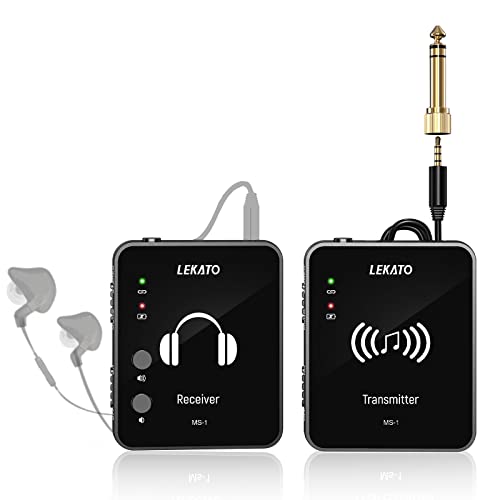
- Supports up to 6 sets and one transmitter to many receivers
- 2.4GHz stereo audio with low latency and auto-pairing
- Built-in rechargeable battery lasts more than 5 hours
Best For: Band rehearsal, church, and small gig monitoring
Pro UHF Pick

- UHF design helps reduce wireless interference.
- 16 channels support easier frequency switching.
- Rechargeable battery charges in 2 hours.
Best For: Singers and bands needing a stable rechargeable UHF monitor
Low-Latency Multi-Receiver Pick

- Under 4.5 ms latency in mono mode.
- One transmitter can feed up to 4 receiver pairs.
- Rechargeable receivers last about 6-8 hours.
Best For: Groups that need one-to-many rechargeable IEM monitoring
Portable Stage Pick

- Stereo and mono modes support flexible monitoring.
- Rechargeable battery lasts up to 5 hours.
- Works with mixers, interfaces, and active speakers.
Best For: Portable wireless monitoring for musicians and small stages
Long-Run Portable Monitoring – LEKATO MS-20 for long sessions
If you want rechargeable in ear monitoring systems that are built for long rehearsal blocks and gig nights, the LEKATO MS-20 stands out for its bundled charging case and strong battery story. It combines OTG phone input, auto-pairing, and a compact clip-on design, so setup stays simple while still giving you room to move on stage.
Best For: Bands, singers, and studio users who need extended runtime and easy mobile-device input.
Pros:
- Up to 30 hours of use with the charging case and 2000mAh capacity
- OTG support for plug-and-play use with smartphones and USB-C devices
- One transmitter can send to multiple receivers, up to 10 pairs
- 150 ft open-area range with 2.4GHz wireless and low-noise monitoring
Cons:
- Earphones are not included
- Range and stability are best in open areas, not crowded environments
- Uses a plastic build and is not water resistant
The MS-20 is a practical pick if battery life and easy setup matter more than extra features. Its balance of long runtime, OTG flexibility, and multi-receiver support makes it a strong everyday monitoring option for rehearsals and live use.
Mobile Charging-Case Monitor – MELONARE PM-2 with charging case
The MELONARE PM-2 is aimed at musicians who want rechargeable in ear monitoring systems with simple mobile setup and a travel-friendly charging case. It delivers OTG input, mono/stereo switching, and one-to-many monitoring, making it easy to use for live shows, studio work, or quick practice sessions.
Best For: Mobile performers, hosts, and small teams that want compact wireless monitoring with extra recharges on hand.
Pros:
- Charging case extends total runtime up to 30 hours
- OTG cable support for smartphones, tablets, and laptops
- 24bit/48kHz audio with a 20Hz–20kHz range and 100dB SNR
- One transmitter can connect to multiple receivers with independent volume control
Cons:
- Each full charge of the transmitter and receiver lasts up to 10 hours, so the case is important for longer use
- Uses a plastic enclosure
- Listed battery average life is 10 hours, which is shorter than some case-based totals
PM-2 makes sense if you value convenience, mobile compatibility, and fast auto-pairing over more advanced stage controls. It is a solid fit for users who want a compact, rechargeable system that is easy to keep powered through a busy day.
Fast-Response Stage Monitor – INPARTNER A88T for tight timing
For players looking at rechargeable in ear monitoring systems with quick response and simple charging, the INPARTNER A88T focuses on low latency and stable 2.4GHz transmission. It is designed for practical stage and studio monitoring, with frequency hopping to help reduce interference and a fast charge time for getting back in action.
Best For: Musicians and production users who prioritize low delay, reliable signal, and fast recharge times.
Pros:
- Low latency rated under 4ms for real-time monitoring
- Frequency hopping helps reduce interference from other wireless devices
- 100 ft open-space range with 2.4GHz wireless connectivity
- Includes a 1-to-2 USB-C and USB-A charging cable for simultaneous charging
Cons:
- Battery life is over 8 hours, which is shorter than some charging-case systems
- No headphone jack is listed
- Only the cable and manual are included in the listed media
The A88T is a straightforward choice if tight timing matters more than all-day runtime. Its low-latency design and anti-interference features make it especially appealing for practice, performance, and professional audio monitoring.
Cleaner 5.8GHz Stereo Monitor – EX-GEAR EMR 1-GRAY
If you want rechargeable in ear monitoring systems with a focus on cleaner wireless performance, the EX-GEAR EMR 1-GRAY uses 5.8GHz transmission instead of the more crowded 2.4GHz band. It also adds 48kHz/24-bit stereo audio, ultra-low latency, and one-to-many auto pairing, which makes it a useful fit for small stages, churches, and studio sessions.
Best For: Worship teams, small gigs, and rehearsal setups that want cleaner stereo monitoring and simple pairing.
Pros:
- 5.8GHz wireless is positioned as cleaner than crowded 2.4GHz systems
- 48kHz/24-bit lossless stereo audio for detailed monitoring
- Ultra-low latency below 5ms for real-time performance
- Auto-pairs multiple receivers for one-to-many monitoring
Cons:
- Battery life is over 5 hours, which is modest versus longer-runtime systems
- No headphone jack is listed
- Range is 100 ft, which is shorter than some competing IEM options
This model makes a lot of sense when cleaner wireless behavior and stereo detail matter more than maximum runtime. It is a practical, rechargeable option for performers who want fast setup and dependable short-to-medium range monitoring.
Compact Practice Monitor – JOYO JW-07 Wireless IEM
If you’re looking for rechargeable in ear monitoring systems for personal practice, the JOYO JW-07 is built around simplicity and portability. Its 2.4GHz connection, low latency under 5ms, and 48kHz/16-bit audio make it a practical choice for guitar practice, recording, and close-in monitoring where timing matters.
Best For: Guitar players and beginners who want a compact wireless monitor for practice and recording.
Pros:
- Low-latency monitoring with real-time feedback for practice.
- 48kHz/16-bit audio clarity for clean listening.
- Built-in battery delivers over 8 hours per charge.
- 12 channel banks help with flexible setup in different spaces.
Cons:
- One transmitter does not support multiple receivers.
- Designed more for practice than full-scale stage monitoring.
Overall, the JW-07 focuses on easy wireless monitoring rather than advanced routing or multi-user expansion. If you want a straightforward rechargeable in ear monitoring system for individual use, it offers strong battery life, quick pairing, and stable short-range performance.
Pro Stereo Rack System – Phenyx Pro PTM-10 Wireless IEM
The Phenyx Pro PTM-10 is aimed at performers who need a more serious wireless monitoring setup than a basic practice unit. Among rechargeable in ear monitoring systems, it stands out for true stereo monitoring, 900MHz operation, and up to 160 ft. coverage, making it a strong fit for stage, studio, and spoken-word use.
Best For: Performers, speakers, and small teams that want stereo monitoring with long-range wireless reliability.
Pros:
- True stereo/mono switching for different monitoring needs.
- 900MHz band helps reduce congestion and avoid 2.4GHz-style latency issues.
- Up to 160 ft. range with 89 selectable frequencies.
- EQ, balance, limiter, and lock functions add useful control.
Cons:
- Uses AA batteries in the included receiver package.
- Bulkier setup than clip-on practice-focused systems.
If you want a dependable monitoring system for more demanding environments, the PTM-10 offers the features that matter: clearer stereo separation, broad frequency selection, and rack-friendly hardware. It is a more professional option for users who value stability and control over ultra-simple portability.
One-to-Many Rehearsal Pick – LEKATO MS-1 Wireless IEM
The LEKATO MS-1 is a practical pick for rechargeable in ear monitoring systems when you need one transmitter to feed several receivers. Its 2.4GHz stereo transmission, auto-pairing, and built-in rechargeable battery make it well suited to band rehearsal, church use, and small gigs where quick setup and shared monitoring are priorities.
Best For: Small bands, churches, and rehearsal spaces that need one-to-many wireless monitoring.
Pros:
- Supports up to 6 sets working simultaneously.
- One transmitter can pair with multiple receivers.
- Auto-pairing makes setup fast and simple.
- Built-in rechargeable battery lasts more than 5 hours.
Cons:
- Battery life is shorter than some other options.
- Range is limited to about 100 ft. in open areas.
For users who need an easy, shared monitoring solution, the MS-1 keeps the workflow straightforward while still delivering stereo audio and low-latency 2.4GHz performance. It is especially appealing if you want a compact wireless IEM that works well for everyday group rehearsals without a complicated setup.
Pro UHF Pick – Metal UHF Wireless IEM
If you want rechargeable in ear monitoring systems with a more traditional professional setup, this UHF model is built for stable monitoring in studios, rehearsals, and live shows. Its metal enclosure, 16 adjustable channels, and built-in noise reduction are aimed at keeping your signal reliable when other wireless gear is nearby.
Best For: Singers, bands, studios, and live performers who want a rechargeable UHF in-ear monitor with simple operation and channel flexibility.
Pros:
- UHF wireless design helps resist interference from nearby wireless devices.
- Built-in intelligent noise reduction supports high-fidelity sound reproduction.
- Rechargeable 1000mAh battery charges in about 2 hours and runs up to 5 hours.
- 16 adjustable channels make it easier to avoid frequency conflicts on shared setups.
Cons:
- Battery life is shorter than some competing systems that run longer on a charge.
- Only one receiver is included in the box.
- Best suited to users comfortable with UHF setup and channel management.
This is a practical choice if reliability matters more than extra features. The rechargeable design and metal build make it a straightforward option for performers who need a dependable in-ear monitoring system for regular use.
Low-Latency Multi-Receiver Pick – MS-02 2.4G Stereo IEM
Among rechargeable in ear monitoring systems, this 2.4G model stands out for low-latency monitoring and one-to-many pairing. It is built for small and medium stage use where multiple performers need the same feed, with mono/stereo switching and simple auto-pairing to keep setup moving quickly.
Best For: Bands, churches, teachers, and small stage teams that need one transmitter feeding multiple rechargeable receivers.
Pros:
- Mono mode latency is listed at under 4.5 ms for responsive monitoring.
- Supports one transmitter to multiple receivers, up to 4 pairs of devices.
- Rechargeable system offers about 6-8 hours of operation per charge.
- Compact clip-on receiver design and LED indicators make it easy to monitor battery and volume.
Cons:
- Earbuds are not included and must be purchased separately.
- Best open-area range is listed at 100 feet, so layout matters.
- Noise control is listed as none, so it is more about monitoring than isolation.
This is a strong fit if you need a practical, rechargeable monitoring system for multiple users. The low-latency connection and multi-receiver support make it especially useful for rehearsal spaces and group performances.
Portable Stage Pick – Sky01 Rechargeable 2.4G IEM
If you are comparing rechargeable in ear monitoring systems for rehearsals and everyday stage use, this 2.4G option is built around portability and flexible monitoring modes. It supports stereo and mono operation, works with common audio gear, and keeps the focus on simple wireless monitoring for musicians and content creators.
Best For: Musicians, vocalists, worship teams, and home studio users who want a lightweight rechargeable wireless monitor for practice and performance.
Pros:
- Supports both stereo and mono modes for different monitoring setups.
- Offers up to 30 meters of range in open environments.
- Built-in rechargeable battery provides up to 5 hours of use.
- Compatible with mixers, audio interfaces, amplifiers, active speakers, tablets, and computers.
Cons:
- Battery life is moderate rather than all-day long.
- Noise control is listed as none.
- Best performance depends on direct line-of-sight positioning.
This model is a sensible pick if you want a lightweight system that can move easily between rehearsal, livestreaming, and stage work. It is designed for straightforward wireless monitoring rather than advanced processing, which keeps the setup practical.
How We Picked the Best Rechargeable in Ear Monitoring Systems
We looked for rechargeable in-ear monitoring systems that balance sound quality, latency, battery life, and ease of use. Priority went to models with stable wireless connections, useful charging solutions, and formats that fit both solo performers and full bands.
We also favored systems with clear specs, flexible input/output options, and portable designs that make setup easier for rehearsals, gigs, and travel.
Quick Comparison
For simple plug-and-play use, 2.4GHz systems are often the easiest choice. They tend to be compact, straightforward, and well suited to practice spaces and small stages. UHF-based systems may better suit users who need broader channel options, stronger interference management, or larger stage coverage.
Charging cases and dockable receivers are especially helpful if you want fast storage and fewer loose cables between sessions.
Key Buying Factors for Rechargeable In-Ear Monitoring Systems
Latency and Audio Quality
Low latency is essential for tight timing, especially for vocalists, drummers, and players who rely on rhythmic precision. Look for systems that advertise low-latency transmission and support at least 24-bit audio when possible.
Wireless Band and Range
Band choice affects interference, range, and setup flexibility. 2.4GHz models are popular for convenience, while UHF systems can offer better control in crowded wireless environments. Consider your venue size and how many wireless devices will be active nearby.
Battery Life and Charging
Since rechargeable in-ear monitoring systems are meant to reduce downtime, battery life matters. A strong system should last through rehearsals or full sets, and a charging case or dock can make daily use much easier.
Monitor Mix and System Flexibility
Some systems are designed for one transmitter with multiple receivers, which is ideal for bands. Others are better for individual users who want a compact personal monitoring setup. Check whether the system supports stereo or mono operation, auto-pairing, and any needed adapters.
Who Should Buy Which Rechargeable in Ear Monitoring Systems?
If you want the easiest setup for home practice or smaller gigs, a compact 2.4GHz model is usually the best fit. If you play larger venues, share wireless space with other gear, or need more channel control, a UHF system may be worth the upgrade.
For frequent travelers and busy musicians, rechargeable in-ear monitoring systems with charging cases are especially convenient. They help keep receivers ready to go and simplify storage between sessions.