A well-designed home theater needs more than a powerful receiver and large screen. Floors, walls, doors, and furnishings can all transmit or reflect sound, causing bass vibration, echoes, and noise that travels into adjoining rooms.
These 10 soundproofing mats for home theaters cover several practical approaches, from dense mass-loaded barriers and cork underlayment to interlocking floor mats and wall-mounted acoustic treatments. Use the guide below to match the material, coverage, and installation style to your room.
Best 10 Soundproofing Mats for Home Theaters Picks for 2026
Best for Vehicle-Style Mass Loading
VEVOR Noise Grabber Mass Barrier

- 200-mil, three-layer construction
- 36 square feet per roll
- Self-adhesive and cuttable
Best For: Targeted DIY barrier applications
Best for Floor and Vibration Control
Interlocking Sound Absorbing Floor Mats
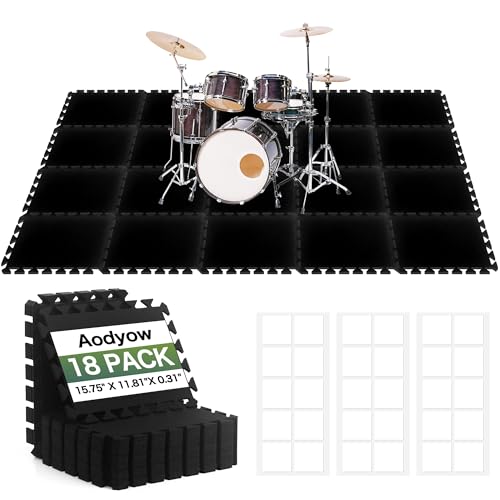
- 18 interlocking felt panels
- Helps absorb impacts and echoes
- Cuttable and removable
Best For: Theater floors and equipment vibration
Best for Wall Echo Reduction
12-Inch Polyester Acoustic Panels

- Thick, dense polyester construction
- Self-adhesive removable installation
- About 7.6 square feet per pack
Best For: Reducing echoes on home theater walls
Best for Doors, Windows, and Blackout
VEVOR Sound Dampening Blankets

- Large 96-by-80-inch coverage
- Grommets simplify hanging
- Also blocks projection light
Best For: Temporary door and window treatment
Best Modular Pick
Interlocking Felt Carpet Tiles

- Absorbs ambient noise and dampens vibrations
- Covers up to 24 sq. ft. with 24 tiles
- Tool-free interlocking installation
Best For: Flexible home theater floor coverage and floor protection
Best Underfloor Barrier
Natural Cork Underlayment Roll

- Reduces impact noise beneath finished flooring
- Covers 40.5 sq. ft. per roll
- Cuttable for glue-down or loose-lay installation
Best For: Home theater flooring projects using underlayment
Best Wall Treatment

- Helps reduce echoes and reverb
- Includes 52 one-inch foam panels
- Comes with 300 adhesive pieces
Best For: Wall-mounted echo control in home theaters and studios
Flexible Floor Coverage
Interlocking Felt Soundproof Mats

- 20-piece modular design covers up to 17 sq. ft.
- High-density felt cushions floors and dampens vibration.
- Includes tape for added slip resistance.
Best For: Customizable home theater floor coverage
Wall-Mounted Acoustic Control
Garvee 18-Pack Acoustic Panels

- 18 high-density polyester panels cover up to 6 sq. ft.
- Hook-and-loop mounting requires no drills or glue.
- Vertical channels help reduce echoes and room noise.
Best For: Removable wall treatment in compact home theaters
Measured Vibration Dampening
TroyStudio 24-Piece Acoustic Floor Mats

- 24 pieces fit a stated 4-by-6-foot drum-mat layout.
- NRC 0.7 rating supports its sound-absorption claims.
- Cuttable felt panels include tape for added stability.
Best For: Home theater floors and speaker or equipment areas
Best for Vehicle-Style Mass Loading – VEVOR Noise Grabber Mass Barrier
Although designed primarily for vehicles, this VEVOR roll can suit targeted soundproofing mats for home theaters when you need a dense, cut-to-fit barrier. Its 200-mil, three-layer construction combines high-density foam, an aluminum foil surface, and adhesive backing.
Best For: DIYers adapting a roll-form barrier for small, irregular areas or targeted insulation projects.
Pros:
- 36 square feet of material can be cut to fit custom spaces.
- Self-adhesive backing simplifies installation without separate glue.
- Aluminum foil and foam layers provide soundproofing, heat insulation, waterproofing, and fire resistance features.
Cons:
- Product recommendations are specifically centered on reducing vehicle noise.
- A rolling tool is not included.
- Roll-form material may require careful measuring and trimming for room applications.
This is a versatile material option rather than a purpose-built home theater panel. Consider it for concealed, customized sections where adhesive installation and cut-to-size coverage are useful.
Best for Floor and Vibration Control – Interlocking Sound Absorbing Floor Mats
These interlocking felt mats are a practical choice among soundproofing mats for home theaters when floor vibration, equipment movement, or reflected sound are concerns. The 18-piece set creates a customizable surface for seating areas, speakers, or studio equipment.
Best For: Home theaters, music rooms, and equipment areas where floor protection and vibration damping matter.
Pros:
- 18 panels provide a flexible, expandable floor covering.
- High-density felt absorbs impacts and helps reduce echoes and reverberation.
- Interlocking edges and included adhesive strips help limit slipping.
- Panels can be cut, stacked, and stored when needed.
Cons:
- The 15.7-by-11.8-inch panels create seams across larger areas.
- At 0.3 inches thick, they are primarily floor pads rather than thick wall treatment.
Choose this set when your home theater needs a removable floor solution for speakers, chairs, or other equipment. Its modular format is especially convenient for renters and frequently rearranged rooms.
Best for Wall Echo Reduction – 12-Inch Polyester Acoustic Panels
For wall treatment, these 12-inch polyester panels are a straightforward option among soundproofing mats for home theaters. Their thicker, denser construction is designed to absorb sound and reduce echo, while chamfered edges support decorative DIY layouts.
Best For: Home theater walls, gaming rooms, offices, and other spaces that need improved room acoustics.
Pros:
- 100% polyester construction is odorless and flame retardant.
- Panels are described as 25% thicker and 35% denser than traditional sound-absorbing panels.
- Self-adhesive installation and removable tape make setup accessible.
- Eight-panel packs cover approximately 7.6 square feet.
Cons:
- One eight-pack covers a relatively small area.
- For best absorption, the supplied guidance recommends covering the wall area completely.
- These panels target echo and room acoustics rather than complete sound isolation.
This is a good decorative acoustic-treatment choice when your priority is reducing reflections inside the theater. Plan the quantity carefully, since each pack covers only about 7.6 square feet.
Best for Doors, Windows, and Blackout – VEVOR Sound Dampening Blankets
These large hanging blankets offer a flexible alternative to permanent soundproofing mats for home theaters, particularly around doors and windows. Their woven polyester and recycled cotton three-layer construction helps absorb echoes, reduce reflections, and block light.
Best For: Home theaters needing temporary door or window coverage, sound treatment, and blackout capability.
Pros:
- Large 96-by-80-inch blankets provide broad coverage with fewer seams.
- Grommets and woven straps support installation on hooks, screws, or curtain rods.
- Blackout material helps reduce glare during projections.
- Quilted construction and double-stitched binding support repeated hanging use.
Cons:
- The product provides limited sound insulation and is mainly a protective barrier.
- It is not water resistant and should be kept dry.
- Spot cleaning is recommended rather than machine washing.
Use these blankets as a flexible supplemental treatment rather than a complete soundproofing system. They are especially useful when controlling light and reflections around openings is as important as reducing some external noise.
Best Modular Pick – Interlocking Felt Carpet Tiles
These interlocking felt tiles are a practical option when shopping for soundproofing mats for home theaters and want a flexible floor covering. The dense polyester felt helps absorb ambient noise and dampen vibrations while protecting hardwood or tile from scratches.
Best For: Home theater floors, music practice areas, offices, and renters who need portable, customizable coverage.
Pros:
- High-density felt helps absorb noise and dampen vibrations.
- Interlocking installation requires no tools or glue.
- Tiles can be cut to fit awkward corners and cover up to 24 square feet.
- Soft, warm surface adds underfoot comfort and floor protection.
Cons:
- The 24-square-foot coverage may require multiple packs for larger theaters.
- At 0.3 inches thick, it is intended more for sound absorption and protection than heavy-duty impact isolation.
Choose this set for easy installation and versatile floor coverage. Its dark gray felt finish suits modern rooms, though buyers with larger spaces should calculate the number of packs needed in advance.
Best Underfloor Barrier – Natural Cork Underlayment Roll
For a built-in approach to soundproofing mats for home theaters, this cork underlayment is designed to sit beneath finished flooring. Its cellular structure helps reduce impact noise from footsteps, chairs, and dropped objects while adding thermal insulation.
Best For: Home theaters with laminate, engineered wood, vinyl, tile, or other compatible finished flooring systems.
Pros:
- Provides 40.5 square feet of natural cork underlayment coverage.
- Honeycomb structure helps absorb impact energy and reduce floor-transmitted noise.
- Can be installed by glue-down or loose-lay methods and cut with a utility knife.
- Naturally moisture- and mold-resistant, with added thermal insulation.
Cons:
- A vapor barrier is required over concrete subfloors.
- Not recommended for high-moisture areas such as basements and bathrooms.
- Installation requires placement beneath another flooring surface rather than use as a finished mat.
This is the strongest fit for a theater flooring project where acoustic treatment can be planned below the surface. It offers broad flooring compatibility, but moisture conditions and subfloor requirements should be checked before installation.
Best Wall Treatment – Wedge Acoustic Foam Panels
These wedge panels are a wall-focused alternative when choosing soundproofing mats for home theaters. Their grooved foam surface is intended to absorb unwanted echoes, reverb, and flutter echoes, helping make a room sound more controlled.
Best For: Spot-treating walls in home theaters, recording spaces, home offices, vocal booths, and control rooms.
Pros:
- Triangular grooves help absorb echoes, waves, and reverb.
- The 52-panel pack supports targeted wall treatment.
- Includes 300 pieces of double-sided adhesive for installation.
- Fire-resistant, air-permeable, and made with non-toxic materials according to the supplied specifications.
Cons:
- At 1 inch thick, the panels are intended for sound absorption rather than full room sound isolation.
- Adhesive installation is primarily suited to walls, not floor use.
- Panels may need 24 to 48 hours to recover their shape if they do not rebound after unpacking.
Use these panels to reduce reflected sound inside the theater rather than to block noise traveling through floors or walls. They are particularly useful for targeted acoustic treatment where echo control matters most.
Flexible Floor Coverage – Interlocking Felt Soundproof Mats
These interlocking felt mats are a practical option when comparing soundproofing mats for home theaters that need floor-level cushioning and vibration dampening. The 20-piece set assembles into a customized area covering up to 17 square feet, while the high-density felt helps reduce reverb, echo, and impact from foot traffic.
Best For: Home theater floors, media rooms, playrooms, and other spaces where modular coverage and underfoot cushioning are priorities.
Pros:
- Interlocking design creates a customizable, expandable floor covering.
- High-density felt helps absorb shock and dampen vibration.
- Includes removable double-sided tape for added slip resistance.
- Lightweight puzzle pieces are easy to assemble and disassemble.
Cons:
- The set covers up to 17 square feet, so larger rooms may require multiple packages.
- At 0.4 inches thick, it is intended as a floor mat rather than a wall or ceiling treatment.
- It is not described as water resistant.
Choose this set if you want adaptable floor protection with modest acoustic and vibration benefits. Its black, pattern-free finish should blend easily into many home theater layouts.
Wall-Mounted Acoustic Control – Garvee 18-Pack Acoustic Panels
For shoppers seeking soundproofing mats for home theaters that install on walls, these Garvee acoustic panels provide a compact, tool-free approach. The 18 polyester-fiber panels use vertical channels to help absorb sound and reduce echoes, with hook-and-loop strips for repositionable installation.
Best For: Home theater walls, recording rooms, gaming spaces, and rooms where echo reduction is more important than floor cushioning.
Pros:
- High-density polyester fiber is designed for sound absorption.
- Hook-and-loop strips enable quick installation without drills or glue.
- Panels can be repositioned or removed and may be cut for different layouts.
- Fireproof, odorless, non-toxic, and flame-resistant materials are specified.
Cons:
- The 18-pack covers up to 6 square feet, limiting coverage for larger walls.
- At 0.35 inches thick, these panels are relatively slim.
- They are intended for acoustic dampening and echo control rather than complete sound isolation.
This is the better fit when your home theater has noticeable wall reflections and you want a removable installation method. Measure the target surfaces carefully, since the included coverage is limited.
Measured Vibration Dampening – TroyStudio 24-Piece Acoustic Floor Mats
The TroyStudio set stands out among soundproofing mats for home theaters when you need a larger interlocking floor layout with stated acoustic performance. Its 24 polyester-felt panels fit a 4-by-6-foot arrangement, and the manufacturer lists an NRC of 0.7 for sound absorption.
Best For: Home theater floors, speaker platforms, music areas, and rooms needing a cuttable, non-slip acoustic underlayment.
Pros:
- Twenty-four pieces can form a floor area of about 4 by 6 feet.
- High-density felt is designed to reduce reverb, echo, and vibration.
- Stated NRC of 0.7 and average absorption coefficient of 0.75 provide useful performance benchmarks.
- Panels can be cut with a knife and include removable double-sided tape.
Cons:
- The mats are not water resistant, limiting use to indoor dry areas.
- The 0.32-inch thickness may provide less cushioning than thicker floor products.
- Its listed 20.24-square-foot unit coverage may not suit larger rooms without additional sets.
This set is a strong choice for shoppers who want a defined floor footprint and published absorption figures. It is especially practical beneath speakers or equipment where vibration control and easy customization matter.
How We Picked the Best Soundproofing Mats for Home Theaters
We compared the selected products by material, thickness, coverage, installation method, and intended use. The list includes products for reducing airborne noise, limiting impact and vibration, controlling reflections, and adding softer surfaces beneath theater seating or equipment.
Because no single mat solves every acoustic problem, we also considered whether each option is better suited to floors, walls, doors, windows, or layered construction. Product dimensions and pack sizes were weighed against the amount of surface area you need to treat.
Quick Comparison
| Type | Best use | Main advantage | Important limitation |
|---|---|---|---|
| Mass-loaded barrier | Walls, ceilings, partitions | Dense material helps block sound transmission | Usually requires cutting and concealed installation |
| Cork underlayment | Hard flooring beneath finished surfaces | Adds separation and vibration control | Works best as part of a flooring system |
| Interlocking floor mats | Equipment, seating, and floating floors | Simple installation with impact cushioning | Limited sound blocking by themselves |
| Acoustic wall panels or foam | Echo and sound reflection control | Improves room clarity and reduces reverberation | Does not fully soundproof a room |
| Sound-dampening blankets | Doors, windows, temporary barriers | Flexible and removable | Coverage and sealing affect results |
Key Buying Factors for Soundproofing Mats for Home Theaters
Soundproofing Versus Acoustic Treatment
Soundproofing aims to stop noise from entering or leaving a room, while acoustic treatment improves sound inside it. Dense mass-loaded barriers and properly installed underlayment are generally more useful for transmission control. Foam and felt panels primarily reduce reflections and echo.
Material, Density, and Thickness
Heavier, denser materials typically block more airborne sound than lightweight foam. Thickness can improve cushioning and absorption, but it does not automatically make a product a complete sound barrier. Look for a product that fits the specific problem rather than choosing by thickness alone.
Coverage and Installation
Measure the floor, wall, or opening before ordering, then account for seams, cuts, and overlaps. Interlocking tiles are convenient for temporary or partial coverage. Rolls and blankets can cover larger areas, but they may need adhesive, framing, fasteners, or a secure mounting system.
Vibration and Low-Frequency Bass
Subwoofers and tactile transducers can transfer energy through floors and walls. Use dense isolation layers, resilient mounting, or underlayment beneath the equipment when vibration is the main concern. A thin decorative panel will not replace mechanical isolation.
Who Should Buy Which Soundproofing Mats for Home Theaters?
- For wall or ceiling construction: Choose a mass-loaded barrier when your priority is reducing sound transfer between rooms.
- For hard floors and subwoofer isolation: Consider cork underlayment or dense interlocking mats, especially when combined with a finished floating floor or equipment platform.
- For echo inside the theater: Acoustic panels or wedge foam are more appropriate than floor mats. Place them at major reflection points and avoid covering every surface.
- For doors, windows, or flexible use: Sound-dampening blankets offer removable coverage, provided they hang securely and minimize gaps.
- For renters and quick upgrades: Select non-permanent interlocking tiles, hook-and-loop panels, or removable blankets that can be installed without altering the room.
The best setup often combines approaches: block transmission with mass and sealed construction, reduce floor vibration with underlayment, and control remaining reflections with wall treatment. Match the product to the path sound is taking before buying.