Standalone samplers remain one of the most inspiring tools for beatmakers, performers, and producers who want a tactile workflow without relying on a laptop. They blend sampling, sequencing, and arrangement into a single box, making it easier to capture ideas and build tracks fast.
In this roundup, we focus on the best standalone samplers for 2026 across different needs, including portability, performance features, and deeper production power.
Best 10 Standalone Samplers Picks for 2026
Portable Starter MPC
Akai Professional MPC Sample Portable Sampler

- Battery-powered standalone sampling
- Built-in speaker and microphone
- 16 pads with quick chopping workflow
Best For: Beginners and portable beatmakers
Studio-Grade Standalone
Native Instruments MASCHINE+ Production Workstation
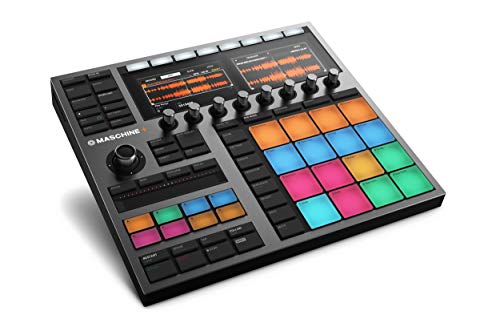
- Standalone beatmaking and sampling workflow
- Includes sounds, instruments, and effects
- Pro-grade audio interface and MIDI I/O
Best For: Producers and live performers
Live DJ Sampler
Pioneer DJ DJS-1000 Standalone DJ Sampler

- Laptop-free sampler and sequencer
- Touchscreen with 16 velocity pads
- Syncs with CDJs and DJM mixers
Best For: DJs and live remix performers
Flagship Power Sampler
Akai Professional MPC Live III Portable Music Production Center
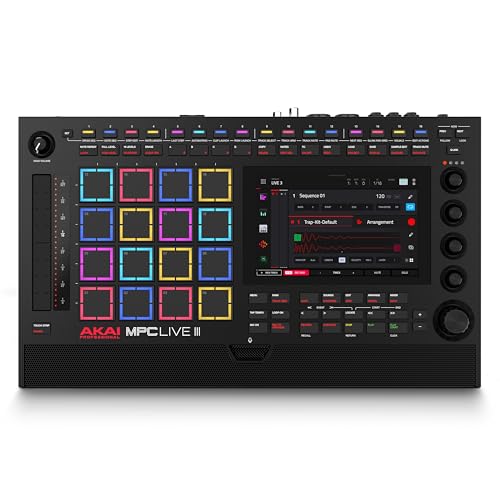
- 8-core processor with 8GB RAM
- Built-in speakers, mic, and battery
- 3D-sensing MPCe pads and touch-strip
Best For: Advanced producers and performers
Portable Beatmaker
Novation Circuit Rhythm Sampler and Groovebox

- Eight sample tracks with chainable patterns
- Records and resamples external audio directly
- Built-in battery for mobile beatmaking
Best For: portable beatmaking and live performance
Standalone Production Hub

- Standalone sampling, sequencing, and arranging
- 7-inch touchscreen with classic MPC pads
- USB-C studio connectivity and hybrid workflow
Best For: laptop-free beatmaking and full song production
Extended Protection Bundle
Novation Circuit Rhythm Sampler Bundle
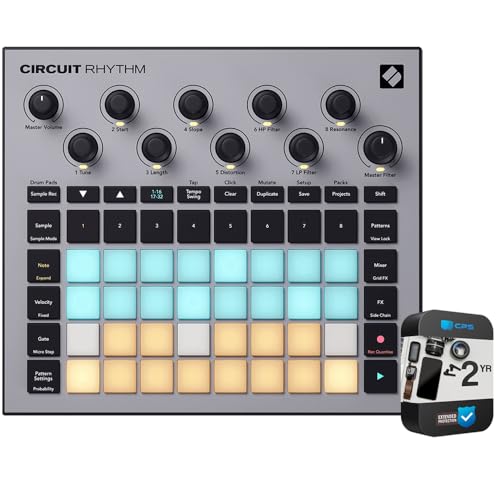
- Same eight-track Circuit Rhythm workflow
- Adds extended protection coverage
- Portable with up to four hours of battery life
Best For: buyers who want Circuit Rhythm plus extra protection
Portable Workstation
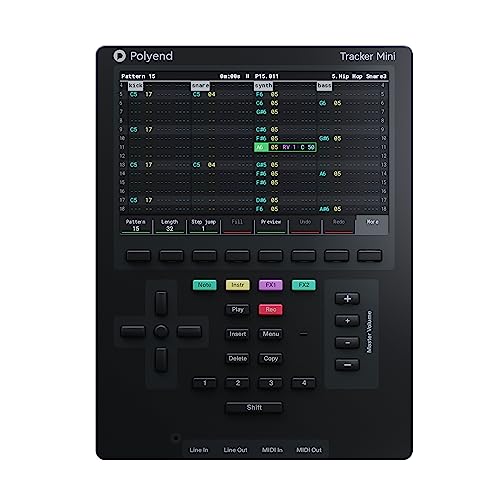
- Standalone audio workstation with 4,000 preloaded samples
- Wavetable and granular synthesis for sound design
- Portable build with USB power and microSD support
Best For: Mobile producers who want a portable standalone sampler
Compact Sequencer
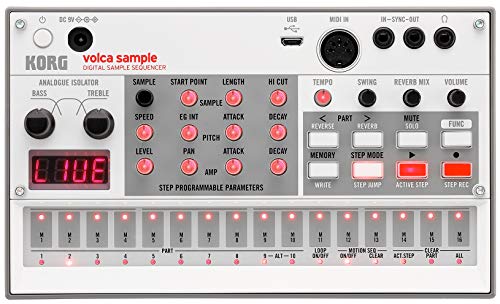
- 8-voice polyphony with 16-step sequencing
- Integrated speaker plus headphone output for standalone use
- Battery or AC-powered for flexible portability
Best For: Beatmakers who want a lightweight standalone sampler
Performance Sampler

- Built-in mic and battery power for mobile sampling
- 29 DSP effects with seamless switching
- 12 trigger pads plus Sub Pad for live control
Best For: Performers and beatmakers who want a hands-on standalone sampler with effects
Portable Starter MPC – Akai Professional MPC Sample Portable Sampler
If you want standalone samplers that keep the classic MPC feel without a steep learning curve, the Akai Professional MPC Sample is built for fast ideas anywhere. Its battery power, built-in speaker, internal microphone, and microSD storage make it easy to record, chop, and build beats away from the computer.
Best For: Beginners, DAWless creators, and beatmakers who want a compact MPC workflow with portable sampling.
Pros:
- Fully standalone with rechargeable battery, built-in speaker, and internal microphone
- 16 responsive MPC pads plus a 2.4-inch full-color display for hands-on control
- Instant Sample Chop Mode, timestretch/repitch, and internal resampling with FX
- USB-C audio/MIDI connectivity, stereo I/O, and microSD card storage
Cons:
- MIDI DIN adapters are not included
- More compact than full-size MPC units, so advanced users may want extra depth
This is a practical entry point if you want an MPC-style standalone sampler that is easy to carry and quick to learn. It favors immediacy, making it a strong choice for capturing samples and turning them into grooves fast.
Studio-Grade Standalone – Native Instruments MASCHINE+ Production Workstation
For standalone samplers that lean toward a polished production workflow, MASCHINE+ is designed to handle beat creation, sampling, arranging, and live performance without a laptop. It pairs the standalone experience with an included selection of instruments, sounds, and effects, so you can start building right away.
Best For: Producers and performers who want a standalone production workstation with integrated instruments and pro-style connectivity.
Pros:
- Standalone workflow for beats, melodies, sampling, arranging, and performance
- Includes MASCHINE+ Selection with instruments, sounds, and effects
- Quad-core CPU and 4 GB RAM for smooth creation
- Pro-grade audio interface with line inputs/outputs, mic input, MIDI, and USB ports
Cons:
- Requires more of a workstation mindset than a simple grab-and-go sampler
- Heavier than compact portable units
MASCHINE+ makes sense if you want a serious standalone hub for production as well as sampling. It is built for users who value integrated instruments, routing options, and a durable studio-ready design.
Live DJ Sampler – Pioneer DJ DJS-1000 Standalone DJ Sampler
If your priority is standalone samplers for DJ sets, the Pioneer DJ DJS-1000 is built for hands-on performance without a laptop. The 7-inch touchscreen, 16 velocity-sensitive pads, and step-sequencer layout make it easy to trigger samples and program patterns in a live booth.
Best For: DJs who want a standalone sampler for live remixing, looping, and performance syncing.
Pros:
- Standalone sampler and sequencer with no laptop required
- 7-inch touchscreen plus 16 velocity-sensitive pads for tactile control
- Classic step sequencer for building drum patterns and loops on the fly
- PRO DJ LINK syncs with CDJs and DJM mixers
Cons:
- More specialized for DJ use than general music production
- Heavier than compact studio samplers
This is a strong fit when you want samples to stay locked into a DJ workflow. It focuses on live interaction and set integration, which makes it especially useful for remixing and performance.
Flagship Power Sampler – Akai Professional MPC Live III Portable Music Production Center
Among standalone samplers, the Akai Professional MPC Live III is the most fully loaded option here, aimed at users who want to produce, record, mix, and perform without a computer. With an 8-core processor, 8GB of RAM, built-in speakers, a rechargeable battery, and expansive I/O, it is built for serious standalone work.
Best For: Advanced beatmakers and producers who want a powerful standalone MPC for studio and performance use.
Pros:
- Fully standalone with 8-core processor, 8GB RAM, and MPC3 OS
- Integrated mic, stereo speakers, rechargeable battery, and 128GB internal storage
- 3D-sensing MPCe pads and performance touch-strip for expressive control
- USB-C, CV/Gate, MIDI I/O, and multiple audio connections for studio integration
Cons:
- Likely more complex than entry-level standalone samplers
- Premium feature set may exceed what casual users need
If you want a flagship standalone sampler with deep sequencing and performance features, this model is the most capable of the group. It suits users who plan to build full tracks, not just trigger samples.
Portable Beatmaker – Novation Circuit Rhythm Sampler and Groovebox
If you want standalone samplers that make it easy to record, chop, and perform without a computer, the Novation Circuit Rhythm is built for fast, hands-on beat creation. It samples directly from phones, turntables, or synths, then lets you slice, reverse, loop, and resample ideas into finished grooves.
Best For: Producers who want a compact, screen-light sampler for portable beatmaking and live performance.
Pros:
- Eight flexible sample tracks with 32-step patterns chainable up to 256 steps per track.
- Records external audio directly and supports slice, reverse, loop, and resample workflows.
- Performance FX like lo-fi tape, stutter, beat repeat, reverb, and delay add movement.
- Built-in 4-hour battery supports music making away from the studio.
Cons:
- Screenless workflow may feel limiting if you prefer detailed visual editing.
- Focused on sampling and groove creation rather than full DAW-style production.
The Circuit Rhythm is a strong choice if you value immediacy, portability, and tactile sequencing over deep menu navigation. It works especially well as a standalone sampler for sketching ideas and performing live.
Standalone Production Hub – Akai Professional MPC One G2
For buyers comparing standalone samplers that can also handle full song production, the Akai Professional MPC One G2 is a powerful desktop center. It combines classic MPC pads with a 7-inch touchscreen, USB-C connectivity, and standalone sampling, sequencing, arranging, and performance tools in one unit.
Best For: Producers who want a laptop-free production center for sampling, arranging, and hybrid studio work.
Pros:
- Fully standalone workflow for chopping samples, sequencing gear, and arranging full songs without a computer.
- 8-core processor supports up to 16 stereo audio tracks and 32 plugin instruments per project.
- USB-C enables one-cable audio, MIDI, host/device support, and sampling from external devices.
- Includes Ableton Live Control Mode plus project import/export for hybrid studio setups.
Cons:
- More of a full production center than a simple grab-and-go sampler.
- Desktop format may be less portable than smaller grooveboxes.
If you need a standalone sampler that can grow into a complete production workflow, the MPC One G2 is the most capable option here. Its strength is breadth: sampling, sequencing, arranging, and integration with a larger studio setup.
Extended Protection Bundle – Novation Circuit Rhythm Sampler Bundle
This Novation Circuit Rhythm bundle is for shoppers who want the same standalone samplers workflow as the base unit, plus added protection. It lets you record samples directly to the hardware, slice and resample them, and build beats anywhere with an eight-track, screenless sequencer.
Best For: Mobile producers who want a Circuit Rhythm package with extended service protection included.
Pros:
- Standalone sampler and drum machine with eight sample tracks and hands-on sequencing.
- Supports slice, reverse, loop, resample, and chromatic playback without a computer.
- Portable design includes up to four hours of battery life.
- Bundle adds extended protection in addition to the included manufacturer warranty.
Cons:
- Functionally similar to the standard Circuit Rhythm, so the bundle value is mostly in protection.
- Screenless workflow may not suit users who want a more detailed display.
Choose this version if you already know you want the Circuit Rhythm workflow and prefer the peace of mind of added coverage. It is a practical pick for portable sampling, but the core hardware remains focused on fast, tactile beatmaking.
Portable Workstation – Polyend Tracker Mini
The Polyend Tracker Mini is a standalone sampler and audio workstation for creators who want a portable, no-computer workflow. It comes with 4,000 preloaded samples, wavetable synthesis, and granular synthesis, making it a flexible option for building ideas anywhere.
Best For: Mobile producers who want a portable standalone sampler with deep sound design tools.
Pros:
- Standalone audio workstation with 4,000 preloaded samples
- Includes wavetable synthesis and granular synthesis for broader sound design
- Portable design with USB power and microSD to USB-A adapter support
- Button, dial, and keyboard controls for hands-on use
Cons:
- Platform is listed as no operating system, so workflow may feel specialized
- At 2.7 pounds, it is portable but not ultra-light
For buyers comparing standalone samplers, this model stands out for combining an onboard sample library with synthesis tools in a travel-friendly format. It is a strong pick if you want to sketch, sequence, and shape sounds without relying on a computer.
Compact Sequencer – Korg Volca Sample 2
Korg Volca Sample 2 Digital Sample Sequencer Drum Machine w/Pattern Chain Mode and 16-step Sequencer
Check Price On AmazonThe Korg Volca Sample 2 is a compact standalone sampler and drum machine built around quick sequencing and easy portability. With 8-voice polyphony, a 16-step sequencer, pattern chain mode, and onboard speaker support, it is designed for fast beat-making and sample playback without much setup.
Best For: Beatmakers who want a lightweight standalone sampler for portable rhythm programming.
Pros:
- 8-voice polyphony and a 16-step sequencer with pattern chain mode
- Integrated speaker and headphone output for standalone use
- Runs on 6 AA batteries or an AC adapter for flexible power
- Dedicated Librarian software for sample and pattern management
Cons:
- Micro USB connectivity is basic compared with newer connections
- Small format may limit hands-on control compared with larger units
As standalone samplers go, this one focuses on portability and quick groove building rather than a sprawling feature set. It is a practical choice if you want an easy-to-carry sampler for drum patterns, sample playback, and sketching ideas on the move.
Performance Sampler – Roland SP-404A
The Roland SP-404A is a standalone sampler built for fast performance and on-the-go sampling. It includes a built-in mic, battery power, 29 DSP effects, and 12 trigger pads, giving you a hands-on workflow for triggering samples and shaping them live.
Best For: Performers and beatmakers who want a hands-on standalone sampler with effects.
Pros:
- Built-in mic and battery power support sampling anywhere
- 29 DSP effects plus seamless effects switching for live performance
- 12 trigger pads, three control knobs, and a Sub Pad for quick control
- Can import audio files and assign samples to pads with software
Cons:
- Uses an older workflow centered around SD card and computer import
- Features are performance-focused, so it is less of an all-in-one workstation
Among standalone samplers, the SP-404A is especially strong if you care about expressive triggering and real-time effects. It is a good fit for users who want a sampler that feels immediate on stage or during live beat sessions.
How We Picked These Standalone Samplers
We prioritized units that can sample, sequence, and perform without needing a computer, then compared workflow, portability, pad quality, screen clarity, storage options, and overall versatility. We also considered how well each option fits common use cases such as live finger drumming, pattern building, sample chopping, and full track creation.
Quick Comparison: What Matters Most
Among Standalone Samplers, the biggest differences usually come down to workflow and scale. Some models are compact and immediate for sketching ideas on the go, while others act like full production stations with deeper editing, more tracks, and broader I/O. If you want a performance-first device, look for responsive pads and fast access to mutes, scenes, and effects. If you want a studio centerpiece, prioritize sequencing depth, sample editing, and project management.
Key Buying Factors for Standalone Samplers
Sampling and Editing Tools
Check how easily the unit records, trims, slices, and maps samples. For many users, the best Standalone Samplers are the ones that make chopping and resampling feel quick rather than technical.
Sequencing and Track Count
Make sure the sequencer fits your style. Groovebox-style models may be great for fast pattern-based composition, while production stations often offer more tracks, longer arrangements, and more detailed control.
Portability and Power
If you plan to travel or perform away from the studio, battery life, size, and durability matter. Larger machines usually offer more power, but smaller units can be easier to integrate into a mobile setup.
Connectivity and Expansion
Consider MIDI, audio inputs and outputs, storage, and sample import methods. The right connections can make a sampler much more useful as the hub of a larger rig.
Who Should Buy Which Standalone Samplers?
If you want a compact, performance-friendly option, look at smaller grooveboxes and portable samplers. If you need a serious all-in-one music center, choose a more advanced workstation or MPC-style unit. DJs and live performers may prefer models built for clip launching, scene control, and fast triggering, while beatmakers often get the most from devices that emphasize chopping, sequencing, and resampling.
For most buyers, the best Standalone Samplers are the ones that match your workflow first and your feature list second. Start with how you create, then choose the device that removes friction from that process.