Office studios need more than a door that closes. Small gaps around the frame or beneath the slab can let in voices, hallway noise, dust, light, and uncomfortable drafts.
This roundup compares 10 door seals and draft-blocking options for different gap sizes, installation preferences, and sound-control goals. Use the buying guide below to narrow the choices before measuring your door.
Best 10 Studio Door Seals for Offices Picks for 2026
Best Overall Kit

- Treats up to four standard-size doors
- Includes seals and a door sweep
- Designed to reduce sound through door gaps
Best For: Multi-door office, apartment, or studio projects
Best Removable Option
Adjustable Velvet Under-Door Stopper

- Fits 30–36-inch doors
- Handles gaps up to 1.7 inches
- Slides into place without adhesive
Best For: Draft, light, dust, and modest noise control
Best for Large Gaps

- Covers 5/16–15/32-inch gaps
- Includes 18 feet of material
- Multi-hole design helps reduce sound transmission
Best For: Perimeter sealing on office or studio doors
Best Low-Profile Seal

- Clear design blends with door colors
- Two adhesive faces improve hold
- 20-foot strip cuts to length
Best For: Discreet draft, dust, and noise reduction
Quiet Office Upgrade
PVC Soundproof Door Bottom Seal

- Helps reduce door-bottom noise and drafts
- Flexible PVC construction
- Suitable for offices, homes, and hotels
Best For: Doors needing a simple bottom seal for noise and draft reduction
Large-Gap Coverage
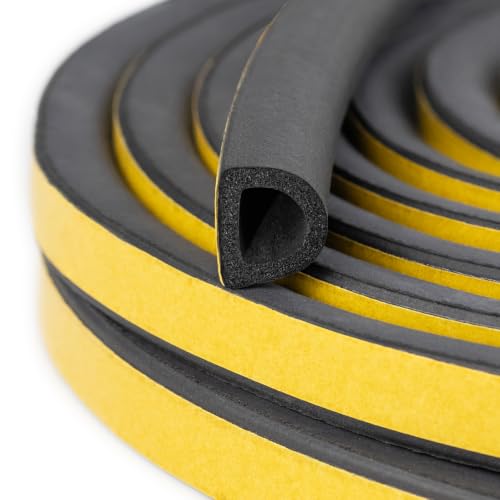
- Fits 5/16–15/32 inch closed gaps
- Flexible, hollow EPDM profile
- Helps reduce drafts, dust, light, and some noise
Best For: Studio or office doors with measured large or uneven gaps
Versatile Long Roll
33 FT EVA Foam Weatherstrip Tape

- Long 33-foot roll for multiple areas
- Flexible, cuttable self-adhesive strip
- Supports sealing, insulation, sound, and light reduction
Best For: Multi-door or mixed-opening office sealing projects
Flexible Door Sweep
Adjustable Silicone Bottom Seal

- Flexible silicone handles uneven floors and carpet
- Seals bottom gaps up to 1.5 inches
- Helps reduce drafts and outside noise
Best For: Large bottom gaps beneath office or studio doors
High-Coverage Frame Seal
50-Foot Self-Adhesive Door Strip
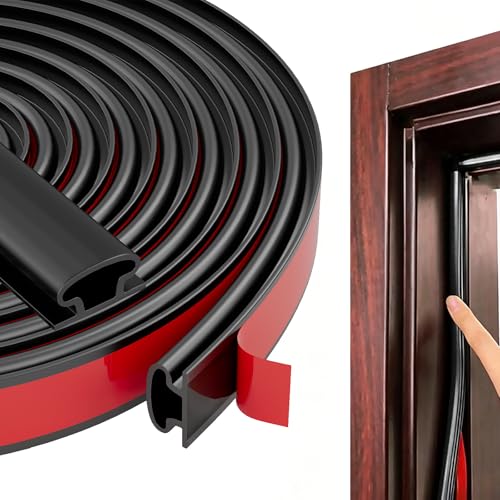
- 50 feet covers multiple doors or windows
- Fits narrow gaps from 0.1 to 0.22 inches
- Helps reduce drafts, noise, dust, and rattles
Best For: Larger office sealing projects with narrow frame gaps
Best Overall Kit – Large Acoustic Door Seal Kit
Audimute Soundproofing Acoustic Door Seal Kit - Door Sweep and Seal - (Large Size)
Check Price On AmazonFor offices or studios needing studio door seals for offices, this kit provides materials for treating gaps around multiple standard-size doors. It combines perimeter sealing with a door sweep to help limit sound traveling through door gaps.
Best For: Offices, apartments, or studios treating several standard-size doors.
Pros:
- Includes two 50-foot door seals and one 25-foot door sweep.
- Designed to treat up to four standard-size doors.
- Easy to install and made from polyurethane.
Cons:
- The kit is sized for standard doors, so unusual door dimensions may require additional material.
- It is supplied in black, which may not suit every office interior.
This is the most comprehensive option in the group for addressing both side gaps and the under-door gap across multiple doors. Measure each door before ordering to confirm the included lengths are sufficient.
Best Removable Option – Adjustable Velvet Under-Door Stopper
This adjustable stopper is a convenient choice for offices seeking studio door seals for offices without applying adhesive strips. Its insert-style design slides under the door and helps block drafts, dust, light, odors, and some sound.
Best For: Interior office doors 30 to 36 inches wide with gaps from 0.5 to 1.7 inches.
Pros:
- Adjustable for doors between 30 and 36 inches wide.
- Removable, washable, and designed not to leave adhesive residue.
- Velvet-and-foam construction offers draft control and some noise reduction.
Cons:
- It is not described as a complete soundproofing solution.
- It may not fit doors outside the stated width or gap range.
- The gray fabric may not match every workplace décor.
Choose this model when easy removal and broad everyday sealing matter more than maximum acoustic treatment. Its stated soundproofing performance is limited, so consider the rest of the door and wall construction as well.
Best for Large Gaps – EPDM Adhesive Door Seal
For offices comparing studio door seals for offices, this self-adhesive EPDM strip is suited to larger perimeter gaps. Its flexible rubber construction and multi-hole design are intended to help reduce drafts, light, water, and sound transmission around doors.
Best For: Commercial or residential doors with gaps from 5/16 to 15/32 inch.
Pros:
- Seals the specified larger gap range of 5/16 to 15/32 inch.
- Provides 18 feet of cut-to-size material.
- Self-adhesive backing requires no tools or specialized experience.
- EPDM rubber is designed for durability and low-temperature flexibility.
Cons:
- Surface preparation is important for the adhesive to hold properly.
- One 18-foot roll may not cover multiple doors.
- It is intended for perimeter sealing rather than a standalone under-door sweep.
This is a practical pick for filling a measurable, relatively wide gap around one door. Measure the frame carefully and plan for a separate sweep if the bottom gap also needs treatment.
Best Low-Profile Seal – Clear T-Shaped Silicone Strip
This clear silicone strip offers a less noticeable approach to studio door seals for offices. Its T-shaped profile uses two adhesive faces for a more secure hold while helping reduce drafts, dust, and outside noise around compatible door gaps.
Best For: Doors where a clear, flexible seal and discreet appearance are priorities.
Pros:
- Clear silicone blends with different door colors.
- Two adhesive surfaces are designed to improve stability.
- Supplied as a 20-foot strip that can be cut to length.
- Helps reduce drafts, dust, and noise.
Cons:
- It is recommended to check the door gap and mounting surface before ordering.
- Adhesive performance may require warming in cold weather.
- The strip is designed for door edges and frames, not specifically as an under-door sweep.
Consider this option when appearance and flexible installation are important. Clean and dry the mounting surface, then press both adhesive faces firmly into place for the intended hold.
Quiet Office Upgrade – PVC Soundproof Door Bottom Seal
For offices that need a straightforward way to reduce drafts and some door-related noise, this PVC bottom seal is a practical option among studio door seals for offices. Its flexible black design is intended for installation at the bottom of a door and can also suit bedrooms, homes, and hotel settings.
Best For: Office, bedroom, and home doors where reducing drafts, noise, and room-temperature loss is a priority.
Pros:
- Designed to help reduce noise and drafts at the door bottom.
- Flexible PVC construction.
- Suitable for residential, office, and hotel settings.
- Black finish can complement many doors.
Cons:
- The supplied details do not specify supported gap sizes.
- Only one seal is included.
This is a focused choice for sealing the lower edge of a studio or office door. Confirm the door-bottom fit before purchasing, especially if the gap is unusually large.
Large-Gap Coverage – 20 FT D-Shaped EPDM Door Seal
For studio door seals for offices with uneven or larger gaps, this 20-foot D-shaped EPDM strip offers a more specifically sized solution. The hollow profile is designed for closed gaps from 5/16 to 15/32 inch and uses a mesh-reinforced adhesive backing for installation on clean, dry surfaces.
Best For: Office and studio doors with measured gaps between 5/16 and 15/32 inch that need draft, dust, light-leak, and some noise reduction.
Pros:
- Designed for relatively large, uneven gaps.
- Flexible EPDM rubber remains usable in hot and cold weather.
- 20-foot length can cover multiple sections or doors.
- Helps reduce drafts, dust entry, light leaks, and some outside noise.
Cons:
- Requires measuring the closed gap before ordering.
- Adhesive needs a clean, dry surface and up to 24 hours to bond.
- May need warming before installation in cold weather.
Its clearly stated gap range and long roll make this a strong candidate when a studio door has a noticeable perimeter gap. Careful measurement and surface preparation will be important for reliable adhesion.
Versatile Long Roll – 33 FT EVA Foam Weatherstrip Tape
When a project involves several office doors, frames, or other openings, this 33-foot self-adhesive strip provides plenty of material for cutting to size. It is marketed for studio door seals for offices as well as windows and ventilation openings, with a flexible foam construction intended to support sealing, insulation, sound reduction, and light blocking.
Best For: Multi-area sealing projects where a long, cuttable strip is useful for doors, windows, and other gaps.
Pros:
- 33-foot roll provides substantial coverage.
- Flexible material can be cut for different gap sizes.
- Upgraded mesh adhesive is designed to improve adhesion.
- Suitable for sealing, insulation, sound reduction, and light blocking.
Cons:
- The supplied details do not specify a precise supported gap range.
- Its broad multi-use design may require careful trimming for a clean office-door fit.
- Only one roll is included.
This is the most versatile option of the three for larger or varied sealing jobs. Measure the door or frame first, then cut carefully so the flexible strip does not interfere with opening and closing.
Flexible Door Sweep – Adjustable Silicone Bottom Seal
For offices needing studio door seals for offices, this adjustable silicone door sweep focuses on gaps beneath interior or exterior doors. Its flexible design can help limit drafts, some outside noise, and airflow while sliding over carpet or uneven flooring.
Best For: Office doors with bottom gaps up to 1.5 inches, especially where a flexible, waterproof seal is useful.
Pros:
- Silicone construction is flexible, resilient, and resistant to heat and cold.
- Triple-design hollow arc helps reduce airflow and muffle some outside noise.
- Self-adhesive backing installs quickly and is designed to glide over carpet.
- 39-inch length can be trimmed to fit many doors.
Cons:
- Adhesion may be weaker on rough or textured surfaces.
- Requires careful measuring and 24 hours of setting time before frequent door use.
- Cold-weather installation may require heating the adhesive with a hair dryer.
This is the most suitable option when the main problem is a sizable gap beneath an office or studio door. Confirm the door width and floor clearance before installation, and allow the adhesive to set fully.
Frame Gap Seal – D-Shaped TPE Weather Strip
This D-shaped strip is a practical choice for studio door seals for offices when the leakage is around the door frame rather than beneath it. The 20-foot roll can be cut to length and applied to clean, dry wood, metal, glass, or some plastic surfaces.
Best For: Common-size gaps around office door frames, front doors, and windows where a narrow self-adhesive strip is appropriate.
Pros:
- Thickened TPE offers rebound and resistance to easy deformation.
- 20-foot roll provides material for multiple frame sections or doors.
- Designed to reduce drafts, dust, noise, and light gaps.
- Simple peel-and-press installation after surface preparation.
Cons:
- The 3/8-inch width and 1/4-inch thickness may not suit unusually wide gaps.
- Performance depends on a clean, dry, compatible mounting surface.
- It is intended for frame gaps, not as a dedicated under-door sweep.
Choose this strip for perimeter sealing where the door closes against a frame. Measure the gap first so the D-shaped profile can compress effectively without making the door difficult to close.
High-Coverage Frame Seal – 50-Foot Self-Adhesive Door Strip
For larger office projects involving studio door seals for offices, this 50-foot self-adhesive strip offers substantial coverage for door frames and windows. It is designed for narrow gaps, can be cut with scissors, and may also help reduce rattles, vibrations, and squeaks.
Best For: Multiple office doors or windows with gaps measuring approximately 0.1 to 0.22 inches.
Pros:
- 50-foot length is useful for sealing several openings.
- Flexible material can be cut and bent to fit different areas.
- Helps block drafts, noise, dust, light, odors, and other unwanted airflow.
- Self-adhesive backing is intended to secure after 24 hours of bonding.
Cons:
- Its stated gap range is narrower than a bottom-door seal’s coverage.
- Low temperatures can reduce adhesive performance during installation.
- Requires accurate measurement and a clean, dry surface.
This option makes sense when you need one long roll for repeated frame-sealing work. Measure each gap before ordering, and warm the adhesive in cold conditions to support bonding.
How We Picked the Best Studio Door Seals for Offices
We selected these options for office studios based on the problems they are designed to address: noise leakage, air movement, dust, light gaps, and inconsistent door fit. We also considered installation style, material, adjustability, coverage length, and suitability for bottom-of-door or frame gaps.
A seal can reduce sound transmission through a small opening, but it will not make a hollow or poorly fitted door fully soundproof. The best results usually come from sealing the perimeter first, then addressing the threshold or bottom gap.
Quick Comparison
| Type | Best For | Installation | Key Advantage |
|---|---|---|---|
| Acoustic door seal kit | Studios prioritizing noise control | Kit-based installation | Addresses multiple door gaps |
| Adhesive foam or rubber strip | Frame gaps and general insulation | Peel-and-stick | Simple, flexible installation |
| Silicone or T-shaped seal | Long-lasting edge sealing | Slot or adhesive fit, depending on design | Resilient material and clean profile |
| Door sweep or draft stopper | Bottom gaps and drafts | Attach or position at door base | Fast coverage beneath the door |
| D-shaped weatherstripping | Large perimeter gaps | Self-adhesive | Compressible, broad contact surface |
Key Buying Factors for Studio Door Seals for Offices
Measure the Gap First
Close the door and measure the largest visible gap at the sides, top, and bottom. A narrow strip may fail to contact the door, while an oversized seal can prevent smooth closing. For uneven gaps, prioritize a compressible profile or a kit with multiple seal components.
Choose the Right Location
Perimeter weatherstripping belongs on the frame or door stop. Sweeps, under-door blockers, and bottom seals are intended for the gap beneath the door. If noise or light enters at both locations, combining the two types is usually more effective than using a thicker bottom strip alone.
Check Adhesion and Surface Condition
Self-adhesive products work best on clean, dry, smooth surfaces. Remove dust and grease, allow the surface to dry, and avoid stretching the strip during installation. Painted, textured, or damp frames may require additional mounting support.
Balance Sealing with Door Operation
The door should latch without excessive force and open without dragging. Test the seal before trimming permanently, particularly with thick rubber, velvet, or foam products. In shared offices, avoid solutions that create a trip hazard or interfere with accessibility.
Who Should Buy Which Studio Door Seals for Offices?
Choose an acoustic seal kit if your primary concern is sound escaping through several door gaps. Select adhesive foam or D-shaped weatherstripping for an affordable frame-sealing project with straightforward installation. Silicone or T-shaped profiles are better suited to buyers who want a more durable, neat-looking seal and have a compatible door channel or mounting surface.
For cold air, dust, or hallway light entering below the door, use an adjustable draft stopper or door sweep. Large-gap D-shaped seals are a practical choice when ordinary thin tape does not make contact. If the office door is used frequently, prioritize a durable, low-friction bottom seal and verify that it will not impede the threshold.
Before ordering, confirm the product’s width, thickness, total length, mounting method, and color. For the strongest improvement, seal the top and sides, treat the bottom gap separately, and reassess the room after installation.