Choosing the right studio monitors can make or break your mix decisions. If you want honest playback that helps you hear problems instead of flattering them, flat-response monitors are the smart place to start.
This roundup focuses on 10 strong options for home studios, project rooms, and mixing setups, with a mix of budget-friendly and step-up choices for different room sizes and workflows.
Best 10 Studio Monitors with Flat Response Picks for 2026
Reference-Grade 3-Way Design
Kali Audio IN-8 V2 8-Inch Coaxial Monitor

- 3-way coaxial design for precise imaging
- 140W tri-amplified power with low distortion
- XLR, TRS, and RCA inputs for flexible setups
Best For: engineers needing accurate monitoring and strong low-end extension
Classic Neutral Pair
Yamaha HS5 Powered Studio Monitors

- Neutral tuning focused on sonic purity
- 5-inch woofer and 1-inch tweeter for nearfield use
- XLR and TRS inputs with bi-amplified power
Best For: small studios that need a trusted, no-coloration reference
Wide-Sweet-Spot Value Pair
JBL 305P MkII 5-Inch Studio Monitors

- Image Control Waveguide for precise imaging
- Boundary EQ and HF Trim for room tuning
- XLR/TRS inputs with a 5-inch woofer
Best For: creators who want accurate monitoring and an easy-to-place sweet spot
Compact Desktop Reference
Yamaha HS4 B Powered Monitor Pair

- Compact 4.5-inch woofer for desk setups
- Room control and high trim response controls
- XLR/TRS, RCA, and stereo mini inputs
Best For: desktop users who need a compact, adjustable monitor pair
Studio-Ready Budget Pick
Edifier MR4 4-Inch Near-Field Monitors
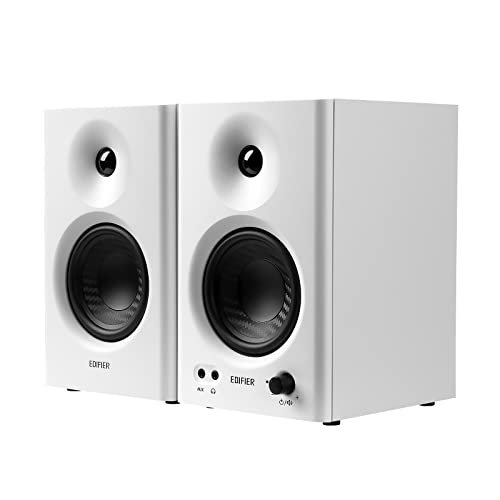
- Near-flat curve tuned for creators
- TRS, RCA, AUX, and headphone output
- Dual monitor and music modes
Best For: Home studios and budget-minded music creators
Reference-Style Main Monitor
Yamaha HS8 8-Inch Powered Pair

- 38Hz to 30kHz frequency response
- 75W LF and 45W HF bi-amp power
- Includes a pair of monitors
Best For: Serious recording and mixing setups
Wide-Sweet-Spot Mix Tool
PreSonus Eris E7 XT Active Monitor

- EBM waveguide for wide sweet spot
- Room-tuning controls for accurate mixing
- Includes Studio One Prime and plug-ins
Best For: Mixing in rooms that need tuning flexibility
Reference-Ready Pair
Yamaha HS7 7-Inch Powered Studio Monitor Pair

- 43Hz-30kHz response for detailed monitoring
- Bi-amp system with dedicated LF/HF power
- XLR and TRS inputs for wired studio use
Best For: mixing and recording with balanced wired connections
Feature-Rich Nearfield
Edifier MR5 Studio Monitor Bookshelf Speakers

- 3-way active crossover with dedicated mid driver
- 46Hz-40kHz response and room-tuning controls
- XLR, TRS, RCA, AUX, Bluetooth, and headphone out
Best For: desktop studios and flexible nearfield listening
Classic Studio Pair
Yamaha HS7 Powered Studio Monitor Pair
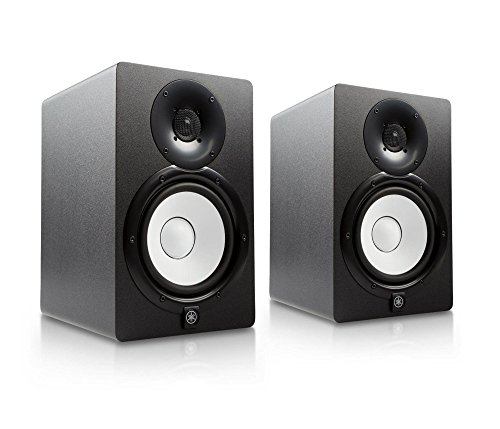
- 43Hz-30kHz response for near-field monitoring
- XLR/TRS inputs with acoustic space control
- Sold as a stereo pair for studio setups
Best For: traditional studios that want simple wired monitoring
Reference-Grade 3-Way Design – Kali Audio IN-8 V2 8-Inch Coaxial Monitor
If you want studio monitors with flat response for critical mixing, the Kali Audio IN-8 V2 is built around a 3-way coaxial design that aims for precise imaging and strong phase coherence. Its 8-inch woofer, dedicated midrange, and coaxial tweeter help keep detail organized across the spectrum, while the tri-amplified 140W design gives it the headroom needed for honest monitoring.
Best For: Producers and engineers who want a highly accurate nearfield monitor with flexible room placement options.
Pros:
- 3-way coaxial driver layout for point-source accuracy and flat response
- 140W tri-amplified power with low distortion and good headroom
- 8-inch woofer provides extended low-end while staying clear
- XLR, TRS, and RCA inputs support a wide range of setups
Cons:
- Sold as a single monitor, so a stereo pair requires two units
- 8-inch size may be larger than needed for very tight desks
- Best performance depends on boundary compensation and placement tuning
The IN-8 V2 stands out if you need accuracy first and size second. With room-adjustment tools and broad connectivity, it fits both home studios and more serious production spaces.
Classic Neutral Pair – Yamaha HS5 Powered Studio Monitors
The Yamaha HS5 remains a go-to choice for studio monitors with flat response because it focuses on sonic purity rather than added coloration. With a 5-inch woofer, 1-inch dome tweeter, and bi-amplified power, it gives you a straightforward nearfield monitor setup for mixing and editing.
Best For: Mixers and producers who want a reliable, neutral reference pair for smaller studio spaces.
Pros:
- Designed to emphasize sonic purity with minimal coloration
- 5-inch woofer and 1-inch tweeter suit nearfield monitoring
- XLR and TRS inputs accept balanced or unbalanced signals
- Bi-amplified 70W system provides solid monitoring output
Cons:
- 5-inch design is not ideal if you want heavy bass extension
- Sold as a pair, so the upfront cost is higher than a single monitor
- Best suited to nearfield use rather than larger rooms
If you value a familiar, honest sound over boosted lows, the HS5 is an easy monitor to trust. It is especially appealing for smaller production setups where accuracy matters more than sheer output.
Wide-Sweet-Spot Value Pair – JBL 305P MkII 5-Inch Studio Monitors
For buyers comparing studio monitors with flat response, the JBL 305P MkII offers a practical mix of accuracy and room-friendly tuning tools. Its Image Control Waveguide is designed for precise imaging and a wide sweet spot, while Boundary EQ and HF Trim help adapt the sound to your workspace.
Best For: Home producers, podcasters, and creators who want accurate monitoring with a broad listening area.
Pros:
- Patented Image Control Waveguide supports precise imaging
- Boundary EQ and HF Trim help tailor response to the room
- 5-inch woofer with Slip Stream port adds controlled bass output
- XLR/TRS inputs and 100-hour reliability testing add practicality
Cons:
- 5-inch size limits deep bass compared with larger monitors
- Sold as a pair, so it takes more budget than a single-speaker listing
- Best results still depend on room placement and tuning
The 305P MkII is a strong all-round studio monitor if you need clear imaging without overcomplicating the setup. Its tuning controls make it especially appealing for less-than-perfect rooms.
Compact Desktop Reference – Yamaha HS4 B Powered Monitor Pair
If you need studio monitors with flat response for a desk or compact editing setup, the Yamaha HS4 B keeps the focus on practical accuracy. Its 4.5-inch woofer, 1-inch dome tweeter, and room control/high trim features make it a small-format option for music production and video editing.
Best For: Desktop creators who need a compact monitor pair with straightforward connectivity and room controls.
Pros:
- Compact 4.5-inch design works well on smaller desks
- Room control and high trim help adjust response
- XLR/TRS, RCA, and stereo mini inputs provide flexible hookup options
- Included cables and anti-slip pads add convenience
Cons:
- 26W output is modest for larger rooms
- Smaller woofer means less low-end reach than bigger monitors
- Designed as a compact system rather than a full-range powerhouse
The HS4 B is a sensible pick when desk space is limited but you still want a monitor tuned for honest work. It is especially useful for editing tasks where small size and control matter more than loud playback.
Studio-Ready Budget Pick – Edifier MR4 4-Inch Near-Field Monitors
If you want studio monitors with flat response without spending much, the Edifier MR4 is built around a near-flat curve tuned for artists and music creators. It keeps the setup practical with balanced TRS, RCA, and AUX inputs, plus a front headphone output for quick monitoring.
Best For: Home studios, beginner producers, and anyone who wants an affordable near-field monitor with flexible connections.
Pros:
- Professionally fine-tuned to a near-flat responsive curve
- 1-inch silk dome tweeters and 4-inch composite woofers for clear, smooth sound
- MDF wooden structure helps reduce resonance
- Dual monitor/music modes for production or casual listening
Cons:
- 4-inch woofer size may be limiting for deeper bass-heavy work
- No wireless input options listed
This is a straightforward studio-monitor option for users who care more about accuracy and useful input options than extra features. The onboard high- and low-frequency controls also make it easier to adapt the sound to your room.
Reference-Style Main Monitor – Yamaha HS8 8-Inch Powered Pair
The Yamaha HS8 is a strong choice if you’re shopping for studio monitors with flat response and want a larger powered pair for recording or mixing. Its 38Hz to 30kHz response, bi-amp design, and XLR connectivity make it a classic fit for studio work where accuracy matters.
Best For: Recording and mixing setups that need a full-size powered monitor pair with wide-range output.
Pros:
- 38Hz to 30kHz frequency response
- 75W LF plus 45W HF bi-amp system
- 8-inch woofer and 1-inch dome tweeter
- Bundle includes a pair of monitors
Cons:
- Large 8-inch cabinets take up significant desk or stand space
- XLR cables are not included
For users who want a bigger monitoring solution, the HS8 brings the kind of scale and output that suits serious studio use. It is less compact than smaller monitors, but the speaker size and bi-amp power are part of its appeal.
Wide-Sweet-Spot Mix Tool – PreSonus Eris E7 XT Active Monitor
PreSonus Eris E7 XT 2-Way Active Studio Monitor with EBM Waveguide (Pack of 1)
Check Price On AmazonThe PreSonus Eris E7 XT is a practical pick for studio monitors with flat response if you want tuning controls and a wide listening area. Its EBM waveguide is designed for a wide sweet spot and solid imaging, while the acoustic controls help you tailor the monitor to your room.
Best For: Mixers and producers who want flexible room tuning and a wide sweet spot in a single monitor.
Pros:
- EBM waveguide provides a wide sweet spot and solid imaging
- Acoustic tuning controls for level, HPF, LF trim, HF trim, and acoustic space
- 6.55-inch low-frequency transducer for deep lows
- Includes Studio One Prime and Studio Magic plug-in suite
Cons:
- Sold as a single monitor, not a pair
- Larger than compact desktop monitors
Overall, this monitor stands out for users who want more control over how the speaker interacts with the room. The combination of tuning options and broad dispersion makes it especially useful when you need consistency across different listening positions.
Reference-Ready Pair – Yamaha HS7 7-Inch Powered Studio Monitor Pair
If you want studio monitors with flat response for mixing decisions, the Yamaha HS7 pair is built around a straightforward near-field design with XLR and TRS inputs and a 43Hz-30kHz rated response. The bi-amp layout and 7-inch woofer aim for clear, controlled playback that works well when you need to hear balance, not hype.
Best For: Mixing and recording setups that prioritize honest playback and balanced analog connections.
Pros:
- 43Hz-30kHz frequency response supports detailed monitoring across lows, mids, and highs
- Bi-amp design with 60W LF and 35W HF amplification for dedicated driver power
- XLR and TRS phone jack inputs accept balanced or unbalanced signals
- Sold as a pair, making it ready for stereo studio setups
Cons:
- No wireless connectivity listed
- Large 7-inch class monitors take more desk or stand space than compact speakers
Overall, the HS7 is a practical pick if you want a well-known studio monitor pair that stays focused on wired, near-field monitoring. Its feature set is simple, but the response range and bi-amp design make it a strong fit for critical listening.
Feature-Rich Nearfield – Edifier MR5 Studio Monitor Bookshelf Speakers
The Edifier MR5 is a versatile choice if you’re comparing studio monitors with flat response and want room tuning plus modern connectivity in one package. Its 3-way active crossover, 46Hz-40kHz range, and rear EQ controls are designed to help you adapt the sound to your space rather than forcing one fixed voicing.
Best For: Small studios and desktop setups that need tuning flexibility, Bluetooth, and multiple input options.
Pros:
- 3-way active crossover with 5-inch woofer, 3.75-inch mid driver, and 1-inch tweeter
- 46Hz-40kHz frequency response for wide-band playback
- Rear knobs and app-based room compensation for acoustic adjustment
- XLR, TRS, RCA, AUX, Bluetooth 6.0, and headphone output for flexible connectivity
Cons:
- More feature-heavy than a simple no-frills monitoring speaker
- Desktop-friendly size may still be larger than ultra-compact monitors
In practice, the MR5 stands out for buyers who want monitoring accuracy plus convenience features like Bluetooth and app control. If your setup changes often or your room needs some help, it offers a lot of adjustment without giving up studio-oriented connections.
Classic Studio Pair – Yamaha HS7 Powered Studio Monitor Pair
The Yamaha HS7 Powered Studio Monitor Pair is a familiar option for anyone shopping for studio monitors with flat response and a simple wired signal path. With 43Hz-30kHz frequency response, XLR/TRS inputs, and acoustic space control, it is designed for near-field monitoring where you want a straightforward read on your mix.
Best For: Traditional home or project studios that want reliable near-field monitoring with basic room adjustment.
Pros:
- 43Hz-30kHz sound frequency response for broad monitoring coverage
- XLR and TRS input connectors for studio wiring
- Acoustic space control helps tailor placement in the room
- Sold as a pair for immediate stereo setup
Cons:
- No dedicated wireless feature is part of the core studio-monitor design
- At 6.5-inch driver size, they are not the smallest desk speakers
This version keeps the HS7 formula focused on the essentials: near-field accuracy, wired inputs, and room control. If you prefer a proven, uncomplicated monitoring setup, it fits that brief well.
How We Picked the Best Studio Monitors with Flat Response
We prioritized models known for neutral voicing, consistent stereo imaging, and practical connectivity for modern home studios. We also considered driver size, amplifier power, room fit, and how well each option supports mixing and editing work without excessive coloration.
Quick Comparison: What Stands Out
Smaller monitors are usually better for compact desks and close listening, while 7-inch and 8-inch models can deliver more low-end extension and headroom in larger spaces. Coaxial and waveguide designs can also help with imaging and a wider sweet spot, which matters when you move around your workspace.
Key Buying Factors for Studio Monitors with Flat Response
Size and Room Match
Match the speaker to your room. A 5-inch monitor may be ideal for a small bedroom setup, while 7-inch and 8-inch models are often better if you need fuller bass and can place them farther from walls.
Accuracy Over Hype
The goal of Studio Monitors with Flat Response is translation: mixes that sound balanced on headphones, cars, earbuds, and consumer speakers. Look for even mids, controlled highs, and bass that is present but not exaggerated.
Placement and Isolation
Even the best monitors can sound misleading if they are too close to walls or not aimed properly. Budget for stands, isolation pads, or desk placement that keeps the tweeters at ear level and reduces reflections.
Inputs and Workflow
Most studio monitors offer balanced XLR or TRS inputs, which are best for interface connections. If you need flexible desktop use, models with RCA inputs can be convenient, but balanced connections are usually preferred for cleaner signal flow.
Who Should Buy Which Studio Monitors with Flat Response?
If you are building a first setup or working in a small room, compact 4-inch or 5-inch monitors are often the easiest to place and the least likely to overwhelm the space. If you produce bass-heavy music, mix in a larger room, or want more low-end authority, 7-inch and 8-inch monitors are a better fit.
For users who want the most practical all-around choice, pick a model that balances flat response, usable bass extension, and room-appropriate size. The best choice is the one that helps you make confident mix decisions every day.