Schools often need to prepare identical USB drives for exams, software deployments, classroom projects, recovery tools, or media distribution. The right duplicator can reduce repetitive computer-based copying while helping staff maintain consistent results.
This roundup compares 10 standalone USB duplicators across compact two-target models and higher-capacity systems designed for labs, IT departments, and district-wide workflows.
Best 10 USB Duplicators for Schools Picks for 2026
Best Compact Choice
StarTech 1:2 USB Duplicator and Eraser

- Standalone 1-to-2 copying
- Copy, compare, and erase modes
- LCD status and error monitoring
Best For: Small school IT teams handling USB creation and sanitization
Best for Small Batch Expansion
Nexcopy USB115SA 1:15 Duplicator

- One master and 15 targets
- No PC or software required
- Asynchronous masters up to 256 MB
Best For: Schools preparing up to 15 identical USB drives
Best High-Volume Choice
Systor 1:15 USB Duplicator and Sanitizer

- One source with 15 targets
- Synchronous and asynchronous modes
- Up to 2 GB per minute transfer rate
Best For: Campus and district IT teams running larger USB deployments
Best Portable Option
EZ Dupe 1:4 Mini USB Plus MK II
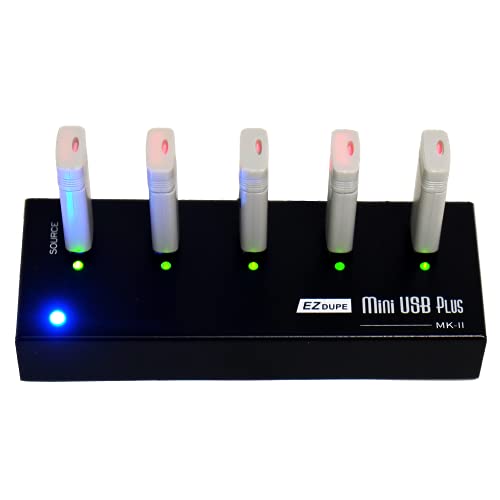
- Duplicates four drives simultaneously
- Supports USB 1.0, 2.0, and 3.0
- Portable power-bank compatibility
Best For: Classrooms, labs, and small mobile USB-copying jobs
High-Volume Standalone Pick

- Copies one source to seven drives
- No computer or software required
- Up to 2GB per minute
Best For: School IT departments handling larger USB rollouts
Touchscreen Workflow Pick
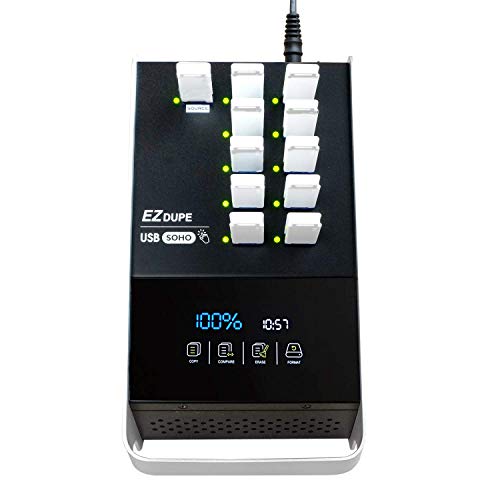
- Duplicates up to 10 USB drives
- Touchscreen copy and erase controls
- Up to 35MB per second
Best For: Teams seeking simple, high-volume USB workflows
Portable Small-Batch Pick

- Copies to two targets at once
- Includes bit-for-bit copy mode
- Compact and computer-free
Best For: Technicians managing small batches and field deployments
Best High-Capacity Pick

- Copies or erases up to seven USB drives
- LCD controls with Copy & Compare verification
- 128 MB asynchronous-copy buffer
Best For: School IT teams managing frequent multi-drive deployments
Best for Large-Batch Deployment
Vinpower 15-Target USB Duplicator

- Duplicates one master to 15 targets
- Asynchronous operation works without a PC
- Includes Smart Copy, Raw Mode, and secure erase
Best For: District or school IT teams preparing large drive batches
Best Compact Five-Drive Option

- Duplicates or erases up to five USB drives
- LCD status monitoring and Copy & Compare
- Portable standalone design with 64 MB async buffer
Best For: Smaller schools handling routine five-drive deployments
Best Compact Choice – StarTech 1:2 USB Duplicator and Eraser
For schools looking at USB duplicators for schools, the StarTech USBDUP12 is a practical fit for small batches, IT maintenance, and drive sanitization. It works without a computer, supports USB 3.0 and 2.0 media, and includes copy, compare, and erase functions.
Best For: School IT teams that need a compact tool for creating boot drives, verifying copies, and securely clearing USB media.
Pros:
- Standalone 1-to-2 duplication requires no computer.
- Supports file, sector-by-sector, quick erase, and overwrite modes.
- LCD status display, error scanning, and copy-and-compare verification.
- Asynchronous copying supports source content under 64 MB.
Cons:
- Only duplicates two target drives at a time.
- Asynchronous mode is limited to source content under 64 MB.
- External USB storage devices may need their own power source.
Its modest two-drive capacity is best for smaller school deployments, but the added erase and verification features make it more versatile than a basic copier.
Best for Small Batch Expansion – Nexcopy USB115SA 1:15 Duplicator
The Nexcopy USB115SA is designed for schools that need to prepare many identical USB drives at once. Its standalone 1-master, 15-target configuration avoids PC software, while asynchronous duplication supports masters up to 256 MB.
Best For: Schools distributing small boot-drive images, classroom resources, or other USB content in batches of up to 15.
Pros:
- Provides one master and 15 target positions.
- Operates without a computer or software.
- Asynchronous duplication supports masters up to 256 MB.
- LCD feedback shows real-time performance and status.
Cons:
- The supplied notes do not specify supported USB generations or erase functions.
- Its asynchronous capacity limit may not suit larger images.
- The large multi-port design may be more than needed for occasional copying.
This model emphasizes batch output rather than advanced sanitization, making it a straightforward option when a school’s priority is producing multiple ready-to-use drives.
Best High-Volume Choice – Systor 1:15 USB Duplicator and Sanitizer
For larger school rollouts, the Systor SYS-USBD-15 combines 15-target duplication with standalone operation. It supports synchronous and asynchronous modes, performs bit-by-bit copying, and maintains a stated transfer rate of up to 2 GB per minute as the number of loaded drives increases.
Best For: District or campus IT departments that need repeatable, high-volume USB deployment with long-term technical support.
Pros:
- Copies from one source to up to 15 target drives.
- Requires no computer or software.
- Supports synchronous and asynchronous copying.
- Offers up to 2 GB per minute transfer speed and hot-swappable operation.
Cons:
- USB Type-C drives require an adapter.
- The supplied notes do not detail specific erase modes.
- A 15-target unit may be excessive for occasional classroom use.
Its combination of capacity, bit-by-bit copying, and support coverage makes it a strong fit when schools regularly provision many drives rather than only a few at a time.
Best Portable Option – EZ Dupe 1:4 Mini USB Plus MK II
The EZ Dupe Mini USB Plus MK II offers a compact middle ground for schools that need more than one copy but do not require a 15-target machine. It duplicates up to four USB drives simultaneously, supports USB 1.0 through 3.0 flash media, and can run from a power bank or USB power source.
Best For: Teachers, lab managers, and school IT staff who need portable four-drive duplication for smaller deployments.
Pros:
- Copies up to four USB drives at the same time.
- Standalone plug-and-use operation needs no computer.
- Supports synchronous and asynchronous copying.
- Updated version offers a stated speed of up to 2.5 GB per minute and support above 2 TB.
Cons:
- Four target ports provide less throughput than 15-drive models.
- External USB storage may require its own power source.
- The supplied notes do not list dedicated erase or sanitization modes.
Its small footprint and flexible power options make it convenient for moving between classrooms or labs, while four-target capacity keeps it useful for routine school-level jobs.
High-Volume Standalone Pick – Systor 1-to-7 USB Duplicator
For schools needing usb duplicators for schools that can handle multiple target drives at once, the Systor SYS-USBD-7 is a standalone desktop option. It copies from one source to up to seven USB drives without a computer or software, with synchronous and asynchronous modes for different workflows.
Best For: School IT departments preparing several USB drives for labs, classrooms, or device rollouts.
Pros:
- Duplicates one source to seven target drives simultaneously.
- Requires no computer or software.
- Supports bit-by-bit copying, synchronous and asynchronous modes, and USB 1.1, 2.0, and 3.0 flash drives.
- Offers up to 2GB per minute and includes lifetime technical support.
Cons:
- USB Type-C drives require an adapter.
- The unit weighs 10 pounds, making it less portable than compact duplicators.
- Its listed USB interface is USB 1.1.
The seven-port capacity makes this a strong choice when a school values throughput and repeatable, computer-free duplication. Its warranty and support coverage may also appeal to organizations planning regular institutional use.
Touchscreen Workflow Pick – EZ Dupe SOHO Touch 1-to-10
The EZ Dupe SOHO Touch is designed for schools that want a straightforward interface while duplicating many USB drives. Its touchscreen menu provides copy, compare, format, and erase controls, while its independent design supports daily operation without requiring a battery.
Best For: School technology teams that prioritize simple controls and high-capacity USB duplication.
Pros:
- Duplicates USB flash media to up to 10 targets.
- Touchscreen interface simplifies copy, compare, format, and erase tasks.
- Supports USB 2.0, 3.0, and 3.1 thumb drives, file formats, file sizes, and drive capacities.
- Copies at up to 35MB per second and has a lightweight, heavy-duty design.
Cons:
- It has a one-year manufacturer warranty.
- The supplied notes do not specify bit-by-bit copying.
- Its capabilities are focused on USB flash media rather than a broader range of storage types.
With ten target ports and a touchscreen, this model can reduce training and make recurring school deployment tasks easier. Compare its workflow features with your school’s need for exact, bit-level cloning before choosing it for image-based rollouts.
Portable Small-Batch Pick – BestDuplicator UB300 1-to-2
The BestDuplicator UB300 is a compact option for schools that only need to create one or two copies at a time. It operates independently of Windows or Mac software and combines duplication with media checks, erase functions, and a simple LCD-controlled interface.
Best For: School technicians handling small batches, field deployment, or occasional USB cloning.
Pros:
- Copies one USB drive to two targets simultaneously without a computer.
- Offers Quick Copy and Whole Media Copy for data-only or bit-for-bit duplication.
- Includes capacity checks, device information, speed tests, and erase functions.
- Compact 6.72-ounce design is easy to move between rooms or sites.
Cons:
- Supports only two target USB drives at once.
- Designed for USB 1.1 and 2.0 media, so it is less suited to newer USB workflows.
- Memory-card duplication requires a compatible USB card reader sold separately.
The UB300 is a practical fit when portability and verification tools matter more than maximum throughput. Its two-target limit makes it better for small school deployments or maintenance tasks than for large-scale classroom rollouts.
Best High-Capacity Pick – StarTech 1:7 USB Duplicator
For schools preparing several boot drives or distributing files to teams, this USB duplicator for schools copies or erases up to seven USB drives without a computer. Its LCD controls, verification option, and support for common file systems make it practical for an IT office or lab.
Best For: School IT teams that need seven-at-a-time USB duplication, drive wiping, and copy verification.
Pros:
- Duplicates or erases up to seven USB drives independently of a computer.
- Supports USB 3.0 and 2.0 flash media and external USB storage.
- Offers sector-by-sector copying, secure overwrite modes, and Copy & Compare verification.
- Asynchronous mode allows finished drives to be replaced without interrupting copies for source content under 128 MB.
Cons:
- Asynchronous mode is limited to source content under 128 MB.
- Some external USB devices may need their own power source.
With seven target ports and a broader 128 MB asynchronous-copy buffer, this model suits schools that regularly prepare multiple drives. Its standalone operation and erasing features also reduce the need for a separate computer-based workflow.
Best for Large-Batch Deployment – Vinpower 15-Target USB Duplicator
Schools deploying a large number of identical USB drives can use this standalone USB duplicator for schools to copy one master to 15 targets without a PC. Smart Copy, raw bit-by-bit mode, asynchronous duplication, and secure erase provide flexibility for classroom, lab, and IT workflows.
Best For: District or school IT departments handling large batches of USB drives at once.
Pros:
- Copies to 15 USB drives simultaneously without requiring a computer.
- Asynchronous duplication supports independently copying any size master data.
- Smart Copy and Raw Mode accommodate fast file copying or bit-by-bit duplication.
- Supports secure erasing and optional adapters for SD, microSD, and CompactFlash media.
Cons:
- At 11 pounds, it is less convenient to move between rooms than smaller units.
- Additional flash-media formats require a corresponding Interface Adaptor Module add-on.
- The supplied warranty is one year.
This is the strongest choice when throughput matters more than portability. Its 15 target slots can reduce repeated duplication cycles, while raw mode and secure erase support more exact and reusable media-management procedures.
Best Compact Five-Drive Option – StarTech 1:5 USB Duplicator
For smaller schools or occasional lab deployments, this USB duplicator for schools provides standalone copying and erasing for up to five USB drives. It supports common USB media, displays status on an LCD, and includes verification and overwrite options for a controlled IT workflow.
Best For: Schools that need a portable five-drive duplicator for routine USB preparation and sanitization.
Pros:
- Copies or erases up to five USB 3.0 or 2.0 drives without a computer.
- Supports file-based and sector-by-sector duplication across several file formats.
- LCD controls show drive information and performance, with scanning for errors and bad sectors.
- Asynchronous mode supports drive replacement during copying for source content under 64 MB.
Cons:
- Its five target ports provide less batch capacity than larger duplicators.
- Asynchronous copying is limited to source content under 64 MB.
- External USB storage may require a separate power source.
This model balances basic batch capacity with a relatively portable design. It is a sensible fit when five simultaneous copies are enough and the school wants copy verification plus recognized erase modes without adding a computer to the process.
How We Picked the Best USB Duplicators for Schools
We focused on standalone duplicators that can copy USB media without requiring a host computer. The selection includes compact units for occasional classroom or office use, as well as larger systems capable of producing multiple copies simultaneously. We considered target count, advertised transfer speed, USB compatibility, display and menu controls, portability, and erasing or sanitization features.
For school environments, practical operation matters as much as headline speed. Models with clear status feedback, simple source-and-target workflows, and dedicated copy and erase functions can reduce training time and prevent avoidable mistakes.
Quick Comparison
| Best For | What to Prioritize | Typical Configuration |
|---|---|---|
| Occasional classroom use | Compact design and simple controls | 1:2 or 1:4 |
| School IT departments | Higher target count and reliable status monitoring | 1:5 to 1:10 |
| District or lab deployment | Maximum simultaneous output and fast throughput | 1:7 to 1:15 |
| Secure media reuse | Built-in erase or sanitization modes | Any size, depending on workflow |
Key Buying Factors for USB Duplicators for Schools
Target Count and Throughput
A 1:2 or 1:4 duplicator is usually sufficient for a teacher, small lab, or occasional IT task. Larger schools should consider 1:7, 1:10, or 1:15 models to reduce the number of production cycles. Advertised speeds are useful for comparison, but real-world performance also depends on the source drive, target drives, file sizes, and USB standards.
Compatibility and Drive Handling
Check whether the unit supports the USB drive types and capacities your school already uses. Mixing very different drives can affect performance, and some copying workflows require target media with enough usable capacity for the source. USB 2.0 support is broadly compatible, while USB 3.x models may offer faster transfers when the entire setup supports the newer standard.
Controls, Verification, and Sanitization
An LCD or touchscreen can make it easier to confirm copy status, capacity, and errors. If drives are reused for student data, testing, or exams, choose a model with dedicated erase or sanitization functions and establish a documented process for checking results before distribution.
Portability and Support
Compact units suit schools that share equipment between rooms. Larger duplicators are better kept in a central IT workspace. Also consider warranty coverage, replacement availability, staff familiarity, and whether the device can operate independently of school computers.
Who Should Buy Which USB Duplicators for Schools?
Teachers and small departments: Choose a compact 1:2 or 1:4 model for occasional lesson materials, boot media, or project distribution.
School technology coordinators: A 1:5 to 1:10 duplicator offers a useful balance of output capacity, footprint, and manageable operation for routine lab preparation.
District IT teams and large computer labs: Select a 1:7 or 1:15 system when producing many identical drives is common. Higher capacity can substantially reduce staff time, particularly when preparing drives across multiple classrooms or campuses.
Schools handling sensitive or reusable media: Prioritize a duplicator with clear erase or sanitization controls, then pair it with written procedures for labeling, verification, storage, and secure disposal.