Choosing the right workstation keyboard can speed up everything from beat-making to full song production. The best models combine hands-on control, strong sound engines, and sampling tools that fit the way you work.
Below, we focus on workstation keyboards with sampling that make sense for modern creators: reliable performance, streamlined workflows, and enough flexibility to grow with your setup.
Best 10 Workstation Keyboards with Sampling Picks for 2026
Standalone Sampling Workstation
Akai MPC Key 37 G2 for Producers

- 37-key synth-action keybed with 16 MPC pads
- Standalone MPC3 OS for sampling and arranging
- USB-C sampling plus multichannel audio/MIDI
Best For: Producers who want a compact standalone keyboard workstation for sampling and song creation.
Portable Music Workstation

- 61 velocity-sensitive keys with three touch curves
- 790 instrument sounds plus 59 drum kits
- Backlit controls, screen, and real-time joystick
Best For: Players who want a portable 61-key workstation for composing and performing tracks.
Compact Sampling Center
Akai MPC One G2 Desktop Workstation

- Standalone MPC3 OS for sampling and sequencing
- Fast USB-C sampling and multichannel connectivity
- Compact desktop design with 16 MPC pads
Best For: Beatmakers who want a compact standalone sampling and sequencing hub without keys.
Premium 88-Key Workstation
Korg NAUTILUS AT 88 with Aftertouch
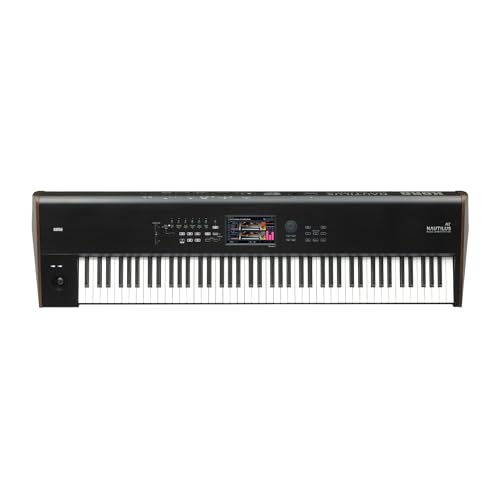
- 88-key RH3 weighted keyboard with aftertouch
- 8-inch Color TouchView display and quick access controls
- Sampling and sequencing modes built into the workflow
Best For: Advanced players who want a premium weighted 88-key workstation with expressive control.
Flagship Creative Workstation
Roland FANTOM-06 Sampling Workhorse

- Deep onboard sampling with multisample support
- ZEN-Core, V-Piano, and SuperNATURAL engines
- Clip-based sequencing with touchscreen control
Best For: Players who want a feature-rich 61-key workstation for sampling and production.
Portable Production Station

- Over 1000 MOTIF-series sounds
- Easy Split/Layer Performance Mode
- 16-part multitimbral with 128-note polyphony
Best For: Players who want a lightweight 61-key production keyboard with a large preset library.
Gig-Ready Synth Workstation

- Over 3800 ZEN-Core sounds
- Sample import for user WAV files
- USB-C audio/MIDI with battery power support
Best For: Gigging keyboardists who want a compact synth with sample import and modern connectivity.
Flagship Performance Workstation
Yamaha MODX M6 61-Key Synthesizer

- 3 sound engines for analog, FM, and realistic tones
- 8 faders, Super Knob, and touch screen for control
- 61 semi-weighted keys with improved playability
Best For: Players who want a lightweight performance workstation for stage or studio
Beat-Making MIDI Workstation Controller

- 37 velocity-sensitive mini keys with DAW control
- 8 MPC pads plus 64-step sequencer for beat making
- MIDI/CV/Gate I/O for external synths and modules
Best For: Beat makers who want a compact controller for sequencing and hardware integration
Compact Studio Entry Controller
Akai LPK25 25-Key MIDI Keyboard

- 25 velocity-sensitive mini keys in a tiny footprint
- Built-in arpeggiator and clock for creativity
- USB-powered with plug-and-play setup
Best For: Producers who want a simple, ultra-portable MIDI keyboard for DAW sketching
Standalone Sampling Workstation – Akai MPC Key 37 G2 for Producers
The Akai Professional MPC Key 37 G2 is a strong fit for workstation keyboards with sampling if you want a compact, all-in-one production setup. It combines a 37-key synth-action keybed, 16 MPC pads, a 7-inch touchscreen, and MPC3 OS workflow so you can sample, sequence, and arrange without depending on a computer.
Best For: Producers who want a standalone keyboard workstation that blends keys, pads, sampling, and full song building in one unit.
Pros:
- Standalone MPC3 OS lets you create, arrange, and finish tracks without a computer.
- Fast sampling workflow supports sampling directly from phones, tablets, and external devices via USB-C.
- USB-C one-cable connectivity handles multichannel audio, MIDI, host/device support, and studio integration.
- 8-core processor and 4GB RAM support up to 16 stereo audio tracks and 32 plugin instruments per project.
Cons:
- Only 37 keys, so it is less suited to players who want a larger keyboard range.
- May be more feature-rich than needed if you only want a simple keyboard for practice.
Overall, this is a modern sampling workstation for producers who want hands-on control and a laptop-free workflow. Its strength is the mix of MPC pads, keys, and standalone production tools in a compact format.
Portable Music Workstation – Korg i3 Workstation Keyboard
The Korg i3 is a practical option in workstation keyboards with sampling if you want a portable 61-key setup for composing and performing complete tracks. It focuses on quick music creation with a broad sound set, velocity-sensitive keys, and performance-oriented controls that make it easy to build layered ideas.
Best For: Players who want a portable music workstation for composing, arranging, and live performance with a full-size keybed.
Pros:
- 61 velocity-sensitive keys with three touch curves for flexible response.
- 790 instrument sounds and 59 drum kits provide a wide starting palette.
- Style Performance Sound Sets make layering sounds straightforward.
- Backlit panel buttons, a screen, and a joystick support performance and navigation.
Cons:
- Its notes emphasize workstation sounds and performance features more than deep sampling controls.
- No touchscreen or modern standalone production workflow is listed.
If your priority is a straightforward workstation keyboard with a large sound library and easy live control, the i3 makes sense. It is aimed more at fast composition and performance than at advanced studio sampling systems.
Compact Sampling Center – Akai MPC One G2 Desktop Workstation
The Akai Professional MPC One G2 is a compact choice in workstation keyboards with sampling for producers who want a desktop unit rather than a full keyboard. It keeps the focus on beatmaking, sampling, sequencing, and full-song creation with MPC3 OS, a 7-inch touchscreen, and one-cable USB-C connectivity.
Best For: Beatmakers and producers who want a compact standalone sampling and sequencing hub for a small studio or travel rig.
Pros:
- Standalone MPC3 OS supports sampling, sequencing, arranging, and performance without a computer.
- Fast sampling workflow can capture audio directly from phones, tablets, and external devices via USB-C.
- USB-C provides multichannel audio streaming and expanded MIDI over a single connection.
- 8-core processor supports up to 16 stereo audio tracks and 32 plugin instruments per project.
Cons:
- Uses 16 pads rather than a traditional keyboard, so it is not for players who need keys.
- Best suited to pad-based production workflows instead of live piano-style playing.
This is a strong desktop production center if sampling speed and portability matter more than keyboard performance. It offers the same modern MPC-style workflow in a smaller format that fits tight studio spaces well.
Premium 88-Key Workstation – Korg NAUTILUS AT 88 with Aftertouch
The Korg NAUTILUS AT stands out among workstation keyboards with sampling if you want a premium 88-key instrument with deep control and a weighted feel. It combines aftertouch, an RH3 keyboard, a large touch display, and direct access to sampling and sequence modes for players who want a serious workstation.
Best For: Advanced players who want an expressive 88-key music workstation with premium weighted action and broad performance control.
Pros:
- 88-key RH3 weighted keyboard with aftertouch for expressive playing.
- 8-inch Color TouchView display provides detailed control and navigation.
- MODE button and Quick Access buttons make sampling, sequencing, and performance modes easier to reach.
- DYNAMICS knob lets you shape volume and tone response in real time.
Cons:
- Large and heavy at 50.9 pounds, so it is not ideal for portable use.
- Its advanced feature set may be more than casual users need.
For musicians who want a high-end workstation with a full weighted key range, this model delivers a lot of expressive control. It is best viewed as a performance and studio centerpiece rather than a lightweight portable keyboard.
Flagship Creative Workstation – Roland FANTOM-06 Sampling Workhorse
If you want workstation keyboards with sampling that can cover writing, sound design, and live performance, the Roland FANTOM-06 is built to do a lot in one lightweight board. It combines deep onboard sampling, multisample support, and a large sound set with hands-on controls that make it easier to move from idea to finished part without leaving the keyboard.
Best For: Players who want a feature-rich 61-key workstation for sampling, sequencing, and stage use.
Pros:
- Deep onboard sampling with pitched keyboard assignment and multisample support
- ZEN-Core, V-Piano, and SuperNATURAL sound engines with thousands of sounds
- Clip-based workflow, TR-REC step sequencer, and piano-roll editing for production
- Large color touchscreen plus pads, sliders, knobs, and dedicated synth controls
Cons:
- 61-note synth-action keybed may not suit players wanting weighted keys
- Feature set is broad, which can feel complex for simple plug-and-play use
The FANTOM-06 stands out if sampling is part of a bigger production setup, not just an extra feature. Its combination of sound engines, sequencing tools, and control layout makes it a practical centerpiece for building tracks and performing them live.
Portable Production Station – Yamaha MX61 Sound Library
The Yamaha MX61 is a straightforward option among workstation keyboards with sampling-adjacent workflow support in a portable format. It does not advertise onboard sampling, but it does give you over 1000 MOTIF-series sounds, performance layering tools, and included music production software for building songs quickly.
Best For: Players who want a lightweight 61-key production keyboard with a big preset library and software support.
Pros:
- Over 1000 sounds from the MOTIF series
- Easy Split/Layer Performance Mode for quick song building
- 16-part multi timbral operation with 128-note polyphony
- Includes music production software
Cons:
- No onboard sampling feature is listed in the supplied product details
- Less focused on deep workstation-style editing than higher-end models
For buyers who care more about portability and a large sound palette than advanced sample editing, the MX61 is easy to live with. It works best as a compact production keyboard where layering, multitimbral parts, and software integration matter more than built-in sampling.
Gig-Ready Synth Workstation – Roland JUNO-D6 Sample Import
For players comparing workstation keyboards with sampling, the Roland JUNO-D6 takes a practical live-performance angle. It offers over 3800 ZEN-Core sounds, an intuitive layout, and a sample import function for playing and editing user WAV files, making it useful if you want stage-ready sounds plus basic user sample handling.
Best For: Gigging keyboardists who want a compact synth with sample import and modern connectivity.
Pros:
- Over 3800 onboard sounds powered by the ZEN-Core engine
- Sample import function for user WAV files
- USB-C class-compliant audio and MIDI for computers and mobile devices
- Battery-powered support and compact 61-note synth-action design
Cons:
- Sampling is limited to sample import, not deep onboard sampling features
- 61 synth-action keys may not satisfy players wanting a more weighted feel
The JUNO-D6 is a smart pick if you want a streamlined board that can handle live sets, quick sound changes, and user WAV playback without a complicated workflow. It is less of a full production workstation than the FANTOM-06, but it covers the essentials cleanly for stage use.
Flagship Performance Workstation – Yamaha MODX M6 61-Key Synthesizer
If you want workstation keyboards with sampling-style studio flexibility and hands-on sound design, the Yamaha MODX M6 is built for that kind of workflow. Its three sound engines cover classic analog-style tones, FM synthesis, and realistic instrument sounds, while the improved 61-key semi-weighted action and performance controls make it a strong fit for players who need expression and speed.
Best For: Synth players and producers who want a lightweight 61-key workstation for stage or studio performance.
Pros:
- Three sound engines provide a wide range of synth and instrument tones.
- 8 faders, Super Knob, touch screen, and 6 display knobs support fast hands-on editing.
- 61 semi-weighted keys offer more substantial synth action than the previous MODX+.
- Expanded ESP plugin lets you work with sounds in a DAW.
Cons:
- Designed for serious synth and workstation use, so it may be more than casual buyers need.
- No built-in sampler is listed in the supplied details.
The MODX M6 is the most performance-focused option here, especially if you value expressive control and quick workflow over a compact controller layout. It suits players who want a keyboard that can handle sound exploration on stage and in the studio.
Beat-Making MIDI Workstation Controller – Akai MPK Mini Plus 37-Key
For workstation keyboards with sampling-friendly beat making, the Akai MPK Mini Plus is a compact controller built to move ideas into a DAW or hardware setup quickly. It pairs velocity-sensitive keys with MPC pads, a 64-step sequencer, and MIDI/CV/Gate connections, so it works well when you want to sketch rhythms, trigger sounds, and control external gear.
Best For: Beat makers and producers who want a compact controller with pads, sequencing, and hardware connectivity.
Pros:
- 37-key velocity-sensitive keybed gives you three octaves for melodic and harmonic parts.
- 8 RGB MPC pads and Chords/Scales modes help with beat creation and performance.
- Built-in 64-step sequencer lets you compose without a computer.
- MIDI I/O and CV/Gate support make it useful with modular gear and synths.
Cons:
- Mini keys may feel small for players used to full-size keyboards.
- It is a controller, not a full standalone workstation.
The MPK Mini Plus is a strong pick if you want a portable control surface that blends pads, sequencing, and external gear support. It is especially appealing for sampling-focused workflows where fast rhythm programming matters.
Compact Studio Entry Controller – Akai LPK25 25-Key MIDI Keyboard
If you are shopping for workstation keyboards with sampling in a very small form factor, the Akai LPK25 is the simplest of the group. It gives you velocity-sensitive mini keys, octave shift buttons, a sustain button, and a built-in arpeggiator, making it useful for quick melodic ideas, software instruments, and portable production setups.
Best For: Producers who want a very compact USB MIDI keyboard for sketching parts and working in DAWs.
Pros:
- 25 velocity-sensitive mini keys keep the footprint extremely small.
- Octave up/down buttons help cover a wider note range.
- Built-in arpeggiator and clock add creative performance options.
- USB power and plug-and-play compatibility make setup easy.
Cons:
- No pads, knobs, or sequencer for deeper workstation-style control.
- Mini key layout is best for short parts rather than full piano-style playing.
The LPK25 makes sense when portability and simplicity matter more than an expanded control surface. It is a practical entry-level choice for writing parts in software and keeping a small production rig uncluttered.
How We Picked the Best Workstation Keyboards with Sampling
We prioritized instruments that offer practical sampling features, strong onboard sound libraries, responsive keybeds, and workflows suited to composing, arranging, and live performance. We also weighed portability, connectivity, storage options, and how quickly each unit gets you from idea to finished track.
Quick Comparison
In broad terms, the roundup splits into full production workstations, hybrid sampler-keyboards, and compact controller-style options. Full-size flagship models tend to offer the deepest sound design and performance features, while smaller units are better for travel, sketching ideas, or pairing with a computer-based studio.
Key Buying Factors for Workstation Keyboards with Sampling
Sampling Workflow
Look for how samples are recorded, trimmed, assigned, and triggered. Some models favor fast pad-based workflows, while others emphasize deeper editing and sequencing. If sampling is central to your process, make sure the interface is efficient enough for frequent use.
Key Action and Size
Keyboard feel matters more than many buyers expect. Weighted keys suit pianists and studio composers, synth action supports lead and pad playing, and compact mini keys fit mobile setups. Match the action to your playing style and the music you create.
Sound Engine and Expansion
Strong factory sounds can save time, but expansion potential is just as important. Consider onboard synthesis, preset quality, and whether the instrument supports additional libraries, firmware updates, or integration with external gear.
Workflow and Connectivity
For Workstation Keyboards with Sampling, fast navigation is essential. Screens, pads, sequencers, DAW integration, USB/MIDI connections, and audio I/O all affect how smoothly the keyboard fits into your studio or stage rig.
Who Should Buy Which Workstation Keyboards with Sampling?
If you want an all-in-one production hub, choose a flagship workstation with deep sequencing and sampling tools. If you mainly make beats, a compact production keyboard or pad-driven sampler can be the better fit. Players who need expressive keys and premium sounds should lean toward higher-end 61- or 88-key instruments. For portable writing, travel, or DAW control, smaller MIDI keyboard controllers are often the most practical choice.
In the end, the best option depends on whether you value sampling depth, key feel, portability, or speed. Focus on the features you will actually use every day, and you will end up with a workstation that supports your workflow instead of slowing it down.