If you want a compact USB audio interface for basic recording, podcasting, or a small home studio, the Jolgoo 2×2 USB Audio Interface is built around the right essentials.
It focuses on high-resolution recording, phantom power, and simple direct monitoring rather than extra software or flashy extras.
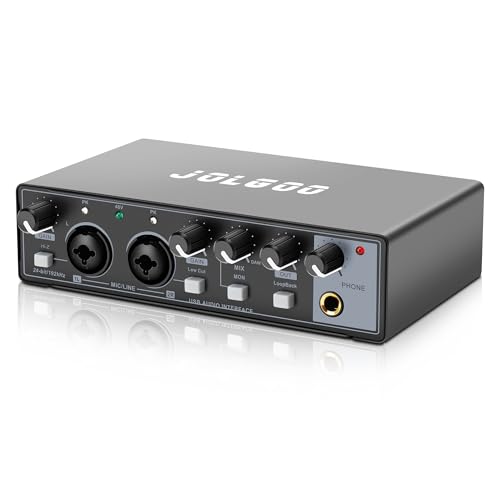
Jolgoo 2×2 USB Audio Interface Review Summary
The Jolgoo 2×2 USB Audio Interface makes sense for creators who want a straightforward box that can handle a condenser mic, a guitar, or a podcast setup without a lot of setup friction.
Based on the listing, it is aimed at people who value plug-and-play convenience, dual input flexibility, and portable recording more than deep studio routing or bundled production features.
That makes it a sensible option for solo musicians, home podcasters, and beginners moving up from a laptop mic or a basic headset interface.
Its strongest appeal is that it combines 24-bit/192kHz audio, +48V phantom power, direct monitoring, and a metal build in one compact unit.
Review Scorecard
| Category | Score | Why it matters |
|---|---|---|
| Recording versatility | 8/10 | Dual combo inputs cover mic and instrument use cases. |
| Vocal recording readiness | 8/10 | +48V phantom power supports condenser microphones. |
| Monitoring convenience | 9/10 | Direct monitoring helps avoid distracting latency. |
| Resolution and fidelity | 8/10 | 24-bit/192kHz support is strong for home recording. |
| Portability | 8/10 | USB power and compact size suit mobile setups. |
| Setup simplicity | 9/10 | Driver-free, plug-and-play use lowers the barrier to entry. |
| Build confidence | 7/10 | Metal housing is a plus, though long-term durability is untested here. |
Key Features and Specifications of Jolgoo 2×2 USB Audio Interface
The listing positions this interface as a compact recording hub with two combo inputs, independent gain control, LED peak indicators, and dedicated headphone monitoring.
It is designed for USB-powered use, so there is no wall adapter requirement in the product description.
The core feature set is practical rather than expansive:
- 24-bit/192kHz audio conversion
- +48V phantom power for condenser microphones
- Direct monitoring switch for real-time playback
- XLR/line combo inputs
- Independent gain controls
- LED peak indicators
- Stereo line outputs for monitors
- Headphone monitoring
- USB-C and USB-A cables included
- Metal housing for interference shielding
The compatibility claims are broad as well.
The listing says it works with Windows, macOS, iOS, Android, and common DAWs such as Audacity, Ableton, and Pro Tools.
That makes it appealing as a general-purpose interface for a mixed home-studio environment, although the listing does not spell out advanced routing or bundled software.
Pros and Cons of Jolgoo 2×2 USB Audio Interface
Pros
- Simple to start using. The driver-free, USB-powered setup is a major advantage for beginners.
- Useful for multiple sources. The combo inputs and phantom power support both microphones and instruments.
- Direct monitoring is a real benefit. Hearing your input without delay matters for vocals and podcasting.
- Portable by design. The compact footprint and included cables make it easier to move between setups.
- More than a bare-bones box. Features like LED peak indicators and stereo line-outs add real utility.
Cons
- Not a full studio controller. There is no evidence of advanced routing, DSP effects, or extensive I/O.
- Feature depth is limited on paper. The listing focuses on core recording basics rather than pro-level control.
- No hands-on performance data. The record supports the specs, but not real-world noise-floor or preamp comparisons.
- Best for simpler setups. If you need many inputs or complex monitoring, this is probably too modest.
Who Should Buy Jolgoo 2×2 USB Audio Interface?
This interface fits new or intermediate creators who want a clean path into better recording.
If your priority is recording one or two sources at a time, powering a condenser mic, and checking levels without delay, the Jolgoo design lines up well with that workflow.
It is also a reasonable match for people who record in multiple places.
The USB-powered design, compact body, and included USB-C and USB-A cables make it easier to move between a desktop rig, a laptop setup, or a portable podcast station.
You should probably skip it if you need a larger input count, specialized studio features, or deeper software integration.
The listing suggests a focused interface, not an all-in-one production surface.
Recording Workflow and Control on Jolgoo 2×2 USB Audio Interface
Input Flexibility
The two combo inputs are the key practical advantage here.
They let the interface handle a mic, guitar, or other line-level source without forcing you into a single-purpose setup.
Monitoring and Gain Staging
Direct monitoring and independent gain controls make day-to-day use simpler.
For vocal tracking, podcast recording, or live overdub work, that combination helps reduce timing issues and makes clipping easier to manage.
Recording Quality Targets
The listed 24-bit/192kHz support suggests a modern baseline for home recording.
That does not guarantee a superior sound by itself, but it does place the interface in a category that should be more than adequate for most casual and semi-serious projects.
Build and Portability
The metal housing and USB-powered design matter because they make the unit easier to trust and easier to move.
If you record in a small desk setup and occasionally travel with gear, those are practical advantages rather than cosmetic ones.
Alternatives to Jolgoo 2×2 USB Audio Interface
If you want to compare the Jolgoo against better-known options, these Amazon search pages are sensible starting points:
Focusrite is the most obvious comparison if you want a widely recognized entry-level interface with a similar two-input shape.
PreSonus and M-Audio are worth checking if you want a compact home-studio interface from a familiar audio brand.
Behringer is the budget-oriented alternative if you want to stay with the simplest possible setup.
Is Jolgoo 2×2 USB Audio Interface Worth It?
Yes, if you want a simple 2-in/2-out style interface for vocal recording, podcasting, or light instrument tracking. The appeal is not premium studio complexity; it is a compact, easy-to-understand feature set built around phantom power, direct monitoring, and portable USB use.
If you are buying for a small home studio and want fewer obstacles between plugging in and recording, the Jolgoo 2×2 USB Audio Interface looks like a sensible fit.
If you need more channels, more processing, or deeper professional control, look at the alternatives instead.