Choosing the right sampler can shape your entire workflow, from quick sketching to full track production. The best options for 2026 balance sound quality, hands-on control, and the features you’ll actually use.
This roundup focuses on samplers for recording that suit different budgets and creative styles, including portable beat tools, performance samplers, and studio-friendly setups.
Best 10 Samplers for Recording Picks for 2026
Portable MPC Sampler
Akai MPC Sample for Beatmaking Anywhere

- Standalone battery-powered sampler with internal mic and speaker
- 16 MPC pads, color display, and quick chopping workflow
- USB-C, line I/O, and MIDI support for studio or live use
Best For: DAWless beatmakers and portable recording
Studio Recording Bundle
PreSonus AudioBox USB 96 Starter Kit

- Interface, condenser mic, headphones, and stand included
- Studio One Artist and Studio Magic software bundled
- All required cables included for a simple setup
Best For: Home recordists starting a computer-based studio
Groovebox Sampler
Novation Circuit Rhythm for Live Sampling

- Records directly from phones, turntables, or synths
- Eight sample tracks with chainable step patterns
- Performance FX and 4-hour battery for portable use
Best For: Live beatmakers and resampling workflows
Budget Sample Pad
Akai MPX8 for Simple Sample Playback

- Eight velocity-sensitive pads for expressive triggering
- Loads WAV samples from SD or SDHC cards
- USB MIDI and standard MIDI I/O for gear control
Best For: Simple sample playback and live triggering
Portable Beat-Making Sampler
teenage engineering EP-133 K.O. II
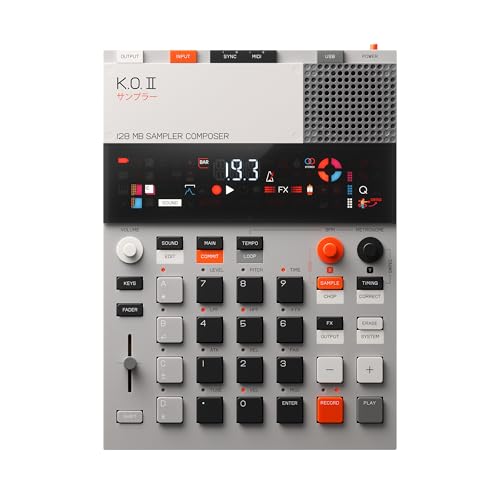
- Built-in mic and line-in for quick sampling
- 4 groups x 99 patterns for fast sequencing
- 12 punch-in effects plus 6 master effects
Best For: Beatmakers who want fast capture and live performance control
Pocket Creative Sampler

- Built-in mic for quick sample capture
- Chop and step sampling for easy slicing
- Granular controls for deeper sound design
Best For: Mobile creators who want quick capture and creative sample shaping
Sculpting Stereo Sampler

- Four stereo tracks with real-time recording and overdub
- Granular processing with up to 128 grains
- Scenes and macros for performance control
Best For: Sound designers and performers who want deep recording and transformation tools
Portable SP Workflow

- Pattern sequencer with 16 performance pads
- Mic/guitar, stereo line, and MIDI I/O
- Includes semi-rigid CB-404 gig bag
Best For: Portable beatmakers who need a sampler and protective carry case
Lo-Fi Recording Choice

- 12/24kHz sampling with 12-bit mode
- 8-track sequencer and built-in FX
- Battery-powered and compact
Best For: Creators who want a compact lo-fi sampler for recording
Bundle Value Pick
Roland SP-404MKII with Headphones

- SP-404MKII plus headphones and cloth
- OLED display for waveform editing
- Flexible power options for portable use
Best For: Buyers who want the SP-404MKII with basic monitoring accessories
Portable MPC Sampler – Akai MPC Sample for Beatmaking Anywhere
If you want samplers for recording with a true standalone workflow, the Akai Professional MPC Sample is built to capture ideas without needing a computer. Its internal microphone, rechargeable battery, speaker, and microSD storage make it easy to record, chop, and build beats wherever inspiration hits.
Best For: DAWless beatmakers, finger drummers, and creators who want portable recording and MPC-style sampling.
Pros:
- Standalone operation with battery power, built-in speaker, internal mic, and microSD storage.
- 16 responsive MPC pads plus a 2.4″ full-color display for hands-on sampling and editing.
- Strong onboard effects, including 60 effect types and dedicated control knobs.
- USB-C audio/MIDI, stereo line I/O, and MIDI sync support for studio or live setups.
Cons:
- MIDI DIN adapters are not included for the 1/8″ MIDI connections.
- It is more focused on sampling and beatmaking than being a full recording studio.
This is a strong fit if you want a compact sampler that can record and shape ideas fast while staying fully portable. It leans into the classic MPC workflow, but keeps the setup simple for beginners and flexible enough for experienced producers.
Studio Recording Bundle – PreSonus AudioBox USB 96 Starter Kit
For buyers comparing samplers for recording, this PreSonus package is less about sampling hardware and more about getting a complete home-recording setup in one box. The AudioBox USB 96 interface, condenser mic, headphones, and included software give you the basics for capturing vocals and instruments right away.
Best For: Home recordists who need an all-in-one starter kit for vocals, instruments, and computer-based production.
Pros:
- Includes an AudioBox USB 96 interface, M7 condenser mic, HD7 headphones, and desktop mic stand.
- Comes with Studio One Artist and Studio Magic software for recording and production.
- USB connectivity and 2-channel support suit basic home studio recording.
- All required cables are included, which simplifies first-time setup.
Cons:
- It is a recording package, not a dedicated sampler or groovebox.
- Best suited to computer-based workflows rather than standalone sampling.
If your main goal is to record clean audio rather than build beats on a hardware sampler, this bundle is a practical entry point. It is a straightforward way to start tracking vocals and instruments with the core gear already included.
Groovebox Sampler – Novation Circuit Rhythm for Live Sampling
The Novation Circuit Rhythm is a smart pick for samplers for recording when you want to grab audio directly into a groovebox and turn it into beats fast. You can plug in a phone, turntable, or synth, record sounds into the machine, then resample and shape them across eight sample tracks.
Best For: Live beatmakers and sample-based producers who want fast recording, resampling, and performance features.
Pros:
- Records directly from external sources like phones, turntables, and synths.
- Eight sample tracks with 32-step patterns, chainable up to 256 steps per track.
- Built-in performance FX such as lo-fi tape and beat repeat for textured beats.
- Standalone design with a 4-hour battery for mobile beatmaking sessions.
Cons:
- Storage and workflow are centered on sample performance, not full multitrack recording.
- Its hands-on style may feel more specialized than a general-purpose recorder.
This is a creative, performance-first sampler that rewards quick recording and immediate experimentation. If you want a box that can capture sounds and turn them into finished ideas without a laptop, it delivers a focused workflow.
Budget Sample Pad – Akai MPX8 for Simple Sample Playback
If you need a compact option in the samplers for recording category, the Akai MPX8 is a straightforward sample playback pad for triggering sounds from SD media. It does not record audio on its own, but it does make it easy to load WAV samples and trigger them from eight velocity-sensitive pads.
Best For: Players who need a simple pad controller for sample playback, live triggering, and MIDI control.
Pros:
- Eight backlit velocity- and pressure-sensitive pads for expressive triggering.
- Loads 16-bit mono WAV samples from SD or SDHC cards.
- USB MIDI plus standard MIDI I/O for controlling software or external gear.
- Sample kit editor adds tuning and reverb control for basic customization.
Cons:
- It is a playback device, not a true audio recorder.
- Sample storage is limited to SD-based kits and small assignment sizes.
The MPX8 is best viewed as a lightweight way to trigger prepared samples rather than create them from scratch. For simple live use or adding sample hits to a setup, it offers the essentials without extra complexity.
Portable Beat-Making Sampler – teenage engineering EP-133 K.O. II
If you want samplers for recording that also double as a fast sketchpad for beats, the EP-133 K.O. II is built around speed. It lets you sample from the built-in mic or line-in, then move quickly into pattern building, resampling, chopping, and live effects control.
Best For: Beatmakers and performers who want a compact sampler for capturing sounds, building patterns fast, and shaping them live.
Pros:
- Built-in microphone plus line-in for recording sounds around you or external gear
- Reworked sequencer with 4 groups x 99 patterns for fast beat construction
- 12 punch-in 2.0 effects and 6 master effects for live performance tweaking
- OS 2.0 adds resampling, chopping, sidechain, song mode, and extended MIDI support
Cons:
- Runs on a compact workflow that may feel specialized if you want a traditional sampler layout
- Designed for portability, so it is more about quick creation than deep studio integration
The K.O. II is a strong choice if you value immediacy: record, sample, sequence, and perform without a lot of setup. Its built-in mic and performance-focused features make it especially practical for turning everyday audio into tracks fast.
Pocket Creative Sampler – Roland AIRA Compact P-6
The Roland AIRA Compact P-6 is a practical pick among samplers for recording when portability and quick sound capture matter. Its built-in mic, chop tools, step sampling, and resample functions are aimed at making it easy to grab audio and turn it into playable ideas on the go.
Best For: Mobile creators who want a pocket sampler for recording, chopping, and reshaping sounds quickly.
Pros:
- Built-in microphone for recording sounds without extra equipment
- Chop and step sampling features for splitting audio into playable parts
- Resample capability for building new loops and custom textures
- Granular sound design controls for detailed sonic shaping
Cons:
- Small format may suit hands-on sketching more than large-scale sampling sessions
- Advanced editing depends on the included P-6 Sample Tool software
Overall, the P-6 is a good fit if you want a compact sampler that focuses on quick recording and creative manipulation. It combines immediate capture with deeper sound-shaping tools, which makes it useful for experimentation and portable production.
Sculpting Stereo Sampler – S4 Sculpting Sampler
For samplers for recording that lean into transformation as much as capture, the S4 Sculpting Sampler is built around four parallel stereo tracks and a deep effects chain. It supports real-time recording, overdub, sound-on-sound loops, varispeed recording, and external audio processing, so it is geared toward turning recorded material into evolving textures.
Best For: Sound designers and live performers who want a recording sampler with heavy processing, modulation, and scene-based control.
Pros:
- Four stereo tracks with real-time recording, overdub, and sound-on-sound looping
- Granular engine with up to 128 grains and detailed control over movement and pitch
- Scene storage and global macro controls for performance and composition workflows
- USB-C audio interface support for flexible recording and routing
Cons:
- Its feature set is more focused on shaping sound than simple one-step sampling
- May be more sampler than casual users need if they only want basic capture and playback
The S4 stands out when your goal is not just to record audio, but to mold it into textures and performance-ready scenes. It offers a powerful mix of sampling, modulation, and processing that should appeal to experimental users.
Portable SP Workflow – Roland SP-404MKII + Gig Bag
If you want samplers for recording that can also travel safely, this Roland SP-404MKII bundle is built around fast creative workflow and practical portability. It combines the SP-404MKII sampler workstation with a semi-rigid CB-404 gig bag, giving you pattern sequencing, mic/guitar input, stereo line I/O, MIDI, and onboard storage in one setup.
Best For: Portable beatmakers and recording-focused creators who need an all-in-one sampler plus protective carry case.
Pros:
- Sampler workstation includes a pattern sequencer and 16 performance pads.
- Mic/guitar input, stereo line I/O, and MIDI I/O support flexible recording setups.
- 16GB onboard storage and two headphone outputs add practical studio convenience.
- Bundle includes the CB-404 gig bag with padded interior, shoulder strap, and detachable pouch.
Cons:
- The bundle is still centered on the SP-404MKII workflow, so it may be more performance-oriented than traditional studio sampling.
- At 7.1 pounds for the full package, it is not the lightest option to carry.
The strength of this package is that it pairs a capable sampler with a purpose-built bag, which makes it easier to move between sessions without extra setup hassle. For recording-focused users who value speed, input flexibility, and protection, it is a solid practical choice.
Lo-Fi Recording Choice – Sonicware Lofi-12 XT
For samplers for recording with a distinct character, the Sonicware Lofi-12 XT focuses on early-digital sound and compact beat making. Its 12/24kHz sampling, 12-bit sampler mode, and built-in background mix-tape recording make it appealing if you want a lo-fi workflow in a battery-powered unit.
Best For: Creators who want a compact lo-fi sampler with a recording-friendly, old-school sound.
Pros:
- 12/24kHz sampling and 12-bit mode deliver a clear lo-fi character.
- 8-track sequencer supports non-stop beat making.
- Includes 8 insert FX plus delay, reverb, and master FX for shaping recordings.
- Battery power and compact size make it easy to use away from a desk.
Cons:
- Its sound profile is specifically lo-fi, so it may not suit users seeking a cleaner sampler.
- Included components are limited to an AC adaptor and SD card.
This is a strong pick if your recording goals lean toward texture, grit, and a compact creative setup. The built-in sample library and mix-tape recording feature add convenience, but the real appeal is the intentionally early-digital sound.
Bundle Value Pick – Roland SP-404MKII with Headphones
If you are shopping for samplers for recording and want a ready-to-use package, this Roland SP-404MKII bundle adds monitoring accessories to the core unit. You get the creative sampler and effector, plus Samson SR350 over-ear stereo headphones and a polishing cloth, along with the SP-404MKII’s OLED display, velocity-sensitive RGB pads, and onboard looping features.
Best For: Buyers who want the SP-404MKII plus basic monitoring accessories in one bundle.
Pros:
- Includes the SP-404MKII sampler and effector with headphones and a cleaning cloth.
- Vivid OLED display supports visual waveform editing.
- 17 velocity-sensitive RGB pads offer expressive performance control.
- USB-C, mobile battery, six AA batteries, or AC adaptor power options support flexible use.
Cons:
- The bundle accessories are basic, so it is not a full studio package.
- Most value comes from the SP-404MKII itself if you already own headphones.
This bundle makes sense if you want the SP-404MKII platform and prefer to get essential extras at the same time. It is a straightforward option for recording and performance work, especially if portability and quick setup matter.
How We Picked These Samplers for Recording
We prioritized versatility, ease of use, recording quality, performance features, and value. A strong sampler for recording should make it simple to capture audio, edit quickly, and build ideas without slowing your creative flow. We also looked for models that fit different use cases, from portable sampling to deeper production and live performance.
Quick Comparison
Not every sampler is built for the same job. Some are best for finger drumming and clip launching, while others focus on compact sketching, gritty lo-fi textures, or all-in-one beat production. If you want a straightforward starting point, look for a model with solid onboard recording, intuitive pads or buttons, and enough storage or sample management to avoid constant file juggling.
Key Buying Factors for Samplers for Recording
Recording Workflow
Check how the unit captures audio: onboard microphone, line input, USB audio, or external recording only. Faster capture matters if you plan to sample ideas on the fly.
Editing and Sampling Tools
Look for trimming, chopping, time-stretching, pitch control, and effects. These features help turn raw recordings into usable parts without needing a computer.
Portability and Power
If you create away from the studio, battery power, compact size, and durable controls matter. Desktop units may offer more depth, but portable models are easier to carry and use anywhere.
Storage and Sample Memory
Consider sample length, memory limits, and media support. Larger projects need more headroom, especially if you layer drums, vocals, and melodic samples.
Connectivity
USB, MIDI, line inputs, and sync options affect how well the sampler fits into your setup. Choose based on whether you work standalone, with a DAW, or with external gear.
Who Should Buy Which Samplers for Recording?
If you want an all-around creative centerpiece, choose a deeper production sampler with strong sequencing and editing. If you mainly need fast idea capture, a compact groovebox or portable sampler may be the better fit. Studio users should favor models with reliable audio integration and flexible connectivity, while live performers should focus on responsive controls, effects, and rugged design. For lo-fi or experimental sounds, a sampler with characterful conversion or granular tools can be especially inspiring.
In short, the best Samplers for Recording are the ones that match your workflow, not just the spec sheet. Pick the model that makes it easiest to capture ideas, shape them, and keep making music.