Choosing the right recorder can make podcast production faster, cleaner, and more reliable. The best options balance audio quality, input flexibility, portability, and easy file transfer.
This roundup of voice recorders for podcasts highlights standout picks for studio-style setups, remote interviews, and on-the-go creators, so you can match the device to your workflow.
Best 10 Voice Recorders for Podcasts Picks for 2026
Multi-Guest Podcast Hub
Zoom PodTrak P4 Podcast Recorder

- 4 XLR mic inputs with phantom power
- 4 headphone outputs with independent volume
- Mix-Minus for phone and remote interviews
Best For: Multi-host podcasts and remote call-in interviews
AI Meeting Note Taker
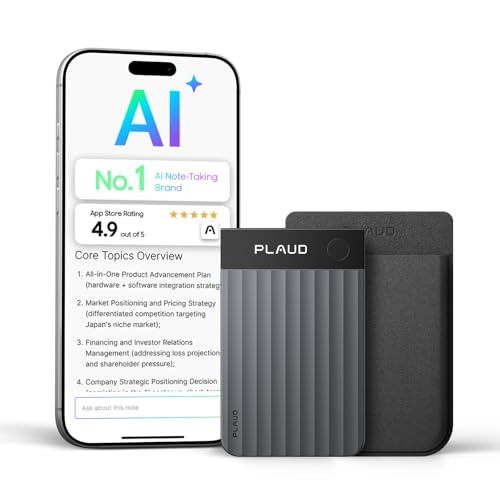
- AI transcription, summaries, and ASK Plaud
- Auto switches between call and meeting modes
- Slim body with long battery life
Best For: Interviewers and creators who want AI note-taking plus recording
AI-Enhanced Podcast Rig

- Four XLR inputs with multitrack recording
- AI noise reduction and tone enhancement
- Four headphone outputs with separate volume
Best For: Podcast teams wanting easier setup and automatic audio cleanup
Portable AI Dictaphone

- 128GB storage with up to 33 hours recording
- AI transcription, summaries, and speaker ID
- One-touch operation with privacy lock
Best For: Solo podcasters and interviewers needing a pocketable recorder
Studio-Ready 4-Track Flexibility
Zoom H4 Essential Handheld Recorder

- 32-bit float with 4 tracks helps reduce clipped audio.
- Built-in stereo mics and dual XLR/TRS inputs add flexibility.
- USB-C interface mode and SD card backup support podcast workflows.
Best For: Podcasters who need a versatile recorder for interviews and multi-source sessions.
Budget Voice-Activated Pick
EVISTR 64GB Digital Voice Recorder

- PCM noise reduction and adjustable gain support clear voice capture.
- Voice activation helps skip silence and save space.
- 64GB storage and long battery life suit long recording days.
Best For: Podcasters who want a simple, low-cost recorder for spoken content and backups.
Compact USB-C Podcast Option

- 32-bit float recording helps reduce clipped audio.
- Built-in X/Y stereo mics suit podcasts and interviews.
- USB-C mic mode supports calls, livestreams, and voiceovers.
Best For: Creators who want a lightweight recorder for mobile podcasting and voice work.
Easy One-Button Recorder
Compact 16GB Dictaphone for Lectures
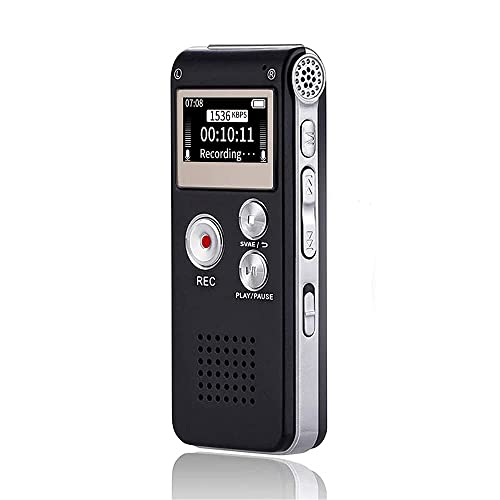
- One-button REC/STOP/PLAY controls
- Noise reduction with voice-activated recording
- Up to 30 hours of recording time
Best For: Beginners needing a simple recorder for voice capture and playback
Dual USB Podcast Hub
PodTrak P2 with AI Noise Reduction

- Two USB mic inputs and two headphone outputs
- Mix-Minus for remote guests without echo
- Records to SD card while streaming live
Best For: Two-person podcasts with USB mics and built-in processing
High-Capacity Voice Capture

- 136GB storage with included 128GB TF card
- Up to 68 hours of recording per charge
- PCM HD audio with dual noise reduction mics
Best For: Long sessions and users who want big storage with simple controls
Multi-Guest Podcast Hub – Zoom PodTrak P4 Podcast Recorder
If you’re comparing voice recorders for podcasts, the Zoom PodTrak P4 is built for small roundtables and remote interviews. It combines four XLR mic inputs, four headphone outputs, and recording features that make it easier to run a multi-person show without extra gear.
Best For: Podcasters who need an all-in-one recorder for multiple hosts, call-ins, and monitoring.
Pros:
- Four XLR mic inputs with phantom power for multi-host recording
- Four headphone outputs with individual volume control
- Automatic Mix-Minus supports phone and remote interviews
- Sound Pads and multitrack recording add flexibility for shows
Cons:
- Battery life is limited to about 3.5 hours on AA batteries
- Uses a compact 2-inch screen, so setup feedback is basic
- Best suited to podcast workflows rather than general note taking
Overall, the P4 is a strong podcast-first recorder if you want simple multi-input control and easy monitoring. It focuses on show production essentials rather than AI features or general-purpose storage.
AI Meeting Note Taker – Plaud Note Pro Voice Recorder
For buyers looking at voice recorders for podcasts, the Plaud Note Pro stands out more as an AI-powered capture and transcription tool than a traditional studio recorder. It records meetings and calls, adds multimodal notes, and can help turn spoken content into summaries and follow-up material.
Best For: Creators who want recording, transcription, and AI summaries in a slim portable device.
Pros:
- AI transcription and summaries with ASK Plaud chat tools
- Automatic switching between call and meeting modes
- Very slim, credit-card-sized design with AMOLED display
- Long battery life and included starter transcription plan
Cons:
- No headphones jack for direct monitoring
- Transcription features depend on the Plaud app and plan limits
- More focused on note taking and summarizing than multi-mic podcast production
In practice, the Note Pro is best if your podcast workflow includes a lot of interviews, meetings, and post-recording organization. It is less of a full podcast mixer and more of a smart capture device with strong AI support.
AI-Enhanced Podcast Rig – Zoom PodTrak P4next Recorder
The Zoom PodTrak P4next is aimed squarely at voice recorders for podcasts when you need four mic inputs and help getting clean audio fast. It adds AI noise reduction, tone enhancement, and COMP tools while still keeping the familiar multi-host recording layout.
Best For: Podcasters who want four-mic recording with built-in AI cleanup tools.
Pros:
- Four XLR inputs with multitrack recording support
- AI noise reduction and tone enhancement help simplify mixing
- Up to +70dB of gain for demanding podcast microphones
- Four headphone outputs with separate volume controls
Cons:
- Designed mainly for podcast production, not general voice memo use
- Battery type is listed as unknown, so portability details are less clear
- AI features may be more than casual users need
As a podcast recorder, the P4next is the most hands-off option in this group for cleaning up audio on the fly. It makes the most sense for teams that want a straightforward four-person setup with fewer manual adjustments.
Portable AI Dictaphone – EVISTR L359 Voice Recorder
If you need voice recorders for podcasts in a compact, travel-friendly form, the EVISTR L359 is more of a handheld recorder than a studio hub. It offers high-bitrate recording, AI transcription, and simple one-touch operation for interviews, rough podcast captures, and on-the-go notes.
Best For: Solo creators and interviewers who want a pocketable recorder with transcription tools.
Pros:
- 128GB storage with up to 33 hours of continuous recording
- AI transcription, summaries, mind maps, and speaker identification
- 3072Kbps HD audio with noise reduction and voice-activated recording
- One-touch operation plus password protection and hold switch
Cons:
- Mono built-in mic is less suited to multi-person podcast production
- No XLR inputs or headphone monitoring for a full studio setup
- Best features depend on the AI DVR Link app and OTG workflow
The L359 is a practical pick when portability and post-recording organization matter more than live podcast routing. It works well as a backup recorder or a simple capture tool, but it won’t replace a dedicated podcast mixer.
Studio-Ready 4-Track Flexibility – Zoom H4 Essential Handheld Recorder
If you want voice recorders for podcasts that can handle interviews, remote chats, and on-the-go episodes, the Zoom H4 Essential gives you a lot of room to grow. Its built-in stereo mics, two XLR/TRS inputs, and USB-C audio interface mode make it useful for creators who need more than a basic pocket recorder.
Best For: Podcasters who want a flexible recorder for interviews, voice work, and multi-source recording.
Pros:
- Records in 32-bit float with 4 tracks to help prevent distorted takes.
- Built-in stereo mics plus two XLR/TRS inputs support external mics and gear.
- USB-C lets you record or stream to a phone, tablet, or computer while saving a backup to SD card.
- Spoken menu guidance can make navigation easier for more users.
Cons:
- Uses 2 AA batteries rather than a built-in rechargeable pack.
- 10-hour digital recording time may be limiting for longer sessions.
The H4 Essential is a strong pick if your podcast setup needs both portability and more advanced input options. It is especially appealing when you want cleaner capture and backup recording in one device.
Budget Voice-Activated Pick – EVISTR 64GB Digital Voice Recorder
Among voice recorders for podcasts, the EVISTR L357 makes sense when you want a simple device for spoken-word capture, note-taking, or backup recording. It focuses on voice clarity, long battery life, and easy file handling rather than advanced podcast hardware.
Best For: Budget-minded podcasters who need a compact recorder for interviews, lectures, and spoken notes.
Pros:
- PCM noise reduction and adjustable gain are designed to improve spoken audio capture.
- Voice-activated recording can reduce silent gaps and save storage space.
- 64GB storage and up to 32 hours of recording time support long sessions.
- Simple 2-button operation makes it easy to start and save recordings quickly.
Cons:
- Built-in mic only, so it is less flexible than multi-input podcast recorders.
- Best suited to voice capture rather than more complex podcast production setups.
The EVISTR is practical if you want straightforward recording for interviews or solo notes without a steep learning curve. It is more of a dependable spoken-audio tool than a full podcasting hub.
Compact USB-C Podcast Option – Zoom H1 Essential Recorder
If you need voice recorders for podcasts that are easy to carry, the Zoom H1 Essential is built for quick stereo capture and straightforward USB-C use. It is a compact option for interviews, voiceovers, and casual podcast recording when portability matters more than multiple inputs.
Best For: Creators who want a lightweight recorder for podcast conversations, voiceovers, and mobile recording.
Pros:
- 32-bit float recording helps protect against clipping in unpredictable spoken sessions.
- Built-in X/Y stereo mics capture clear audio for podcasts and interviews.
- USB-C microphone mode works with livestreams, calls, voiceovers, and desktop or mobile recording.
- Very lightweight design makes it easy to carry to shoots, meetings, and interviews.
Cons:
- Uses 2 AAA batteries, so battery management matters for longer outings.
- Stereo mic design is less expandable than recorders with XLR/TRS inputs.
The H1 Essential is a smart choice for creators who want better voice capture without carrying larger gear. It is especially useful when you need a small recorder that can double as a USB microphone.
Easy One-Button Recorder – Compact 16GB Dictaphone for Lectures
If you want a simple option among voice recorders for podcasts, this compact recorder keeps the learning curve low. It offers one-button recording, playback, A-B repeat, and noise reduction, so it can work for quick solo captures, notes, or basic voice logging without a complicated setup.
Best For: Beginners who want an easy-to-use recorder for straightforward voice capture and playback.
Pros:
- One-button recording with REC, STOP, and PLAY controls
- Built-in noise reduction and sensitive microphone for clearer voice capture
- Voice-activated recording helps save space and battery
- Up to 30 hours of continuous recording time
Cons:
- Designed more for simple recording than full podcast production
- Single built-in mic and mono operation limit advanced use cases
For podcasting, this model makes the most sense when simplicity matters more than multi-track features. It is a practical entry-level recorder for quick spoken-word capture, but it is not built like a dedicated podcast interface.
Dual USB Podcast Hub – PodTrak P2 with AI Noise Reduction
Among voice recorders for podcasts, the Zoom PodTrak P2 is built for a more podcast-specific workflow. It supports two USB microphones, two headphone outputs, remote guest input, and onboard processing, making it a strong choice when you want to record and stream with less post-production work.
Best For: Two-person podcast setups that need USB mic support, monitoring, and built-in processing.
Pros:
- Two USB mic inputs and two headphone outputs for simple two-person recording
- Mix-Minus helps bring in a remote guest without echo
- AI noise reduction, compressor, tone shaping, and de-esser reduce editing needs
- Can record to SD card while streaming to a smartphone or computer
Cons:
- Up to 4 hours on AA batteries may be limiting for long sessions
- Built for a focused two-mic setup rather than larger multi-host productions
This is the most podcast-oriented option in the group, especially if you want a portable recorder that handles guest calls and monitoring cleanly. It is a strong fit for creators who want practical live recording tools instead of a basic voice memo device.
High-Capacity Voice Capture – 136GB Recorder with PCM Audio
If you need a high-capacity pick in voice recorders for podcasts, this Tonfarb model focuses on storage, long runtime, and easy operation. It supports PCM HD recording, automatic noise reduction, voice activation, and one-click recording, which makes it useful for lengthy spoken-word sessions where convenience matters.
Best For: Long recording sessions and users who want large storage with simple controls.
Pros:
- 136GB total storage with included 128GB TF card
- Up to 68 hours of continuous recording on a single charge
- PCM HD audio plus dual noise reduction microphones
- One-click record/save and USB-C file transfer
Cons:
- Built-in recorder format and controls are better suited to solo capture than full podcast workflows
- Mono microphone operation may not suit creators needing multi-mic flexibility
For podcast-related use, this is best as a long-form capture device rather than a studio centerpiece. Its standout strengths are storage, battery life, and easy access to recordings, which suit extended interviews or notes-heavy sessions.
How We Picked These Voice Recorders for Podcasts
We focused on recording quality, input options, portability, battery life, storage, and how well each device fits real podcast workflows. We also weighed features that reduce editing time, such as voice activation, USB connectivity, onboard controls, and transcription tools.
For podcasting, flexibility matters. A good recorder should work just as well for solo episodes as it does for interviews, remote guests, or field recordings.
Quick Comparison
Before buying, decide whether you need a multichannel podcast recorder, a compact handheld recorder, or a simple dictation-style device. Multichannel models are best for studio and co-hosted shows, while smaller recorders suit creators who need portability and quick setup. App-driven and AI-assisted models can help with note-taking, transcription, and cleanup, but they may not replace a dedicated podcast interface.
Key Buying Factors for Voice Recorders for Podcasts
Inputs and Expandability
Count your microphones now and think about growth later. If you plan to record hosts and guests simultaneously, choose a recorder with enough XLR or USB mic inputs and separate headphone monitoring.
Audio Quality and Noise Control
Look for clean preamps, low-noise operation, and built-in noise reduction if you often record in untreated rooms. Features like safety tracks and level control also help protect takes.
Portability and Power
If you record away from a desk, size and battery performance matter. Pocketable models and handheld recorders are easier to travel with, while larger units usually offer better monitoring and more routing options.
Storage and File Management
Ample internal storage, microSD support, and simple USB file transfer make post-production easier. Voice activation can save space, but manual recording is usually better for podcast reliability.
Who Should Buy Which Voice Recorders for Podcasts?
Solo podcasters: Choose a compact recorder with straightforward controls and dependable audio capture.
Interview-based shows: Look for models with multiple mic inputs, headphone outputs, and support for remote callers or USB guests.
Mobile creators and field reporters: A lightweight handheld recorder is usually the best fit for fast setup and travel-friendly recording.
Creators who want transcription and notes: AI-enabled recorders can be useful for summarizing conversations, but make sure the device still meets your recording needs first.
In short, the best Voice Recorders for Podcasts are the ones that match your recording style, not just the longest feature list. Prioritize the inputs, portability, and workflow tools you will use most often.