The best drum machines for home studio setups make it easier to build beats, practice parts, sketch arrangements, and add reliable rhythm tracks without booking studio time. The right choice depends on whether you need hands-on sequencing, realistic kit sounds, looping, or a complete electronic drum setup.
Our roundup includes dedicated drum machines, sampler-based grooveboxes, drum pedals, and beginner-friendly electronic kits. Use the guide below to compare their strengths and choose a model that fits your workflow, space, and budget.
Best 10 Drum Machines for Home Studio Picks for 2026
Classic Workhorse
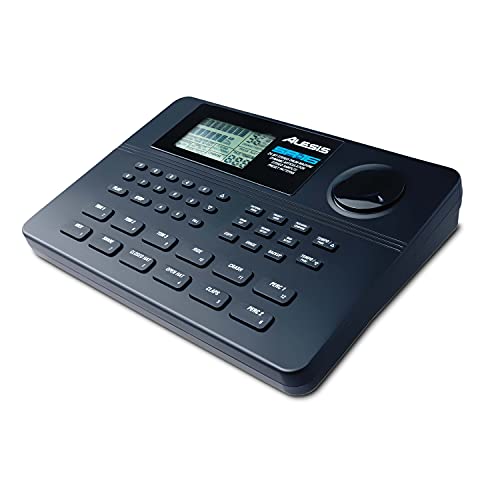
- 233 assignable sounds with 100 total drum kits
- Velocity-sensitive pads and Dynamic Articulation
- MIDI, stereo outputs, footswitch inputs, and effects
Best For: Songwriters and home-studio producers wanting a proven standalone drum machine
Portable Sampling Hub

- Battery-powered sampler with speaker, microphone, and microSD storage
- 16 pads, sample chopping, timestretching, and resampling
- USB-C audio/MIDI plus line, MIDI, and sync connections
Best For: Portable beatmakers and DAWless sample-based producers
Analog Groove Specialist

- Separate accent control for every drum
- Song mode chains patterns for longer arrangements
- Color sound shaping on instruments except Cowbell
Best For: Hands-on electronic producers and live pattern performers
Practice-Ready E-Drum Kit

- Complete seven-piece kit with mesh heads and accessories
- 12 kits, 110 sounds, lessons, exercises, and recording
- Bluetooth audio, USB MIDI, stereo outputs, and headphones
Best For: Beginners and home-studio drummers needing quiet, playable practice
Looper-Driven Beatmaking

- Stereo looper and drum machine in one pedal
- 121 grooves across 11 genres
- 140 minutes of stereo loop storage
Best For: Home-studio musicians needing synchronized looping and rhythm backing
Portable Finger-Pad Practice
Medeli MR101S Portable Drum Machine

- 16 touch-sensitive finger pads
- 48 drum kits and 100 preset patterns
- USB-C or battery powered
Best For: Portable beat practice and straightforward home-studio pad playing
Full-Set Beginner Drumming
AODSK UAED-400 Electric Drum Set

- Complete kit with four pads and three cymbals
- 150 sounds, 15 kits, and 10 demo songs
- USB MIDI, AUX input, and headphone output
Best For: Beginners wanting realistic, quiet-practice electronic drums at home
Loop-and-Rhythm Companion

- Looper and drum machine in one pedal
- 160 minutes of loop capacity
- 100 grooves across 10 musical styles
Best For: Guitarists and loop-based home-studio recording
Quiet Practice Workstation
Donner DED-80 Electronic Drum Set

- Mesh pads and headphone-ready quiet practice
- 180 sounds and 15 built-in drum kits
- USB MIDI connectivity for DAW use
Best For: Beginners and home drummers needing a complete electronic kit
Hands-Free Beat Controller
BeatBuddy 2 Drum Machine Pedal

- Real-time foot control for beats and song parts
- 200+ songs across 23 genres
- 13 HD drum kits with visual metronome
Best For: Solo performers, guitarists, and live loopers
Classic Workhorse – Alesis SR-16
The Alesis SR-16 is a practical choice for anyone looking for drum machines for home studio songwriting, sequencing, or live performance. Its velocity-sensitive pads, broad sound library, MIDI support, and stereo outputs make it easy to integrate with keyboards, computers, DAWs, and electronic drum kits.
Best For: Songwriters, remix engineers, live performers, and home-studio producers who want a proven standalone drum machine.
Pros:
- Includes 233 assignable sounds and 50 preset plus 50 user drum kits.
- Velocity-sensitive pads with Dynamic Articulation support expressive playing.
- Offers MIDI connectivity, stereo-pair outputs, footswitch inputs, and built-in effects.
Cons:
- Its plastic body and compact design may feel less substantial than metal alternatives.
- The feature set is focused on classic drum-machine operation rather than modern portable sampling.
The SR-16 remains a strong fit when dependable sequencing, flexible MIDI connectivity, and familiar drum sounds matter more than battery operation or advanced sampling workflows.
Portable Sampling Hub – Akai MPC Sample
The Akai MPC Sample brings sampling, sequencing, and effects into a compact battery-powered unit. For drum machines for home studio setups, it offers a flexible workflow with 16 pads, onboard recording, microSD storage, a built-in speaker and microphone, and USB-C audio/MIDI connectivity.
Best For: Beatmakers, finger drummers, DAWless creators, and producers who want portable sample-based production.
Pros:
- Operates standalone with a rechargeable battery, speaker, microphone, and microSD storage.
- Includes over 100 factory kits, sample chopping, timestretching, resampling, and four internal FX processors.
- Provides line, headphone, MIDI, sync, and USB-C connections for studio or live integration.
Cons:
- The MIDI adapter is not included.
- Its sample-focused workflow may be more involved than a traditional preset-based drum machine.
This is the most versatile option in the group for turning recorded sounds into beats, especially if you want to move between portable creation, a home studio, and DAWless performance.
Analog Groove Specialist – Arturia DrumBrute Impact
The Arturia DrumBrute Impact is aimed at producers who want hands-on analog drum-machine control. Its separate accent per drum, pattern-chaining Song mode, and Color sound-shaping options provide useful ways to add movement and character to home-studio grooves.
Best For: Electronic producers and performers who prioritize tactile pattern programming and analog-style sound shaping.
Pros:
- Provides a separate accent control for each drum.
- Song mode supports chaining patterns into longer arrangements.
- Color sound-shaping is available across the instruments, except Cowbell.
Cons:
- The Color control does not apply to the Cowbell.
- The supplied notes provide fewer connectivity and sound-library details than some competing options.
The DrumBrute Impact is a focused choice for players who prefer immediate hardware controls and pattern performance over a broad sample library or all-in-one learning features.
Practice-Ready E-Drum Kit – Alesis Turbo Max
The Alesis Turbo Max is an electronic drum kit rather than a conventional tabletop drum machine, but it can suit a home studio where realistic playing feel and quiet practice are priorities. Its mesh heads, Bluetooth, USB MIDI, recording functions, and stereo outputs support practice, jamming, and computer-based production.
Best For: Beginner drummers, shared-space musicians, and producers who want to record played drum parts with a complete kit.
Pros:
- Includes mesh drumheads, cymbals, pedals, rack, throne, headphones, and sticks.
- Offers 12 kits, 110 sounds, play-along tracks, exercises, metronome, and recording functions.
- Supports Bluetooth audio, USB MIDI, stereo line outputs, headphones, and AUX input.
Cons:
- It is a full electronic drum set and requires more space than a compact drum machine.
- Its feature set is oriented toward learning and performance rather than sample chopping or analog synthesis.
Choose the Turbo Max when hands-on drumming is central to your workflow. It is especially practical for quiet home practice and for sending played parts to a computer or mobile DAW.
Looper-Driven Beatmaking – MOOER Groove Loop X2
For guitarists and other home-studio musicians who want drum machines for home studio use without adding a separate looper, the MOOER Groove Loop X2 combines both functions in one pedal. It offers 121 grooves, stereo looping, tempo tools, and editor-software support in a compact format.
Best For: Musicians who want synchronized drum grooves and stereo looping in a pedalboard-friendly setup.
Pros:
- Combines a stereo looper with a built-in drum machine.
- Provides 121 drum grooves across 11 genres, with 11 variations per genre.
- Stores up to 140 minutes of stereo loops across 14 save slots.
- Includes automatic tempo detection, time stretch, separate routing, and editor software.
Cons:
- Requires a 9V DC, 300mA center-negative power adapter.
- Its pedal format may be less suitable for users seeking a standalone pad-based instrument.
The Groove Loop X2 is a feature-rich choice when synchronized rhythm practice, looping, and compact connectivity matter more than a traditional drum-pad layout.
Portable Finger-Pad Practice – Medeli MR101S Portable Drum Machine
The Medeli MR101S is a compact option for anyone comparing drum machines for home studio practice and portable beat creation. Its 16 touch-sensitive pads provide a direct playing surface, while USB-C or battery power makes it easy to move between a desk, rehearsal space, and other locations.
Best For: Beatmakers and drummers who want a portable pad-based unit with preset kits and patterns.
Pros:
- Offers 16 touch-sensitive finger pads for hands-on playing.
- Includes 48 drum kits and 100 preset drum patterns.
- Supports USB-C or battery power for flexible placement.
- Includes a foot pedal for hands-free flexibility.
Cons:
- The supplied notes do not specify audio outputs, MIDI connectivity, or onboard recording features.
- Its pattern and kit selection is preset-focused rather than described as deeply programmable.
The MR101S makes sense for users who prioritize accessible pad performance and portability, though buyers needing detailed studio connectivity should confirm the available connections before purchasing.
Full-Set Beginner Drumming – AODSK UAED-400 Electric Drum Set
Although it is a complete electronic drum kit rather than a compact tabletop unit, the AODSK UAED-400 is worth considering alongside drum machines for home studio setups when realistic pad playing is the priority. It includes four drum pads, three cymbals, a module, throne, sticks, headphones, and USB MIDI connectivity.
Best For: Beginners who want a complete, quiet-practice electronic kit with home-studio connectivity.
Pros:
- Includes a full beginner setup with pads, cymbals, throne, sticks, headphones, and cables.
- Offers 150 sounds, 15 drum kits, and 10 demo songs.
- Provides USB MIDI and AUX input for connecting with other music equipment.
- Foldable design, headphone output, metronome, and external speaker support suit home practice.
Cons:
- At 19.8 pounds and roughly 39.4 inches in each listed dimension, it requires more space than a compact drum machine.
- It is designed for beginner drumming, so advanced players may want more specialized features.
- Its four-pad configuration is less compact and immediate than a finger-pad controller.
The UAED-400 is a practical choice when playing feel, silent practice, and a complete beginner kit matter more than minimal footprint or a dedicated groovebox workflow.
Loop-and-Rhythm Companion – FS21 Drum Machine Looper
The FLAMMA FS21 is a practical option for musicians seeking drum machines for home studio setups with built-in looping. It combines 24-bit/44.1kHz phrase recording with 100 drum grooves, 10 metronome settings, tap tempo, and dual footswitch control.
Best For: Guitarists, loopers, and home-studio users who want drum backing and phrase looping in one pedal.
Pros:
- Combines a looper and drum machine with separate footswitch controls.
- Offers 160 minutes of total loop capacity across 40 preset slots.
- Includes 100 grooves across 10 styles, plus metronome and tap-tempo functions.
- Supports computer-based audio management and automatically saves recorded content after power loss.
Cons:
- Exported files include looper audio only, not the drum-machine sounds.
- Requires a 9V center-negative power adapter; an external footswitch is sold separately.
For a compact home-studio workflow, the FS21 is especially useful when you want to build arrangements hands-free. Its main limitation is that drum sounds are not included in exported loop files.
Quiet Practice Workstation – Donner DED-80 Electronic Drum Set
The Donner DED-80 brings a complete electronic kit to home studios and practice spaces where noise and storage matter. Its mesh pads, headphones, USB MIDI connection, 180 sounds, and foldable frame make it a versatile choice among drum machines for home studio use, particularly for hands-on drumming and MIDI-based creation.
Best For: Beginners and home drummers who need quiet practice, structured lessons, and USB MIDI connectivity.
Pros:
- Includes mesh pads, cymbals, pedals, throne, sticks, headphones, module, and cables.
- Provides 180 sounds, 15 drum kits, 30 demo songs, and 30 accompaniment tracks.
- Supports USB MIDI connection to DAW software.
- Foldable, apartment-friendly design supports headphone-based practice.
Cons:
- Requires a power amplifier for sound output when not using headphones.
- The full kit occupies considerably more space than a tabletop or pedal drum machine.
- Melodics access includes 40 free virtual lessons but does not include a subscription.
The DED-80 is better suited to players who want to physically perform drum parts than to producers seeking a small beat box. Its quiet mesh setup and MIDI output make it a capable home practice and recording tool.
Hands-Free Beat Controller – BeatBuddy 2 Drum Machine Pedal
The Singular Sound BeatBuddy 2 is a compact pedal-format option for drum machines for home studio sessions, live looping, and hands-free performance. It provides physical control over songs, fills, transitions, and parts, while its library includes more than 200 songs across 23 genres and 13 HD drum kits.
Best For: Guitarists, solo performers, loopers, and producers who want live control of realistic drum backing.
Pros:
- Two footswitches provide real-time control of beats, fills, transitions, and song sections.
- Includes more than 200 songs across 23 genres and 13 HD drum kits.
- Offers a visual metronome for timing and complex time-signature practice.
- Compact pedal design uses 9V power and draws 100mA.
Cons:
- Its pedal format may be less suitable for users who prefer pad-based beat programming.
- Additional content and custom arrangements rely on BeatBuddy Manager Online or the Beat Boutique library.
- Warranty information must be confirmed with the seller or manufacturer.
The BeatBuddy 2 stands out when performance control is more important than studio-style sequencing. Its foot-operated design and song-part controls make it a strong fit for live looping and solo arrangements as well as home recording.
How We Picked the Best Drum Machines for Home Studio Use
We focused on the features that matter most in a home recording environment: sound quality, playability, sequencing or looping flexibility, connectivity, portability, ease of use, and overall value. The list spans several product types because “drum machine” can mean very different things to a producer, guitarist, songwriter, or electronic drummer.
Dedicated units such as the Alesis SR-16 and Arturia DrumBrute Impact suit beat programming and hands-on performance. Sampler-based hardware such as the Akai MPC offers broader production potential, while pedal options from MOOER, FLAMMA, and Singular Sound are useful for instrumentalists who need rhythms at their feet. The Alesis, AODSK, and Donner electronic kits are better suited to players who want to perform parts with drum pads.
Quick Comparison
| Best For | Recommended Type | What to Prioritize |
|---|---|---|
| Classic beat programming | Standalone drum machine | Patterns, outputs, sounds, and sequencing |
| Full music production | Sampler or groovebox | Sampling, storage, editing, and connectivity |
| Live guitar or bass performance | Drum machine pedal | Foot control, looping, presets, and output routing |
| Learning and realistic practice | Electronic drum set | Pad response, quiet operation, lessons, and included accessories |
Key Buying Factors for Drum Machines for Home Studio
Workflow and Control
Consider how you prefer to create rhythms. Step sequencing is efficient for precise programmed patterns, while pads are better for playing beats in real time. Pedals should offer dependable footswitch control and clear access to fills, variations, and stops during performance.
Sounds and Editing
Preset quality matters, but so does flexibility. Look for genre coverage, adjustable parameters, layering, effects, and sample support if you expect to create sounds beyond the factory library. Analog-focused machines can deliver character, while sample-based models often provide greater range.
Connections and Recording
Check for stereo audio outputs, headphone monitoring, MIDI, USB, and auxiliary inputs where relevant. A device with MIDI or USB integration can fit more easily into a DAW-based studio. If you plan to record vocals or instruments alongside beats, confirm that the available outputs match your interface and mixer.
Space, Noise, and Practice Needs
Compact machines and pedals are ideal for desks and small rooms. Electronic kits require more floor space but provide a more natural playing experience. Mesh pads and headphone support are especially useful when practicing in apartments or shared spaces.
Who Should Buy Which Drum Machines for Home Studio?
Choose a standalone drum machine if you want fast pattern creation and dedicated rhythm-focused controls. Choose a sampler or groovebox if drums are only one part of a broader production workflow. Guitarists and solo performers should consider a drum pedal with looping and foot-controlled pattern changes. Beginners who want to physically play drums, practice quietly, or use guided lessons will generally get more from an electronic drum set.
Before buying, decide whether the unit will mainly support recording, live performance, practice, or songwriting. Matching the control style and connectivity to that primary use will matter more than simply choosing the model with the largest sound count.