A well-chosen patch bay can make a home studio easier to reconfigure, troubleshoot, and expand. Instead of reaching behind racks or repeatedly unplugging gear, you can bring key connections to one accessible front panel.
This roundup compares 10 patch bays for home studios, covering balanced TRS and XLR designs, different channel counts, and flexible routing formats for interfaces, preamps, compressors, mixers, and outboard effects.
Best 10 Patch Bays for Home Studios Picks for 2026
Versatile Routing
Behringer ULTRAPATCH PRO PX3000

- 48-point balanced TRS patchbay
- Four selectable routing modes
- Rugged construction for studio use
Best For: Flexible home-studio signal routing
Wireless Integration

- 46-point TRS patchbay
- Built-in Bluetooth connectivity
- Gold-plated connectors and aluminum body
Best For: Studios integrating phones, tablets, or laptops
Balanced Studio Control

- 48-point balanced patchbay
- Normal, Half-normal, and Thru modes
- 1U rack-mountable construction
Best For: Traditional rack-based home studios
XLR Signal Routing

- 16-point XLR patchbay
- 32 gold-plated XLR connectors
- Compact aluminum construction
Best For: Compact XLR-based recording setups
Balanced Rack Organization

- 19-inch rack-mountable format
- Fully shielded steel enclosure
- Designed for balanced XLR routing
Best For: Home studios and installed audio systems using XLR connections
High-Capacity TRS Routing
Black Lion Audio PBR TRS Patchbay

- 48-point patchbay design
- 96 gold-plated TRS connectors
- Stainless steel construction
Best For: TRS-equipped studios needing extensive patching capacity
Compact XLR Rack Routing

- 16-channel XLR configuration
- 19-inch, 1U rack-mount design
- Shielded steel enclosure with reversible ears
Best For: Balanced XLR systems with limited rack space
Flexible Routing
Black Lion Audio PBR TRS3 Patchbay

- 48-point design with 96 gold-plated TRS connectors
- Three-way mode switch for adaptable routing
- Supports up to 192 kHz and includes a two-year warranty
Best For: Growing home studios needing extensive TRS patching
Compact Balanced Control
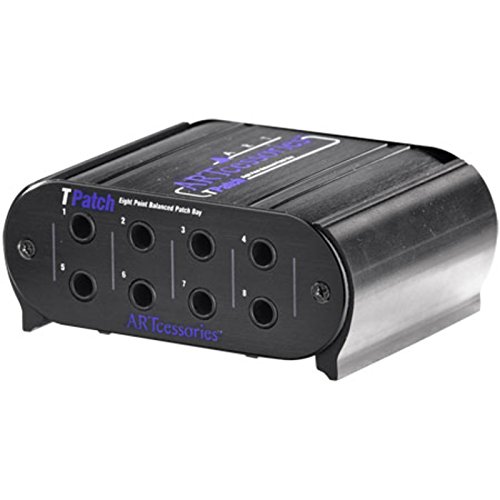
- Eight balanced points with four linked pairs
- Switchable half-normal and normal modes
- Rugged aluminum case with a two-year warranty
Best For: Compact home studios using balanced TRS routing
Modular XLR Expansion

- 16-channel XLR panel with four modular blocks
- Configurable from four to 16 channels
- Steel chassis and reversible rack ears
Best For: Rack-based studios needing modular XLR routing
Versatile Routing – Behringer ULTRAPATCH PRO PX3000
Behringer ULTRAPATCH PRO PX3000 Multi-Functional 48-Point 3-Mode Balanced Patchbay
Check Price On AmazonFor home studios needing flexible patch bays, the Behringer ULTRAPATCH PRO PX3000 provides 48 points and selectable routing modes to organize connections and reduce cable clutter. Its balanced TRS design and rugged construction suit a broad range of studio setups.
Best For: Home studios that want extensive routing flexibility in a 1U patchbay.
Pros:
- Offers Parallel, Half-normalled, Normalled, and Open modes.
- Provides 48 points with balanced TRS connectivity.
- Uses high-quality components and rugged construction.
Cons:
- The wide range of modes may require careful setup and labeling.
- Its connectivity is centered on TRS and related audio formats rather than Bluetooth.
The PX3000 is a strong choice when routing flexibility is more important than simplicity. Its selectable channel modes can help a growing home studio keep equipment connections organized.
Wireless Integration – Black Lion Audio PBR TRS-BT
The Black Lion Audio PBR TRS-BT stands out among patch bays for home studios by combining 46-point TRS connectivity with Bluetooth. It is designed for integrating smartphones, laptops, and tablets into professional audio workflows.
Best For: Home studios that want to connect portable Bluetooth devices alongside wired TRS gear.
Pros:
- Combines Bluetooth connectivity with 1/4-inch TRS connections.
- Provides 46 patchbay points for studio routing.
- Includes 94 gold-plated TRS connectors and an aluminum outer body.
Cons:
- Bluetooth adds a feature that may be unnecessary for a strictly wired setup.
- Its point count is lower than some 48-point alternatives.
Choose the PBR TRS-BT if wireless device integration is part of your workflow. For conventional rack routing only, a simpler wired patchbay may be a more direct fit.
Balanced Studio Control – Samson S-Patch Plus
Samson S-Patch Plus Balanced 48-Point 1/4" Patch Bay | 1/4 Inch Phone Connections
Check Price On AmazonThe Samson S-Patch Plus is a practical option for patch bays for home studios, offering 48 balanced 1/4-inch points in a 1U rack-mountable design. Front-panel switches let you configure each channel without reaching behind your equipment.
Best For: Home studios that need a straightforward, balanced rack patchbay with front-panel mode switches.
Pros:
- Provides 48 front connections and 48 rear connections.
- Supports Normal, Half-normal, and Thru operation.
- Rack-mountable 1U design helps centralize studio connections.
- Solid construction and a clean signal path support reliable operation.
Cons:
- Uses 1/4-inch phone connections rather than XLR connectors.
- Its manual toggle-switch configuration requires hands-on setup.
The S-Patch Plus balances useful routing flexibility with an easy-to-understand layout. It is well suited to a traditional rack-based home studio built around balanced 1/4-inch connections.
XLR Signal Routing – Black Lion Audio PBR XLR
The Black Lion Audio PBR XLR is a focused choice for patch bays for home studios that rely on XLR connections. Its 16-point layout and 32 gold-plated XLR connectors provide a compact way to route audio signals in recording or live-sound setups.
Best For: XLR-based home studios needing compact signal routing.
Pros:
- Offers 16 patchbay points with 32 XLR connectors.
- Uses gold-plated connectors for audio signal routing.
- Compact aluminum construction is suited to studio use.
Cons:
- Has fewer points than 48-point TRS patchbays.
- Does not provide the supplied notes’ Bluetooth or selectable routing-mode features.
The PBR XLR makes sense when XLR compatibility is the priority. Its smaller point count keeps the design focused, though larger studios may need additional routing capacity.
Balanced Rack Organization – ART P48-48 Point Patch Bay
The Art Pro Audio P48 is a practical choice among patch bays for home studios when you need a rack-mounted, balanced XLR connection point. Its fully shielded steel enclosure helps organize cabling and reduce wear on your equipment’s connectors.
Best For: Home recording studios, professional studios, PA and AV installations, home theater systems, and live sound setups using XLR connections.
Pros:
- 19-inch rack-mountable design
- Fully shielded steel construction
- Helps organize cables and reduce connector wear
- Suitable for home and professional audio environments
Cons:
- Uses XLR connections rather than TRS
- Indoor use is the specified application
The P48 focuses on straightforward XLR routing and rack organization. It is a sensible fit if your studio or installed audio system already relies on balanced XLR cabling.
High-Capacity TRS Routing – Black Lion Audio PBR TRS Patchbay
The Black Lion Audio PBR is a strong option among patch bays for home studios that need a high-capacity TRS connection panel. It provides 48 patch points through 96 gold-plated TRS connectors in a black-anodized housing.
Best For: Studios and audio setups that use TRS connections and need 48-point patchbay capacity.
Pros:
- 48-point patchbay configuration
- 96 gold-plated TRS connectors
- Compatible with all listed devices
- Stainless steel construction
Cons:
- TRS-only connectivity may not suit XLR-based systems
- At 4.31 pounds, it is heavier than some compact units
With its large connector count and gold-plated TRS connections, the PBR is geared toward flexible studio routing. Confirm that your equipment and cabling use TRS before choosing it.
Compact XLR Rack Routing – ART P16 XLR Balanced Patchbay
The ART P16 is a focused option among patch bays for home studios with balanced XLR equipment. Its 1U rack-mount design provides 16 front-panel female XLR connectors and 16 rear-panel male XLR connectors in a shielded steel enclosure.
Best For: Home and professional recording setups that need organized, balanced XLR connections in a 1U rack space.
Pros:
- 16-channel XLR patchbay layout
- 19-inch, 1U rack-mountable enclosure
- Rugged, fully shielded all-steel construction
- Reversible rack ears and a 3-year warranty
Cons:
- Provides XLR connectivity rather than TRS
- Offers fewer patch points than 48-point models
The P16 is a straightforward choice when your rack needs balanced XLR routing without using more than one rack unit. Its front-female and rear-male layout makes the connection format easy to identify during installation.
Flexible Routing – Black Lion Audio PBR TRS3 Patchbay
The Black Lion Audio PBR TRS3 is a versatile choice among patch bays for home studios, offering 48 points with 96 gold-plated TRS connectors. Its three-way mode switch lets you adapt the routing to different studio setups.
Best For: Home-studio users who need high channel capacity and flexible TRS routing for instruments, microphones, computers, and speakers.
Pros:
- Provides 48 patch points and 96 TRS connectors.
- Uses gold-plated connectors for a durable connection surface.
- Three-way mode switch supports flexible routing configurations.
- Supports sample rates up to 192 kHz and includes a two-year warranty.
Cons:
- Its larger 48-point layout may be more than a small setup requires.
- TRS connectivity may be less suitable for systems centered on XLR patching.
Choose this model when you expect your home studio to need substantial patching capacity and multiple routing options. Smaller rigs may find its expanded layout unnecessary, but growing setups can benefit from the additional points.
Compact Balanced Control – Art Pro Audio TPatch
The Art Pro Audio TPatch is a compact option among patch bays for home studios, with eight balanced points and 1/4-inch TRS phone jack connectors. Switchable half-normal and normal modes provide useful control over direct signal routing.
Best For: Smaller home studios that need balanced line routing in a straightforward eight-point format.
Pros:
- Offers eight points of balanced direct signals.
- Includes four linked input/output pairs.
- Switches between half-normal, normal, and through-type connections.
- Rugged extruded aluminum case and two-year warranty.
Cons:
- Eight channels provide less expansion room than larger patchbays.
- Its listed software compatibility is focused on Windows-based DAWs.
The TPatch makes sense for a compact setup where balanced connections and simple normalization options matter most. Consider a higher-capacity model if you expect to add many external devices or routing paths.
Modular XLR Expansion – AP16 XLR Patchbay
The AP16 is a 16-channel XLR balanced patch panel designed for organized studio routing. Its four factory-assembled modular blocks can be configured in four-channel increments, making it a practical alternative for home studios that rely on XLR connections.
Best For: Home studios and rack systems needing modular XLR routing, zone-based cable management, and flexible installation.
Pros:
- Supports 4-, 8-, 12-, or 16-channel configurations through four modular blocks.
- Individual blocks can be assigned to system zones and removed or replaced independently.
- 24K gold-plated XLR pins and a full-steel chassis support durable signal routing.
- Reversible rack ears allow front- or rear-mounting in standard 19-inch racks.
Cons:
- XLR connectivity may be less convenient for setups built around 1/4-inch TRS patching.
- Its 16-channel rack format may be excessive for very small studios.
- The supplied notes do not specify a warranty or maximum sample rate.
The AP16 stands out when modular maintenance and XLR-based organization are priorities. Its steel construction and reversible rack ears add installation flexibility, while the block design can simplify future changes without reworking the entire unit.
How We Picked the Best Patch Bays for Home Studios
We focused on practical studio-routing needs rather than simply ranking products by channel count. The selection includes balanced TRS and XLR patch bays, models with different point counts, and options suited to both compact desks and larger rack-based systems. We considered connector format, normalled or switchable routing, build quality, rack compatibility, signal integrity, and how easily each unit can adapt as a studio grows.
Because patch bays are infrastructure products, reliability and layout flexibility matter as much as headline features. A model that matches your existing cables and equipment can be more useful than a larger unit with the wrong connector type.
Quick Comparison
| Best For | Recommended Format | What to Prioritize |
|---|---|---|
| General line-level routing | Balanced TRS | Switchable or configurable normals |
| Microphones and installed connections | XLR | Secure connectors and clear labeling |
| Small home studios | 8- or 16-point design | Compact size and sufficient expansion |
| Larger rack systems | 48-point patch bay | High density and flexible routing |
| Mixed studio workflows | Multi-mode or mixed-format model | Compatibility with present and future gear |
Key Buying Factors for Patch Bays for Home Studios
Connector Type and Signal Level
Choose TRS when most of your equipment uses balanced 1/4-inch line connections. XLR models make more sense for microphone lines, preamp connections, and permanently installed balanced inputs and outputs. Confirm whether your equipment carries microphone, line-level, or instrument signals before wiring the bay.
Normalled Routing and Flexibility
Normalled connections let a signal pass from a source to a destination without a front-panel cable. Half-normalled designs can split or monitor a signal, while through or non-normalled layouts provide straightforward manual routing. Adjustable modes are valuable if your workflow changes frequently.
Point Count and Rack Space
Count the connections you need today, then allow room for expansion. A 48-point unit can consolidate a larger rack, but an 8- or 16-point model may be easier to wire and more appropriate for a compact setup. Check rack width, mounting depth, and rear-panel access before buying.
Labeling, Wiring, and Maintenance
Clear labels reduce routing mistakes. Leave enough space behind the rack for cable bends, label both ends of every cable, and use short patch cables where possible. Avoid treating a patch bay as a substitute for proper gain staging or balanced cabling.
Who Should Buy Which Patch Bays for Home Studios?
Choose a configurable balanced TRS model if you want one central hub for interfaces, compressors, equalizers, and other line-level equipment. Pick an XLR patch bay if your workflow revolves around microphones, preamps, or fixed XLR connections. Smaller studios should favor compact point counts and simple access, while expanding or hybrid studios will benefit from higher-density designs with selectable routing modes.
If you are unsure, map every input and output first, identify which connections you want permanently normalled, and buy the format that matches the majority of your equipment. That approach makes the patch bay easier to install and more useful every time you change your recording or mixing setup.