The right soundproofing mat can make a noticeable difference in vehicle road noise, appliance vibration, workshop sound, and room acoustics. However, mats vary widely in thickness, density, surface construction, installation method, and intended use.
This roundup compares automotive deadening mats, mass-loaded barriers, acoustic panels, and anti-vibration floor tiles so you can match the material to the noise problem instead of relying on thickness alone.
Best 10 Soundproofing Mat Picks for 2026
Best Full-Roll Automotive Coverage
VEVOR Noise Grabber Mass Barrier

- 200-mil high-density foam construction
- 36 sq. ft. cut-to-fit roll
- Self-adhesive, layered aluminum-foil design
Best For: Broad DIY vehicle soundproofing coverage
Best Peel-and-Stick Value
Butyl Sound Deadening 80mil Mat

- 80-mil three-layer butyl construction
- 36 sq. ft. vehicle coverage
- High-tack peel-and-stick backing
Best For: Easy DIY automotive noise and vibration control
Best Indoor Floor Protection
Interlocking Felt Sound Absorbing Mats

- 20-piece interlocking felt set
- Up to 17 sq. ft. of coverage
- Cushions floors and dampens vibration
Best For: Indoor rooms, studios, gyms, and play areas
Best Thick Automotive Sheet Option

- 197-mil, three-layer automotive sheets
- 30 pieces covering 32 sq. ft.
- Designed to reduce noise, vibration, and rattles
Best For: Thick, manageable DIY vehicle installations
Best for Echo Control

- Absorbs echoes, reverb, and flutter echoes
- Includes 60 pieces of mounting tape
- Flame-retardant, cuttable polyurethane foam
Best For: Recording rooms, offices, gaming spaces, and home theaters
Best for Vehicle Vibration Damping

- Dampens road and vehicle vibrations
- Self-adhesive and easy to cut
- Reflective foil adds thermal insulation
Best For: Car cabins, floors, trunks, and interior panels
Thick Foam Coverage Pick
GOSCHE 394 Mil Sound Deadening Mat

- 10 mm closed-cell foam construction
- 16 sq. ft. across 15 sheets
- Peel-and-stick sound and heat insulation
Best For: DIY vehicle projects needing thick, easy-to-install coverage
Butyl Installation Indicator Pick
KILMAT 80 Mil Sound Deadening Mat

- Self-adhesive butyl and foil construction
- 10 sq. ft. of manageable-sheet coverage
- Embossed foil indicates proper rolling
Best For: Targeted DIY automotive sound-deadening projects
Large-Area Heat Barrier Pick
Siless Liner 157 Closed-Cell Foam
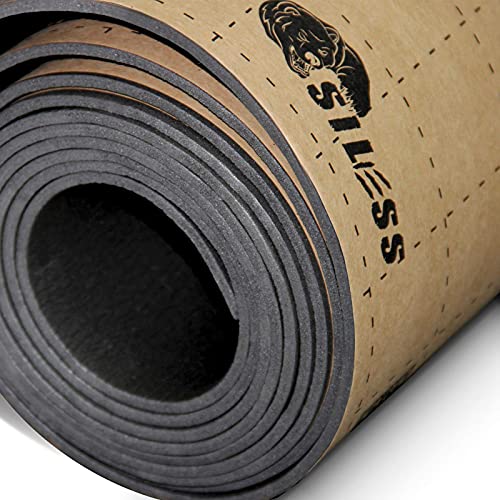
- 36 sq. ft. continuous roll
- Claims 98% radiant heat blocking
- Waterproof, lightweight 4 mm foam
Best For: Large vehicle insulation jobs requiring broad heat-barrier coverage
Best Full-Roll Automotive Coverage – VEVOR Noise Grabber Mass Barrier
For broad vehicle coverage, this soundproofing mat combines a 200-mil foam core with aluminum foil and adhesive backing. The 36-square-foot roll can be cut to fit doors, panels, and other irregular spaces, while its layered construction also supports heat insulation and waterproofing.
Best For: DIY vehicle projects needing a thick, customizable roll for broad coverage.
Pros:
- Thick 5.1 mm high-density foam helps reduce interior vehicle noise.
- Three-layer design adds soundproofing, heat insulation, waterproofing, and fire resistance.
- Self-adhesive backing simplifies installation without additional adhesive.
- 36 square feet of material can be cut for compact or irregular areas.
Cons:
- A rolling tool is not included for securing the installation.
- A roll format may require more measuring and cutting than pre-sized sheets.
Choose this model when thickness and flexible roll coverage matter most. Its 200-mil construction is substantial, but planning and careful surface preparation will help produce a clean fit.
Best Peel-and-Stick Value – Butyl Sound Deadening 80mil Mat
This butyl soundproofing mat is designed for straightforward automotive installation. Its 80-mil, three-layer construction uses reinforced aluminum foil, a butyl rubber core, and high-tack adhesive to address road noise and panel vibrations across up to 36 square feet.
Best For: Vehicle owners who want an easy peel-and-stick upgrade for doors, trunks, and similar areas.
Pros:
- Butyl rubber core helps absorb vibrations and block sound.
- Reinforced foil layer supports heat insulation and water resistance.
- 36 square feet covers many vehicle applications.
- Rated working temperature range is -50°F to 300°F.
Cons:
- At 80 mils, it is thinner than the supplied 197- and 200-mil alternatives.
- Sheet pieces require cutting and individual placement during installation.
This is a practical choice for buyers prioritizing simple installation and balanced coverage. Its thinner profile may be easier to handle, while the butyl construction targets both vibration and noise.
Best Indoor Floor Protection – Interlocking Felt Sound Absorbing Mats
Unlike automotive sheets, this soundproofing mat set is intended for indoor floors and activity areas. The 20 high-density felt puzzle pieces provide cushioning, vibration dampening, and some reduction of reverberation while assembling into a customizable surface of up to 17 square feet.
Best For: Home, studio, classroom, gym, and play areas that need cushioned, non-slip floor coverage.
Pros:
- Interlocking pieces are easy to assemble, disassemble, and rearrange.
- High-density felt helps absorb foot-traffic shock and reduce echo.
- Non-slip design helps protect hard floors from scratches and impacts.
- Includes 48 pieces of removable double-sided tape for added stability.
Cons:
- Maximum coverage is about 17 square feet per 20-piece set.
- These floor mats are not intended for vehicle panel installation.
- Larger areas require additional sets.
Consider this set when floor cushioning and room noise control are more important than automotive insulation. The modular design makes it convenient for temporary or custom indoor layouts, but coverage is limited per package.
Best Thick Automotive Sheet Option – 197mil Sound Deadening Mat
For drivers seeking thick, pre-cut automotive material, this soundproofing mat provides 32 square feet in 30 manageable sheets. Its 197-mil three-layer structure combines aluminum foil, foam, and adhesive backing to help address road noise, panel vibration, and interior rattles.
Best For: DIY vehicle installations where thick sheets and convenient individual pieces are preferred.
Pros:
- 197-mil thickness supports substantial noise and vibration reduction.
- Pre-sized 15.7-by-9.8-inch sheets are easier to handle than a large roll.
- Aluminum foil top layer provides thermal insulation and water resistance.
- Strong adhesive backing supports secure, long-term installation.
Cons:
- Coverage is 32 square feet, less than the 36-square-foot options listed here.
- Thicker sheets can require more careful fitting around tight contours.
This model fits buyers who want a thick automotive mat without managing one continuous roll. The individual sheets simplify handling, while the lower total coverage should be considered when estimating project needs.
Best for Echo Control – 1-Inch Acoustic Foam Panels
If you need a soundproofing mat alternative for managing echoes and reverb, this 12-pack of wedge acoustic foam panels is designed to absorb sound rather than block it. The 12-by-12-inch, 1-inch-thick panels suit studios, podcast rooms, gaming spaces, offices, and home theaters.
Best For: Improving room acoustics and reducing echoes in recording, media, and work spaces.
Pros:
- High-density foam helps reduce echoes, reverb, flutter echoes, and background noise.
- Includes 60 pieces of double-sided adhesive tape for installation.
- Flame-retardant polyurethane foam is described as non-toxic and odor-free.
- Panels can be cut and arranged in different color combinations.
Cons:
- These panels absorb sound but are not intended to provide the mass-based sound blocking of a barrier mat.
- Vacuum-sealed foam may require 24–48 hours to fully recover its shape.
- Each panel is only 1 inch thick, limiting low-frequency control compared with thicker treatments.
This is a practical choice when the main issue is room reflections rather than sound transmission through walls. The included mounting tape and compact panels make it convenient for targeted acoustic treatment.
Best for Vehicle Vibration Damping – Car Sound Deadening Mat
This soundproofing mat is made for vehicle interiors where road noise and vibration are the primary concerns. The 10-piece kit uses a pliable butyl rubber compound with self-adhesive backing and reflective aluminum foil for added thermal insulation.
Best For: Reducing vibration and road noise in a car cabin, floor, trunk, or other interior areas.
Pros:
- Butyl rubber substrate helps dampen vehicle and road vibrations.
- Self-adhesive backing supports straightforward installation.
- Reflective aluminum foil adds thermal insulation.
- Flexible sheets can be cut to fit different vehicle surfaces.
Cons:
- The kit is intended for cars rather than broad wall, ceiling, or room soundproofing.
- Total coverage is limited to 10 square feet.
- Installation requires preparing and fitting multiple individual pieces.
For automotive projects, this mat offers a focused way to address panel vibration and cabin noise. Its pre-cut sheets and adhesive backing make it more convenient than installing a large roll of soundproofing material.
Best for Structural Sound Blocking – 1-Pound Mass Loaded Vinyl
For projects that need a true soundproofing mat or barrier, this 1-pound-per-square-foot mass loaded vinyl adds density to walls, ceilings, floors, doors, and other structures. The flexible 1-by-8-foot sheet covers 8 square feet and is designed for sound blocking and vibration control.
Best For: Adding mass to walls, ceilings, doors, HVAC systems, vehicles, and studio or home-theater assemblies.
Pros:
- Its 1 lb/sq ft density is designed to block sound through mass.
- High damping properties help reduce vibration.
- Flexible, waterproof, flame-retardant material can be used indoors or outdoors.
- Can be cut with a utility knife and installed with adhesive, nails, or screws.
Cons:
- The 8-square-foot sheet may require multiple pieces for larger projects.
- Installation typically requires sealing seams with acoustic caulk or barrier tape.
- At 8 pounds per sheet, handling and positioning may take extra effort.
This is the most suitable option here when sound transmission and vibration—not just room echo—are the priority. Its dense, flexible construction works well as one layer within a properly sealed sound-control assembly.
Thick Foam Coverage Pick – GOSCHE 394 Mil Sound Deadening Mat
If you want a thick, easy-to-apply soundproofing mat for vehicle doors, floors, or the firewall, the GOSCHE 394 mil option offers 16 square feet of peel-and-stick coverage. Its closed-cell foam construction is designed to reduce vibration, road noise, and heat transfer.
Best For: DIY vehicle projects where vibration reduction, cabin comfort, and heat insulation are priorities.
Pros:
- Thick 10 mm construction helps dampen engine, tire, and road vibrations.
- Provides 16 square feet of coverage across 15 manageable sheets.
- Peel-and-stick backing supports straightforward installation on flat metal surfaces.
- Closed-cell foam helps with both sound reduction and heat insulation.
Cons:
- Designed for flat metal surfaces, so coverage may be less convenient on complex contours.
- The 15-sheet format may require more seams than a continuous roll.
Choose this soundproofing mat when you want substantial foam thickness and a beginner-friendly sheet format without stepping up to a premium-priced material.
Butyl Installation Indicator Pick – KILMAT 80 Mil Sound Deadening Mat
The KILMAT 80 mil soundproofing mat uses self-adhesive butyl and foil to reduce automotive noise and vibration. Its smaller sheets are convenient to cut and position, while the embossed foil provides a visual cue for rolling the material smooth during installation.
Best For: DIY installers who want lightweight butyl sound deadening with an installation indicator.
Pros:
- Self-adhesive butyl backing is designed for user-friendly installation.
- Embossed foil helps indicate when the material has been rolled smooth and installed correctly.
- Includes 10 square feet of coverage in manageable sheets.
- At 80 mil thick, it balances sound insulation with a relatively light 0.5-pound-per-square-foot weight.
Cons:
- Provides less total coverage than the 16- and 36-square-foot alternatives in this roundup.
- Its 80 mil thickness is substantially thinner than the 394 mil foam option.
This is a practical soundproofing mat for targeted automotive applications, especially if you value easy handling and a built-in visual installation guide.
Large-Area Heat Barrier Pick – Siless Liner 157 Closed-Cell Foam
For broad vehicle coverage, the Siless Liner 157 combines closed-cell polyethylene foam with a self-adhesive layer in a 36-square-foot roll. This soundproofing mat is waterproof, lightweight, and intended for areas such as the firewall, doors, roof, trunk, and floor.
Best For: Large vehicle insulation jobs where heat blocking, moisture resistance, and extensive coverage matter.
Pros:
- Provides 36 square feet of coverage in one continuous roll.
- Closed-cell foam is waterproof, lightweight, odor-free, and moisture resistant.
- Designed to block 98% of radiant heat transfer, according to the supplied product information.
- Self-adhesive backing and flexible foam support installation with or without a roller.
Cons:
- At 4 mm thick, it is thinner than the 10 mm GOSCHE foam option.
- A long roll may be less convenient to handle than smaller pre-cut sheets.
- Its listed operating temperature is up to 215°F, which may limit use in hotter locations.
Pick this soundproofing mat when coverage efficiency and heat insulation are more important than maximum thickness or compact sheet handling.
How We Picked the Best Soundproofing Mats
We evaluated these products by intended application, material construction, thickness, coverage, installation method, and the type of noise they are designed to address. Automotive butyl mats are best suited to reducing panel vibration and road noise, while mass-loaded vinyl adds a dense barrier against airborne sound. Foam and felt products primarily absorb reflections or dampen contact vibration rather than blocking sound through a wall or vehicle panel.
We also considered practical details such as roll or panel dimensions, adhesive backing, trimming requirements, heat resistance where relevant, and whether the product is appropriate for permanent installation. Coverage matters: a smaller mat may work well for targeted panel treatment, while larger rolls are more efficient for doors, floors, walls, and broad enclosures.
Quick Comparison
| Type | Best for | Main strength | Important limitation |
|---|---|---|---|
| Butyl automotive mat | Vehicle doors, floors, trunks | Reduces panel resonance | Requires careful surface preparation |
| Mass-loaded vinyl | Walls, partitions, enclosures | Blocks airborne sound with density | Heavy and harder to install |
| Closed-cell foam liner | Vehicle insulation and decoupling | Lightweight cushioning and heat protection | Not a complete sound barrier alone |
| Acoustic foam or felt | Echo and room reflections | Absorbs mid- and high-frequency reflections | Does not block outside noise |
| Interlocking floor mat | Equipment and floor vibration | Non-slip contact isolation | Limited airborne-noise reduction |
Key Buying Factors for a Soundproofing Mat
Choose the Right Noise-Control Function
For rattles and vibrating metal, choose a butyl or asphalt-free automotive deadening mat. For sound passing through a partition, use a dense mass barrier such as mass-loaded vinyl, usually with a decoupling layer. For echo inside a room, acoustic foam or felt panels are more appropriate. Floor mats help isolate vibration from machinery, speakers, or appliances.
Check Thickness, Density, and Coverage
Thickness alone does not determine performance. Density and coverage are equally important, especially for barriers. A thicker automotive mat may add more damping, but it also adds weight. Measure the treatment area before buying and account for overlaps, trimming, seams, and difficult contours.
Plan the Installation
Self-adhesive products are convenient, but they need clean, dry, grease-free surfaces and firm roller pressure. Rolls and sheets may require a sharp knife, gloves, and careful handling. In vehicles, confirm that the added thickness will not interfere with clips, trim, window mechanisms, pedals, or spare-tire compartments.
Who Should Buy Which Soundproofing Mat?
Vehicle owners dealing with door buzz, trunk resonance, or road noise should start with a butyl automotive mat and add a closed-cell foam liner where clearance allows. Choose a heavier, thicker option for broad panel coverage or demanding applications, and a smaller pack for targeted repairs.
Anyone building a wall, recording area, or partition should consider mass-loaded vinyl rather than relying on acoustic foam alone. Use foam or felt panels when the main problem is room echo, speech clarity, or harsh reflections. For washing machines, speakers, tools, and other vibrating equipment, interlocking floor mats provide a simpler contact-isolation solution.
Finally, prioritize measured coverage and compatibility over the highest advertised thickness. A correctly installed, purpose-matched Soundproofing Mat usually performs better than a heavier product used in the wrong location.